The most reliable way to prevent memory loss and disorientation in aging cats is to place wooden furniture suitable for their environment to stimulate daily activities. This article goes beyond simply buying toys; it details how to apply the principles of ‘Environmental Enrichment’ to maintain your cat’s brain health by combining them with wooden cat structures. We have included specific practical methods and precautions that pet owners can implement to improve the quality of life for their senior cats, hoping to assist you in fulfilling your role as a caregiver.
What are the symptoms and causes of cognitive decline in elderly cats?
Many pet owners become sensitive to changes in cognitive function as soon as they feel their cat is getting older. Unlike young cats, senior cats process new stimuli more slowly, often leading to confusion about their surroundings. This condition is not merely a natural aging process where memory fades, but is referred to as ‘senile cognitive decline’ or ‘dementia-like symptoms’, which may require appropriate intervention.
Major Clinical Symptoms of Senile Feline Dementia (SIRDS)
Research defines cognitive decline in senior cats as ‘Senile Feline Cognitive Dysfunction Syndrome (SIRDS)’, which shares characteristics with human dementia. The first symptom to appear is an abnormally long time spent sleeping. This is not simply due to accumulated fatigue, but rather a lowered level of brain arousal, causing the cat to remain in a deep sleep state even during the day. Conversely, at night, they become active; this is a reversal of the circadian rhythm, where the cat becomes nocturnal or stays awake at night while sleeping during the day.
The second important symptom is the loss of spatial awareness. Areas of the house that were once familiar may feel strange to the cat, causing them to wander around as if they don’t recognize their home, or they may forget the location of the litter box and urinate in inappropriate places, leading to what is known as ‘urinary dysfunction’. This is caused by a temporary paralysis of brain function rather than a physical illness, and many pet owners mistakenly treat it as such. Additionally, a lack of response to strangers, other cats, or even familiar family members, or a failure to respond to their own name, are considered early signs of dementia.
Thirdly, increased anxiety and aggression are behavioral changes frequently observed in senile feline dementia. As memory declines, past threatening experiences may be confused with the current environment, causing the cat to approach their owner aggressively or react excessively to unfamiliar objects. Particularly when spatial awareness is blurred in narrow spaces or at heights, fear can be amplified due to the loss of physical balance, such as bumping into ceilings or falling from the floor. These symptoms appear when the cat is stressed because it cannot solve problems on its own, making active environmental intervention by the owner essential.
The Impact of Brain Cell Aging and Environmental Factors on Dementia
Like humans, a cat’s brain aging occurs due to a reduction in nerve cells and the weakening of neural networks. However, aging itself is not the sole cause of dementia; environmental factors that excessively increase ‘cognitive load’ play a significant role. When a cat lives a repetitive and monotonous daily life, the brain has no need to process new stimuli, causing neuroplasticity to drop, which accelerates cognitive decline. In other words, an environment lacking activity and new exploration opportunities is fatal to the brain health of senior cats.
Research shows that cats with dementia symptoms tend to have reduced hippocampal volume and decreased secretion of acetylcholine, a neurotransmitter. This is a sign of the deterioration of brain areas responsible for learning and memory, a state that cannot be immediately recovered by simply taking supplements. Particularly for indoor cats who are limited by various external smells, sounds, and visual stimuli, if the owner does not actively create an environment, the brain is forced into a ‘rest mode’. Therefore, to keep a cat’s brain young, a rich environment that can mimic external stimuli, i.e., environmental enrichment, is essential.
Furthermore, senior cats tend to prefer activities with low energy consumption due to physical decline, creating a vicious cycle that reduces blood circulation to the brain and further impairs cognitive function. For example, a lifestyle pattern of just eating from the food bowl and then immediately sleeping does not supply the necessary blood flow to the brain. Conversely, activities such as moving around to get food or climbing to high places increase heart rate and blood flow to the brain, stimulating cognitive function. Understanding this principle reveals that creating an environment where the cat breathes together with you, beyond just caring for them, is the key to preventing senile dementia.
How do Wooden Cat Furniture (PlayCat) structures work to prevent dementia?
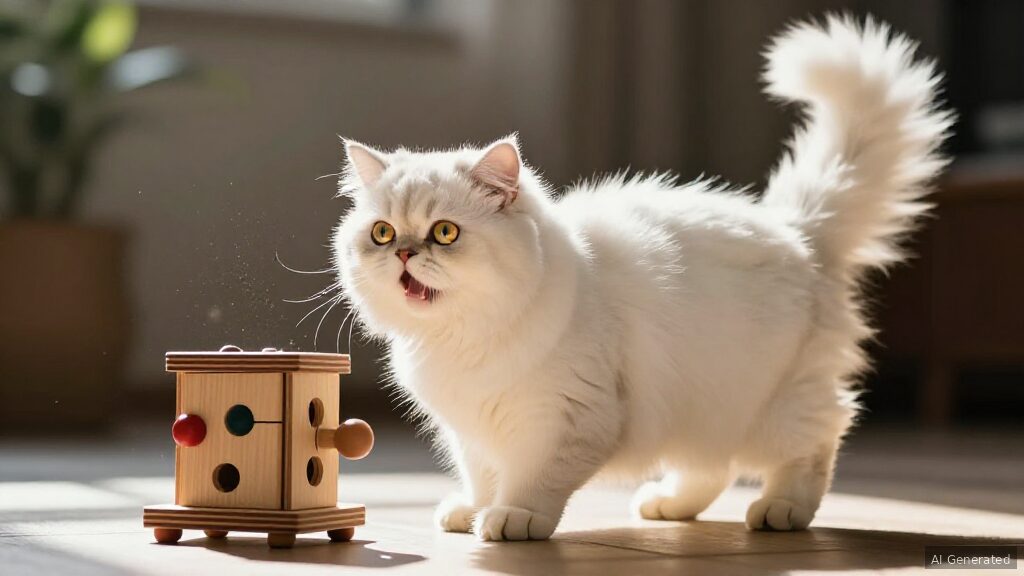
The most effective and practical method to prevent and alleviate cognitive decline in senior cats is to provide ‘Environmental Enrichment’. Here, environmental enrichment means creating an environment where the cat can choose and perform various behaviors such as exploring, moving, hunting, and resting according to their instincts, going beyond simply buying toys. Wooden furniture manufactured by PlayCat is the optimal tool to realize this environmental enrichment, playing a decisive role in protecting your cat’s brain health.
Effects of Vertical Structures on Spatial Awareness and Motor Function Improvement
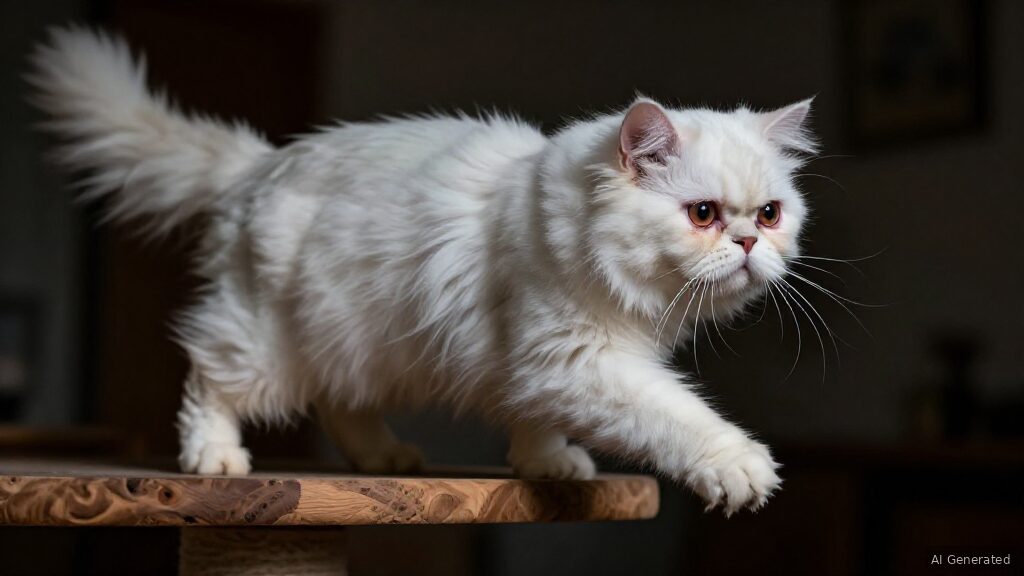
Cats are originally animals that climb trees to monitor predators and secure safe territories. Vertical structures that satisfy this instinct greatly improve the spatial awareness and motor functions of senior cats. PlayCat’s wooden furniture is designed with various heights, allowing cats to naturally move their weight and maintain balance at different levels. In this process, the cat must accurately grasp its position, which serves as important training to stimulate the brain’s spatial sense.
To explain specifically, the various levels and connected ceilings of the wooden furniture require the cat to judge for itself ‘where is it safe to climb’ and ‘where should the next step be’. This decision-making process activates the frontal lobe of the brain, helping to maintain cognitive function. Additionally, vertical movement structures like stairs induce physical activity by using the cat’s muscles. While senior cats are prone to low activity levels, the process of climbing up and down wooden furniture naturally increases exercise, increasing blood flow to the brain and directly contributing to dementia prevention. Research shows that cats with active activities utilizing vertical structures have a lower incidence of dementia symptoms.
Furthermore, the stable and sturdy structure of the wooden furniture prevents cats from feeling anxious even when they climb high. Since senior cats have reduced balance, they may feel fear and restrict activity if they climb narrow poles or unstable structures. However, PlayCat’s wooden furniture, with its thick wood and stable supports, allows cats to confidently use high areas, naturally cultivating the coordination between the brain and body. This is not just a play tool, but essential infrastructure to protect the physical and mental health of senior cats.
Structural Features that Stimulate Exploration and Hunting Instincts
A cat’s brain works most actively when its hunting and exploration instincts are stimulated. The complex structure of wooden furniture, including holes, tunnels, and hidden spaces, provides a perfect hunting ground and exploration environment for cats. While senior cats may become lethargic due to a lack of visible prey, these structures include hiding spots, allowing the cat to hide itself and induce behaviors of exploring the surroundings and finding prey. This gives the cat the experience of the ‘sequence of hunting’, waking up the brain.
A specific application example is hiding treats inside the ceiling or tunnels of the wooden furniture. Since the cat must find the prey, it climbs up and down the structure and digs through holes to explore. In this process, all five senses—sight, smell, hearing, etc.—are stimulated simultaneously, activating various areas of the brain. Particularly for senior cats whose memory is blurred and who may find it difficult to locate specific positions, these structures provide clues like ‘it should be here’, enabling successful exploration and helping them regain a sense of achievement and confidence.
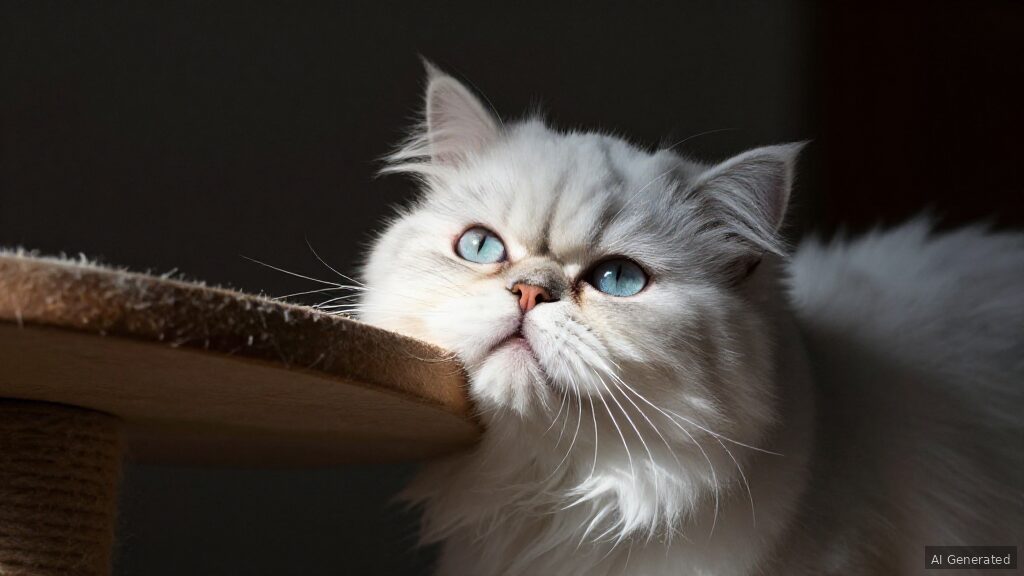
Additionally, the natural texture of the wooden furniture provides important stimulation for the cat. The rough surface of the wood transmits various sensations to the cat’s paw pads, providing subtle stimuli that cannot be felt on soft floors or carpets. This provides the cat with new experiences, contributing to maintaining the brain’s neuroplasticity. PlayCat’s wooden furniture utilizes these natural materials and structures to effectively stimulate the cognitive function of senior cats and alleviate dementia symptoms. Through these structures, owners help the cat awaken again as an active subject thinking and acting, rather than just a passive being that sleeps all day.
Specific Environmental Creation Methods for Environmental Enrichment (Ethology) for Senior Cats
Environmental enrichment is not enough with just installing fixed equipment; its effectiveness varies depending on the owner’s continuous observation and environmental adjustments. Since senior cats may adapt slowly to new environments due to physical limitations and cognitive decline, owners should change the environment appropriately in stages. In this process, we introduce specific methods to stimulate the cat’s instincts using PlayCat’s wooden furniture.
Space Utilization Strategies Using Treats and Food
A cat’s brain maximizes learning effects through rewards (treats). Therefore, to stimulate the cognitive function of senior cats, treats or food should not simply be put in a bowl but set as a ‘reward’ that must be obtained within the structure. For example, scatter treats on the top of PlayCat’s wooden furniture or fix the food bowl inside the ceiling or tunnel to induce the cat to use the structure to get food.
The specific implementation steps are as follows:
- Step 1: Treat Placement Sprinkle treats at the entrance of the highest level or hidden tunnel of the wooden furniture. Since the cat must climb up and down the structure to find the prey, the brain’s motor areas and spatial sense are stimulated.
- Step 2: Food Distribution Instead of filling the food bowl with all the food at mealtime, distribute it in small amounts across various levels of the wooden furniture. This allows the cat to maintain continuous activity levels as it moves from one level to the next while eating.
- Step 3: Hidden Food Hide food slightly inside the tunnel or holes. Since the cat must detect the food’s location through its sense of smell and dig through the structure, this becomes a very enjoyable intellectual challenge for the cat.
This method makes the cat an active subject interacting with the environment, rather than a passive being that simply waits. Additionally, changing the time and location of giving treats slightly every day allows the cat to adapt to unpredictable environments and develop brain flexibility. Since senior cats may be sensitive to changes, it is best to avoid changing the environment too abruptly and gradually increase the difficulty.
Exercise Regulation and Safety Management Using Vertical Structures
Since senior cats may find it difficult to exercise for long periods due to lack of stamina, it is important to regulate exercise levels using wooden furniture. PlayCat’s wooden furniture provides various heights of levels and ceilings, offering space for the cat to exercise according to its stamina. Owners should try to induce the cat to exercise by climbing up and down the structure for at least 15 to 20 minutes a day.
A specific exercise program can be designed as follows:
- Daytime: Short Activity Since the cat may be tired during the day, induce the cat to use the structure for a short time by giving treats on the lower levels of the wooden furniture. At this time, encourage the cat to climb the levels slowly.
- Evening: Long Activity Since the cat may have a bit more energy after evening or dinner, induce the cat to climb to the higher levels of the wooden furniture to engage in long-term activity. At this time, encourage repetitive movements of climbing up and down the ceiling.
- Safety Check Lay soft straw or blankets on the floor so the cat does not fall from the structure. Also, check that the gap between each level and the ceiling of the wooden furniture is not too wide to ensure safety so the cat does not fall.
Such exercise strengthens the cat’s muscles and increases blood flow to the brain, directly helping to prevent dementia. Additionally, the stable and sturdy structure of the wooden furniture prevents cats from feeling anxious even when they climb high. Since senior cats have reduced balance, they may feel fear and restrict activity if they climb narrow poles or unstable structures. However, PlayCat’s wooden furniture, with its thick wood and stable supports, allows cats to confidently use high areas, naturally cultivating the coordination between the brain and body. This is not just a play tool, but essential infrastructure to protect the physical and mental health of senior cats.
Advanced Information and Precautions for Preventing Dementia in Senior Cats
Preventing dementia in senior cats is determined not only by behavioral changes but also by the owner’s attitude and detailed environmental adjustments. Here, the point to note is that cats showing dementia symptoms do not recognize their condition and therefore experience a lot of stress. Therefore, owners should create an environment that minimizes the discomfort felt by the cat.
Early Signs of Dementia Symptoms and Response Methods
The early signs of feline dementia are ‘urinary dysfunction’ and ‘increased daytime sleep’. If a cat urinates in a place different from usual or sleeps all day, owners should be careful not to mistake this for bad habits or illness. These symptoms may indicate that the cat has forgotten its position or that its brain arousal level is low during the day, causing it to sleep. At this time, owners should create an environment that helps the cat remember its position.
Specific response methods are as follows:
- Location Confirmation Check the locations of places the cat frequently visits, such as the litter box, dining table, and bedroom, and place wooden furniture to help the cat easily recognize these spaces.
- Treat Rewards Provide positive rewards by giving treats when the cat urinates in the correct place or is active during the day. This encourages the cat to perform correct behaviors.
- Providing Stability Provide a space where the cat can sleep on the lower levels of the wooden furniture so it does not feel anxiety, and reassure the cat with your voice or scent.
If such early responses are not timely, dementia symptoms may worsen, significantly lowering the cat’s quality of life. Therefore, owners should be sensitive to small changes in the cat and strive to make appropriate interventions. Additionally, as the cat’s memory declines, past threatening experiences may be confused with the current environment, causing the cat to approach the owner aggressively or react excessively to unfamiliar objects. At this time, owners should not strongly stop the cat but maintain an attitude of understanding and empathizing with the cat’s emotions.
Limitations of Environmental Enrichment and Alternative Methods
Environmental enrichment is very effective in preventing dementia in senior cats, but it cannot be applied to all situations. For example, if a cat shows severe dementia symptoms and has extremely low activity levels, active intervention may be needed, such as the owner physically carrying the cat up to the structure. Additionally, if the cat lacks stamina to climb the high levels of the wooden furniture, the owner should place more treats on the lower levels of the structure or install additional structures that the cat can easily move between.
In such cases, the following alternative methods can be utilized:
- Treat Induction If the cat cannot climb to the high level of the structure, the owner should take the cat to the lower level of the structure with treats and let it eat.
- Structure Modification Lower the levels of the wooden furniture to match the cat’s stamina, or install additional structures that the cat can easily move between.
- Owner Intervention If the cat does not use the structure, the owner should play with the cat by climbing up and down the structure together. This greatly helps the cat learn how to use the structure.
Environmental enrichment is a method to wake up the brain by stimulating the cat’s instincts, but it requires the owner’s continuous observation and intervention. It is important to flexibly adjust the methods of environmental enrichment according to the cat’s condition to create the most suitable environment for the cat. Additionally, if the cat’s dementia symptoms worsen and environmental enrichment proves ineffective, consult a veterinarian to consider drug therapy or adjunctive treatment. Owners should strive to accurately grasp the cat’s condition and take appropriate measures.
Practical Application Guide: Cat Dementia Prevention Checklist Starting Today
Now, owners can formulate a specific action plan for preventing dementia in senior cats. The checklist below includes actions that can be implemented starting today, written to include estimated time, required items, and expected effects. Owners can refer to this checklist to create an environment suitable for their cat’s condition.
- Selecting the Location of Wooden Furniture
The first thing to do is to place the wooden furniture in an appropriate location in the house. It should be placed close to places the cat frequently visits or where it sleeps during the day to make it easy for the cat to use the structure. The required items are wooden furniture (PlayCat) and auxiliary items (straw, blankets), and the estimated time is within 30 minutes. This work increases the cat’s accessibility, maximizing the effects of environmental enrichment. - Establishing a Treat Placement Strategy
Next, place treats in the various levels and tunnels of the wooden furniture. To induce the cat to climb up and down the structure to find treats, it is best to place treats on the highest level or hidden spaces of the structure. The required items are treats or food, and the estimated time is 10 minutes. This plays an important role in stimulating the cat’s brain and increasing exercise levels. - Creating a Safe Environment
Lay soft straw or blankets on the floor so the cat does not fall from the structure. Also, check that the gap between each level and the ceiling of the wooden furniture is not too wide to ensure safety so the cat does not fall. The required items are straw and blankets, and the estimated time is 10 minutes. This is an essential step to allow the cat to use the structure without anxiety. - Inducing Activity During the Day
To prevent the cat from sleeping all day during the day, induce the cat to use the structure for a short time by giving treats on the lower levels of the wooden furniture. At this time, encourage the cat to climb the levels slowly. The required items are treats, and the estimated time is 15 minutes. This helps increase the cat’s daytime activity levels and raise its brain arousal level. - Inducing Long Activity During the Evening
Since the cat may have a bit more energy after evening or dinner, induce the cat to climb to the higher levels of the wooden furniture to engage in long-term activity. At this time, encourage repetitive movements of climbing up and down the ceiling. The required items are treats, and the estimated time is 20 minutes. This consumes the cat’s stamina and increases blood flow to the brain, directly helping to prevent dementia. - Owner Intervention and Play
If the cat does not use the structure, the owner should play with the cat by climbing up and down the structure together. This greatly helps the cat learn how to use the structure. The required items are the owner’s time and emotional support, and the estimated time is 15 minutes. This helps the cat learn how to use the structure and strengthens the bond with the owner.
Consistently practice this checklist to make your cat’s senior life healthy and happy. Even small efforts from the owner can make a big difference for the cat. Start today and take the first step towards preventing dementia in your cat.
Frequently Asked Questions (FAQ)
We have organized and answered questions in detail regarding dementia prevention and environmental enrichment in senior cats. These questions are based on concerns that pet owners actually face.
1. Does buying wooden furniture cure feline dementia?
Buying wooden furniture is not a direct method to cure dementia. Since dementia is a pathological condition caused by brain aging, it should be accompanied by drug therapy or adjunctive treatment. However, providing environmental enrichment through wooden furniture helps stimulate the cat’s cognitive function and increase brain activity, greatly helping to slow down or alleviate the worsening of dementia symptoms. In other words, wooden furniture is an essential tool for dementia prevention and symptom management, but it is not a drug that treats dementia itself. Owners should focus on improving the cat’s quality of life by utilizing wooden furniture, which is very important support for the cat.
2. What if my senior cat dislikes the wooden furniture and won’t climb it?
If a senior cat dislikes the wooden furniture or won’t climb it, the owner should adjust the environment considering the cat’s stamina and cognitive state. First, lower the levels of the wooden furniture or install additional structures that the cat can easily move between. Additionally, provide positive rewards such as giving treats when the cat uses the structure to induce the cat to use it. The owner playing with the cat by climbing up and down the structure together is also helpful. This way, the owner can induce the cat to use the structure and focus on creating an environment suitable for the cat.
3. Do I need to buy other toys if I buy wooden furniture?
Wooden furniture already provides a sufficient environment to stimulate the cat’s instincts. Therefore, there is no need to purchase additional toys. However, depending on the cat’s condition, you can add other toys to strengthen environmental enrichment. For example, if the cat does not use the structure, you can strengthen environmental enrichment by hiding food or treats inside the structure or inducing the cat to climb to the ceiling of the structure. Owners should provide environmental enrichment in appropriate methods according to the cat’s condition.
4. Is it safe if the cat falls from the wooden furniture?
PlayCat’s wooden furniture is designed with the safety of the cat as the top priority. The gaps between each level and the ceiling are designed so the cat does not fall, and laying soft straw or blankets on the floor makes it even safer. Additionally, the structure of the wooden furniture is stable and sturdy, preventing the cat from falling from the structure. When placing the wooden furniture, owners should lay soft straw or blankets on the floor to help the cat land safely even if it falls from the structure.
5. Is a veterinarian consultation necessary for preventing feline dementia?
Environmental enrichment for preventing feline dementia is a very important method that owners can do themselves. However, if the cat’s dementia symptoms are severe or accompanied by other diseases, a veterinarian consultation is necessary. Owners should strive to accurately grasp the cat’s condition and take appropriate measures. Additionally, if the cat’s dementia symptoms worsen and environmental enrichment proves ineffective, consult a veterinarian to consider drug therapy or adjunctive treatment. Owners should strive to accurately grasp the cat’s condition and take appropriate measures.
6. How do I clean the wooden furniture?
Wooden furniture is made of natural materials, making it safe and eco-friendly for cats. Cleaning can be done by wiping off dust with a soft cloth, or using a mild detergent if necessary. If the cat urinates on the structure, remove it immediately and clean it thoroughly with a disinfectant. Additionally, check that the gap between each level and the ceiling of the wooden furniture is not too wide to ensure safety so the cat does not fall. Owners should regularly clean the wooden furniture to provide a clean and safe environment for the cat.
Conclusion
Preventing dementia in senior cats can be realized through the owner’s active attention and environmental enrichment. PlayCat’s wooden furniture is an essential tool to stimulate the cat’s instincts and protect brain health. Owners should start using wooden furniture today to make your cat’s senior life healthy and happy. Be sensitive to even small changes in the cat and strive to make appropriate interventions. Check for more cat environmental enrichment information at PlayCat (playcat.xyz).
This content was created using AI technology. Always consult a veterinarian for medical-related information.