


How Your Cat Can Become an Inventor! How to Live Safely and Happily at Home Based on Enrichment Principles
Cats are not just simple pets; they are creative beings whose behavior and intelligence vary greatly depending on their environment. As we can learn from Dr. Catstein of Ice Cream Edu, behind the objects we take for granted lies the cat’s constant questioning and experimentation. This article scientifically analyzes the underlying motivations for why cats exhibit certain behaviors and presents specific Environmental Enrichment strategies that owners can provide for their cats.
The core value of this article is to understand the cat’s instincts to prevent destructive behaviors that may occur at home, and instead support the process of the cat inventing its own play. The solid wood furniture provided by PlayCat (플레이캣) respects these natural instincts and is the optimal tool for creating an environment where the cat can comfortably explore and invent. By reading this article to the end, you will be able to acquire a systematic care method that goes beyond simply throwing toys at your cat, stimulating their brain and promoting their physical health.
Why Cats Invent Household Items and the Scientific Background
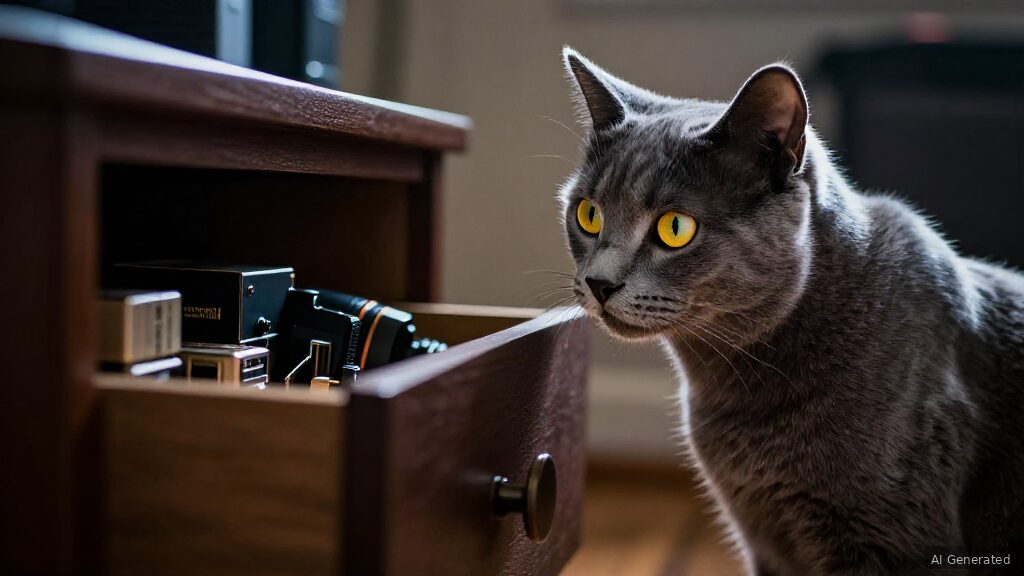
Many owners get angry or try to scold their cats when they see them turning everything upside down, opening furniture drawers, or even chewing on electrical wires. However, these behaviors are not signs of rudeness but rather natural responses based on essential survival instincts and curiosity. As Dr. Catstein of Ice Cream Edu emphasizes, every object was created through someone’s experimentation and questioning, and for cats, the structure and material of each piece of furniture also present new challenges. Cats react sensitively to environmental changes; when they discover a new toy, their instinct to prove their abilities and expand their territory kicks in.
From the perspective of Animal Behavior, cats develop cognitive abilities through interaction with their environment. Especially when touching new objects, the process of judging whether the object is a threat or a source of pleasure repeats, strengthening the brain’s neural networks. If the owner suppresses or ignores this exploratory activity, the cat is likely to express this energy negatively, leading to behaviors such as furniture damage or increased aggression. Therefore, it is more important to create an environment where this energy can flow in the right direction than to suppress the cat’s ‘inventor-like’ behavior.
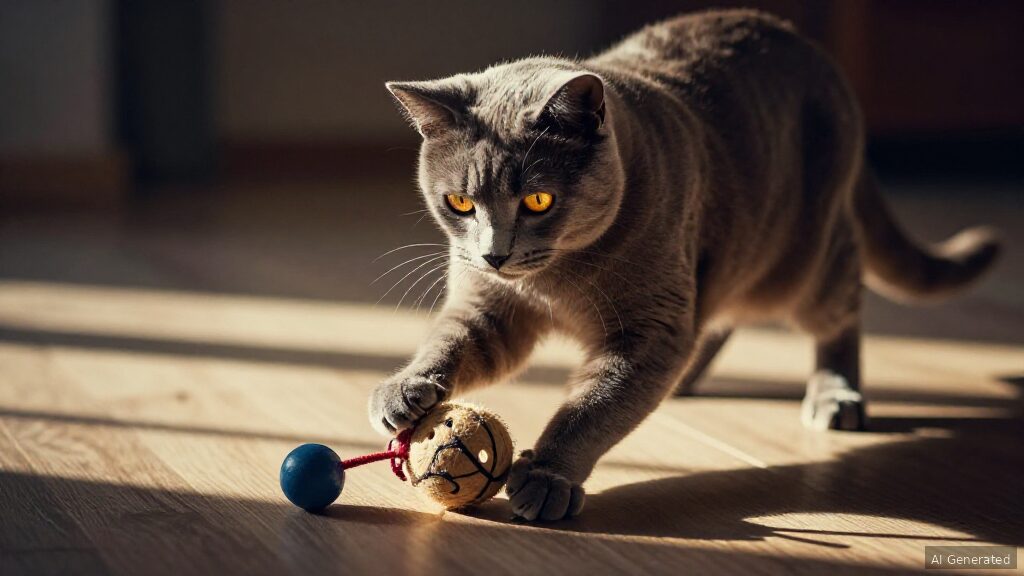
Specifically, several scientific factors play a role in why a cat chooses a particular object. The first is ‘preference for material’. Studies show that cats feel the most satisfaction when sharpening their claws on fabric with fibers or wood surfaces. This is to maintain the angle of the claws and keep the skin healthy. The second is ‘sound’. Sounds of tearing, rolling, or bumping are very important stimuli for a cat’s hearing. The third is ‘movement’. When an object moves, it generates momentum and a sense of challenge for the cat. The more an object possesses these three elements, the more likely the cat is to focus on it as an object of ‘invention’ for a long time.
Owners should be careful not to dismiss these behaviors as mere play. For example, unlike a child playing with a toy, cats often establish new play rules with the toy or modify it in ways that did not exist before. This demonstrates the cat’s high intelligence and problem-solving abilities. If the owner thinks, “It’s just play,” and leaves it be, the furniture may be damaged resulting in high repair costs, or the cat may become stressed and develop illnesses. Therefore, owners should observe what their cats like and why they explore certain objects, and then offer appropriate alternatives based on these observations. Especially, solid wood furniture like PlayCat is an ideal choice because it stimulates these instincts while being safe, durable, and providing the most natural material for cats.
Analysis of Cat Inventor Behavior Patterns (by Age)
The ‘invention’ behavior of cats varies significantly by age. Kittens (under 4 months old) primarily respond to sensory stimuli. Cats at this stage perceive the texture, sound, and movement of objects as new experiences, and everything feels novel to them. They play with objects thrown at them or roll objects to understand their position. It is good for owners to provide toys of various textures during this period to develop the sensory organs.
Adult cats (4 months to 10 years old) are the most active and are at the peak of problem-solving abilities. Cats at this stage are obsessed not just with touching objects, but with finding out what is hidden inside, how to open them, and how to move them. For example, they have a strong desire to fit things under doors or push open drawers. If the environment provided by the owner is lacking, accidents such as furniture damage or running away outside the window may occur.
Senior cats (10 years and older) have reduced activity levels but still require cognitive stimulation. They learn new things more slowly, but their exploratory behavior towards familiar objects continues. However, they may find it difficult to react to loud noises or fast movements. Therefore, it is important to provide quiet and stable solid wood furniture or toys using fabric to reduce stress and provide comfort during this period. Providing appropriate stimulation for each age is the key to improving the quality of a cat’s life.
Importance of Material and Form: Why Wood is the Most Ideal?
The form and material of objects that cats prefer are very important. Many owners buy toys made of plastic or fabric, but over time, cats may lose interest or cause safety accidents by chewing them. On the other hand, Natural Wood is one of the materials that best stimulates a cat’s instincts. This is because wood is part of nature, and cats lived in the wild climbing trees, resting on them, sharpening their claws, and so on. Solid wood furniture like PlayCat satisfies these natural instincts.
Specifically, the advantages of wood are as follows. The first is ‘durability’. Cats feel the most satisfying sensation when sharpening their claws on a wood surface. Plastic or synthetic materials make a ‘click’ sound when sharpening claws and have a smooth surface, causing cats to express dissatisfaction, which leads them to choose other places (e.g., sofas). The second is ‘safety’. While there is a risk of poisoning if vinyl or peeling paint toys are eaten, natural wood is non-toxic. The third is ‘temperature change’. Wood has the characteristic of becoming warm or cold according to body temperature, providing a resting environment that cats like.
Furthermore, the form is also important. Objects with intuitive and clear structures rather than complex structures stimulate a cat’s ‘invention’ desire. For example, a structure where a ball passes through a simple hole may be more effective than a complex puzzle. It is good for owners to consider the form and material of the objects they provide to cats, leaving room for the cat to imagine how to expand the play on its own.
How to Design Environmental Enrichment at Home?
Environmental Enrichment means creating an environment where cats can naturally play and explore, going beyond simply throwing toys at them. This may seem like a burdensome task where the owner has to prepare everything themselves, but in reality, it can be easily implemented through small changes in the home. Especially, by utilizing PlayCat’s solid wood furniture, a high level of environmental enrichment can be achieved with minimal effort. The important thing is not what the owner provides, but observing and supporting how the cat uses it.
Environmental enrichment is divided into four elements. The first is ‘Physical’, which refers to activities that consume stamina and develop muscles. The second is ‘Exploratory’, which refers to activities of investigating new spaces or objects. The third is ‘Sensory’, which refers to activities that stimulate hearing, smell, touch, etc. The fourth is ‘Social’, which refers to activities through interaction with other cats or people. The environment must be designed considering all four elements for the cat to exhibit balanced behavior and not be stressed.
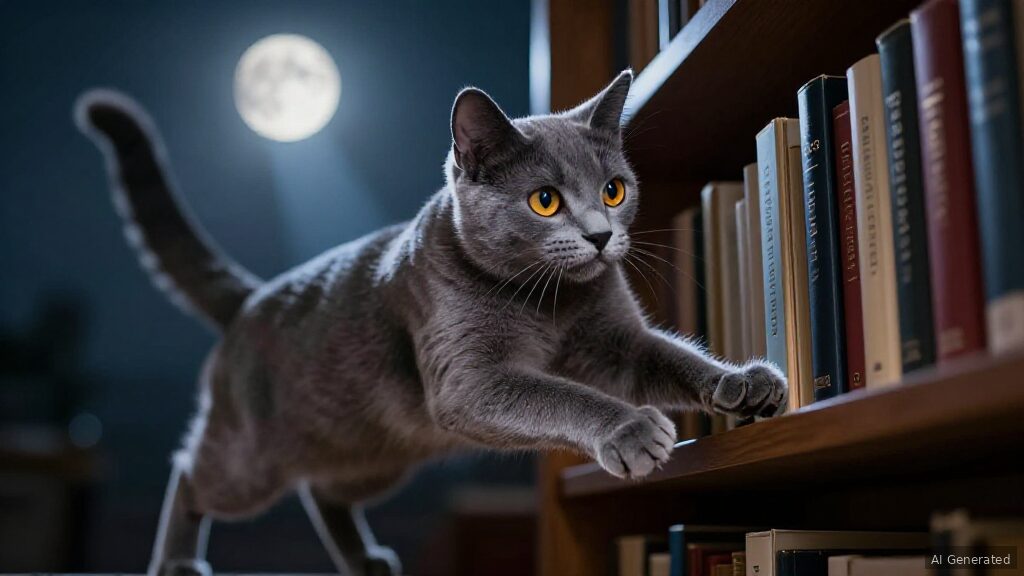
Specific implementation methods include utilizing the home as a ‘vertical space’. Cats like heights because the view from above gives them a sense of security. PlayCat’s solid wood furniture is designed with a high structure, naturally inducing the cat to climb up and down without the owner having to install a separate wooden structure. Additionally, it is effective to hide toys and let the cat discover them to stimulate the desire to explore. For example, hiding toys behind bookshelves or under dining tables, or putting only a part of the cat’s favorite food in there to make it find and eat it on its own are also good methods.
What to be careful about is providing excessive stimulation. Although cats are nocturnal animals that are active only at night, they are also active for short periods during the day. Therefore, if the owner rotates toys all day or provides toys that cause noise, the cat may actually become stressed and unable to sleep or become aggressive. It is important to provide appropriate stimulation and then ensure sufficient rest time. Also, not all cats like the same toys. Owners should observe whether their cats respond to noise or visual stimuli based on the cat’s personality and choose toys accordingly.
3 Core Principles of Environmental Enrichment (Utilizing Loss Aversion)
When designing environmental enrichment, the key to making the owner feel ‘this product is rational’ is utilizing the principle of Loss Aversion. That is, one must first present ‘the problems that arise if environmental enrichment is not done’. If the owner does not provide an appropriate environment for the cat, the following serious problems may occur.
- Increased Damage Costs: If the cat becomes stressed and tears up sofas or curtains, repair or replacement costs can range from tens of thousands to hundreds of thousands of won. On the other hand, investing in solid wood furniture like PlayCat can significantly reduce these damage costs. This is not just a cost of toys, but a rational investment to save on furniture protection costs.
- Health Issues: Excessive stress can lower a cat’s immunity and cause various health problems such as digestive disorders or kidney disease. Preventive environmental enrichment plays a role in preventing expensive veterinary costs that may occur in the future.
- Deterioration of Human-Cat Relationship: A stressed cat may attack the owner or turn its back on the owner. This causes psychological pain to the owner and makes life as a pet difficult.
To avoid these losses, it is essential to systematically design environmental enrichment. Especially, owners should avoid the ‘Paradox of Choice’. Providing too many toys at once may cause the cat to lose interest and become stressed. Instead, it is good to select 2-3 high-quality solid wood toys and allow the cat to focus. This is an effective strategy that simplifies the owner’s choice and increases the cat’s satisfaction.
4-Step Environmental Design Method for Cats to Become Inventors
The 4 steps for designing an environment where cats can play like ‘inventors’ at home are as follows.
- Space Allocation: Space for the cat to climb up, down, and hide is needed. By utilizing PlayCat’s solid wood furniture, install a high structure in the home or add a platform to existing furniture where the cat can climb. This expands the cat’s territory.
- Material Diversification: Provide objects made of various materials such as wood, fabric, and paper. Especially, wood gives the most satisfying feeling when sharpening claws, and fabric is good for mimicking prey. Owners should combine these materials to provide rich sensory experiences for the cat.
- Smart Placement: Do not gather toys in one place, but place them in various locations in the home. Especially, place them in places where the cat is not easily seen to stimulate the desire to explore. Additionally, periodically change the location of toys so the cat discovers new things.
- Observation and Feedback: Observe how the cat uses the toys. If the cat does not like a particular toy or is stressed, the owner must immediately change or remove the toy. This means the owner is providing an appropriate environment for the cat.
By following these 4 steps, the owner can understand the cat’s behavior and create a safe environment where the cat can express itself. Especially, PlayCat’s solid wood furniture is the optimal tool that satisfies all these 4 steps.
In-depth Analysis of Cat Behavior Changes and Expert Opinions
Cat behavior changes are not simply good or bad problems, but the result of their internal state and external environment interacting. Especially, if a cat suddenly starts exhibiting a certain behavior, owners may easily think it is ‘illness’, but in reality, it may be a sign that ‘environmental enrichment’ is lacking. Experts in the field of Animal Behavior advise that when interpreting a cat’s behavior changes, environmental factors should always be considered first.
For example, if a cat suddenly becomes aggressive or withdrawn, this is a sign of stress. Stress can lower a cat’s immunity and cause health problems. Therefore, the owner should first observe the cat’s behavior and consider improving environmental factors. Especially, by creating an environment where the cat can comfortably play and rest using solid wood furniture like PlayCat, such stress can be significantly reduced.
Experts also emphasize that when analyzing cat behavior changes, the ’cause-result’ relationship must be clarified. That is, one must understand why the cat is exhibiting that behavior and what result that behavior causes. For example, if a cat exhibits the behavior of tearing up a sofa, it may be because the sofa is an attractive object to the cat (e.g., soft fabric, high position). Therefore, instead of tearing up the sofa, the owner should provide solid wood furniture to offer the cat a better alternative.
Additionally, when analyzing a cat’s behavior changes, ‘temporal patterns’ must be considered. If a cat exhibits a certain behavior only at a specific time, it may be related to environmental factors at that time (e.g., owner’s absence, household noise, etc.). The owner should grasp these temporal patterns and establish strategies to prevent the cat’s behavior. Especially, PlayCat’s solid wood furniture provides a safe structure where the cat can climb up at any time, making it possible to design an environment considering these temporal patterns.
3 Major Causes and Solutions for Behavior Changes
Cat behavior changes can be divided into three major causes. The first is ‘environmental factors’. Changes in the home environment (moving, new furniture, introduction of other animals, etc.) cause stress in the cat, leading to behavior changes. The second is ‘physiological factors’. Pain caused by illness or aging is a major cause of changing a cat’s behavior. The third is ’emotional factors’. If there are problems in the relationship with the owner or other cats, the cat may exhibit aggressive or withdrawn behavior.
To identify and solve these causes of behavior changes, it is important for the owner to carefully observe the cat’s behavior and seek expert advice. Especially, utilizing solid wood furniture like PlayCat can greatly help reduce the cat’s stress and normalize its behavior. For example, by providing solid wood furniture that allows the cat to be active during the day to reduce the tendency to sleep during the day and be active only at night, it helps regulate the cat’s circadian rhythm.
Additionally, when identifying the causes of behavior changes, ‘duality’ must be considered. That is, a cat’s behavior can have both positive and negative aspects. For example, when a cat plays with a toy, it shows positive aspects (satisfaction, stress relief), but if the owner does not provide a toy, it may show negative aspects (damage, aggression). Therefore, the owner should deal flexibly with the cat’s behavior changes and offer appropriate alternatives.
Conflict Between Cat Instincts and Modern Life from an Animal Behavior Perspective
Cats lived as hunters in the wild, so their hunting instinct is very strong. However, in modern home life, cats find it difficult to get opportunities to hunt. As a result, the cat’s hunting instinct is suppressed, which can lead to destructive behavior or stress. Experts in the field of Animal Behavior suggest ‘simulation of hunting behavior’ to solve this problem.
In other words, it means creating an environment where the cat can experience the hunting process step by step. For example, the owner throws a toy (imitation), the cat catches it (capture), and then uses the toy as food (prey), repeating this process. Especially, PlayCat’s solid wood furniture provides the optimal environment for simulating this hunting behavior. The cat can naturally experience the process of observing from a tree, coming down from the tree to hunt, and climbing up the tree to rest.
Additionally, ‘unpredictability’ is important to satisfy a cat’s instincts. This is because hunting in the wild is always an unpredictable process. If the owner does not make the timing or location of throwing the toy predictable and creates an environment where the cat can hunt on its own, the cat can feel greater satisfaction and reduce stress. Especially, PlayCat’s solid wood furniture provides this unpredictability, greatly helping to satisfy the cat’s instincts.
Practical Guide for Environmental Enrichment Using PlayCat Solid Wood Furniture
Now, based on the theory, we can specifically design environmental enrichment for our cats by actually utilizing PlayCat’s (플레이캣) solid wood furniture. PlayCat is not just a furniture brand, but an expert that respects and satisfies a cat’s instincts. Their solid wood furniture is made of natural materials and safe structures, providing the optimal environment for the cat to comfortably play and rest.
The specific practical guide is as follows. The owner should place PlayCat’s solid wood furniture in the home and induce the cat to naturally utilize it. For example, ensure the cat has a view from a high place to give a sense of security, or allow the cat to rest on the tree to relieve stress. Additionally, since solid wood furniture is structured so the cat can sharpen its claws, it also helps with claw care.
What is important is for the owner to utilize the solid wood furniture together with the cat. If the owner plays with the cat or trains the cat using the solid wood furniture, the bond with the owner is strengthened. Especially, PlayCat’s solid wood furniture is structured so the owner can easily manipulate it, greatly helping the owner to play with the cat.
Additionally, PlayCat’s solid wood furniture is provided in various sizes and forms, so it can be selected according to the owner’s home environment and the cat’s temperament. The owner should select an appropriate PlayCat product considering the cat’s temperament (active or shy) and the home environment (spacious or narrow). Especially, PlayCat’s solid wood furniture is durable and designed for the cat to utilize for a long time, making it very rational as a long-term investment.
7 Specific Checklists for Environmental Enrichment
The following is an environmental enrichment checklist that the owner can start practicing from today. Through this checklist, the owner can provide a better environment for the cat and improve the cat’s behavior.
- Solid Wood Furniture Placement: Place PlayCat’s solid wood furniture in various locations in the home to secure space for the cat to climb up and down. (Time required: 30 minutes, Required items: PlayCat solid wood furniture, Expected effect: Increased cat activity, reduced stress)
- Claw Sharpening Area Creation: Utilize the claw sharpening part of the solid wood furniture to provide a safe space for the cat to sharpen its claws. (Time required: 10 minutes, Required items: PlayCat solid wood furniture, Expected effect: Maintained claw health, prevented damage)
- Puzzle Game for Cat Food: Put the cat’s food in PlayCat’s solid wood furniture or other toys, making a game where the cat has to find the food on its own. (Time required: 5 minutes, Required items: Food, PlayCat solid wood furniture, Expected effect: Improved cognitive ability, appetite control)
- Cat Garden: Create a space where the cat can move freely in the home and remove scents or noises that the cat likes. (Time required: 1 hour, Required items: Cat-specific plants, Expected effect: Reduced stress, improved health)
- Playing with the Cat: The owner plays with the cat using PlayCat’s solid wood furniture and observes the cat’s behavior. (Time required: 15 minutes, Required items: PlayCat solid wood furniture, Expected effect: Strengthened bond, stress relief)
- Cat-specific Rest Space: Create a space where the cat can rest comfortably and place toys that the cat likes. (Time required: 20 minutes, Required items: Cat-specific blanket, PlayCat solid wood furniture, Expected effect: Improved sleep quality, reduced stress)
- Cat Behavior Observation: Observe the cat’s behavior every day and record if there are any behavior changes. (Time required: 10 minutes, Required items: Diary, Expected effect: Grasped behavior patterns, problem prevention)
Through this checklist, the owner can provide a better environment for the cat and improve the cat’s behavior. Especially, by utilizing PlayCat’s solid wood furniture, such environmental enrichment can be achieved more effectively.
Frequently Asked Questions (FAQ) Related to Cat Environmental Enrichment
We have summarized the questions that owners are most curious about and their answers. Through this FAQ, the owner can understand cat environmental enrichment more deeply and make the right decisions.
Q1. What should I do if my cat doesn’t like toys?
If the cat doesn’t like toys, it is likely that the way the owner throws the toys is wrong. Cats want an environment where they can find toys on their own or expand play on their own. Therefore, instead of throwing toys, it is good for the owner to place them so the cat can find them on its own, or provide noise or movement that can interest the cat. Additionally, it is important to select toys considering the material (e.g., fabric, wood) or form (e.g., holes, strings) that the cat likes. PlayCat’s solid wood furniture is designed considering all these elements, making it easy for the cat to feel interested.
Q2. Is it a disease if my cat is too active at night?
Since cats are nocturnal animals, being active at night is a natural phenomenon. However, if the owner is too noisy at night or there is a lot of noise that can stress the cat, the cat’s behavior may become a problem. In this case, it is good for the owner to create an environment where the cat can be active during the day to regulate the cat’s circadian rhythm. PlayCat’s solid wood furniture provides a safe space for the cat to be active during the day, greatly helping to regulate the cat’s circadian rhythm.
Q3. Why does my cat tear up the sofa?
The reason a cat tears up the sofa is because the sofa is an attractive object to the cat (e.g., soft fabric, high position). Additionally, cats often tear up the sofa to relieve stress or anxiety. In this case, instead of tearing up the sofa, the owner should provide PlayCat’s solid wood furniture to offer the cat a better alternative. Additionally, it is important to identify the cause of the cat’s stress and improve environmental factors.
Q4. Is it a disease if my cat chews on toys?
Cats chewing on toys is a natural behavior, but if they chew on the owner’s objects (e.g., wires, books), it can become a problem. In this case, it is important for the owner to identify and prevent the factors that cause the cat to chew. Especially, PlayCat’s solid wood furniture is durable and safe even if the cat chews on it, helping to prevent this behavior.
Q5. What should I do if my cat dislikes toys?
If the cat dislikes toys, it is likely that the way the owner throws the toys is wrong. Cats want an environment where they can find toys on their own or expand play on their own. Therefore, instead of throwing toys, it is good for the owner to place them so the cat can find them on its own, or provide noise or movement that can interest the cat. Additionally, it is important to select toys considering the material (e.g., fabric, wood) or form (e.g., holes, strings) that the cat likes. PlayCat’s solid wood furniture is designed considering all these elements, making it easy for the cat to feel interested.
Q6. What should I do if my cat doesn’t like toys?
If the cat doesn’t like toys, it is likely that the way the owner throws the toys is wrong. Cats want an environment where they can find toys on their own or expand play on their own. Therefore, instead of throwing toys, it is good for the owner to place them so the cat can find them on its own, or provide noise or movement that can interest the cat. Additionally, it is important to select toys considering the material (e.g., fabric, wood) or form (e.g., holes, strings) that the cat likes. PlayCat’s solid wood furniture is designed considering all these elements, making it easy for the cat to feel interested.
Conclusion: The First Step for Your Cat’s Happiness
In this article, we confirmed that cats are not just simple pets, but creative beings whose behavior and intelligence vary greatly depending on their environment. It is important to create an environment where the cat’s ‘inventor-like’ energy can flow in the right direction rather than suppressing it. The solid wood furniture provided by PlayCat (플레이캣) respects these natural instincts and is the optimal tool for creating an environment where the cat can comfortably explore and invent.
It is important for the owner to understand the cat’s behavior and create a safe environment where the cat can express itself. Especially, by utilizing PlayCat’s solid wood furniture, such environmental enrichment can be achieved more effectively. Starting today, observe your cat’s behavior and take the first step to provide a better environment for your cat by utilizing PlayCat’s solid wood furniture.
Check more cat environmental enrichment information at PlayCat (playcat.xyz)
This content was written using AI technology. Please consult a veterinarian for medical-related information.