


The Most Lethal Silent Enemy: Understanding and Managing Feline Kidney Disease
For cat owners, one of the most feared diseases is ‘Chronic Kidney Disease (CKD)’. The kidneys are vital organs that filter waste from the body and regulate fluid and electrolyte balance. However, due to their unique structure and physiological characteristics, cats’ kidneys are highly susceptible to disease progression before symptoms become obvious. This is why it is often called the ‘silent killer’; clinical signs are frequently not detected until more than two-thirds of kidney function has been lost.
If early symptoms are overlooked and left untreated, kidney tissue can become irreversibly fibrotic and lose function. This can lead not only to urinary issues but also to severe vomiting, loss of appetite, anemia, high blood pressure, and ultimately, life-threatening uremia. This is why veterinary teams at clinics like Incheon Seo-gu Animal Hospital are dedicated to accurately diagnosing the complexity of these diseases and establishing customized treatment plans at each stage. The core goal for kidney disease is not necessarily a cure, but rather delaying progression and maintaining quality of life. Achieving this requires sharp observation by the owner and regular veterinary checkups.
Mechanisms and Risk Factors Leading to Kidney Function Decline
The causes of feline kidney disease are highly diverse, and multiple factors often act in combination rather than a single cause. First, there are congenital factors; certain breeds such as Persians, Ragdolls, and Maine Coons have a higher genetic probability of developing kidney cysts or congenital kidney malformations. These genetic predispositions can act as vulnerabilities in kidney tissue as the cat ages, potentially accelerating the onset of the disease.
Among acquired factors, acute poisoning is the most representative. Cats are extremely sensitive to specific plants (such as lilies), anti-parasitic drugs, antifreeze, and human painkillers (such as acetaminophen). Even the ingestion of a small amount of toxic substance can cause acute renal failure, which can be fatal within days if not treated immediately. Additionally, chronic kidney damage can progress if pyelonephritis or cystitis caused by bacterial infections is left untreated for a long period, allowing the infection to spread into the kidneys.
Aging is the most unavoidable major risk factor. As cats age, natural degeneration of kidney tissue occurs. Imbalanced diet, insufficient water intake, and oral health issues (periodontal disease) can accelerate the decline of kidney function. In particular, when oral bacteria travel through the bloodstream to the kidneys and cause inflammation, it directly impacts the decline of kidney function in senior cats. Furthermore, high blood pressure damages the microvasculature of the kidneys, creating a vicious cycle that impairs glomerular (filter) function. These various risk factors work in combination to gradually paralyze the kidney’s filtration mechanism.
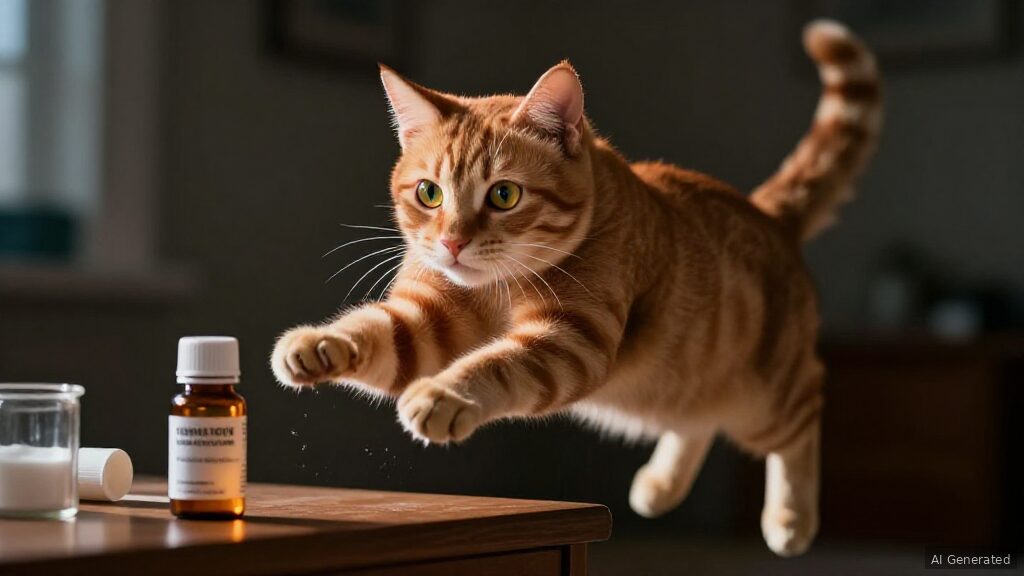
Step-by-Step Symptom Guide for Early Detection
Symptoms of kidney disease change distinctly depending on the stage of progression. While early stages are difficult for owners to notice, symptoms become clearer as the disease advances, making keen observation by the owner crucial. The table below summarizes the main symptoms according to the stage of disease progression.
| Stage | Kidney Function Status | Main Symptoms and Signs | Points for Owners to Watch |
|---|---|---|---|
| Early Stage (Stages 1-2) | Mild function decline (33~66% damage) |
– Polyuria (increased urine volume) – Polydipsia (drinking excessive water) – Mild loss of appetite – No weight loss |
Observe if the water bowl is emptied more frequently or if visits to the litter box increase. This stage can only be detected through blood tests. |
| Middle Stage (Stage 3) | Moderate function decline (66~75% damage) |
– Severe loss of appetite – Vomiting and diarrhea – Rapid weight loss – Signs of dehydration – Bad breath (uremic odor) |
Cats frequently refuse food or vomit after eating. The coat becomes rough, and activity levels decrease significantly. |
| Severe (Stage 4) | End-stage renal failure (Severe damage) |
– Extreme vomiting – Lethargy and coma – Pale gums due to anemia – Seizures or paralysis – Uremia |
This is a life-threatening condition. Immediate emergency treatment is required, along with intensive management such as dietary control and fluid therapy. |
Especially in the early stages, ‘polyuria’ and ‘polydipsia’ are the first signals to appear. Cats naturally have low water intake, but when kidney function declines, they cannot produce concentrated urine, leading to excessive loss of body fluids. Consequently, they drink more water, but if the amount exceeds what the kidneys can handle, dehydration and metabolic acidosis eventually occur. Owners should check if their cat is emptying the water bowl more often than usual or if the frequency of litter box visits has increased sharply. Additionally, worsening bad breath or drooling around the mouth can be early signs of uremia, requiring immediate veterinary consultation.
Veterinary Clinic Examination Process and Cost Range for Accurate Diagnosis
To accurately diagnose feline kidney disease, professional veterinary examinations beyond simple symptom observation are essential. Veterinary clinics typically combine blood tests, urine tests, and imaging tests to make a comprehensive judgment. First, in the basic blood biochemistry test, levels of ‘Creatinine’ and ‘Blood Urea Nitrogen (BUN)’ are checked. If these values exceed the normal range, it indicates a decline in kidney filtration function. Recently, the ‘SDMA (Early Kidney Damage Marker)’ test has been introduced, which can detect abnormal signals even when creatinine levels are normal if about 40% of kidney function is damaged, greatly aiding early diagnosis.
Urine tests play a crucial role in identifying the cause and progression of kidney disease. ‘Urine Specific Gravity (USG)’ is measured to check how well the kidneys can concentrate urine. Normal cats have high concentration ability, but with kidney disease, the urine comes out dilute. Additionally, the presence of protein in the urine (proteinuria) is checked to evaluate the extent of kidney damage, and microscopic examination is performed to check for urinary tract infections or stones. If protein is detected, it is a strong signal that kidney damage is progressing.
Imaging tests include abdominal ultrasound and blood pressure measurement. Ultrasound allows direct observation of the kidney’s size, shape, and internal structure (cysts, stones, tumors, etc.). A characteristic of progressing chronic kidney disease is that the kidneys shrink and the surface becomes rough. Furthermore, since high blood pressure can be both a cause and a result of kidney disease, blood pressure measurement is essential. Examination costs vary depending on the clinic size and items tested, but basic blood and urine tests range from 50,000 to 100,000 KRW. If ultrasound or blood pressure measurement is added, costs can range from 150,000 to 200,000 KRW. This is the most efficient investment for early detection and reducing long-term treatment costs.
Treatment Option Comparison: Pros and Cons of Medication, Diet, and Fluid Therapy
Treatment for kidney disease must be customized according to the stage of the disease and the cat’s overall health status. Currently, there is no treatment to fully restore kidney function; the goal is to protect remaining kidney function and alleviate symptoms to improve quality of life. Major treatment options include medication, dietary therapy, and fluid therapy, each with its own pros and cons.
| Treatment Option | Main Content | Pros | Cons and Considerations |
|---|---|---|---|
| Dietary Therapy | – Low-protein, low-phosphorus food – Encouraging high water intake – Supplementation of essential fatty acids |
– Minimizes kidney burden – Alleviates uremia symptoms – Improves long-term survival rate |
– Cats may reject it due to low palatability – Sudden diet changes can cause diarrhea – Requires continuous diet management |
| Medication | – Phosphate binders – Antihypertensives – Anti-emetics – Anemia treatments |
– Immediate relief of specific symptoms (vomiting, high blood pressure, etc.) – Prevents complications – Relatively easy administration |
– Possibility of side effects with long-term use – Stress during medication administration –>Continuous cost |
| Fluid Therapy | – Intravenous or subcutaneous fluids – Correction of dehydration and waste removal |
– Rapid improvement of acute symptoms – Restores electrolyte balance – Kidney cleansing effect |
– Requires hospitalization (IV) or owner training (subcutaneous) – Stress from invasive procedures – High cost and time consumption |
Dietary therapy is the most fundamental and core aspect of kidney disease management. Limiting protein and phosphorus intake can reduce the burden on the kidney’s filtration system. However, since cats are carnivores, they may strongly reject protein-restricted food, so a strategy combining palatable therapeutic foods or wet food is necessary. Medication is essential for managing symptoms like high blood pressure, vomiting, or anemia that cannot be resolved by diet alone. In particular, phosphate binders are administered with meals to block phosphorus absorption in the intestines. Fluid therapy is most effective when dehydration is severe or uremia is progressing rapidly, but it has the disadvantage of placing a heavy burden of time and cost on the owner. Therefore, it is important to select the most suitable treatment combination for the cat’s condition through close communication between the owner and the veterinarian.
Age-Specific Management Differences: Customized Care from Kittens to Seniors
Management strategies and precautions for kidney disease vary significantly depending on the cat’s age. Specialized approaches are needed for each age group.
Kittens (Under 1 year): Cats at this age may have congenital kidney malformations or diseases. Since kittens’ kidney tissue is not fully developed, they are very vulnerable to dehydration. It is important to consistently monitor water intake and visit the hospital immediately if vomiting or diarrhea persists to check for dehydration. Balancing the supply of nutrients needed for growth with kidney protection is crucial; imposing overly restrictive diets can hinder growth, so veterinary guidance is essential.
Adult Cats (1~7 years): This is the period when kidney disease can slowly begin. Especially after neutering, obesity or reduced activity can lead to metabolic diseases, which can indirectly burden the kidneys. During this time, it is important to check SDMA and creatinine levels through annual regular checkups. Stress management is also important; conflicts in multi-cat households or environmental changes can lower kidney function, so a stable environment must be maintained.
Seniors (7 years and older): This is the period when kidney function naturally declines. Regular checkups every 6 months are recommended, combining blood tests with blood pressure measurement and urine tests. Dietary control is most urgent at this stage; gradually transition to therapeutic food or increase the proportion of wet food to boost water intake. Additionally, periodontal disease management is very important, as gum inflammation can transmit bacteria to the kidneys, so regular oral exams and scaling are necessary. For senior cats, maintaining body temperature and resting on soft flooring are important, so careful attention must be paid to environmental adjustments.
Home Space Management for Recovery and Utilizing PlayCat
Cats suffering from kidney disease are very sensitive to environmental changes and stress. In particular, creating a home environment where the cat feels comfortable is essential to promote water intake and facilitate defecation. A pleasant and stable space helps maintain the cat’s immunity and positively affects disease recovery.
First, strategically place water bowls. While cats instinctively prefer to keep food and water far apart, cats with kidney disease need to maximize water intake, so placing small water bowls in various locations to improve accessibility is necessary. Especially, placing them in flat, open spaces is better than high places or narrow corners. Additionally, the number and location of litter boxes are important. In multi-cat households, prepare one more litter box than the number of cats, and since cats with kidney disease produce more urine, cleanliness must be maintained more frequently.
PlayCat Solid Wood Furniture can be an ideal solution for creating such an environment. PlayCat products use natural solid wood, containing no harmful substances, and are safe even if the cat scratches or bites them. In particular, the natural warmth of the wood helps senior cats maintain body temperature, preventing cats with weak kidney function from catching colds or hypothermia on cold tile floors. PlayCat’s storage cat houses or high platform structures provide spaces where cats can rest comfortably, and the natural breathability of wood regulates humidity to maintain a pleasant environment. Furthermore, the soft touch of wood reduces cat stress, and the design blends well with the home, contributing to the owner’s psychological stability as well.
In a recovery environment, noise and light are also important factors. Cats with kidney disease can be sensitive to noise, so select a quiet area for furniture placement. The solid structure of PlayCat solid wood furniture absorbs noise, creating a quiet resting space. Such meticulous environmental management plays an important role in improving the cat’s quality of life and slowing the progression of kidney disease.
Prevention and Regular Checkup Checklist: Essential Items for a Healthy Old Age
While completely preventing kidney disease is difficult, regular checkups and proper lifestyle habits can delay the onset or alleviate symptoms. Here is a prevention checklist for owners to practice in daily life.
- Regular Blood and Urine Tests: For cats over 7 years old, test kidney-related values (Creatinine, SDMA, BUN) and urine specific gravity every 6 months; for younger cats, do so annually.
- Monitor Water Intake: Record water intake and immediately detect changes where the cat drinks significantly more or less than usual.
- Record Weight Changes: Weigh your cat weekly and visit the hospital immediately if weight decreases without a known reason.
- Oral Health Management: Since periodontal disease can negatively affect the kidneys, perform dental care using toothpaste and a toothbrush or undergo regular scaling.
- Diet Management: Reduce the intake of high-protein, high-phosphorus food and increase the proportion of wet food with high moisture content.
- Block Toxic Substances: Keep substances harmful to cats, such as lilies, antifreeze, and human medications, out of reach.
- Stress Management: Minimize new environmental changes or conflicts in multi-cat households to reduce mental stress.
If you make this checklist a habit, you will be able to catch early signs of kidney disease and respond in a timely manner. Prevention is the most powerful treatment, and the owner’s attention and effort are the greatest gifts to their cat.
Frequently Asked Questions (FAQ)
Q1. If a cat drinks a lot of water, is it definitely kidney disease?
Not necessarily. The symptom of drinking excessive water is called polydipsia and can appear in various diseases other than kidney disease, such as diabetes, hyperthyroidism, and pyometra. Additionally, water intake may temporarily increase due to hot weather or the type of food (mainly dry food). However, if there is a sudden change different from the usual, the cause must be identified through a veterinarian’s examination.
Q2. Can a cat with kidney disease be cured?
Currently, there is no medical method to completely repair damaged kidney tissue and restore it to normal function. Kidney disease is mostly chronic, and the goal of treatment is to preserve remaining kidney function as much as possible and alleviate symptoms to improve quality of life. With early detection and consistent management, lifespan can be extended, and the cat can live healthily.
Q3. What food is good for a cat with kidney disease?
Generally, ‘renal therapeutic food’ with low protein and phosphorus content and rich in essential fatty acids is recommended. However, since palatability varies from cat to cat, rather than forcing it, it is better to mix it slowly or provide it in the form of wet food. It is important to consult with a veterinarian to choose the optimal food suitable for the cat’s condition.
Q4. Can I administer subcutaneous fluids at home?
Yes, it is possible. Many owners administer subcutaneous fluids at home after receiving training from a veterinarian. This has the great advantage of reducing the number of hospital visits and lowering the cat’s stress. However, since you must accurately learn aseptic techniques, appropriate injection sites, and fluid volumes, you must receive training under the guidance of a veterinarian.
Q5. What is the average lifespan of a cat with kidney disease?
It varies greatly depending on the timing of detection, the stage of progression, and the quality of management. In cases where it is detected early and the cat consistently receives appropriate dietary therapy and medication, there are many instances where they live a lifespan comparable to normal cats. Conversely, if neglected until the end stage, the survival period can be very short. Therefore, early detection and consistent management by the owner are the most important variables determining lifespan.
This content was created using AI technology. Always consult a veterinarian regarding medical information.