


Your Cat’s Health and Happiness Are Determined by Their Environment
For many cat guardians, the first concern when raising a cat is the question: “Is my little one truly happy inside?” Especially for indoor cats living in urban environments, limited space and a simplistic environment can lead to unexpected stress and behavioral problems. Recent studies suggest that the diversity and complexity of the environment provided to cats have a direct impact on their mental and physical health beyond mere play. In particular, academic research analyzing the differences in gut microbiota between stray cats and indoor cats suggests that the environment can even alter a cat’s physiological state. Compared to urban stray cats, indoor cats tend to show lower gut microbiota diversity, indirectly demonstrating the impact of limited diet and lack of environmental stimulation on the immune system and digestive function.
This article goes beyond simple toy recommendations to deeply explore the core principles of ‘Behavioral Enrichment’, which satisfies a cat’s instincts, relieves stress, and helps maintain a healthy gut environment. Behavioral enrichment refers to creating an environment that allows cats to express natural behaviors such as hunting, exploring, resting, and hiding indoors. Through this guide, guardians can establish customized environmental improvement strategies tailored to their cat’s age and personality, and transform their home into an optimized ecosystem for cats using practical solutions with natural materials like PlayCat’s solid wood furniture.
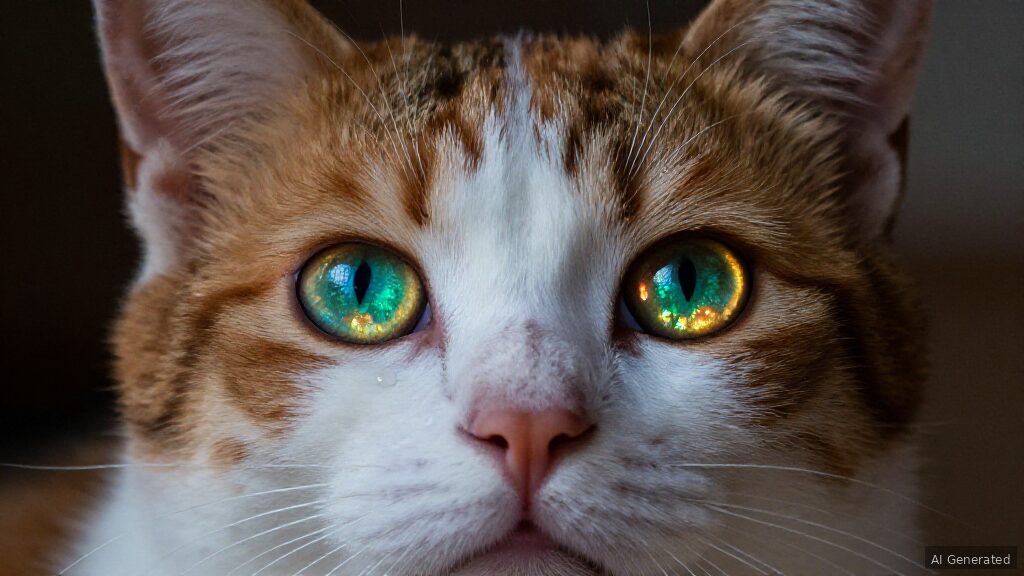
Why Do Indoor Cats Need Environmental Changes?
The biggest problem indoor cats face is the combined effect of ‘boredom’ and ‘stress’. In nature, cats spend most of their day tracking prey, patrolling territory, and searching for hiding spots. However, in a narrow apartment environment, these instinctive behaviors are inevitably suppressed. This suppressed energy can manifest as excessive grooming, increased nighttime activity, abnormal elimination habits, and even aggression.
The Psychological Impact of Limited Space
A small space means more than just a reduction in movable area; it deprives the cat of their ‘sense of control’. Cats feel secure when they can fully grasp and control their territory. However, unpredictable environmental changes or a lack of stimulation create anxiety. Especially in multi-cat households, conflicts arising from overlapping territories can become a chronic stress factor that reduces the diversity of the cat’s gut microbiota.
The Link Between Gut Microbiota and Environment
Recent academic studies show how the environment affects a cat’s gut microbiota. According to research results, cats that experience diverse environments and diets tend to have higher gut microbiota diversity (Alpha Diversity). Conversely, cats living in limited indoor-only environments have lower microbial diversity, which can lead to reduced digestive function or weakened immunity. This means that environmental improvement is an essential element for protecting a cat’s physiological health, going beyond simple behavioral correction.
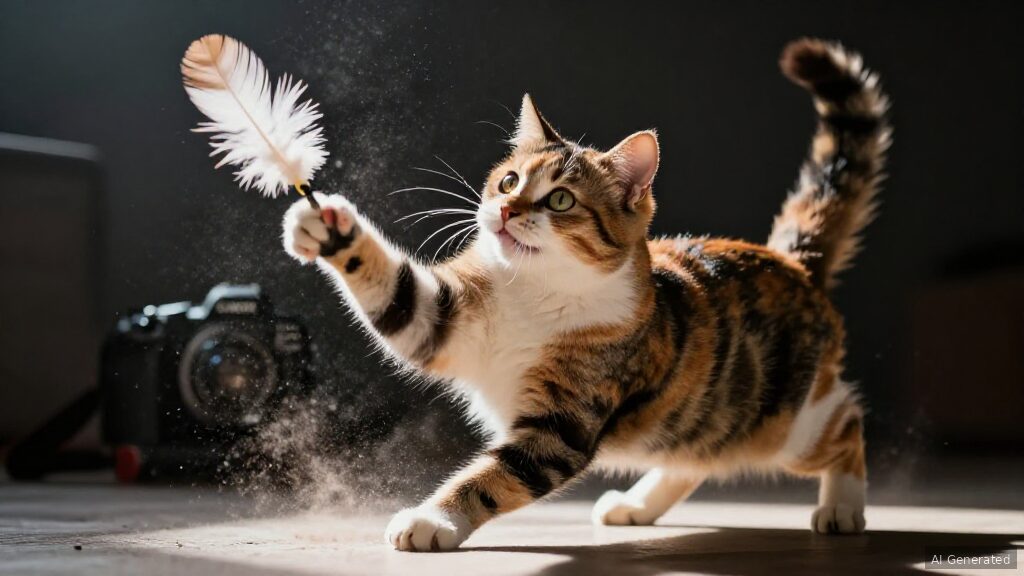
How to Utilize Vertical Space to Awaken Your Cat’s Instincts
Cats are naturally animals that prefer trees and high terrain. Climbing to a high place allows them to survey their surroundings for safety and escape from stressors. If indoor space is limited horizontally, the key is to maximize the use of vertical space to expand your cat’s activity range.
The Importance of Designing Vertical Movement Routes
Create an ‘aerial walkway’ by utilizing wall-mounted shelves, door-frame pathways, or connecting high furniture so your cat can move freely between the floor and ceiling. The most important thing at this point is to maintain continuity so that the movement path is not interrupted. If a cat has to jump down from a high place without a platform to step on in between, that height can become a hazard.
Natural Utilization of PlayCat Solid Wood Furniture
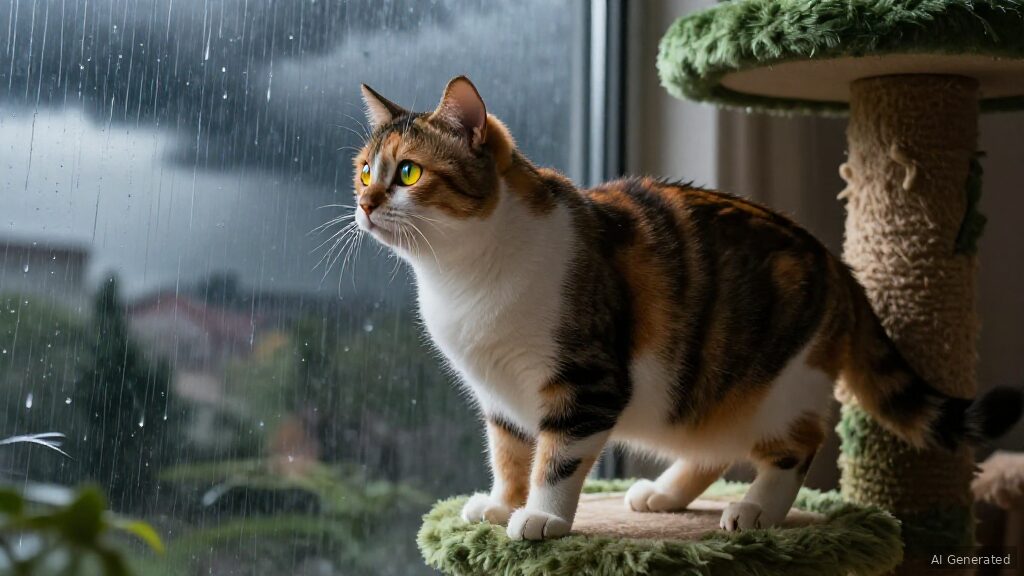
Artificial particleboard or plastic furniture can feel cold to cats and may be difficult to move on due to slipping. In contrast, PlayCat’s solid wood furniture provides the warm texture of natural wood and appropriate friction, allowing cats to climb and move comfortably. Solid wood also has a humidity-regulating effect, providing the optimal environment as a resting space for cats. Placing solid wood furniture with high shelf structures near a window or in a corner of the living room allows cats to satisfy their instinct to bask in the sunlight while keeping watch over their surroundings.
| Vertical Space Utilization Elements | Key Functions | Environmental Improvement Effects |
|---|---|---|
| Wall Shelves | Expanding movement routes, providing high-level resting spots | Resolving lack of horizontal space, reducing stress |
| Tall Wooden Furniture | Acting as a safe lookout, contact with natural materials | Satisfying instinctive prey monitoring, facilitating body temperature regulation |
| Window Perch | Observing outdoor stimuli (Bird watching) | Relieving boredom, visual enrichment |
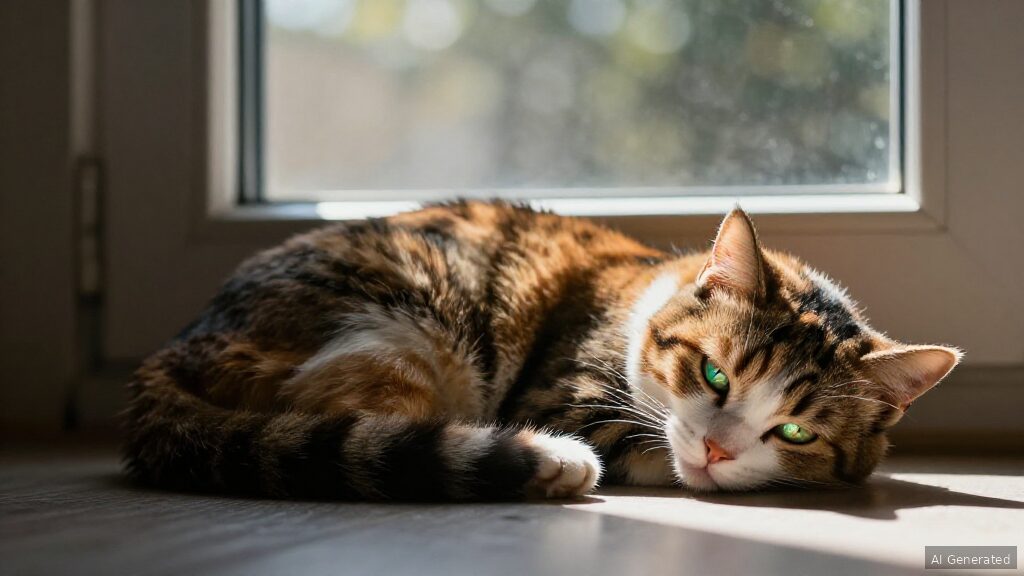
Interactive Play Strategies to Satisfy Hunting Instincts
A cat’s strongest instinct is hunting. If this instinct is not satisfied indoors, the cat may feel anxiety about not finding food or accumulate excessive energy. Beyond simply throwing toys, play that mimics the entire hunting process (Search – Stalk – Capture – Consume) is necessary.
Play Methods Mimicking the Rhythm of the Hunt
In nature, cats spend a long time looking for prey, suddenly ambush, and rest after the hunt. Guardians should apply this rhythm to play. Instead of shaking toys randomly, make them appear slightly from behind (like vegetation) and then suddenly disappear. When the cat focuses and tracks, suddenly change the speed and direction to increase the tension of the hunt.
Play Approaches by Age
Kittens are curious and full of energy, so it is good to repeat frequent play sessions for short periods. Adult cats need to perfect their hunting skills, so include ‘hide-and-seek’ games where toys are hidden and found. For senior cats, joint health must be considered, so low-intensity interactive toys that allow them to hunt by moving their paws without getting up from the floor are suitable. PlayCat’s solid wood furniture naturally blends with these play spaces, serving simultaneously as a place to hide toys and a hiding spot for cats to rest.
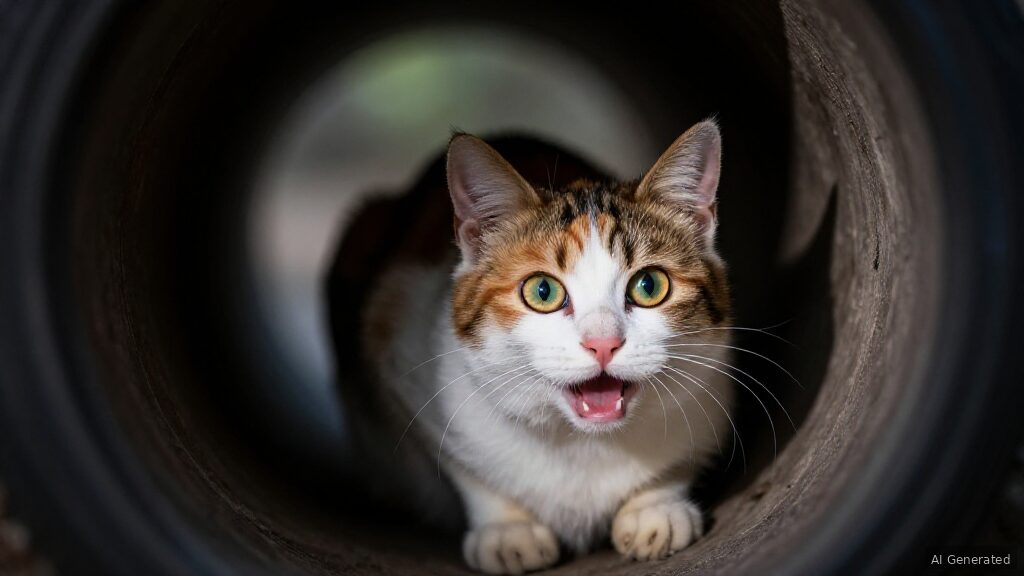
The Psychological Stability Effect of Hiding Spots and Resting Areas
Cats have survived in a survival-of-the-fittest environment where they are both hunters and potential prey. Therefore, a safe ‘hiding spot’ is an essential psychological safe zone for cats. Providing spaces to hide in every corner of the house plays a decisive role in helping cats relieve stress and rest.
Location and Structure of Hiding Spots
Hiding spots should be located in well-ventilated areas with a clear view, but with one side blocked so there is no fear of being attacked from behind. Additionally, since individual cats have different preferences, it is best to place multiple hiding spots at various heights. You should create a variety of options, from box-shaped resting spots placed directly on the floor to open shelters on top of high furniture.
The Stability of Solid Wood Materials
PlayCat’s solid wood furniture has a lower thermal conductivity than synthetic resins or plastics, so it is not cold even in winter and maintains a comfortable temperature in summer. Furthermore, the natural grain of the wood provides a natural grooming effect when felt by the cat’s paws, and its good friction prevents slipping. These physical characteristics further enhance the psychological stability that cats feel when considering a space as a resting area.
Space Separation to Resolve Conflicts in Multi-Cat Households
The biggest problem in households raising multiple cats is territorial disputes and stress. Not all cats can share the same space, and subtle conflicts can arise, especially between males and females or cats with different personalities.
Principles of Securing Individual Territories
In multi-cat households, each cat must have an independent ‘feeding area’, ‘litter box area’, and ‘resting area’. The rule for litter boxes is the number of cats plus one, and each box should be placed in a different location so that one cat does not have to wait for or be disturbed by another. Additionally, it is important to place food bowls separately so they are out of each other’s line of sight.
Alleviating Conflict with Vertical Space
If horizontal space is limited, utilize vertical space so each cat can secure their own territory. For example, designate the top of high shelves or furniture as a dedicated resting spot for a specific cat and separate the movement routes connecting to the floor; this significantly reduces conflict. PlayCat’s various solid wood furniture models come in different heights and structures, making them the optimal solution for creating dedicated spaces tailored to each cat’s personality.
The Impact of Odor and Cleanliness Management on Behavior
Cats have a very sensitive sense of smell. The smell in the house is an important clue for cats to perceive their environment, and unpleasant odors can cause stress and elimination problems. In particular, research related to gut microbiota also emphasizes that environmental cleanliness and dietary factors affect microbial diversity.
The Importance of Litter Box Management
The litter box is the most sensitive space for cats. A litter box that smells or is unhygienic can cause cats to avoid using it, which can lead to accidents. It is essential to scoop waste daily, replace the litter regularly, and clean the box itself.
Hygiene Management of Solid Wood Furniture
PlayCat’s solid wood furniture has a smooth surface with few cracks, making it difficult for dust or bacteria to accumulate. Additionally, wood absorbs and releases moisture, regulating the humidity in the house, which inhibits mold growth and helps the cat’s respiratory health. Simply wiping the solid wood furniture with a cloth regularly can increase the cleanliness of the home and maintain a healthy environment for your cat.
Common Mistakes and Correct Solutions
There are common mistakes that guardians make when attempting behavioral enrichment. These mistakes can actually increase a cat’s stress, so caution is needed.
Mistake 1: Piling up toys indiscriminately
Many guardians buy various toys and pile them up in one place, but to a cat, this can be perceived not as ‘available resources’ but as ‘obstacles’. Toys should be used on a rotation basis to maintain interest. It is good to take out a different toy every day and put unused toys in a box to use again after a week.
Mistake 2: Ignoring vertical space and focusing only on the floor
Even if you lay many carpets or toys on the floor, you cannot satisfy the cat’s instinct to prefer high places. If you do not secure vertical space by utilizing walls or the tops of furniture, the cat will still feel trapped in a limited environment.
Mistake 3: Thinking of solid wood furniture only as ‘interior design’
Placing solid wood furniture simply to match the home’s atmosphere is a mistake. It must be arranged to function as an ‘activity space’ where the cat can actually climb, rest, and play hunting games. Place it in a location easy for the cat to access and consider the furniture’s structure so it does not obstruct the cat’s movement routes.
Behavioral Enrichment Checklist to Start Today
From now on, here are 7 actions you can start today to transform your home into a space optimized for your cat.
- Check Vertical Space: Check high places in the house (top of wardrobes, bookshelves, etc.) and place furniture or shelves so your cat can climb up safely.
- Create Hiding Spots: Place boxes, blankets, or small furniture in every corner of the house where your cat can hide to secure safe resting spots.
- Start Toy Rotation: Reduce the number of toys currently in use by half and hide the rest in a box. Take out different toys tomorrow for playtime.
- Improve the Window Area: Install a perch (pillow or solid wood shelf) where your cat can sit by the window to provide opportunities to watch outdoor animals.
- Reposition the Litter Box: If the litter box is in a thoroughfare for multiple cats or in a too-exposed location, move it to a quieter and more private spot.
- Utilize PlayCat Solid Wood Furniture: Use solid wood furniture as a connector in your cat’s movement routes to encourage them to climb and move naturally.
- Secure Daily Play Time: Provide interactive play that stimulates your cat’s hunting instincts for at least 15 minutes every day. During this time, make the toy appear and disappear.
Frequently Asked Questions (FAQ)
Q1. Is environmental improvement necessary as cats get older?
Yes, senior cats actually require even more meticulous environmental improvement. As they age, joint health weakens, making it difficult to move to high places, so low-step stairs or solid wood furniture with gentle slopes are needed. Additionally, since senior cats become more sensitive to hearing and smell, a quiet resting spot that minimizes noise and odors is essential. Since their adaptability to environmental changes decreases, it is better to improve the environment slowly rather than making sudden changes.
Q2. Is behavioral enrichment possible in a small apartment?
Of course. The size of the space is not the most important factor. What matters is the utilization of ‘vertical space’ and ‘diversity of stimuli’. By creating shelves utilizing walls, resting spots behind doors, and movement routes connecting high furniture, you can sufficiently expand the area where your cat can be active even in a small apartment. PlayCat’s compact solid wood furniture can be used efficiently even in narrow spaces.
Q3. Why is solid wood furniture better than plastic for cats?
As a natural material, solid wood is warm and not slippery, allowing cats to climb and move comfortably. Additionally, the grain of the wood stimulates the cat’s paw pads, providing sensory richness, and its humidity-regulating effect keeps the indoor environment pleasant. On the other hand, plastic is cold and slippery, and can generate static electricity, which cats often dislike.
Q4. Will cats dislike it if there are too many toys?
Yes, if there are too many toys, cats may lose interest or feel confused. Cats love ‘novelty’ and ‘unpredictability’, so it is more effective to select only a few and rotate them rather than providing all toys at once. The secret to increasing a cat’s concentration is to remove unnecessary toys and keep only the necessary ones.
Q5. What should be invested in first for behavioral enrichment?
The first things to invest in are ‘time’ and ‘observation’. It is important to create a customized environment by observing where the cat likes or dislikes, whether they like playing or hiding, etc. Next, it is good to build a physical environment that can satisfy cat instincts, such as solid wood furniture or vertical space structures. Understanding your cat’s personality is more important than blindly buying expensive toys.
Q6. When do behavioral changes in cats appear after environmental improvement?
Since it takes time for cats to adapt to environmental changes, it is difficult to expect immediate results. Usually, if you consistently improve the environment and provide play for about 2 weeks to 1 month, the cat will start exploring the new space and feeling comfortable. Initially, they may show wariness, but over time, you can see positive changes such as a decrease in stress levels and an increase in activity.
Conclusion: An Environment for a Happy Journey with Your Cat
A happy journey with your cat begins not just with love and care, but with creating an environment that understands and respects their instincts. The richness of the environment provided to indoor cats has a broad impact, from their gut microbiota diversity to their mental health and behavioral habits. Utilizing vertical space, playing to satisfy hunting instincts, securing safe hiding spots, and designing spaces using natural solid wood furniture are the most certain ways to gift your cat a better quality of life.
PlayCat’s solid wood furniture is a core element of this environmental improvement, combining the warmth of nature with functionality to provide the optimal space for cats to freely explore and rest in their home. Starting with small changes today, create the safest and happiest indoor ecosystem for your cat. When the environment changes, your cat’s heart and health will change with it.
This content was created using AI technology. Always consult a veterinarian regarding medical information.