


Cat Social Instincts and the Meaning of Social Enrichment
Many people often misunderstand cats as ‘solitary animals.’ However, from an ethological perspective, cats are ‘solitary hunters with social potential’ that flexibly display social behavior depending on the situation. From their wild ancestors, the African wildcat, to modern domestic cats, they have evolved strategies to increase survival rates by sharing resources and responding to threats through group living. This is particularly because, in harsh environments like deserts or grasslands, individuals living in groups had an advantage over isolated individuals in terms of hunting success rates and predator defense.
This instinct applies directly to our indoor cats as well. ‘Social Enrichment’ refers to the process of creating an environment that allows cats to engage in natural social interactions and helping them form positive relationships with humans or other cats. Beyond simply raising multiple cats, the core lies in creating a social space where they can coexist comfortably, preventing conflicts and deepening bonds. This is an essential concept for multi-cat households or guardians planning to adopt a new cat, as it directly impacts the mental health and prevention of behavioral issues in cats.
When social enrichment is lacking, cats experience chronic stress. This manifests as various behavioral problems such as litter box accidents, over-grooming, loss of appetite, and aggression. Conversely, in households where appropriate social enrichment is implemented, cats perceive each other’s presence not as a threat but as a source of comfort, showing higher trust and affection in their relationship with guardians. Space planning utilizing solid wood furniture, including PlayCat, plays a significant role in securing vertical movement routes for cats and creating an environment where they can communicate when needed while respecting each other’s territories.
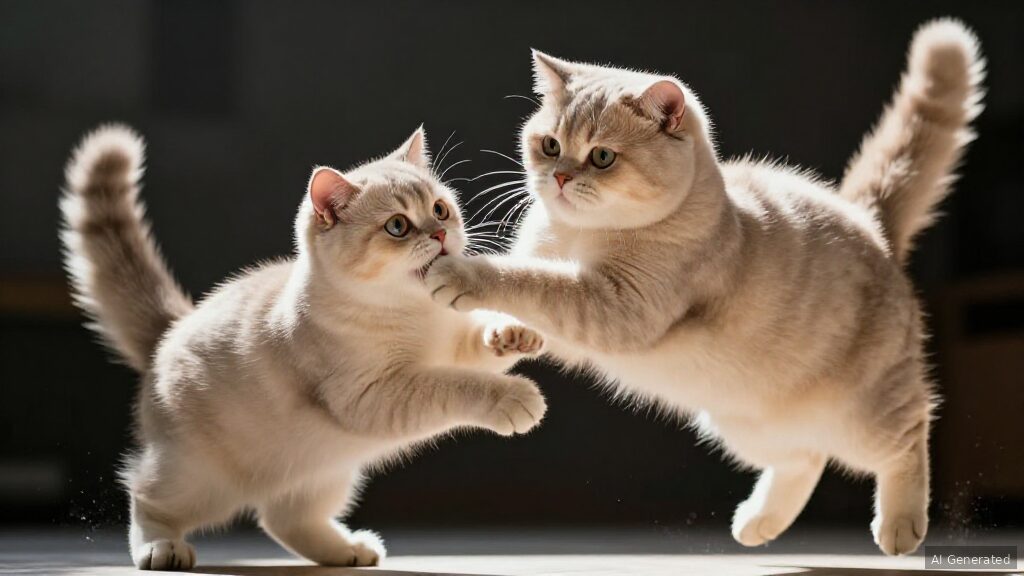
Cat-to-Cat Communication Methods: The Meaning of Scent, Body Language, and Vocalization
Social Information Shared Through Scent: Pheromones and Body Odor
In the world of cats, ‘scent’ is a far more important means of communication than sight or hearing. Cats use secretion glands located in specific parts of their bodies, such as their face, paw pads, and the base of their tail, to leave their scent on objects; this is called Marking. In particular, the behavior of rubbing their cheeks is a sign of ‘this is mine’ and simultaneously an expression of intimacy meaning ‘I am a member of this space.’ In multi-cat households, when cats rub against each other to mix scents, it is an important ritual to share a ‘Family Scent’ and strengthen group cohesion.
When a new cat enters, the first thing the existing cat does is sniff. If they realize their body scents do not mix, they become wary. Therefore, in the early stages of integration, a ‘Swap’ strategy is essential, where towels or blankets are rubbed against each other to exchange scents. This is the safest way to recognize and get used to each other’s presence without direct contact.
Reading Emotional States Through Body Language
Cat body language is very sophisticated, and emotional fluctuations can be read through subtle changes. The direction of the ears is the first clue to understanding a cat’s intention. Ears perked up forward indicate interest and curiosity, while ‘airplane ears’ bent to the side or back signify anxiety or an aggressive state of alert. Tail movement is also an important signal. A tail swaying slowly with the tip slightly curved indicates satisfaction and comfort, while a tail flicking quickly and forcefully shows irritation or a state of readiness to attack.
When two cats meet, if one turns its back and lies down with its legs stretched out, it is a strong signal that it trusts the other and has lowered its defenses. Conversely, the ‘Crusade Pose,’ where a cat puffs up its back, stands sideways, and stares at the opponent, is a defensive aggressive posture in a threatening situation. Guardians must observe these subtle body movements to intervene before conflicts escalate.
Vocalization and Its Meaning
Adult cats rarely use the ‘meow’ sound with each other. This is because ‘meowing’ is a sound evolved primarily for humans. In cat-to-cat communication, ‘hissing,’ ‘growling,’ and ‘chuffing’ are more common. Hissing is a clear warning of ‘do not enter my territory,’ while growling is a more serious threat signal. On the other hand, nose boops or light licking sounds are friendly greetings or expressions of intimacy.
Specifically, ‘chirping’ or ‘purring’ can be interpreted differently depending on the situation. While they indicate excitement during play or satisfaction during grooming, cats may also purr in situations of pain or extreme stress, so accurate judgment based on context is necessary. In spaces utilizing furniture like PlayCat, it is important to create a quiet and peaceful environment so that these sound signals can be transmitted more clearly.
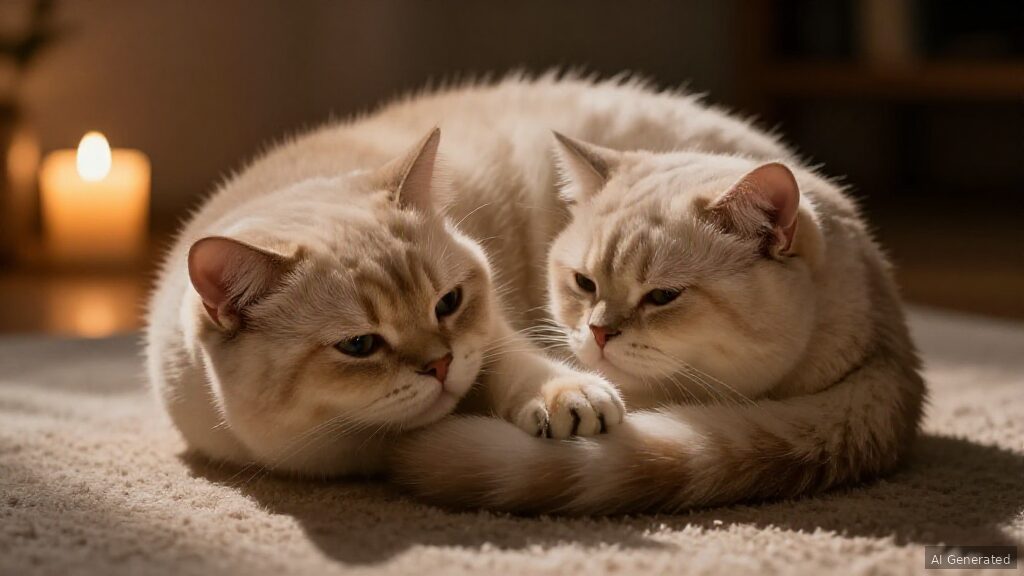
Multi-Cat Household Integration Strategies: Step-by-Step Introduction Methods and Success/Failure Signals
Perfect Isolation and Gradual Meetings
The biggest mistake when bringing in a new cat is immediately releasing them into the same room. For successful integration, one must start with ‘perfect isolation.’ The new cat should spend 3 days to over a week in a separate room to adapt to the new environment and maintain distance from the existing cat. During this period, the guardian should check the new cat’s health status and bring in a towel or blanket scented with the new cat to the existing cat to start indirect contact.
The next step is ‘visual contact.’ Allow them to see each other through a door crack or barrier, but prevent direct contact. At this time, the key is to associate the other cat’s image with positive memories (delicious food, fun play) by feeding them or giving toys. This is called ‘Counter-conditioning,’ a psychological technique that links the other party not as a threat but with good things.
Direct Contact and Monitoring
If both remain calm, allow direct contact by opening the door for a short period. At this time, the guardian must be present and ready to separate them immediately if tension arises. Initial contact time should start short, around 5 to 10 minutes, and gradually increase. Successful signals include sniffing each other, grooming, or lying down comfortably in the same space. Conversely, hissing, baring claws, or chasing are considered failure signals, requiring a return to the isolation phase.
The most important thing in the integration process is not ‘speed’ but ‘the cat’s speed.’ Rushing the process due to the guardian’s impatience can instead leave permanent trauma and trigger aggression. It is good to respect each cat’s personality and adaptation speed, and prepare spaces where they can hide in advance using PlayCat’s solid wood furniture.
Failure Signals and Mediation Methods
If continuous aggression occurs during the integration process, or if one cat completely ignores and avoids the other to the point of skipping meals, integration should be stopped immediately, and advice should be sought from a veterinarian or behavioral expert. Some cats may never be able to coexist comfortably in the same space due to personality differences. Even in such cases, rather than ‘complete separation,’ the goal should be ‘coexistence,’ considering methods such as using spaces at different times or installing visual barriers.
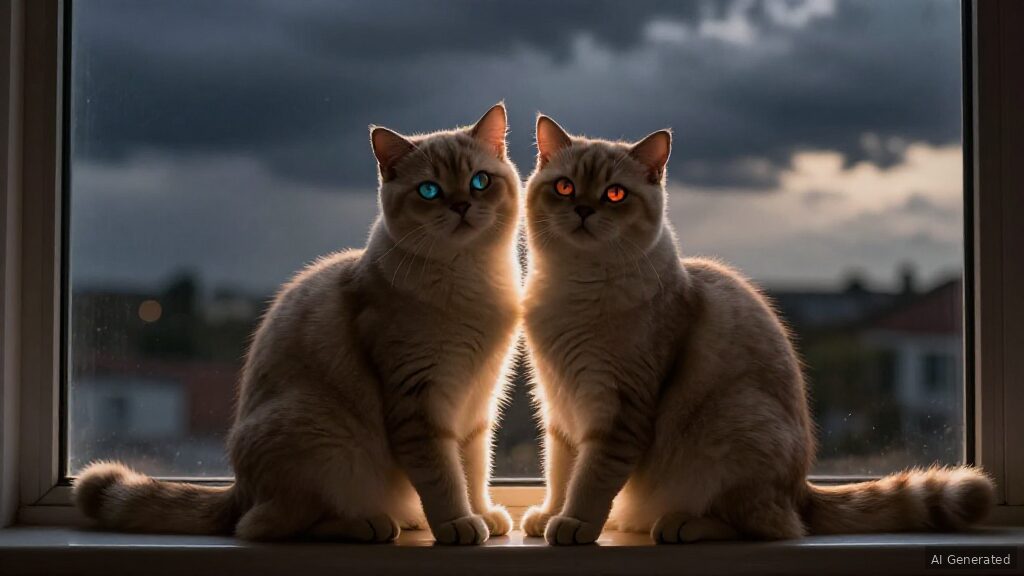
Strengthening Human-Cat Bonds: Play Sessions, Grooming, and Coexistence Time
The Importance of Play Sessions Through Toys
The most effective way to strengthen the bond with a cat is ‘play.’ Play sessions that stimulate hunting instincts not only deplete the cat’s energy and relieve stress but also make them perceive the guardian as a hunting partner and a trustworthy being. It is important to have a focused play time of about 15 to 20 minutes a day, but always complete the sequence of ‘hunt-catch-eat.’ Use toys to simulate hunting, and finally, give treats to satisfy their instincts.
What is important at this time is that the guardian must directly manipulate the toys to stimulate the cat’s hunting instincts. Robot toys or toys for solo play are auxiliary means and cannot replace interaction with humans. Solid wood furniture like PlayCat contributes to expanding the scope of play by serving as platforms where toys can be hung or cats can jump onto.
Grooming and Physical Contact
When a cat licks the guardian’s hand or rubs its head, it signifies a high level of trust. To induce such behavior, it is good for the guardian to first gently stroke the cat’s comfortable areas such as the back, chin, and cheeks. However, not all cats enjoy physical contact, so one must approach gradually while carefully observing the cat’s reaction. If a cat raises its tail and approaches or leans its body, it is a signal saying ‘pet me more,’ while turning ears back or dodging is a signal saying ‘I don’t want this right now.’
Specifically, grooming is one of the most intimate behaviors in cat society. When a guardian brushes the cat, it mimics the cat’s grooming behavior, having the effect of strengthening social bonds. At this time, choose soft brushes or grooming tools that do not irritate the cat’s skin. If performed on PlayCat’s wide solid wood table or shelter, the cat will feel more secure and accept it better.
Time of Coexistence: Just Being Together
Strengthening bonds does not necessarily mean active interaction only. The ‘time of coexistence,’ where the cat sits beside the guardian while they read a book or watch TV, is also important. Cats feel comfortable when the guardian takes an attitude of not ignoring their existence but also not interfering. Doing your own thing in the room while naturally acknowledging the cat’s presence without making eye contact is actually a shortcut to building trust.
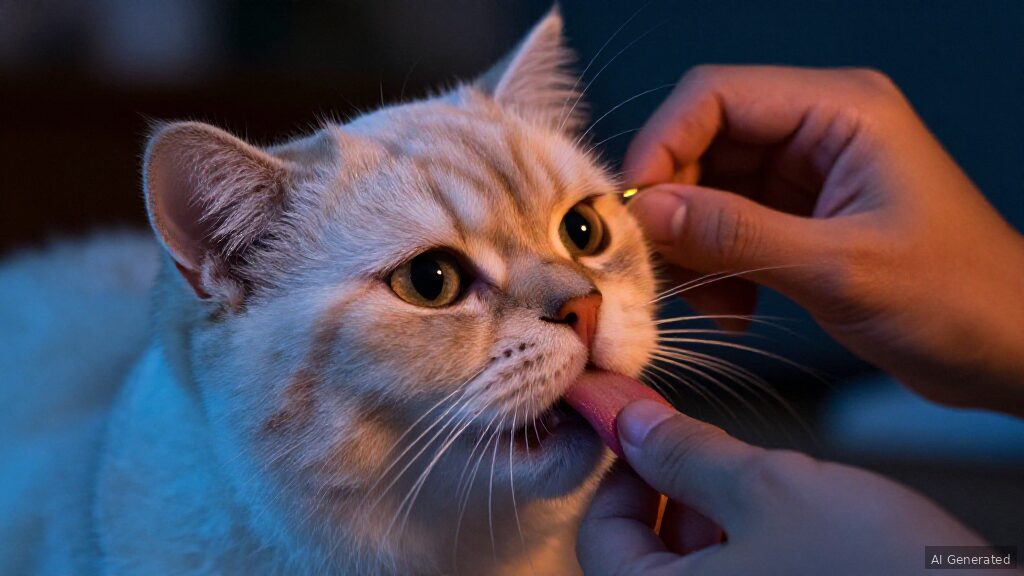
Signs of Social Stress: Conflict Signals and Mediation Methods
Catching the Moment Conflict Begins
Conflict between cats does not explode suddenly but occurs as subtle signals accumulate. The most common early sign is a reaction to ‘territory infringement.’ If one cat shows a defensive posture when trying to approach another cat’s food bowl or litter box, or if fur stands on end when passing each other, these are signs of conflict. Additionally, if one cat continuously stares at or chases another, it could be a signal of dominance struggle or bullying.
Guardians must not miss these signs and intervene immediately. However, shouting or getting angry at random can worsen the situation. Instead, it is better to distract them with toys or separate the cats to give them time to calm down. The high positions or hiding spaces of PlayCat furniture serve as ‘refuges’ where cats can avoid crises on their own in conflict situations.
Mediation Methods and Environmental Improvement
When conflict intensifies, ‘environmental improvement’ must be the top priority. The main cause of stress for cats is resource scarcity. There should be one more litter box than the number of cats, and food and water bowls should also be placed separately. Additionally, it is essential to install shelves or high shelters so that cats can utilize vertical space and avoid overlapping territories.
If conflict repeats at specific times or places, it is effective to change the traffic flow of that space or arrange furniture to create visual barriers. Utilizing PlayCat’s modular solid wood furniture allows for flexible reconfiguration of space according to the cat’s movement routes, which greatly helps in preventing conflict and maintaining social distance. Additionally, using pheromone diffusers to send chemical signals that provide a sense of stability throughout the house can be used as a supplementary measure.
Social Differences by Age and Personality: Kittens, Adults, and Seniors
A cat’s social acceptance varies significantly by age. Social experiences formed at a young age tend to last a lifetime, so it is important to understand the characteristics of each age group and take a customized approach.
| Age Group | Social Characteristics | Integration and Social Enrichment Strategy | Precautions |
|---|---|---|---|
| Kitten (2~7 months) | Socialization period. Highly curious about new stimuli and adaptable. Learns hunting skills and social etiquette through play with other cats. | Encourage play with other cats and expose them to various people to increase social sensitivity. Build trust through play with the guardian. | Requires safety measures as early integration can lead to bullying by adult cats. Excessive play can lead to fatigue accumulation. |
| Adult Cat (1~7 years) | Period of established personality. Strong tendency to stick to existing territories and routines. Can be conservative about accepting new cats. | Gradual integration strategy is essential. Slowly make contact without infringing on the existing cat’s territory. Use PlayCat furniture to secure horizontal space. | Strong resistance to sudden changes. Watch out for litter box accidents due to stress. Dominance struggles can be fierce. |
| Senior (8+ years) | Low energy and sensitive to change. Aggression may increase or they may become withdrawn due to health issues or pain. | Bringing in a new cat is not recommended. Focus on maintaining peace with existing cohabiting cats. Provide comfortable shelters and accessible spaces. | Health checks must be done first. Avoid strenuous play or activities; strengthen bonds through gentle grooming and coexistence time. |
Approaches by Personality Type
Cats have various personality types such as ‘social,’ ‘neutral,’ and ‘solitude-preferring.’ Social cats quickly accept new environments and animals, while solitude-preferring cats suffer great stress from even small changes. Guardians must identify each cat’s tendency and manage them so that social cats do not bully solitude-preferring ones. The various heights and hidden spaces of PlayCat furniture provide an environment where solitude-preferring cats can protect themselves, effectively reducing conflict with social cats.
Social Enrichment for Single-Person Households: Managing Time Alone
Many modern people live in single-person households with their cats. In this case, cats may have to spend the whole day alone, which can lead to social deprivation and stress. To enrich the social life of cats in single-person households, ‘automated interaction’ and ‘environmental stimulation’ are essential.
First, the environment must be arranged so that the cat does not get bored even after the guardian leaves for work. It is good to prepare a space that acts as a ‘cat TV’ where they can view the outside scenery (birds, leaves, etc.) through the window. Additionally, using Puzzle Toys to enjoy the process of finding food can stimulate hunting instincts and relieve boredom.
Solid wood furniture like PlayCat provides ‘vertical space’ which is particularly important in single-person households. It allows cats to feel secure by looking down at their surroundings from high places and maintain activity levels through various movement routes. Installing wall-mounted shelters or staircase-type furniture allows cats to expand their own social territories even in small spaces. Additionally, it is important to fill the gap of the day with an immediate play session when the guardian returns home.
Social Space Separation Using PlayCat Furniture
PlayCat is designed not just as furniture but as a ‘behavioral enrichment tool’ that aids cats’ social behavior. Especially to mitigate conflicts and stress that can occur in multi-cat households or single-person households, it provides spaces where cats can respect each other’s territories while communicating when necessary.
The warm and natural texture of solid wood materials provides psychological stability to cats. The high platforms of PlayCat furniture serve as ‘watchtowers’ where cats can monitor each other while maintaining physical distance. This allows lower-ranking cats to rest comfortably without feeling threatened by upper-ranking cats, reducing social hierarchy conflicts.
Additionally, the modular design allows for flexible reconfiguration of space according to the house structure and the cat’s behavioral patterns. For example, if a visible barrier is needed between two cats, furniture can be arranged to block the view, and if a play space is needed, connected structures can be used to expand movement routes. The space created in this way becomes the foundation for cats to regulate their own social distance, relieve stress, and coexist healthily.
FAQ: Frequently Asked Questions About Cat Social Enrichment
Q1. Can two cats become friends from the start?
Most cats show wariness when they first meet a new animal. It takes time to become friends, requiring a step-by-step introduction process and proper environmental setup. Rather than aiming for immediate intimacy, it is important to aim for ‘coexistence’ and create an environment that respects each other’s territories.
Q2. What should I do if a cat attacks another cat?
In the event of a sudden attack, it is best not to shout or intervene randomly. It is effective to get their attention with a loud noise or distract them with a toy to separate them. Afterwards, completely separate the two cats and repeat the step-by-step introduction process or seek help from an expert.
Q3. Is bringing another cat to a single-person household a good idea?
Bringing in another cat just because the cat seems very lonely can be risky. Integration without considering the existing cat’s personality and health status can instead cause stress and conflict. First, prioritize relieving loneliness through environmental improvements and securing play time for the guardian.
Q4. How do I resolve dominance struggles between cats?
Dominance struggles often occur due to resource distribution issues. It is most important to prepare plenty of litter boxes, food bowls, and shelters to eliminate ‘competition’ elements. Additionally, provide spaces where each cat can enjoy independently to promote psychological stability.
Q5. How does PlayCat furniture help with cat socialization?
PlayCat furniture provides vertical space, allowing cats to live without overlapping territories. Additionally, the natural solid wood material provides psychological stability, reducing stress, and the modular design helps adjust social distance by flexibly reconfiguring space according to conflict situations.
Cat social enrichment is not a short-term process but a long-term one requiring consistent observation and environmental setup by the guardian. Understanding each cat’s personality and finding ways to live together while respecting their natural instincts. That is the beginning of true bonding. With the space solutions provided by PlayCat, let’s create a happy home where cats coexist harmoniously with each other, humans, and the environment.
This content was created using AI technology. Always consult a veterinarian regarding medical information.