


The True Meaning of Feline Social Instincts and Social Enrichment
Many people mistakenly believe cats are independent animals that prefer to be alone. However, from an ethological perspective, cats are inherently beings that require social interaction. From their wild ancestors, the African wildcat, to modern domestic cats, cats have a history of hunting and defending themselves through group living. While they are not as pack-oriented as dogs, this does not mean they lack sociality; rather, it means they possess ‘selective sociality’. Cats prefer to form deep bonds and live together only with individuals with whom they have established intimacy.
The core concept for fulfilling these social instincts is social enrichment. Social enrichment goes beyond simply making friends with other cats; it refers to the overall process of providing cats with various social stimuli and creating an environment for positive interactions. This is a broad concept that includes relationships with humans, relationships with other pets, and social roles within the environment. Cats that do not receive proper social enrichment may exhibit various behavioral issues such as loneliness, anxiety, and aggression, which can ultimately lead to a weakening of the bond with their owners.
The ultimate goal of social enrichment is for cats to feel secure in their environment and maintain their mental and physical health through social interactions. Especially in multi-cat households or when new family members arrive, a systematic social enrichment strategy is essential. Through this, cats can respect each other’s territories and coexist peacefully, while owners can share a deep connection with their pets. PlayCat understands these social needs and focuses on designing environments where cats can naturally communicate and interact.
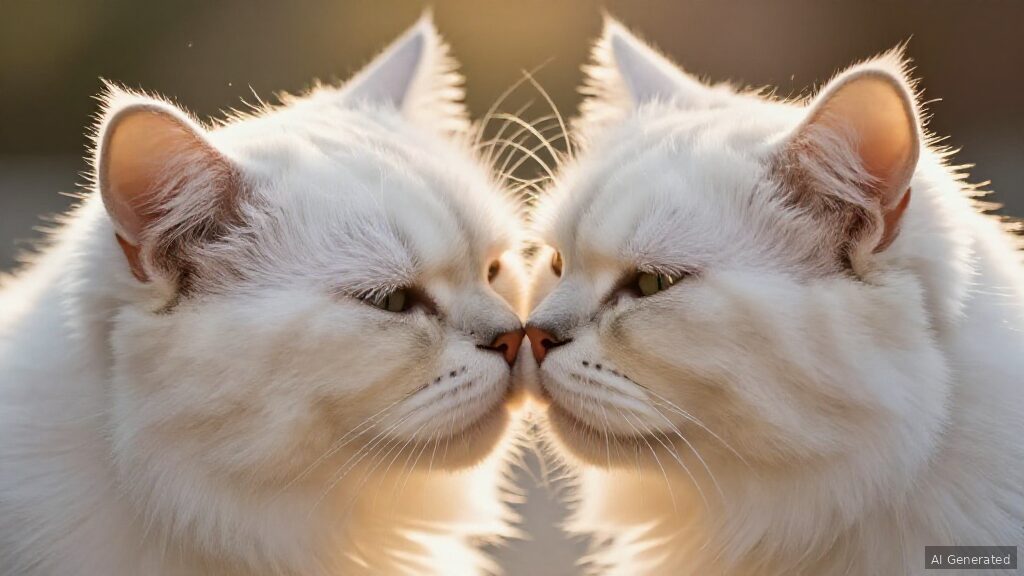
Feline Communication Methods: Decoding Scent, Body Language, and Vocalization
To understand the complexity of cat society, one must grasp the unique ways they communicate. Although cats do not use human language, they convey their intentions and feelings through highly sophisticated and diverse non-verbal signals. These signals are largely categorized into scent, body language, and vocalization, each serving as a tool to exchange important information in specific situations.
Scent and Pheromones: The Invisible Language
For cats, the sense of smell is a far more important sensory organ than vision. Cats mark objects, other cats, and their owners with their scent via scent glands located on their cheeks, forehead, around the lips, and at the base of the tail. This is called rubbing, and it serves as a territorial claim meaning “this is mine” as well as an expression of intimacy. Especially in multi-cat households, cats go through a process of sniffing each other to confirm they are “members of this household.” Allowing cats to sniff each other when they first meet is the first step in reducing conflict and increasing acceptance.
Additionally, cats may sweat through their paw pads when stressed or tense, spreading anxiety signals to the surrounding environment. Conversely, when they are comfortable and happy, they secrete specific pheromones to turn the surroundings into a stable space. Owners should interpret behaviors such as a cat rubbing its cheeks against them or nuzzling to leave its scent as positive signals, which can be used to strengthen the bond.
Body Language: Subtle Movements of Tail and Ears
Cat body language is highly sophisticated, with deep meaning embedded in even the slightest movements. The most representative indicators are the position of the tail and ears. A tail held straight up and out indicates joy, friendliness, and a signal of welcoming the other. Conversely, a tail held stiffly upright or lowered with a slight twitch at the tip indicates warning or aggressive intent. Furthermore, raising the fur on their back and puffing up their body is a defensive mechanism to threaten the opponent or appear larger.
The position of the ears is also a crucial clue. Ears pointed forward indicate curiosity and focus, while ears flattened to the side or back indicate fear, anxiety, or aggressive tendencies. Specifically, the ‘airplane ears’ state, where ears are completely flattened backward, is a serious warning signal; in this case, it is best not to approach forcefully and instead give the cat time to calm down. By reading these body language cues, owners can grasp their cat’s current emotional state and respond appropriately.
Vocalization: From Meows to Hisses
The meaning of a cat’s vocalization changes depending on the situation and the recipient. Adult cats rarely make sounds to each other, but they produce various sounds when communicating with humans or during conflicts. A soft ‘meow’ is used to request attention from the owner or ask for treats, and the tone and length of the ‘meow’ vary according to the cat’s intent. On the other hand, a low-pitched ‘purr’ can indicate satisfaction, but in tense situations, it can also serve as a warning.
The vocalizations that require the most caution are ‘hissing’ and ‘growling.’ These indicate immediate aggressive intent or extreme fear, so rather than forcibly restraining the cat, it is important to provide space for the cat to calm down on its own. Additionally, during play between cats, they may express excitement with short ‘chittering’ or ‘chirping’ sounds. Owners can observe these vocalization patterns to determine if their cat’s social interactions are healthy or if they are under stress.
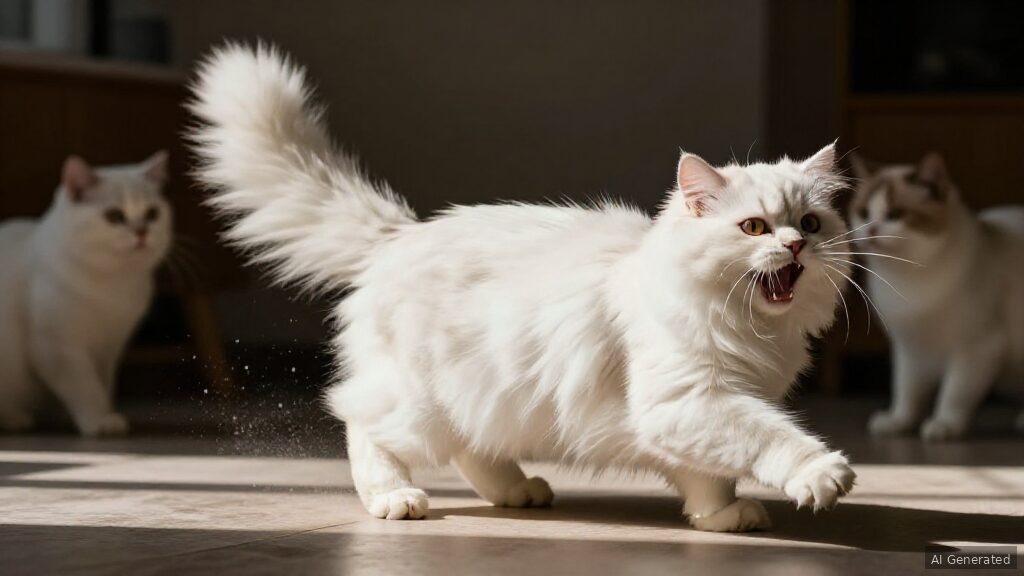
Multi-Cat Household Integration Strategy: Step-by-Step Introduction and Success/Failure Signals
When forming a multi-cat household or adopting a new cat, the most important thing is not to rush. A sudden meeting can stimulate the territorial instincts of existing cats, leading to serious conflict. Therefore, a systematic step-by-step integration strategy is essential. Successful integration is based on trust between cats, and their reactions must be closely observed at each stage.
Step 1: Isolation and Scent Swapping
When bringing in a new cat, do not immediately introduce it to the existing cat; instead, isolate it in a separate space. This period can last from a minimum of 3 days to a week, during which visual contact should be completely blocked. Instead, engage in activities to swap scents. For example, bring a blanket or toy used by the new cat into the existing cat’s space, and conversely, provide the new cat with items from the existing cat. This allows them to perceive each other’s presence not as a ‘threat’ but as a ‘familiar scent.’
The key at this stage is to confirm whether the cats show positive reactions when smelling each other’s scents. If they sniff and sniffle, or purr and appear comfortable, these are successful signals. If they show wariness or aggressive behavior after smelling, it means more time is needed, so do not force a move to the next stage.
Step 2: Visual Contact
Once they are accustomed to scent swapping, allow visual contact. At this point, leave a small gap in the door or install a transparent barrier so they can see each other. However, direct physical contact must be prohibited. In this stage, observe whether the cats look at each other without aggressive behavior. If one side shows wariness or hisses, immediately stop contact and return to the scent swapping stage.
During visual contact, it is beneficial to provide tasty treats or play to facilitate conditioned learning that “good things happen when seeing each other.” This helps cats associate each other’s presence with positive experiences. Utilizing PlayCat’s solid wood furniture and toys to place positive elements in the visual contact area can make the integration process smoother.
Step 3: Direct Meeting (Controlled Face-to-Face)
If there are no issues with visual contact, now attempt a direct meeting for a short period. This should be done while the owner can control both cats simultaneously, using toys or treats to distract them. Start with a short duration of 5-10 minutes and gradually increase the time. If conflict arises, separate them immediately; if it ends successfully, reward them with praise and treats.
Signals of Success and Failure
Signs that the integration process is proceeding successfully include appearing comfortable after smelling each other, napping together, and grooming behaviors like licking each other. Conversely, signals of failure include persistent hissing, aggressive body language, loss of appetite, elimination accidents (urinating/defecating outside the litter box), and behaviors to avoid each other. If these signals persist, slow down the integration speed or seek professional help.
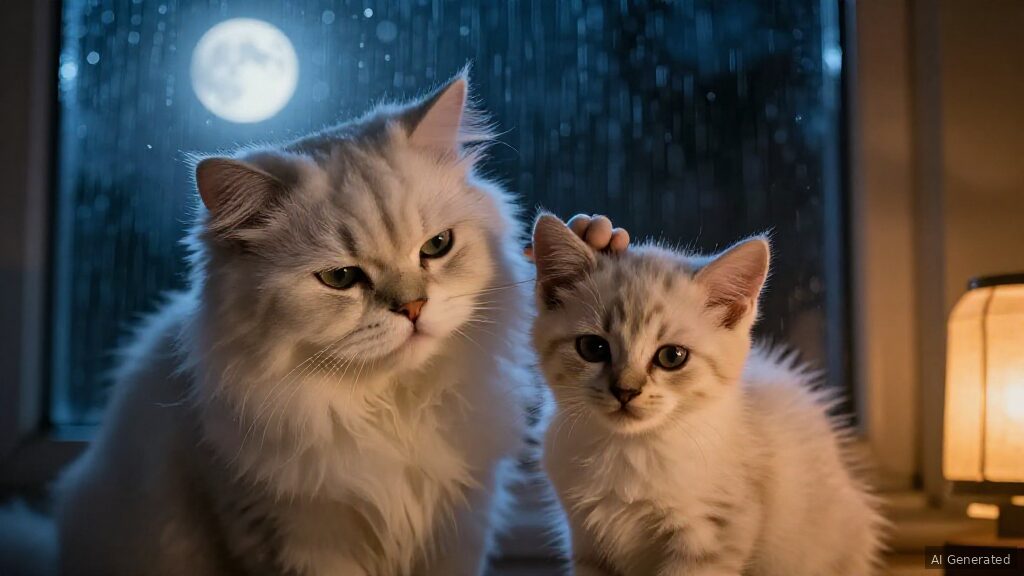
Strengthening the Human-Cat Bond: Play Sessions, Grooming, and Coexistence Time
The bond with a cat begins with simply spending time together and deepens through high-quality interactions. When owners understand their cat’s social instincts and intervene appropriately, the cat begins to perceive the owner as a ‘safe base.’
Active Play Sessions
Play is the most effective way to satisfy a cat’s hunting instincts while strengthening the bond with the owner. You should have play sessions where the cat can actively participate for at least 15-20 minutes every day. At this time, use toys that stimulate the cat’s curiosity, such as feather wands or moving prey, to increase the cat’s focus. The key to play is to let the cat experience the process of chasing and catching prey on its own, and finally, it must provide a successful ‘capture’ experience to give them a sense of accomplishment.
PlayCat’s various solid wood toys naturally stimulate cats’ hunting instincts and are optimized for enjoying play with owners. These toys not only increase the cat’s exercise amount but also contribute to increasing positive interaction time with the owner.
Soft Grooming
Grooming behavior, where cats lick each other, is an important ritual for solidifying social bonds. Owners can also mimic grooming by gently brushing the cat or stroking areas the cat likes (cheeks, chin, behind the ears) with their hands. This sends a signal to the cat that “I love and protect you” and has the effect of relieving stress. However, be careful not to force touching areas the cat dislikes, and proceed while observing the cat’s reaction.
High-Quality Coexistence Time
Simply being present is not enough. There is a need for ‘coexistence time’ where the owner acknowledges the cat’s presence and pays attention. For example, reading a book next to a sleeping cat, or quietly watching while the cat rests after playing, can make the cat feel secure. At this time, it is good to put down the smartphone and focus on connecting with the cat. This calm coexistence instills in the cat the perception that “the owner is someone who accepts me unconditionally.”
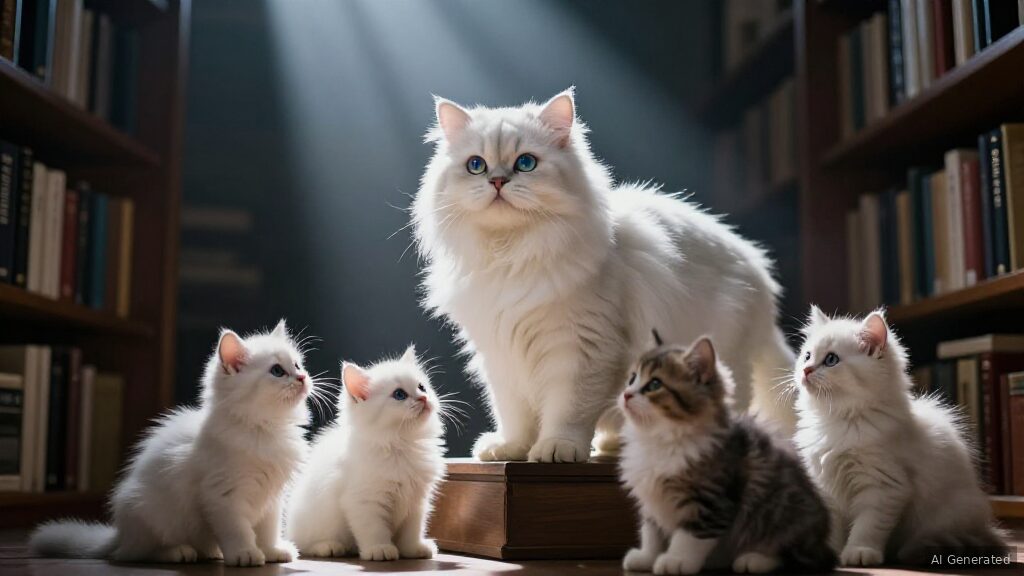
Signs of Social Stress: Conflict Signals and Mediation Methods
Conflict in cat society may be unavoidable, but if not mediated appropriately, it can lead to chronic stress and cause health problems. Owners must detect signs of social stress in their cats early and intervene appropriately.
Major Signs of Conflict
Conflict between cats is not just about fighting; it can also appear as subtle behavioral changes. Representative signs include one cat hiding to avoid another, decreased appetite, avoiding the litter box (eliminating outside), excessive grooming (hair loss), and aggressive postures (raising fur, hissing). Especially in multi-cat households, if a ‘blocking’ phenomenon occurs where one cat prevents another from approaching the litter box or food bowl, it indicates a state of severe stress.
Mediation Methods and Environmental Improvements
When conflict arises, the most important thing is to immediately separate the cats and allow them to find stability in their own spaces. At this time, it is good to clearly distinguish their territories. Utilizing PlayCat’s solid wood furniture or separated space designs can create ‘visual barrier’ spaces where cats can be in the same room without seeing each other. This is effective in reducing stress by minimizing visual stimuli that trigger conflict.
Additionally, apply the ‘N+1 rule’ by preparing one more resource (food, water, litter box, shelter) than the number of cats to reduce competition. Place litter boxes in different locations and keep food bowls out of each other’s sight. If conflict persists, use a pheromone diffuser or seek professional counseling for behavior modification.
Social Differences by Age/Personality: Kitten, Adult, and Senior Comparison
A cat’s age greatly influences socialization and interaction methods. You must understand the characteristics of kittens (infancy), adults (adulthood), and seniors (old age) and apply appropriate social enrichment strategies for each.
| Category | Social Characteristics | Key Interests | Social Enrichment Strategy |
|---|---|---|---|
| Kitten (2 weeks~6 months) | Socialization sensitive period, high curiosity, play-focused (Intimacy with both other cats and humans) |
Hunting play, exploration, peer interaction | Satisfy hunting instincts through various toys, provide opportunities for play with other cats, strengthen gentle human contact |
| Adult Cat (1~7 years) | Established individual personality, strong territorial instinct (Selective sociality, prefers stable relationships) |
Maintaining territory, resting, regular play | Provide predictable routines, minimize resource competition, secure independent spaces through PlayCat furniture |
| Senior (7 years+) | Decreased activity, increased sensitivity to pain (Resistance to new changes) |
Comfortable rest, health maintenance, familiar environment | Soft grooming, low-intensity play, provide accessible shelters, induce gradual adaptation to changes |
Kitten Sociality: For kittens, the period from 2 to 7 weeks of age is the socialization sensitive period; meeting other cats and humans during this time determines their ability to form intimate relationships for life. Kittens at this stage learn social rules through play and hone their hunting skills through interaction with peers. Therefore, in multi-cat households, it is important to provide an environment where kittens can play enough with other cats.
Adult Cat Sociality: Adult cats are accustomed to their own territories and routines and are sensitive to new changes. They are very affectionate towards individuals with whom they have established intimacy but show wariness towards strangers. Therefore, it takes sufficient time and patience for an adult cat to accept a new environment or cat. PlayCat’s furniture provides spaces where adult cats can secure their own territories and rest comfortably, reducing stress.
Senior Cat Sociality: Senior cats experience a decrease in activity due to physical aging and may avoid new interactions due to joint pain and other issues. They value a familiar environment and a stable relationship with their owners the most. Soft grooming and low-intensity play are suitable for senior cats, and sudden environmental changes should be avoided.
Social Enrichment for Single-Person Households: Managing Time Alone
Nowadays, as single-person households increase, there are many cats living alone. However, because cats instinctively require social interaction, if appropriate social enrichment is not provided when the owner is absent, they may suffer from loneliness and stress. Owners in single-person households must create an environment where cats can receive social stimuli even while they are alone.
Creating an Environment for Self-Play
During the time the owner is away, provide toys and an environment that allow the cat to play on its own so it does not feel bored. Puzzle toys, moving toys, and shelters where they can climb high and observe the surroundings are necessary. PlayCat’s solid wood furniture provides a multi-layered structure where cats can explore and rest on their own, helping them maintain an active lifestyle even when alone.
Utilizing Remote Interaction
Try exploring ways to communicate with your cat even after work by using smart cameras or remote-controlled toys. Observing the cat’s behavior and operating toys as needed to show interest is effective in reducing the cat’s anxiety. Additionally, placing the owner’s clothes or blankets in the cat’s shelter can help them gain psychological stability by smelling the owner’s scent.
Regularity of Daily Routine
Cats like regular routines. If the owner maintains a consistent pattern, such as playing or giving treats at a specific time after work, the cat can predict the owner’s arrival and feel secure. This is an important factor in strengthening the cat’s social bond.
Social Space Separation Using PlayCat Furniture
What is important for both multi-cat households and single-person households is an environment where cats feel secure in their own spaces but can communicate when necessary. PlayCat is launching various furniture using natural solid wood materials to meet these social needs.
PlayCat’s furniture acts not just as a shelter but as a tool to regulate cats’ social relationships. For example, a shelter installed at a high position allows the cat to look down, protecting its territory while feeling safe. Additionally, structures providing multiple passages and hiding spaces allow cats to choose whether to avoid or approach each other, contributing to conflict prevention.
Especially, PlayCat’s solid wood furniture is designed considering cats’ body temperature regulation and comfort. As a natural material, wood feels cool in summer and warm in winter, allowing cats to rest comfortably. This lays the foundation for cats to focus on social interactions without stress. In multi-cat households, providing a separate PlayCat shelter for each cat can reduce resource competition and induce peaceful coexistence.
Furthermore, the design of PlayCat furniture blends well with human living spaces, creating an environment where owners also enjoy spending time with their cats. Structures where owners can sit on the furniture to pet or play with the cat greatly help in strengthening the human-cat bond. PlayCat respects cats’ social instincts while providing solutions suitable for modern lifestyles, creating spaces where both cats and people can be happy.
Frequently Asked Questions (FAQ)
1. How long does the integration period take when adopting a new cat?
The integration period varies greatly depending on the individual cat and its personality. On average, it takes about 2 weeks to 1 month, but for sensitive cats, it can take several months. The important thing is not to rush, observe the cat’s reaction, and proceed step-by-step. If conflict persists, it is advisable to slow down the integration speed and seek professional advice.
2. If cats do not lick each other, does it mean there is no bond?
Not necessarily. Grooming between cats is a strong signal of intimacy, but not all cats lick each other. Sleeping comfortably together, appearing comfortable after smelling each other, or simply coexisting peacefully in the same space can be considered sufficient evidence of a formed bond.
3. How should the number of litter boxes be determined in a multi-cat household?
In a multi-cat household, it is recommended to apply the ‘N+1 rule,’ which means preparing one more litter box than the number of cats. For example, if there are 2 cats, you should prepare at least 3 litter boxes. Additionally, place the litter boxes in different locations so that one cat does not have to wait for or be disturbed by another.
4. What is the first thing to do when mediating conflict between cats?
The first thing to do is to immediately separate the cats so they can find stability in their own spaces. Then, clearly distinguish their territories and provide sufficient resources (food, water, litter box) to reduce competition. It is important to limit visual contact until the conflict is resolved.
5. How does PlayCat furniture help with cat sociality?
PlayCat furniture helps prevent conflict and reduce stress by providing various spaces that cats can choose on their own (high shelters, hiding spaces, etc.). Additionally, the natural solid wood material creates an environment where cats can rest comfortably and focus on social interactions, supporting healthy social enrichment.
This content was written utilizing AI technology. Please consult a veterinarian for any medical-related information.