


Practical Guide to Indoor Cat Behavioral Enrichment (Environmental Enrichment) and How to Use Wooden Furniture
Today’s article provides a concrete answer on how to systematically practice ‘Behavioral Enrichment (Environmental Enrichment)’ to reduce stress and increase happiness in indoor cats. Many guardians rely on temporary fixes like blaming the cat’s personality or simply changing the food when their cat shows indifference or aggressive behavior, but this fails to address the root cause. Through this article, we scientifically analyze why proven environmental enrichment strategies from the perspective of feline ethology and PlayCat’s wooden furniture are essential for cats, and provide a practical checklist you can apply starting today to help your cat lead a healthier and more satisfying life.
Why is environmental change necessary when an indoor cat is stressed and behaving abnormally?
Many guardians misinterpret a cat’s problem behaviors, such as excessive sleeping, food refusal, or furniture destruction, as simply being ‘stubborn’ or ‘sick’. However, in many cases, the cause is actually a psychological imbalance resulting from an inability to fulfill instinctual needs due to indoor living. Cats are crepuscular animals with instincts to search wide territories and hunt, but it is difficult for them to naturally express these instincts in a narrow apartment environment. There are animal behavioral studies indicating that this lack of instinct can raise cortisol levels (the cat’s stress hormone) and lead to behavioral disorders.
Why is environmental change essential? To maintain mental health, cats must constantly seek new stimuli to adapt to a fixed environment. If the environment provided by the guardian does not support the cat’s cognitive development and physical activity, they will feel boredom and lethargy. This ultimately results in a ‘harmless’ cat becoming aggressive, or a timid cat becoming even more withdrawn. Therefore, beyond simply giving toys or playing, a structured environmental change that stimulates the cat’s senses and brain is necessary.
The Disconnect Between a Cat’s Instinctual Needs and Indoor Living
Wild cats spend hours a day chasing prey, capturing it, breaking down food, and marking their territory. The physical activity and brain stimulation generated in this process are levels that indoor cats can never match. While the indoor environment is safe, it is simultaneously predictable and limited to the point of boredom. Unless the guardian creates an environment that can replace the cat’s experience of catching prey, the cat will not find an appropriate outlet to release instinctual impulses. This is the main reason why a cat’s energy is released in the wrong direction, manifesting as behaviors like scratching furniture or the guardian’s clothes.
The Psychological Mechanism of Problem Behaviors Stemming from Boredom
In animal ethology, ‘Boredom-induced Behavior’ is a very important concept. When a cat feels bored, the brain demands immediate stimulation to secrete dopamine. The guardian’s body or household furniture often become the closest targets. Every time the guardian says “no,” it counts as giving the cat a new challenge, which inadvertently reinforces repetitive behaviors by distorting the cat’s learning process. Additionally, attempts to excessively approach the guardian or other animals (unnecessary tail chasing, meowing, etc.) to relieve feelings of isolation or anxiety can also result from boredom.
Scientific Evidence That Environmental Enrichment Lowers Stress Hormone Levels
Research in the field of animal welfare indicates that environmental enrichment can lower a cat’s cortisol levels and promote the secretion of oxytocin, the happiness hormone. This is because the process itself—where the cat explores, solves problems, and feels a sense of control—plays a decisive role in stress relief, rather than just playing with toys. For example, the process of solving a puzzle to find hidden food stimulates the cat’s cognitive abilities and reduces stress. In other words, appropriate environmental change is a core element that directly contributes to strengthening a cat’s immune system and extending their lifespan.
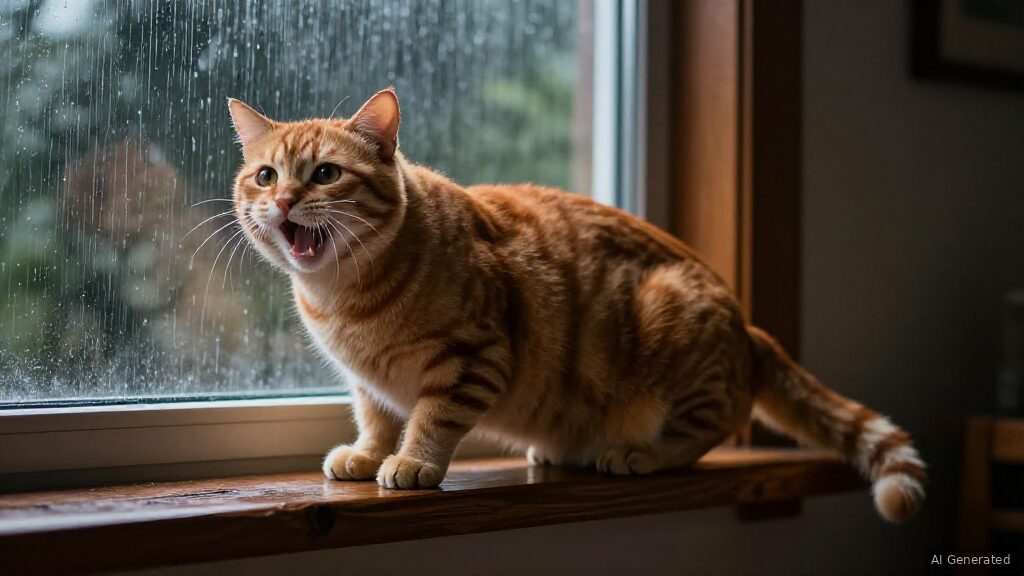
What Are the 5 Core Environmental Enrichment Elements Needed for a Cat?
Environmental enrichment for a cat’s happiness does not simply mean buying a few toys. Feline ethologists emphasize 5 core elements for fulfilling a cat’s basic needs. Guardians must provide these 5 elements in balance for the cat to feel secure and grow healthily. Each element is closely connected to the others, and the effectiveness of the others may diminish if even one is lacking.
1. Fulfillment of Physical Exercise & Hunting Instincts
This is the most basic and important element. While cats sleep for a total of 12 to 16 hours a day, they use their waking time for active activity and exploration. Guardians must create an environment where the cat can experience the process of tracking and capturing prey on its own, going beyond just chasing the ‘object’ (the guardian). This requires space that allows for hiding, jumping, and wall movement, not just running on a string.
How to Practice: Step-by-Step Exercise Routine
- Prey Simulation Stage: Without feeding food, put food or small toys inside a paper bag or tube and let the cat find them on its own. At this time, do not open it too quickly; observe the process where the cat exerts effort. This allows the cat’s brain to form the connection of ‘effort = reward’.
- Vertical Movement Training Stage: Cats prefer vertical spaces to sharpen their claws and build stamina. Guide them to climb high places like desks or chairs, or install wooden furniture that allows wall movement to provide the cat with various movement paths at different heights.
- Aggressive Hunting Stage: Use light toys (like a tail string) to let the cat experience the entire hunting process of kicking, biting, grabbing, and chasing. At this time, do not catch it too quickly; wait until the cat completely suppresses the prey for the instinct to be properly fulfilled.
2. Cognitive Stimulation & Problem-Solving Skill Development
A cat’s brain learns and adapts to the environment much faster than a human’s. However, indoor life can be repetitive, causing the brain to atrophy easily. Cognitive stimulation involves presenting the cat with a ‘problem to solve’. For example, situations where the cat cannot eat food without opening a container, or finding a hidden toy, fall under this category. This is very effective for developing a cat’s intellectual abilities and relieving stress.
How to Practice: Using Cognitive Play Tools
- Puzzle Feeding: Instead of putting food in a simple bowl, put food in a puzzle container or a hidden space in wooden furniture. To get the food, the cat must manipulate the structure and find gaps. In this process, the cat improves its problem-solving abilities and feels a sense of accomplishment.
- Hiding Search Game: Hide a toy or a handful of food the cat likes in various parts of the house and guide the cat to ‘find it’. At this time, stimulate the cat’s sense of smell and vision simultaneously to induce complex space exploration.
- Toy Rotation: Do not show all toys at once; take out about 3 and hide the rest, replacing them with new ones a few days later. Since cats show greater curiosity towards new environments, this makes them perceive old toys as new ones.
3. Securing Vertical Space & Expanding Territory
Cats are ‘vertical animals’. They spend more time in higher places than on the floor and feel safety and control from there. Carpets on the floor or narrow spaces can feel threatening to a cat. Therefore, it is essential to secure safe spaces high up in the house, especially those accessible to walls or windows. This serves as a resting place for the cat and a lookout post to observe the entire house.
How to Practice: Vertical Space Design & Wooden Furniture Installation Guide
- Using Wall-Mounted Wooden Furniture: Wooden furniture like PlayCat is structured to connect walls and floors, providing a continuous space for vertical movement for the cat. This has the effect of securing a wide area even in a narrow apartment, and encourages the cat to naturally crawl up or jump around.
- Arranging Platforms of Various Heights: Cats do not prefer just one height. Create a structure that covers the floor, desk height, and window sill height. Especially, wooden furniture provides comfort to the cat’s paw pads with its natural wood scent and texture, allowing them to stay for a long time.
- Securing Safe Landing Points: Check if there is a safe place to jump down from a high place. It is even better if an elastic carpet is laid on the floor. Regularly inspect the structure of the wooden furniture to ensure it is stable and does not shake, preventing the risk of the cat falling.
4. Noise Reduction & Providing Hiding Spots
Cats have very sensitive hearing and easily get stressed by household noises or sudden changes. Furthermore, they do not need to be within the guardian’s line of sight all the time. A house without hiding spots can give a cat a sense of ‘exposure’, causing anxiety. Guardians must arrange safe spaces where the cat can hide in multiple places, especially to relieve anxiety when the cat is alone.
How to Practice: Hiding Spot Design & Noise Management
- Using Half-Hidden Boxes or Furniture: A box that is not completely sealed is better than one that is; a structure where one side is open or the cat can enter and look out is good. Create a hiding spot by placing a cat-specific coat or toy under the PlayCat wooden furniture or near the window.
- Adjusting Noise Generation Times: Adjust the guardian’s activity time so it does not overlap with the cat’s sleeping or feeding times. When making noises that make the cat anxious (cleaners, vacuum cleaners, etc.), it is better to move the cat to another room beforehand or proceed after providing the cat with a hiding spot.
- Seamless Soft Floor Materials: Since a cat’s paw pads are very sensitive, they prefer soft carpets or wooden floors over rough floors. Wooden furniture provides these soft natural materials, protecting the cat’s paw pad health.
5. Social Interaction & Positive Reinforcement
While cats are independent animals, forming a bond with the guardian is important. However, social interaction does not mean ‘forced play’ or ‘forced contact’. It is true social interaction to respond only when the cat comfortably wants to approach and to respect the cat’s signals. Additionally, it is necessary to reassure the cat through sensory stimuli such as the guardian’s voice, smell, and touch.
How to Practice: Correct Methods for Positive Interaction
- Reading the Cat’s Signals: If the cat shakes its tail or turns its ears back, it is a signal to refuse play. At this time, immediately stop the play and wait until the cat feels comfortable. The cat truly forming a bond comes when it seeks out the guardian on its own and calls.
- Play Using Sensory Stimulation: Play that stimulates various senses, such as making sounds, biting with hands, or smelling. At this time, rather than the guardian initiating the play, guide the cat to approach first.
- Forming a Consistent Routine: A predictable daily routine gives stability to the cat. For example, create a consistent routine by playing and feeding food in the same place and method at the same time of day, such as in the evening.
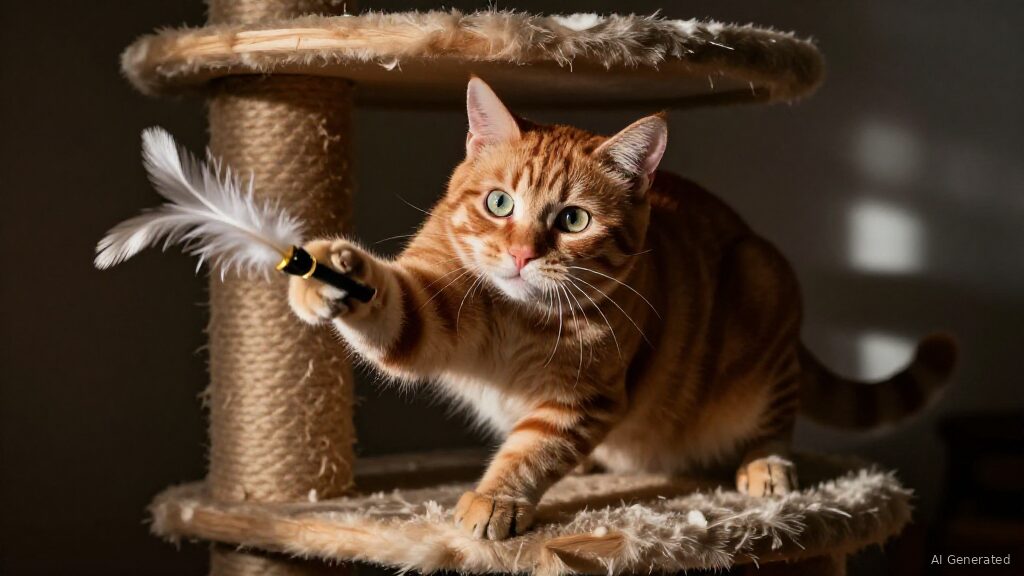
In-depth Information and Precautions for Indoor Cat Behavioral Enrichment
The 5 core elements introduced so far are the foundation for the happiness of indoor cats, but the application method must vary according to the individual cat’s characteristics and living environment. Not all cats respond in the same way, and it is important for guardians to understand the cat’s characteristics and create a customized environment. Additionally, to maximize the effects, one must be familiar with common mistakes and precautions that can occur when conducting environmental enrichment.
Environmental Enrichment Strategies by Cat Personality and Age
The intensity and type of stimulation needed differ according to the cat’s age and temperament. For example, kittens require high activity levels and various challenges, while adult cats or seniors need stable and slow-paced activities. Additionally, active cats require more space, but timid cats may need more hiding spots.
Age and Personality Strategy Table
| Cat Type | Characteristics | Required Environmental Enrichment Strategy | Precautions |
|---|---|---|---|
| Kitten (0-1 year) | Excessive energy, intense curiosity, fast learning ability | Active wooden furniture, various puzzle toys, securing hunting play time (3+ times a day) | Prevent safety accidents, regulate play time with other cats |
| Adult (1-7 years) | Personality formed, high dependence on guardian | Strengthen social interaction, secure vertical space, cognitive stimulation play | Prevent fatigue from excessive play, form regular living habits |
| Senior (7+ years) | Decreased activity, possibility of joint pain, cognitive decline | Stable hiding spots, soft floor materials, easy food feeding (puzzles should not be too complex) | No forced play, regular health checkups and activity level regulation |
| Active Personality | Excessive energy, high desire for space exploration | Wide vertical space, wall-moving furniture, various prey tracking play | Prevent damage from furniture, secure sufficient exercise |
| Timid Personality | Nervous, anxious about new environments | Safe hiding spots, gradually expose to new environment, guardian’s gentle approach | No forced contact, respect the cat’s own rhythm |
| Aggressive Tendency | Sensitive to stress, excessive hunting instinct | Release energy through sufficient hunting play, provide safe distance space | Prevent conflicts with other animals, remove factors causing aggression |
Common Mistakes and Solutions When Conducting Environmental Enrichment
One of the common mistakes guardians make is pursuing too much ‘variety’ or, conversely, repeating ‘boredom’ too much. Additionally, suddenly changing everything when providing a new environment to the cat can exacerbate the cat’s anxiety. It is important to make gradual changes and observe the cat’s reactions.
Mistake 1: Providing too many toys at once
Cats can suffer from the paradox of choice. If there are too many toys, they may feel anxiety about not knowing what they like, or they may end up ignoring all the toys. The solution is to limit toys to about 3 and replace them periodically.
Mistake 2: Forcing the cat to play
Cats often refuse to play. At this time, if the guardian forcibly pulls or encourages the cat, it can stimulate the cat’s defense instinct and induce aggression. The solution is to wait until the cat participates in the play on its own.
Mistake 3: Installing wooden furniture or toys immediately
When installing new furniture or toys, the cat may perceive them as a threat. The solution is to install it first and then guide the cat to approach on its own a few days later, or make it familiar by placing the cat’s familiar scent (like the guardian’s clothes) on it.
Practical Application Guide: Checklist for Starting Cat Behavioral Enrichment Right Away Today
Based on the theories and strategies explained so far, we propose 7 specific actions that guardians can apply immediately upon returning home today. This checklist includes core elements for cat behavioral enrichment and is designed to be repeated daily to increase effectiveness.
- Secure 3 sessions of hunting play per day, lasting 15+ minutes each
- Estimated Time Required: Total 45 minutes (3 times a day)
- Required Items: Tail string toy, food (or treats), wooden furniture (wall-moving capable)
- Expected Effect: Reduced cat stress, improved stamina, reduced aggression and destructive behavior
- Change food feeding method: Use puzzle toys
- Estimated Time Required: 15 minutes (2 times a day)
- Required Items: Wooden puzzle container, food
- Expected Effect: Improved cognitive abilities, increased enjoyment of mealtime, prevention of overeating
- Utilize vertical space: Install and encourage use of wooden furniture
- Estimated Time Required: 1 hour (installation and initial adaptation)
- Required Items: PlayCat wooden furniture, cat-specific coat
- Expected Effect: Securing a safe hiding spot, increased territory sense, stress relief through vertical movement
- Provide hiding spots: Arrange space for the cat to hide
- Estimated Time Required: 30 minutes (space arrangement)
- Required Items: Box, cat-specific coat, space under wooden furniture
- Expected Effect: Relief of anxiety, increased psychological stability, securing opportunity for distance from guardian
- Sensory stimulation play: Utilize sound, smell, and touch
- Estimated Time Required: 20 minutes (1 time a day)
- Required Items: Various noisy toys, cat-specific spray, hands
- Expected Effect: Brain stimulation, stress relief, strengthened bond with guardian
- Environmental change cycle: Change toy and furniture arrangement
- Estimated Time Required: 10 minutes (1 time a week)
- Required Items: Toys, wooden furniture (movable)
- Expected Effect: Prevention of boredom, inducing curiosity through new stimuli
- Reading guardian signals and adjusting reactions
- Estimated Time Required: 24 hours (continuous)
- Required Items: Observation skills
- Expected Effect: Improved quality of interaction with cat, increased cat trust
Frequently Asked Questions (FAQ) About Cat Behavioral Enrichment
1. What should I do if my indoor cat sleeps for too long and refuses to play?
While it is a normal behavioral pattern for indoor cats to sleep for more than 16 hours a day, if their activity level suddenly decreases compared to usual or they do not show any interest in toys at all, this could be a sign of stress or a health issue. At this time, first check the cat’s health status and, especially, check if there is enough vertical space like wooden furniture or hiding spots. If the cat refuses to play, rather than forcing the guardian to play, guide the cat to approach on its own, or change the food feeding method to a puzzle style to provide cognitive stimulation and naturally increase activity levels.
2. Why is it necessary to install wooden furniture in the house, and what is good?
Wooden furniture provides vertical space for cats and gives a natural surface to sharpen claws, reducing stress. Wooden furniture like PlayCat is structured to connect walls and floors, helping cats secure a wide area even in a narrow apartment. Additionally, wood provides comfort to the cat with its natural scent and texture, allowing them to stay for a long time. When installing, it is good to choose products with a slope that the cat can easily climb and have safe landing points.
3. My indoor cat has severe aggression; can it be solved through environmental enrichment?
Indoor cat aggression is mostly derived from stress, boredom, or pain. Environmental enrichment is very effective in reducing aggression by resolving these causes. Especially, if the cat’s energy is released through sufficient hunting play and stress is relieved through safe hiding spots, aggressive behavior naturally decreases. However, if aggression is very severe or health issues are suspected, it is good to consult a veterinarian along with environmental enrichment to identify the exact cause.
4. What kind of play should I do to develop my indoor cat’s cognitive abilities?
To develop an indoor cat’s cognitive abilities, puzzle play, hiding search games, and exploring new toys are effective. Puzzle play where food is hidden and the cat finds it on its own without being fed stimulates the cat’s brain and improves problem-solving abilities. Additionally, it is good to install wooden furniture to guide the cat to manipulate the structure and explore hidden spaces. At this time, it is important to observe the cat’s reaction and provide play with a difficulty level that is not too difficult.
5. Why is securing vertical space for indoor cats important? How should I do it?
Securing vertical space for indoor cats is very important for reducing stress by providing a sense of safety and control. Cats can observe the entire house from high places and avoid dangerous situations. It is good to secure vertical space by installing wooden furniture like PlayCat that connects walls and floors, or by placing cat-specific coats near desks and window sills to provide hiding spots. Additionally, it is important to provide platforms of various heights so the cat can choose the height and low level on its own.
6. What should the guardian do to improve social interaction with the indoor cat?
Improving social interaction with an indoor cat starts with the guardian reading and respecting the cat’s signals. When the cat refuses to play or avoids the guardian, do not approach forcibly, but wait until the cat feels comfortable. Additionally, it is important to provide various sensory stimuli (sound, smell, touch) to the cat to strengthen the bond. Guardians should observe the cat’s behavioral patterns and actively respond when the cat comfortably approaches or wants to play.
Conclusion: The First Step Towards Happy Coexistence with Your Cat
A cat’s happiness lies not just in eating food and sleeping well, but in environmental enrichment that fulfills their instincts and stimulates their cognitive abilities. Through the 5 core elements and the use of wooden furniture introduced today, guardians can play a role in helping cats reduce stress and lead a healthy and satisfying life. We hope that through PlayCat’s wooden furniture, you provide your cat with a wider area and a safe space, allowing you and your cat to spend happy times together.
Check more information on cat behavioral enrichment at PlayCat (playcat.xyz)
This content was written using AI technology. Please consult a veterinarian for medical-related information.