


2026 Comprehensive Guide: How to Enrich Your Cat’s Life and How to Choose Wooden Furniture
What worries cat owners the most is not just feeding or litter management, but more importantly, how to provide psychological satisfaction and relieve stress for their feline companions. This article introduces proven Environmental Enrichment strategies based on over 10 years of living with a cat named “Nabi” and countless trial-and-error practices. The article details the scientific principles of placing wooden furniture, which is also PlayCat’s main focus. By reading this article, you can increase preventive medical benefits by creating an environment that aligns with your cat’s instincts, rather than relying on expensive food or supplements. You will also be able to identify the causes of changes in your cat’s behavior and apply the correct solutions.
Why is Cat Enrichment Necessary, and What Scientific Evidence Should Owners Know?
Problems Arising When Daily Activities and Hunting Instincts Are Not Satisfied
Many owners keep their cats indoors, so they often cannot allow them to fully exercise their hunting instincts (simulated) or defend their territory like wild cats. Wild cats hunt hundreds of mice or birds daily, expending energy by chasing them. In contrast, indoor cats spend the day stepping on their owners’ feet or sleeping, which disrupts their natural physiological rhythms and emotional stability. According to behavioral studies, cats with suppressed hunting instincts exhibit “hyperactivity,” leading to destructive behaviors such as biting clothes, furniture, or toys, or making loud noises all night. This is not just play; it indicates that stress hormone levels (such as cortisol) are abnormally high because energy is not being released. Therefore, owners must design the physical environment so that cats can expend enough energy before sleep.
The Importance of Environmental Control in Preventing Stress and Obesity
Cat stress is not just manifested by sad expressions; it can also lead to various difficult-to-treat diseases. Stress causes a decline in a cat’s immune system, making them susceptible to infectious diseases, and may trigger digestive or skin disorders. Furthermore, if a cat lacks activity, their appetite naturally increases, leading to obesity. Obesity is a leading cause of fatal diseases in cats (such as diabetes, arthritis, and glomerulonephritis). From the perspective of behavioral economics, the cost invested in prevention (time spent creating an environment and wooden furniture) is a more rational choice compared to the potential surgical costs or long-term treatment costs for a cat. In other words, owners should always remember that the most effective investment is reducing the probability of disease through environmental enrichment. This is the first preventive medical measure that goes beyond simply buying toys to protect the cat’s physical and mental health.
The First Action Owners Can Take Immediately: Observation and Recording
Before starting enrichment, owners must accurately understand their cat’s current condition. You need to observe your cat around the clock and ask yourself, “What does this cat like?” Record which toy they like to play with the most, which height they prefer, and when they are most active. This record will become the standard for judging whether the wooden furniture or toys you purchase in the future align with your cat’s preferences. For example, if your cat likes to play hide-and-seek in a corner by the window, then high wooden furniture with rich visual stimulation will be very effective. Once owners understand their cat’s language and behavioral patterns, they can create the correct enrichment environment. Having a mindset of “I should give them something” is not enough; specific behavioral analysis must be conducted first.
| Cat Behavior Symptoms | Potential Causes | Recommended Enrichment Direction |
|---|---|---|
| Sleeping all day, crying all night | Excessive energy accumulation, instincts not satisfied | Induce daytime activity (rotate toys), ensure high-level space |
| Scratching furniture, trying to penetrate furniture | Suppressed hunting instincts, stress | Hunting prey simulation toys, provide vertical movement space |
| Increased aggression (biting, kicking) | Stress, fear | Provide safe hiding spots, gradually change the environment |
How Do Enrichment Strategies Differ Based on Cat Age and Personality?
Challenges and Learning in Kittens and Adolescents
Cats in the kitten stage (0-6 months) and adolescence (6 months to adulthood) are the most physically active and are the best time to learn new things. This is an important process for them to hone their hunting skills, adapt to the environment, and build an emotional bond with their owners. At this stage, enrichment provided by owners should focus on “challenge” and “learning.” Toys that are too easy to solve are not as effective as those requiring the cat to find hidden items or react to slight movements. Regarding wooden furniture, it must have different levels and non-slip ramps so that kittens can practice balance while running on the wood. If owners do not provide appropriate exercise during this period, the cat may have difficulty learning new skills after adulthood, and established habits may become problematic. Therefore, the kitten stage can be said to be the most important period for laying the foundation for “learning.”
Importance of Stability and Hiding Spots for Adult and Senior Cats
Cats in the adult stage (1-7 years) and senior stage (7 years and older) often reduce physical activity and become more sensitive to stress. At this stage, providing “stability” and “hiding spots” is the core of enrichment. Adult cats want to establish their territory and maintain a stable lifestyle, while senior cats have less energy and may react strongly to minor stimuli or become lethargic. Regarding wooden furniture, it is important to have high-level areas (towers or high ramps) that cats can control their territory from, as well as hiding spots with small holes for them to easily hide from noise. Especially for senior cats, due to weakened joints, wooden furniture with intermediate levels of flat surfaces that owners can easily climb up and down is more suitable than areas that are too high or have steep slopes. Adult cats feel more stable in a “predictable environment” rather than in a “challenge,” which is better for their mental health.
Personalized Approaches for Different Personalities (Active, Shy, Aggressive)
Each cat has a unique personality, which is an important variable in determining the direction of enrichment. Active cats prefer short bursts of high-intensity exercise and need toys with fast movement or large activity spaces. On the other hand, shy or defensive cats are easily stressed by new environments or objects. In this case, suddenly changing the environment or providing noisy toys may produce the opposite effect. For shy cats, it is best to introduce new toys slowly and provide “safe signals,” such as placing the owner’s clothes near the holes of the wooden furniture to let the cat’s scent permeate them. Since aggressive cats may have very strong hunting instincts, furniture with specific structures should be provided to allow them to safely release aggressive energy through safe toys. Owners must accurately understand their cat’s personality and choose the type of wooden furniture and toys that best suits that specific cat.
Key Factors When Choosing and Placing Wooden Furniture
Checking Wood Texture and Safety
When choosing PlayCat wooden furniture, the first thing to check is the wood type and surface treatment. Since cats feel the movement of the wood surface directly with their paw pads, rough surfaces or coatings containing wood chips can be dangerous for both owners and cats. Safe wooden furniture should use eco-friendly wood oil or natural varnish, or be smoothly sanded to protect the cat’s paw pads and claws. Additionally, choosing wood that does not release toxic chemicals is important. If owners associate the keyword “health” with “wood safety,” even choosing expensive safe wooden furniture provides huge benefits for the cat in the long run. This reflects the sincerity of owners in providing the best environment for their cats.
Safety and Structural Stability: Preventing Falls and Securing
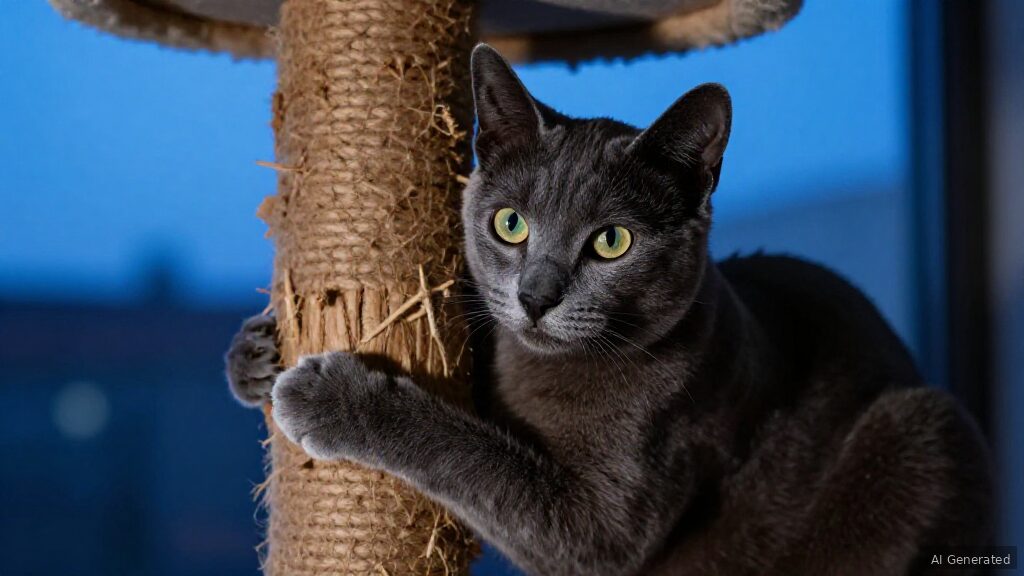
The structural stability of wooden furniture is the most important factor in protecting cat safety. Cats can jump distances twice their body weight and maintain amazing balance even when jumping from high places. Therefore, wooden furniture must be firmly secured to the floor; structures with thin legs or unstable balance are prohibited. Owners must always test whether the furniture shakes or tips over when the cat climbs. Additionally, it is best to check if the structure is damaged by the cat’s claws scratching. If owners choose to provide wall-mounted fixtures for wooden furniture, this is the best way to ensure furniture safety while satisfying the cat’s desire to move to high places. Furniture without secure structural stability not only threatens the cat’s safety but also causes psychological anxiety for owners.
Space Utilization and Placement Strategy: The Importance of Vertical Space
Modern apartments or houses often have limited space, making it difficult to provide sufficient vertical space for cats. However, cats naturally prefer high places and monitor their surroundings and defend their territory from above. When placing PlayCat wooden furniture, it is best to install it on the wall or place it in a corner to ensure the cat’s field of vision, rather than simply placing it in the center of the room. This helps the cat view the entire house as their territory and allows them to move safely. Additionally, the height interval between levels of wooden furniture should be suitable for the cat’s natural climbing. Intervals that are too narrow hinder climbing, while intervals that are too wide may be dangerous for owners. Considering the cat’s body shape and movement patterns, placing wooden furniture in a location easily observable by the owner is efficient.
Cost-Effectiveness: Preventive Investment and Long-Term Perspective
Owners often hesitate to purchase wooden furniture because it is expensive. However, this is a perspective limited to short-term cost comparisons. Investing in appropriate wooden furniture for your cat to reduce stress, prevent obesity, and stop destructive behavior is a way to save time and money costs for owners in the long run. For example, if the cat gets sufficient exercise through wooden furniture, owners can reduce the frequency of buying toys or visits to the animal hospital for treatment. From the perspective of “behavioral economics,” this means that preventive costs are much more efficient than treatment costs. Additionally, unlike toys that are easily damaged or used as consumables, wooden furniture is an investment item that can be used for a long time as the cat grows. Therefore, owners must recognize that wooden furniture is not just a simple toy, but essential equipment for protecting the cat’s health.
Advanced Information on Enrichment and Common Misconceptions Ignored by Owners
Misconceived Concept: Adding Toys vs. Environmental Design
Many owners misunderstand enrichment as “buying many toys.” However, simply piling up many toys can produce the opposite effect. The wider the range of choices for a cat, the more difficult it becomes for them to decide which toy to play with (“choice paradox”), resulting in often playing with nothing. Additionally, for cats sensitive to minor changes, adding new toys may cause stress. Therefore, enrichment should focus more on “environmental design.” That is, it is important to provide a structure (levels, holes, ramps of wooden furniture) that allows the cat to change and explore the environment on their own. Creating an environment for owners where the cat can choose “how to play” is more effective than simply giving them toys.
Managing Risks of Cat Fatigue and Hyperactivity
If enrichment is done excessively, the cat may actually feel fatigued. Unlike humans, cats have different day-night activity patterns, and rest time is very important. If owners throw toys at the cat or shake wooden furniture all day, the cat may produce defensive reactions due to stress. Especially for senior cats or adult cats, due to lack of energy, they may not respond to toys, which may lead owners to mistakenly think “the cat doesn’t like it.” Therefore, owners must always observe the cat’s condition and provide appropriate stimulation within the limit where the cat does not feel fatigued. Additionally, owners must check if the cat feels stressed due to excessive attachment to toys or wooden furniture. Healthy enrichment makes the cat feel “happy and comfortable.”
Owner Participation: Strengthening the Bond with the Cat
The most important element of enrichment is owner participation. Installing wooden furniture or toys is the owner’s responsibility; it is important to help the cat use them naturally. Owners interacting with cats by climbing wooden furniture up and down or throwing toys can bring great satisfaction to the cat. This goes beyond simple play; it is a process of strengthening the bond between owner and cat and increasing mutual trust. Additionally, observing the cat’s behavior and understanding their likes and dislikes is the core of enrichment. If owners do not actively participate, wooden furniture and toys will simply be objects abandoned in the corner of the room, and the effects of enrichment cannot be realized.
Enrichment Checklist You Can Implement Immediately
1. Analysis and Recording of Current Cat Environment
Estimated Time Required: 15 minutes
Items Needed: Notebook, Camera
Expected Effect: Understand cat behavior patterns, identify causes of problematic behaviors
Observe and record where your cat spends the day, what they do, and the toys they use for an hour. Find out the cat’s favorite locations or toys and discover what is missing for the owner. This record will become the most important standard for placing wooden furniture or choosing toys in the future. Additionally, record changes in cat behavior (such as crying all night, increased aggression) to help identify which environmental factors are causing stress.
2. Optimizing Wooden Furniture Placement and Conducting Safety Checks
Estimated Time Required: 30 minutes
Items Needed: Wooden furniture, Fixtures (optional)
Expected Effect: Ensure safe vertical space, increase cat movement convenience
Check the wooden furniture or other vertical spaces (bookshelves, window sills) currently used by the cat around the corners of the house. Check if the furniture is stable, if the cat can easily climb it, and if necessary, secure it to the wall or adjust the level height. Additionally, check if there are enough holes or hiding spots for the cat to hide safely. Install protective devices between each level of wooden furniture to prevent the cat’s claws from scratching, extending the furniture’s lifespan while increasing the cat’s satisfaction.
3. Toy Rotation and Diversity Assurance
Estimated Time Required: 20 minutes
Items Needed: Existing toys, New toys
Expected Effect: Maintain cat’s interest, provide new stimulation
Concentrate all toys in the house in one place. Cats easily lose interest in familiar toys. Therefore, owners should change toys once a week so that the cat feels like they are discovering new toys. Additionally, prepare various toys that can be used in conjunction with wooden furniture (hunting prey simulation, wand toys, etc.) to stimulate various cat instincts. In particular, pick out toys that are not frequently used by the cat and spend time playing with them together with the owner.
4. Dining Environment Improvement and Feeding Strategy
Estimated Time Required: 10 minutes
Items Needed: Wooden furniture ramp, Food bowl
Expected Effect: Increase cat’s interest in eating, prevent obesity
When the cat is eating, place the food on the ramp or high position of the wooden furniture. This makes “eating” feel like a special event for the cat and stimulates their hunting instincts. Additionally, divide the food bowl into several small bowls and place them on different levels of the wooden furniture, allowing the cat to enjoy the process of searching and eating food. This helps regulate the cat’s appetite and prevent obesity. Owners should set meal times for the cat and use wooden furniture to create a dining environment.
5. Inducing Daytime Activity and Energy Expenditure
Estimated Time Required: 15 minutes
Items Needed: Toys, Wooden furniture
Expected Effect: Reduce crying all night and destructive behaviors
Before going to work or during the day, play fully with the cat using wooden furniture. Prepare toys that require the cat to run up and down between the high levels of the wooden furniture to exhaust their energy. In particular, if owners spend time playing with the cat, it can greatly reduce the cat’s stress. Even if owners go out during the day, place and hide toys so that the cat can use wooden furniture to play alone. This helps the cat move safely in the environment even when the owner is not present.
6. Cat Behavior Observation and Feedback
Estimated Time Required: 5 minutes daily
Items Needed: Notebook, Camera
Expected Effect: Monitor behavior changes, adjust strategies
Observe the cat’s behavior daily and record how effective the wooden furniture and toys are. Check if the cat frequently uses the wooden furniture, if they respond to toys, and if crying all night or destructive behaviors have decreased. If specific toys or furniture are ineffective, owners must immediately adjust their strategy. It is important to continuously improve enrichment methods based on the cat’s condition and preferences.
Frequently Asked Questions (FAQ)
My cat doesn’t like wooden furniture, what should I do?
If your cat doesn’t like wooden furniture, owners should first re-examine the cat’s personality and current environment. The cat may be afraid of heights or dislike certain smells. Try lowering the height of the wooden furniture or placing the owner’s clothes near the holes to let the cat’s scent permeate. Additionally, spend time playing with the cat and the wooden furniture to provide a positive experience. It is important to wait for the cat to naturally accept the wooden furniture.
What is the primary task when purchasing wooden furniture?
The primary task when purchasing wooden furniture is “safety” and “stability.” You must check wood safety (presence of toxins), surface treatment, and the structural stability of the furniture (fall prevention). Additionally, it is important to choose appropriate heights and level intervals based on the cat’s personality and body shape. Owners must recognize that wooden furniture is not just a purchase, but essential equipment for protecting the cat’s health and safety.
Does enrichment require additional costs?
The additional cost of enrichment is not high. Simply purchasing wooden furniture provides sufficient effects, and toys can also be easily made by owners using existing materials or recycled materials at home. Additionally, enrichment reduces cat stress and prevents diseases, which has the effect of saving costs for owners in the long run. Therefore, owners must recognize that enrichment is not just a simple cost, but an investment in protecting the cat’s health.
Should enrichment methods be different for senior cats (7 years and older)?
For senior cats, due to reduced physical activity and weakened joints, providing stable and comfortable wooden furniture is more important than active toys. Since senior cats may have difficulty climbing high places, wooden furniture with many intermediate levels of flat surfaces or structures that owners can easily climb up and down should be chosen. Additionally, since senior cats are sensitive to stress, it is best to choose wooden furniture with rich hiding spots or introduce new toys slowly.
Will enrichment cause stress to the cat?
If enrichment is done incorrectly, the cat may feel stressed. For example, if owners suddenly give the cat many toys it is not accustomed to, or place the wooden furniture too high. Therefore, owners must always observe the cat’s condition and create a comfortable and pleasant environment for the cat. The core is for owners to actively participate, understand the cat’s behavior, and provide appropriate stimulation.
Conclusion: The First Step to a Happy Daily Life with Your Cat
The enrichment strategies and wooden furniture selection methods introduced in this article are basic elements for protecting the cat’s healthy life and strengthening the bond between owner and cat. Satisfying the cat’s instincts and creating a suitable environment through wooden furniture is not just a simple luxury or preference; from a preventive medicine perspective, it is a very rational choice. Starting today, owners should observe the cat’s behavior, place wooden furniture, and use toys to create a happy life for the cat. The time you spend with your cat will become a more special and meaningful life.
PlayCat wooden furniture is optimized to respect cat instincts and provide a safe environment. Visit PlayCat (playcat.xyz) for more information on cat enrichment.
This article was written using artificial intelligence technology. For medical-related information, please consult a veterinarian.