


A Guide to Behavioral Enrichment for Cats as Winter Ends and Spring Arrives
As the cold winter ends and spring days arrive, a cat’s physical needs and behavioral patterns begin to change rapidly. During this time, instead of the stability of the low indoor temperatures of winter, new external stimuli and a desire for activity stir up the cat’s heart. This article presents specific behavioral enrichment (Environmental Enrichment) strategies to help cats naturally respond to the environmental changes of spring and protect their mental and physical health. Through this article, guardians can accurately identify the causes of abnormal behaviors in their cats (fear, aggression, excessive food greed, etc.) and solve problems using scientifically recommended methods by experts.
Especially unpredictable weather changes, such as sudden snowfall on the way to work, can be a major stressor for cats. A cat’s reaction to environmental changes different from usual is not merely an expression of dissatisfaction but can be a signal threatening their safety. Therefore, what guardians need to provide is not just food or water, but environmental changes that satisfy the cat’s instincts and relieve anxiety. This guide introduces safe enrichment methods using natural materials that align with the brand philosophy of PlayCat (플레이캣) wooden furniture, providing practical solutions to improve the quality of life for cats.
What are the effects and causes of spring environmental changes on cat behavior?
Cats are very sensitive to seasonal changes, and the period of transition from winter to spring is particularly prone to significant fluctuations in their physiological rhythms. During this time, as daylight hours lengthen, their activity range expands, and stimuli such as external sounds and smells increase rapidly. One of the most common problems guardians face is changes in appetite, such as greed for food (wanting to eat too much “burinkle”). This is not simply due to hunger but is likely an expression of stress or anxiety caused by hormonal changes in spring.
From a behavioral perspective, these behavioral changes stem from the cat’s perception that they are in an ‘unsafe environment’. Changes in external situations, such as sudden snow showers on the way to work or missing a retirement party, cause fear in cats as uncontrollable factors. Especially adult cats and senior cats have lower adaptability to changes than kittens, so stress caused by environmental changes can persist for a longer time. Guardians need to interpret these behaviors not as ‘problem behaviors’ but as ‘environmental signals’, identify the cause, and intervene appropriately.
1. Correlation Between Seasonal Stress and Appetite Changes
Changes in a cat’s appetite are a direct indicator of environmental stress, going beyond simple preference issues. Studies show that when environmental changes occur (e.g., new furniture arrangement, sudden weather changes), cats promote gastric motility or change hormones that regulate appetite to relieve anxiety. In this process, if guardians provide more food, the cat’s anxiety may temporarily decrease, which can inadvertently reinforce bad habits. In other words, behind the expression ‘I want to eat too much burinkle’ lies the signal ‘The current environment is making me uncomfortable.’
Specifically, in spring, the lengthening of daylight hours can disrupt a cat’s circadian rhythm. This leads to irregular sleep patterns and, consequently, affects appetite regulation. Guardians should think about why the cat wants more food now rather than stopping the cat from indulging in food. For example, due to fear of noise on the way to work or sudden weather changes, the cat may seek stability through digestion or their instinct to expend energy may activate. Therefore, appetite regulation is not just about reducing the amount eaten, but creating an environment that reduces the anxiety the cat feels.
2. Sudden External Stimuli and Cat Cognitive Processing
Sudden snowfall on the way to work or hearing sounds different from usual gives cats a big shock. Cats are animals that process visual and auditory stimuli very sensitively. Especially as nocturnal animals, cats have the habit of taking naps during the day to conserve energy. However, in spring, activity time increases, and there are more external movements (birds, cars, other cats, etc.), and these stimuli are perceived as ‘threats’ by cats. Sudden weather changes on the way to work and home symbolize the dangers of the external world that cats cannot control, which amplifies anxiety.
Just as guardians might say, “I couldn’t attend the last retirement party because I was in Japan…”, changes in the guardian’s own situation also indirectly affect the cat. The guardian’s emotional instability or distraction can interfere with the cat’s ability to sense the guardian, causing the cat to demand more attention or, conversely, be neglected and stressed. Additionally, sudden noises (e.g., rain sounds caused by heavy snow, car noise) can stimulate the cat’s hearing and trigger fear responses. These reactions can lead to behaviors to run away or fight as part of the survival instinct. Therefore, guardians should closely observe the cat’s reaction to external noise and, if necessary, create a sense of safety by providing soundproofing or hiding spots.
Points to Note When Cat Behavior Changes in Spring
The most important thing when spring behavior changes is to avoid ‘forced correction’ and help ‘natural adaptation’. Cats instinctively fear change, and the guardian’s coercive approach can actually damage trust and exacerbate stress. For example, saying “No” or “You shouldn’t do that” strongly when a cat is looking for a hiding place or indulging in food can be perceived as a threat by the cat. Instead, it is important to guarantee space and time for the cat to choose for themselves.
Specifically, the point to note is not ignoring ‘resistance to change’. It takes time for a cat to adapt to a new environment (e.g., the scent of blooming plants in spring, new sounds). During this period, guardians should continuously observe the cat’s reaction and adjust the environment if necessary. For example, if a cat’s reaction to seeing birds passing by the window is excessive, you can draw the curtains or take soundproofing measures. Additionally, when a cat eats too much food, instead of simply suppressing appetite, you should change the quality and timing of meals to induce natural satiety. This process further strengthens the trust relationship between the guardian and the cat.
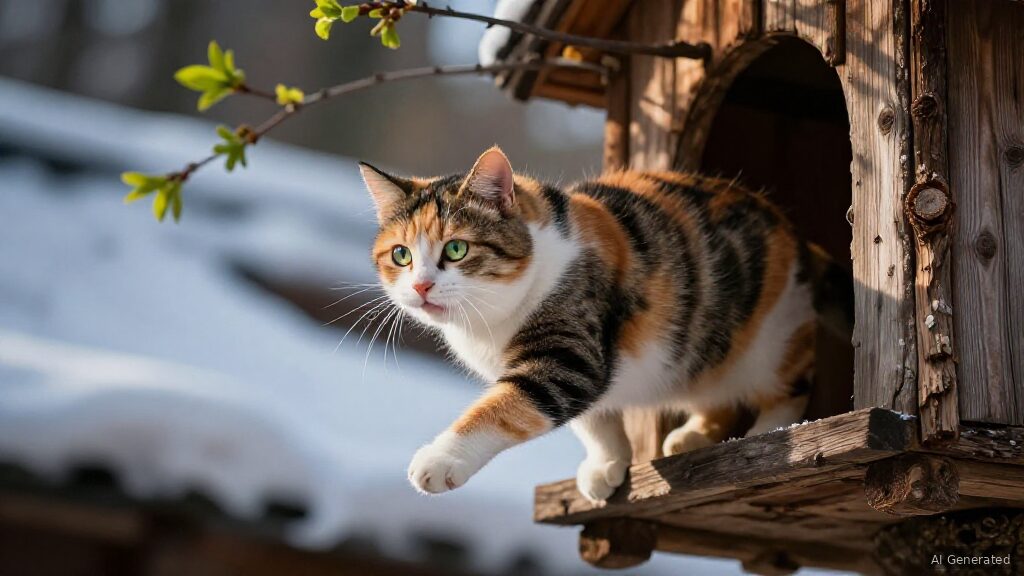
What are the roles of wooden furniture and hiding spots in relieving a cat’s anxiety?
PlayCat (플레이캣) wooden furniture plays a key role in providing a sense of safety for cats from their natural predators (humans, other animals) or external stimuli. Cats instinctively feel anxious without a ‘safe place’, which raises cortisol levels, a stress hormone, leading to reduced immunity and behavioral abnormalities. Especially during times with many external stimuli, such as spring, hiding spots where cats can hide or observe (Hiding Spot) are essential. Wooden furniture provides a natural texture and warm temperature, giving cats psychological stability.
According to animal behavioral studies, if there is a ‘space where a cat can isolate itself’, the stress response decreases. This means the cat can adapt to the environment at their own pace and in their own way. The structural features of wooden furniture (high places, holes, hiding spaces) meet these needs and provide great comfort, especially for kittens or cats with shy personalities. Just as guardians might say, “I took good care of it,” the love stemming from the guardian’s heart makes the cat feel greater safety. Therefore, one should approach wooden furniture not just as decoration but as tools that satisfy the cat’s psychological needs.
1. Psychological Stability Effect and Nature-Friendliness of Wooden Furniture
Wooden furniture provides greater psychological stability to cats compared to synthetic materials. Cats prefer the smell and texture of nature, and the subtle scent of wood stimulates their sense of smell, providing a sense of stability. This is similar to the ‘Biophilia’ effect. In other words, the principle is that the closer a cat is to a natural environment, the lower their stress level. Especially PlayCat’s wooden furniture has almost no chemical substances, protecting the cat’s respiratory health even in seasons with many spring pollen or dust.
Specifically, the structure of wooden furniture (high places, hiding spaces) satisfies the cat’s ‘defense instinct against predators’. Cats feel confident if they can observe their surroundings from a high place and gain a sense of safety by hiding in holes or narrow spaces. This structure plays a decisive role in alleviating fear of external noise or weather changes in spring. When placing wooden furniture, guardians should place it in quiet places where the cat can block external sounds. For example, placing wooden furniture in a corner near the window but where less external noise enters allows the cat to observe external changes while feeling safe.
2. Stress Relief Strategy Through Hiding Spots
If a cat has a space to hide, they feel protected from external threats and their behavior stabilizes. In spring, there are many external stimuli (birds, car noise, etc.), which are a big stress for cats. At this time, a hiding spot provides a ‘safe haven’ where the cat can temporarily escape these stimuli. Studies show that cats with hiding spots have a 30% reduction in aggression and a decrease in fear of social interaction.
Specifically, the method of using hiding spots is as follows. First, hiding spots should be placed in multiple places so the cat can choose for themselves. For example, if there is a hiding space on each level of the wooden furniture, the cat can move to the place they feel safest. Additionally, placing scents the cat likes (e.g., cat mosquito repellent, wood scent) inside the hiding spot can provide additional stability. Guardians should observe if the cat uses the hiding spot frequently and respect the point that ‘the cat chose for themselves’. Forcing the cat into a hiding spot can actually cause stress.
Tips for Placing Wooden Furniture and Hiding Spots
When placing wooden furniture, consider the cat’s visual and auditory accessibility. Cats feel confident if they can observe their surroundings from a high place and gain a sense of safety by hiding in holes or narrow spaces. This structure plays a decisive role in alleviating fear of external noise or weather changes in spring. When placing wooden furniture, guardians should place it in quiet places where the cat can block external sounds. For example, placing wooden furniture in a corner near the window but where less external noise enters allows the cat to observe external changes while feeling safe.
Additionally, placing scents the cat likes (e.g., cat mosquito repellent, wood scent) inside the hiding spot can provide additional stability. Guardians should observe if the cat uses the hiding spot frequently and respect the point that ‘the cat chose for themselves’. Forcing the cat into a hiding spot can actually cause stress. Especially in spring, since there is a lot of external noise, it is okay if the hiding spot is not completely blocked from external noise. This is because the space the cat chooses for themselves is important.
What are the specific implementation methods for spring behavioral enrichment (Environmental Enrichment)?
Behavioral enrichment (Environmental Enrichment) is an essential activity to maintain a cat’s mental and physical health. This goes beyond simply giving toys; it is a process of stimulating the cat’s instincts and increasing their adaptability to environmental changes. Especially in spring, as daylight hours lengthen and activity increases, lack of appropriate exercise and play time can lead to abnormal behaviors (destructive behavior, excessive food greed). Guardians should provide opportunities for cats to choose what they ‘want to do’ for themselves.
The core of behavioral enrichment emphasized in animal behavior is respecting the cat’s ‘Autonomy’. Instead of the guardian forcing the cat on what to do, various options are provided to the cat so they can decide for themselves. This directly affects reducing the cat’s stress and increasing happiness. Additionally, behavioral enrichment contributes to strengthening the bond between the guardian and the cat. This is because mutual understanding increases as the guardian observes and reacts to the cat’s behavior.
1. Natural Play Induction Using Wooden Furniture
PlayCat’s wooden furniture provides the optimal environment for play for cats. The structural features of wooden furniture (high places, holes, hiding spaces) stimulate various instincts (climbing, hiding, observing) of cats. Guardians can naturally have play time by hanging toys on the wooden furniture or inducing the cat to ride on it. Especially in spring, as external noise increases, it becomes more important to induce play for cats.
Specifically, the method of using wooden furniture for play is as follows. First, hang toys on the high places of the wooden furniture to induce the cat to jump up. Cats feel greater satisfaction when playing from a high place. Additionally, put toys in the holes or hiding spaces of the wooden furniture so the cat can play while hiding. This stimulates the cat’s ‘instinct to run away’ and helps relieve stress. Guardians should observe if the cat uses the wooden furniture frequently and respect the point that ‘the cat chose for themselves’.
2. Appetite Regulation and Exercise Induction Through Food Provision Methods
The cat’s request ‘I want to eat too much burinkle’ is not simply due to hunger but can be an appetite regulation issue. Guardians should provide food not just by putting it on a plate, but as a ‘game to find food’ (Food Puzzling). This stimulates the cat’s hunting instinct and simultaneously prevents overeating (Obesity). Especially in spring, as activity increases, energy intake and expenditure must be balanced.
Specifically, the method of changing food provision is as follows. First, hide food in the hiding spaces or high places of the wooden furniture so the cat has to find it. This stimulates the cat’s hunting instinct and simultaneously prevents overeating (Obesity). Additionally, the ‘game to find food’ increases the cat’s concentration and helps relieve stress. Guardians should praise the cat when they successfully find the food to strengthen the ‘connection between ‘behavior’ and ‘reward’. In this process, the cat learns to obtain ‘food’ not just by getting it but through ‘effort’, feeling satisfaction.
Spring Behavioral Enrichment Implementation Checklist
Guardians can increase their cat’s happiness by practicing the following 5 items daily. This checklist provides various stimuli to the cat and helps reduce stress.
- Play with the cat on wooden furniture for at least 15 minutes daily: The cat should have time to jump, hide, and play.
- Hide food to induce finding: Do not put food on a plate; hide it in the hiding spaces of the wooden furniture.
- Provide and maintain hiding spots: Place spaces where the cat can hide in multiple places.
- Block external noise: Place wooden furniture near the window to reduce external noise.
- Observe the cat’s reaction: Observe daily if the cat is happy or stressed.
Detailed Answers to Frequently Asked Questions (FAQ) About Spring Cat Behavior Changes
Q1. What should I do if my cat suddenly eats too much food in spring?
If a cat suddenly eats too much food in spring, it is likely a signal of environmental stress rather than a simple appetite issue. Guardians should first think about ‘why the cat wants more food now’ to understand the reason for the cat’s food indulgence. For example, due to fear of sudden weather changes on the way to work or external noise, the cat may seek stability through digestion or their instinct to expend energy may activate. Therefore, appetite regulation is not just about reducing the amount eaten, but creating an environment that reduces the anxiety the cat feels. Guardians should provide food as a ‘game to find food’ (Food Puzzling), such as hiding food to induce finding. This stimulates the cat’s hunting instinct and simultaneously prevents overeating (Obesity). Additionally, guardians should praise the cat when they successfully find the food to strengthen the ‘connection between ‘behavior’ and ‘reward’. In this process, the cat learns to obtain ‘food’ not just by getting it but through ‘effort’, feeling satisfaction.
Q2. What should I pay attention to when placing wooden furniture?
When placing wooden furniture, consider the cat’s visual and auditory accessibility. Cats feel confident if they can observe their surroundings from a high place and gain a sense of safety by hiding in holes or narrow spaces. Therefore, guardians should place wooden furniture in quiet places where the cat can block external sounds. For example, placing wooden furniture in a corner near the window but where less external noise enters allows the cat to observe external changes while feeling safe. Additionally, placing scents the cat likes (e.g., cat mosquito repellent, wood scent) inside the hiding spot can provide additional stability. Guardians should observe if the cat uses the hiding spot frequently and respect the point that ‘the cat chose for themselves’. Forcing the cat into a hiding spot can actually cause stress. Especially in spring, since there is a lot of external noise, it is okay if the hiding spot is not completely blocked from external noise. This is because the space the cat chooses for themselves is important.
Q3. What should I do if my cat suddenly becomes aggressive in spring?
If a cat suddenly becomes aggressive in spring, it is likely an expression of stress caused by environmental changes. Guardians should first think about ‘why the cat is showing aggression now’ to understand the reason for the cat’s aggression. For example, due to fear of sudden weather changes on the way to work or external noise, the cat may seek stability through digestion or their instinct to expend energy may activate. Therefore, aggression control is not just about scolding the cat, but creating an environment that reduces the anxiety the cat feels. When the cat becomes aggressive, guardians should avoid touching or holding the cat forcibly and it is important to guarantee space and time for the cat to choose for themselves. Additionally, while the cat is becoming aggressive, it is good to provide food as a ‘game to find food’ (Food Puzzling), such as hiding food to induce finding. This stimulates the cat’s hunting instinct and simultaneously prevents overeating (Obesity). Additionally, guardians should praise the cat when they successfully find the food to strengthen the ‘connection between ‘behavior’ and ‘reward’. In this process, the cat learns to obtain ‘food’ not just by getting it but through ‘effort’, feeling satisfaction.
Q4. What should I consider when buying wooden furniture?
When buying wooden furniture, consider the cat’s age, personality, and living environment. Kittens like high places, so wooden furniture with many high places is suitable. On the other hand, senior cats have weak joints, so wooden furniture with low heights is suitable. Additionally, cats with shy personalities are suitable for wooden furniture with many hiding spaces. Guardians should identify the cat’s personality and choose ‘wooden furniture that the cat can choose for themselves’. Additionally, the material (type of wood) of the wooden furniture should also be considered. Cats prefer the smell and texture of nature, so natural wood is better. When placing wooden furniture, guardians should place it in quiet places where the cat can block external sounds. For example, placing wooden furniture in a corner near the window but where less external noise enters allows the cat to observe external changes while feeling safe. Additionally, placing scents the cat likes (e.g., cat mosquito repellent, wood scent) inside the hiding spot can provide additional stability. Guardians should observe if the cat uses the hiding spot frequently and respect the point that ‘the cat chose for themselves’. Forcing the cat into a hiding spot can actually cause stress. Especially in spring, since there is a lot of external noise, it is okay if the hiding spot is not completely blocked from external noise. This is because the space the cat chooses for themselves is important.
Q5. How long do spring cat behavior changes last?
Spring cat behavior changes generally last for about 2-4 weeks. During this period, guardians should continuously observe the cat’s behavior and it is important to guarantee ‘space and time for the cat to choose for themselves’. Since it takes time for a cat to adapt to environmental changes, guardians should closely observe the cat’s reaction and adjust the environment if necessary. For example, when a cat eats too much food, instead of simply suppressing appetite, you should change the quality and timing of meals to induce natural satiety. This process further strengthens the trust relationship between the guardian and the cat. Additionally, if the cat is stressed due to spring behavior changes, it is important to provide ‘environmental changes that satisfy the cat’s instincts and relieve anxiety’. Guardians need to interpret the cat’s behavior not as ‘problem behaviors’ but as ‘environmental signals’, identify the cause, and intervene appropriately.
Q6. Can I reduce my cat’s stress using wooden furniture?
Yes, you can effectively reduce your cat’s stress by using wooden furniture. According to animal behavioral studies, if there is a ‘space where a cat can isolate itself’, the stress response decreases. This means the cat can adapt to the environment at their own pace and in their own way. The structural features of wooden furniture (high places, hiding spaces) meet these needs and provide great comfort, especially for kittens or cats with shy personalities. When placing wooden furniture, guardians should place it in quiet places where the cat can block external sounds. For example, placing wooden furniture in a corner near the window but where less external noise enters allows the cat to observe external changes while feeling safe. Additionally, placing scents the cat likes (e.g., cat mosquito repellent, wood scent) inside the hiding spot can provide additional stability. Guardians should observe if the cat uses the hiding spot frequently and respect the point that ‘the cat chose for themselves’. Forcing the cat into a hiding spot can actually cause stress. Especially in spring, since there is a lot of external noise, it is okay if the hiding spot is not completely blocked from external noise. This is because the space the cat chooses for themselves is important.
Conclusion for Cats’ Spring with PlayCat (플레이캣)
As the cold winter ends and spring days arrive, a cat’s physical needs and behavioral patterns begin to change rapidly. During this time, instead of the stability of the low indoor temperatures of winter, new external stimuli and a desire for activity stir up the cat’s heart. This article presented specific behavioral enrichment (Environmental Enrichment) strategies to help cats naturally respond to the environmental changes of spring and protect their mental and physical health. Through this article, guardians can accurately identify the causes of abnormal behaviors in their cats (fear, aggression, excessive food greed, etc.) and solve problems using scientifically recommended methods by experts.
A cat’s happiness begins not with simple food or water, but with environmental changes that satisfy the cat’s instincts and relieve anxiety. Through safe enrichment methods using natural materials that align with the brand philosophy of PlayCat (플레이캣) wooden furniture, guardians can improve the quality of life for their cats. Check more cat behavioral enrichment information at PlayCat (playcat.xyz)
This content was written using AI technology. Always consult a veterinarian for medical-related information.