


The Complete Guide to Enrichment for a Happy Cat Life and How to Choose Wooden Furniture in 2026
For cat owners, the most pressing concern is not just feeding and litter management, but the mental well-being and stress relief of their pets. This article presents environmental enrichment strategies that have been tested over more than 10 years alongside our “cat navigator,” through countless trials and errors. We will also provide a detailed explanation of the scientific principles behind the placement of wooden furniture, a specialty of PlayCat. By reading this article, you will learn to enhance preventive medical effects by creating an environment that suits your cat’s instincts, rather than relying on expensive food or supplements. You will be able to understand the causes of behavioral changes in your cat and apply appropriate solutions.
The Necessity of Cat Enrichment and the Scientific Evidence Owners Should Know
Problems Arising from Not Fulfilling a Cat’s Daily Life and Reproductive Instincts
Many owners keep cats indoors, meaning their pets often cannot fully exercise their instincts to hunt prey (like mice) or defend their territory as wild cats do. Wild cats hunt hundreds of mice and birds a day, exhausting themselves by chasing them. In contrast, indoor cats spend their entire day crouching at their owner’s feet or sleeping, which disrupts their natural physiological rhythms and emotional stability. According to ethological research, cats with suppressed hunting instincts exhibit “excessive behavior,” showing destructive actions like tearing apart clothes, furniture, and toys all night, or meowing incessantly. This is not mere mischief; it indicates that energy is not being released and stress hormone levels, such as cortisol, are abnormally high. Therefore, it is essential for owners to design the physical environment so their cats can consume sufficient energy before bedtime.
The Importance of Environmental Adjustments for Stress and Obesity Prevention
Cat stress can lead to various difficult-to-treat diseases, not just a depressed expression. Stressed cats have weakened immune systems, making them more susceptible to infections, digestive disorders, and skin diseases. Furthermore, when cats lack exercise, their appetite naturally increases, leading to obesity. Obesity is a primary cause of fatal diseases in cats, such as diabetes, arthritis, and glomerulonephritis. From the perspective of behavioral economics, the cost of investing in prevention (time spent on environmental setup and wooden furniture) is a far more rational choice compared to the potential surgery fees and long-term treatment costs for cats. In other words, owners must always remember that enriching the environment to lower the probability of disease occurrence is the most efficient investment. This goes beyond simply buying toys; it is the first step in preventive medicine to protect your cat’s physical and mental health.
The First Action Owners Can Take Immediately: Observation and Recording
Before starting enrichment, it is crucial for owners to accurately grasp their cat’s current state. Ask yourself, “What does this cat like?” and observe your cat throughout the day. Record which toy they spend the most time with, which height they prefer most, and when they are most active. This record will serve as a benchmark when purchasing wooden furniture or toys in the future to determine if they suit your cat’s preferences. For example, if your cat enjoys playing hide-and-seek in every corner by the window, a tall wooden furniture piece with rich visual stimulation would be effective. By understanding your cat’s language and behavioral patterns, you can build the right rich environment. Merely feeling the urge to “give” is insufficient; specific behavioral analysis must come first.
| Cat Behavioral Symptoms | Potential Causes | Recommended Enrichment Direction |
|---|---|---|
| Sleeping all day and crying all night | Excessive energy accumulation, unfulfilled instincts | Daytime activity induction (toy rotation), securing high vantage points |
| Restlessness, intrusion into furniture | Suppressed hunting instincts, stress | Predator simulation toys, provision of vertical movement spaces |
| Increased aggression (biting, kicking) | Stress, fear | Provision of safe hiding spots, gradual environmental changes |
Differences in Enrichment Strategies Based on Cat Age and Personality?
Challenges and Learning for Kittens and Adolescents
Kittens (0-6 months) and adolescents (6 months to adulthood) are physically the most active and the best time to learn new things. Cats in this period are in a crucial process of honing hunting skills, adapting to the environment, and forming bonds with their owners. Enrichment provided during this time must focus on “challenge” and “learning.” Toys that are too easy to solve are less effective than those that require discovering hidden items or reacting only after slight movement. In the case of wooden furniture, various heights of steps and non-slip ramps are essential so that cats can practice balancing by jumping on the wood during this period. If owners do not provide appropriate exercise during this time, it may become difficult for adult cats to learn new techniques later, and established habits may become problematic. Therefore, the kitten period can be said to be the most important time to solidify the “foundation of learning.”
The Importance of Security and Hiding Spots for Adult and Senior Cats
Adult cats (1-7 years) and senior cats (7+ years) tend to have reduced physical activity and increased sensitivity to stress. At this stage, providing “security” and “hiding spots” is the core of enrichment. Adult cats want to establish their territory and maintain a stable lifestyle, while senior cats have less energy and may react strongly to small stimuli or become lethargic. In the case of wooden furniture, it is important to provide high vantage points (towers or tall lamps) where cats can control their territory, and hiding spots with small holes where they can easily hide from loud noises. Especially for senior cats, whose joints weaken, intermediate-height flat surfaces that are not too high or steep, which owners can easily climb up and down, are excellent wooden furniture. Adult cats gain a sense of security in “predictable environments” rather than “challenges,” which is better for their mental health.
Individual Approaches for Different Personalities (Active, Shy, Aggressive)
A cat’s personality varies by individual, which is a crucial variable determining the direction of enrichment. Active cats prefer high-intensity exercise in short periods and need toys that move quickly and spacious movement areas. On the other hand, shy or defensive cats are easily stressed by new environments or objects. In this case, abruptly changing the environment or giving loud toys may have the opposite effect. For shy cats, it is desirable to introduce new toys slowly and provide “safe signals,” such as placing your owner’s clothes in the holes of the wooden furniture so the cat’s scent permeates them. Aggressive cats have very strong hunting instincts, so furniture with a structure that allows them to safely release aggressive energy through safe toys is necessary. Owners must accurately understand their cat’s personality and select the shape of wooden furniture and toys most suitable for that cat.
Core Elements to Consider When Choosing and Placing Wooden Furniture
Checking Wood Texture and Safety
When choosing PlayCat wooden furniture, the first thing to check is the type of wood and the finishing treatment. Since cats move by feeling the surface of the wood with their paws, rough surfaces or finishes with sawdust can pose dangers to both owners and cats. Safe wooden furniture should use eco-friendly wood oil or natural wax, or undergo smooth sanding treatment to protect areas touched by cat paws and hands. Furthermore, it is important to select wood that does not release toxic chemicals. If owners connect the keyword “health” with “wood safety,” choosing safe wooden furniture, even at a higher price, will be a significant long-term benefit for the cat. This reflects the sincerity of owners trying to provide the best environment for their cats.
Safety and Structural Stability: Preventing Tipping and Securing
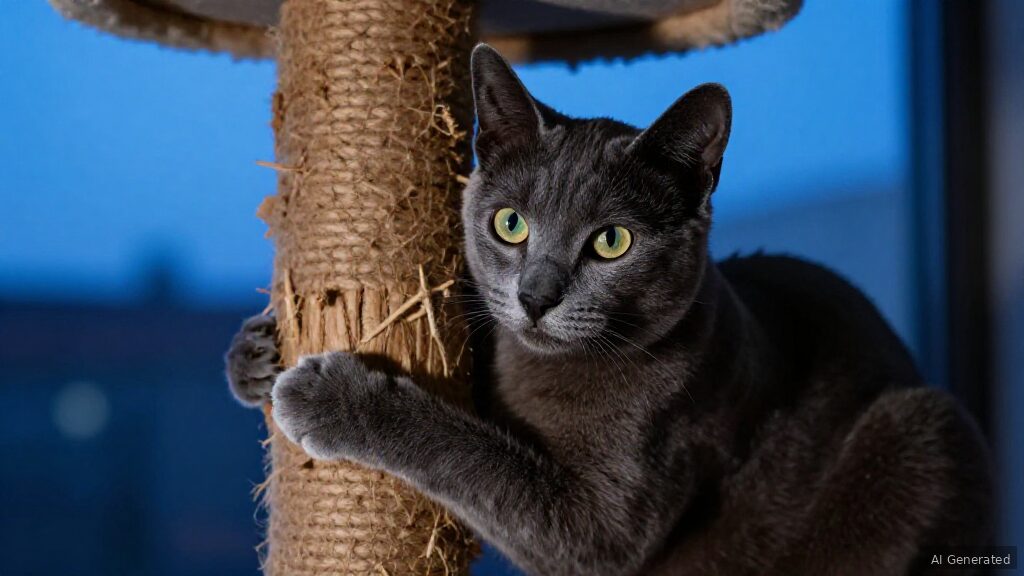
The structural stability of wooden furniture is the most important element to protect cat safety. Cats have the ability to jump more than twice their body weight and maintain remarkable balance even when jumping down from high places. Therefore, wooden furniture must be firmly fixed to the floor, and structures with thin legs or unstable balance should be prohibited. Owners must always test whether the furniture shakes or tips over when the cat climbs on it. Furthermore, it is recommended to check if the structure will be damaged when scratched by cat claws. If owners choose to provide devices to fix the wooden furniture to the wall, it is the best way to satisfy the cat’s high desire for movement while ensuring furniture safety. Furniture without guaranteed structural stability can threaten cat safety and potentially cause psychological anxiety in owners.
Space Utilization and Placement Strategy: The Importance of Vertical Space
Modern apartments and homes often have limited space, making it difficult to provide sufficient vertical space for cats. However, cats essentially prefer high places, monitoring their surroundings and defending their territory from above. When placing PlayCat wooden furniture, it is desirable to install it on walls or in corners to ensure the cat’s field of view, rather than simply placing it in the center of the room. This allows the cat to recognize the entire house as their territory and move safely. Furthermore, the height intervals between the steps of the wooden furniture must be appropriate for the cat to climb naturally. Intervals that are too narrow prevent climbing, while intervals that are too wide may pose dangers to owners. Considering the cat’s body type and movement patterns, placing the wooden furniture in a position easily observable by the owner is efficient.
Cost-Effectiveness: Preventive Investment and Long-Term Perspective
Since wooden furniture is expensive, many owners hesitate. However, this is a perspective limited to short-term cost comparison. Investing in wooden furniture suitable for cats to reduce stress, prevent obesity, and prevent destructive behavior is a way to save time and monetary costs for owners in the long run. For example, if a cat is sufficiently active through wooden furniture, owners can buy toys less frequently and reduce visits to the veterinary clinic for necessary treatments. From the perspective of “behavioral economics,” this means that preventive costs are a far more efficient choice than treatment costs. Furthermore, unlike toys that easily break or wear out, wooden furniture is an investment asset that can be used for a long time as the cat grows. Therefore, owners must recognize wooden furniture not just as a toy, but as essential equipment to protect their cat’s health.
Advanced Information on Enrichment and Mistakes Owners Often Overlook
Misunderstood Concepts: Adding Toys vs. Designing the Environment
Many owners misunderstand enrichment as “buying many toys.” However, simply piling up toys can have the opposite effect. As the range of choices widens, cats may struggle to decide which toy to play with (“the paradox of choice”), resulting in them playing with nothing. Furthermore, for cats that are sensitive to even minor changes, adding just one new toy can cause stress. Therefore, enrichment must focus more on “environmental design.” That is, it is important to provide structures (steps, holes, ramps of wooden furniture) that allow the cat to change the environment and explore themselves. It is more effective for owners to build an environment where the cat can choose “how to play” rather than simply giving toys.
Cat Fatigue Management and Dangers of Excessive Activity
Excessive enrichment can cause cats to become tired in reverse. Unlike humans, cats have different activity patterns day and night, and rest time is very important. If owners throw toys or shake wooden furniture all day, cats may become stressed and react defensively. Especially for senior and adult cats, who lack energy and may not react to toys, this can lead owners to misunderstand that “cats hate it.” Therefore, it is important for owners to continuously observe their cat’s condition and provide appropriate stimulation within a range that does not tire the cat. Furthermore, it is necessary to confirm that the cat is not stressed by being overly attached to toys or wooden furniture. Healthy enrichment is something that makes the cat feel “happy and comfortable.”
Owner Participation: Strengthening the Bond with the Cat
The most important element of enrichment is owner participation. Setting up wooden furniture and toys is the owner’s role, and it is important to help the cat utilize them naturally. Interactions such as owners climbing up and down wooden furniture with their cats or throwing toys provide great satisfaction for the cat. This goes beyond simply playing with the cat; it is a process of strengthening the bond between owner and cat and increasing mutual trust. Furthermore, owners observing their cat’s behavior and understanding what they like and dislike is the core of enrichment. Without active participation, wooden furniture and toys are merely objects left in the corner of the house, and the effects of enrichment cannot be expected.
Enrichment Checklist You Can Practice Today
1. Analysis and Recording of the Cat’s Current Environment
Estimated Time Required: 15 minutes
Required Items: Notebook, Camera
Expected Effect: Understanding of cat behavioral patterns and identification of causes of problematic behaviors
Observe and record where the cat stays, what they do, and which toys they use throughout the day for one hour. Identify the positions and toys the cat prefers most and find parts that owners are overlooking. This record will be the most important benchmark when placing wooden furniture or selecting toys in the future. Furthermore, record changes in the cat’s behavior (e.g., crying all night, increased aggression) to help understand which environmental elements are causing stress.
2. Optimization of Wooden Furniture Placement and Safety Check
Estimated Time Required: 30 minutes
Required Items: Wooden furniture, Fixing devices (optional)
Expected Effect: Ensuring safe vertical space and improving convenience of cat movement
Go around every corner of the house and check the wooden furniture and other vertical spaces (bookshelves, window sills, etc.) currently used by the cat. Confirm if the furniture is stable and if the cat can easily climb it, fixing it to the wall or adjusting step heights as necessary. Furthermore, confirm if there are enough holes or hiding spots for the cat to hide safely. Install protective devices between each step of the wooden furniture to prevent claw scratches, extending the furniture’s lifespan while increasing cat satisfaction.
3. Toy Rotation and Ensuring Diversity
Estimated Time Required: 20 minutes
Required Items: Existing toys, New toys
Expected Effect: Maintaining the cat’s interest and providing new stimulation
Gather all the toys in the house into one pile. Cats easily lose interest in familiar toys. Therefore, owners should swap toys once a week to make the cat feel like they discovered new toys. Furthermore, prepare various shaped toys (predator simulation, string toys, etc.) that can be used with wooden furniture to stimulate the cat’s various instincts. Especially, select toys the cat does not use often and set aside time for owners to play with their cat together.
4. Environmental Improvement of Meal Times and Feeding Strategy
Estimated Time Required: 10 minutes
Required Items: Wooden furniture ramp, Food bowl
Expected Effect: Increased cat interest in meals and obesity prevention
When the cat eats, feed them from the wooden furniture ramp or a high position. This makes “meals” feel like a special event for the cat, stimulating their hunting instincts. Furthermore, divide the food bowl into several small bowls and place them on various steps of the wooden furniture to let the cat enjoy the process of finding food. This helps regulate the cat’s appetite and prevent obesity. It is important for owners to set meal times for their cat and build a meal environment utilizing wooden furniture.
5. Daytime Activity Induction and Energy Consumption
Estimated Time Required: 15 minutes
Required Items: Toys, Wooden furniture
Expected Effect: Reduction in all-night crying and destructive behavior
Before owners leave for work or during the day, let the cat play sufficiently using the wooden furniture. Prepare toys that require climbing up and down the high steps of the wooden furniture and jumping around to consume the cat’s energy. Especially, if owners set aside time to play with their cat, it can significantly reduce the cat’s stress. Even when owners are not present during the day, arrange and hide toys so the cat can play using the wooden furniture on their own. This allows the cat to be active in a safe environment even when owners are away.
6. Cat Behavior Observation and Feedback
Estimated Time Required: 5 minutes daily
Required Items: Notebook, Camera
Expected Effect: Monitoring behavioral changes and strategy modification
Observe the cat’s behavior daily and record how effectively the wooden furniture and toys are working. Confirm if the cat frequently uses the wooden furniture, reacts to toys, and if all-night crying or destructive behavior has decreased. If specific toys or furniture are ineffective, owners must immediately modify their strategy. It is important to continuously improve enrichment methods considering the cat’s condition and preferences.
Frequently Asked Questions (FAQ)
My cat dislikes the wooden furniture. What should I do?
If your cat dislikes the wooden furniture, owners should first reconfirm the cat’s personality and current environment. The cat may be afraid of heights or dislike certain scents. Try methods such as lowering the height of the wooden furniture or placing your owner’s clothes in the holes so the cat’s scent permeates them. Furthermore, set aside time to play with the cat and the wooden furniture to provide positive experiences. It is important to wait until the cat naturally accepts the wooden furniture.
What should be the top priority when purchasing wooden furniture?
The top priority when purchasing wooden furniture is “safety” and “stability.” Be sure to check the safety of the wood (presence of toxins) and finishing treatment, as well as the structural stability of the furniture (anti-tipping). Furthermore, it is important to select based on height and step intervals suitable for the cat’s personality and body type. Owners must recognize wooden furniture not just as a purchase, but as essential equipment to protect their cat’s health and safety.
Does enrichment require additional costs?
Additional costs for enrichment are not significant. Purchasing wooden furniture alone can provide sufficient effects, and toys can be easily made at home or using recycled materials by owners. Furthermore, enrichment has the effect of reducing stress and preventing diseases in cats, thereby reducing owners’ costs in the long run. Therefore, owners must recognize enrichment not just as a cost, but as an investment to protect their cat’s health.
Should enrichment methods change for senior cats (7+ years)?
For senior cats, since physical activity decreases and joints weaken, wooden furniture that provides security and comfort is more important than active toys. Since senior cats find it difficult to climb up and down high places, they need to select wooden furniture with many intermediate-height flat surfaces or structures that owners can easily climb up and down. Furthermore, since senior cats are sensitive to stress, it is desirable to choose wooden furniture with abundant hiding spots and introduce new toys slowly.
Can enrichment cause stress to the cat?
If enrichment is not performed correctly, it can cause stress to the cat. For example, if owners suddenly give too many unfamiliar toys or place wooden furniture too high. Therefore, it is important for owners to continuously observe their cat’s condition and build a comfortable and enjoyable environment for the cat. The core is for owners to actively participate, understand their cat’s behavior, and provide appropriate stimulation.
Conclusion: The First Step for a Happy Daily Life with Your Cat
The enrichment strategies and selection of wooden furniture introduced in this article are essential elements to protect your cat’s healthy life and strengthen the bond between owner and cat. Fulfilling your cat’s instincts through wooden furniture and building the right environment is not just a luxury or hobby; it is a very rational choice from a preventive medical perspective. Owners should start observing their cat’s behavior, placing wooden furniture, and utilizing toys today to create a happy life for their cat. The time spent with your cat will become a more special and meaningful daily life.
PlayCat (PlayCat) wooden furniture is optimized to respect cat instincts and provide a safe environment. Check out more cat enrichment information at PlayCat (playcat.xyz).
This content was created using AI technology. Please consult a veterinarian for medical-related information.