


What Every Multi-Cat Household Owner Must Know — The Truth and Proper Use of Facial Recognition Smart Feeders
The Real Reasons and Limitations of Facial Recognition Feeders in Multi-Cat Homes
Many challenges faced by pet owners in multi-cat households go beyond the simple question of ‘which cat gets fed.’ The deeper issue is how to scientifically manage the health status and eating patterns of individual cats. While facial recognition (Facial Recognition) smart feeders are currently gaining attention as a solution to these concerns, ignoring the limitations of the technology and the complex dynamics of multi-cat environments can actually cause stress. This article goes beyond a simple product introduction to deeply analyze the operating principles, actual efficiency, and applicability of facial recognition feeders from a behavioral perspective. Through this article, readers will gain concrete criteria to determine how to view feeders not just as simple food dispensers, but as ‘individual cat health management solutions,’ and to make the most rational choices for their cats.
Many guardians think, ‘I just need to call my cat’s name,’ but in reality, changes in each cat’s physical features or environmental factors directly affect recognition rates. For example, if an adult cat enters seniority and their eyes become cloudy, or if a kitten grows and their face shape changes, the machine may fail to recognize them, leaving the family member hungry. Therefore, this article goes beyond technical performance to present a flexible management system that considers physiological changes in cats. By reading to the end, readers will learn how to use feeders not just as a purchase, but as a ‘communication tool with cats.’ This is ultimately the most practical action to extend the happiness and lifespan of cats.

The Actual Operating Principles of Facial Recognition Technology and Technical Limitations in Multi-Cat Environments
Factors Affecting Recognition Rates and Correlation with Physical Changes
Facial recognition technology basically works by matching a cat’s facial landmarks (Landmarks) to verify identity. However, since this relies on a fixed database, recognition rates can drop sharply if the cat’s physiological changes occur. According to research, age-related physical changes in cats affect feeder recognition. Kittens (2 weeks to 6 months) grow very rapidly, and their facial skeletons change daily, so the facial data entered during initial setup can become invalid within a few weeks. On the other hand, adult cats (1 to 7 years) have stable landmarks, but if they become stressed or sick, causing swelling around the eyes or temporary changes in nose shape, recognition errors can occur. Additionally, senior cats (7 years and older) often experience worsening cataracts due to aging or changes in fur color, causing existing algorithms to fail to recognize them as new faces and frequently classify them as ‘unknown cats.’
Considering these technical limitations, the most important point when using facial recognition feeders in multi-cat households is to not rely on ‘static data’ but to combine it with ‘dynamic management.’ For example, if a cat stops eating, one should suspect the cat’s health status (tooth pain, gastrointestinal disorders, etc.) rather than simply resetting the machine. If all cats experience a drop in recognition rates simultaneously, it is likely a sensor error with the device itself or a network connection issue. Therefore, pet owners should make it a habit to regularly re-photograph each cat’s face and update the database. This is a key maintenance step to maximize the device’s functions; neglecting it turns the feeder into nothing more than a simple food container.
Multi-Cat Dynamics (Multi-cat Dynamics) and Appetite Competition Psychology
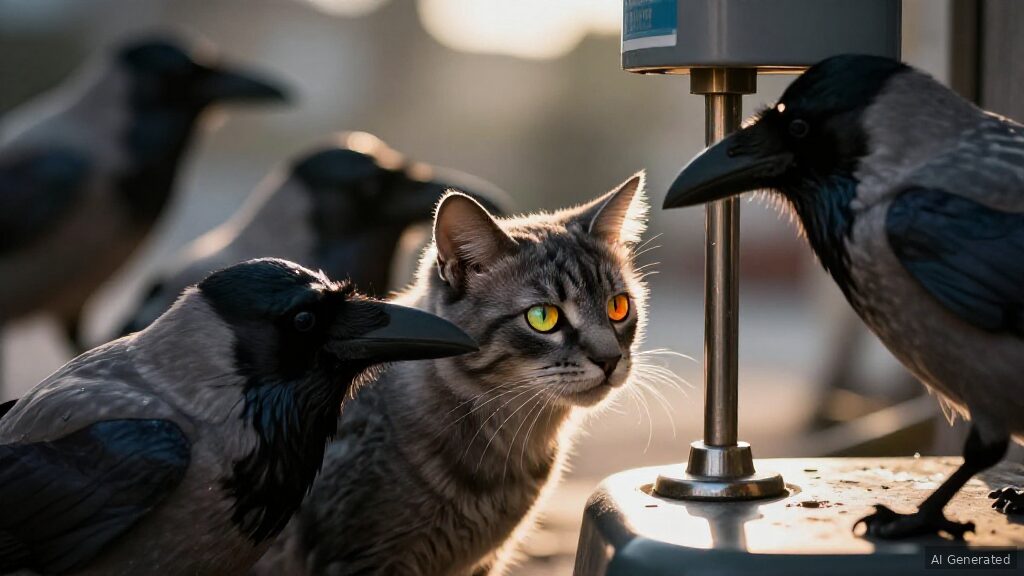
The biggest challenge facial recognition technology faces in multi-cat households is the social dynamics (Social Dynamics) of cats. Compared to primates, cats are a species with a distinct social hierarchy, and the psychology of ‘food competition’ is particularly strong. When a facial recognition feeder opens, cats with an ‘Alpha personality’ often approach first, blocking the door or physically pushing other cats away. In such cases, the machine recognizes only the face of the leading cat and opens the door, but other cats waiting behind completely lose the opportunity to eat. This is a representative example of how even a technically perfect system can fail if it does not consider actual cat behavior.
According to expert opinions, the success rate of facial recognition feeders in multi-cat households varies greatly depending on the personality differences and hierarchy relationships among the cats. For example, facial recognition is effective in households where the hierarchy is clearly established and the alpha cat shows consideration for others, but it can actually increase stress in households where cats aggressively treat each other. Additionally, ‘food competition’ occurring when feeding times overlap can harm a cat’s psychological stability, leading to abnormal eating patterns such as overeating or anorexia. Therefore, before installing a feeder, pet owners should carefully observe each cat’s personality (active, timid, aggressive) and implement a strategy to stagger (错峰) feeding times.
Differences in Algorithms Between Domestic and International Models
Currently, facial recognition feeders sold in the market are divided into domestic and international models, and these two models show clear differences in algorithm sensitivity and database construction methods. Domestic models are mainly designed using wide-angle cameras (Wide-angle Camera) to capture cats from a wide angle. This design considers the possibility of multiple cats approaching at once, but it can increase the probability of confusing background objects or other cats’ faces. On the other hand, international models are mostly equipped with precise close-up cameras (Close-up Camera) and AI ultra-precision algorithms to optimize for capturing finer facial landmarks of individual cats more accurately.
These differences stem not just from hardware performance issues but from differences in assumptions about the usage environment. Domestic models assume a cluttered environment where multiple cats are active simultaneously, while international models assume a relatively private dining space. Therefore, when choosing an international model for a multi-cat household, it is essential to register each cat’s face data from 10 or more different angles (various angles) during the initial setup. This helps the device achieve accurate recognition under various lighting conditions (dim light at dawn, bright light near windows during the day). Additionally, international models have shorter software update cycles, meaning algorithms are constantly improving, whereas domestic models have longer update cycles, which may take more time to recognize new cat faces. Recognizing these differences and choosing an appropriate model is the first step toward efficient food management in multi-cat households.
Cat Health Management: Integrated Approach to Food Management and Behavioral Enrichment
Scientific Approach to Food Management and Maintaining Nutritional Balance
The introduction of smart feeders can be used as a scientific tool to maintain a cat’s nutritional balance, going beyond simple convenience. Especially in multi-cat households, the amount of food required varies depending on each cat’s weight, activity level, and health status. For example, senior cats (Senior Cat) have reduced digestive function and need to eat small amounts frequently, whereas young adult cats (Adult Cat) need to consume relatively large amounts of energy to maintain their active exercise levels. Facial recognition feeders enable this tailored feeding (Tailored Feeding), preventing excessive or insufficient food supply to specific cats.
Specific food management strategies involve monitoring each cat’s weight fluctuations and appetite patterns. Pet owners should record daily intake through the app or device records and track weight changes weekly. If a specific cat’s feeding amount decreases sharply, it may indicate tooth pain, gastrointestinal disorders, or stress. In such cases, one should immediately consult a veterinarian, prioritizing understanding the cat’s health status over mechanical solutions. Additionally, when mixing wet and dry food, it is necessary to set an appropriate ratio considering each cat’s preference and digestive power. This leads to a process of continuously managing the health of the individual cat, going beyond simply filling the machine with food.
Linking Behavioral Enrichment (Environmental Enrichment) with Feeding Times
Smart feeders can become powerful tools to enhance a cat’s behavioral enrichment (Environmental Enrichment). Particularly by utilizing the principle of ‘intermittent reinforcement’ (Intermittent Reinforcement), setting feeding times unpredictably or dividing food into small portions stimulates a cat’s natural hunting instinct. According to research, activities requiring food acquisition provide psychological satisfaction to cats, lowering stress levels and increasing happiness. Facial recognition feeders support this by analyzing each cat’s appetite patterns to supply food at optimal intervals.
Specific behavioral enrichment methods can be applied as follows.
- Food Distribution Strategy: Divide the daily required food amount into thirds and feed in the morning, afternoon, and evening. This helps with weight control and makes feeding times unpredictable, stimulating the hunting instinct.
- Mission-Based Feeding: Encourage a specific cat (e.g., a timid cat) to move around to find food. For example, place food in a corner of the table and set up barriers to prevent other cats from approaching, or hide it under the table.
- Utilizing Sound and Visual Stimuli: Adjust the directionality of the sound or shake the food container to make noise when the feeder operates, guiding cats to gather and stimulating their curiosity.
These methods have the effect of improving mental health beyond simple satiety. Especially in multi-cat households, these methods greatly help reduce social stress by providing opportunities for each cat to play while waiting for their meal time or interact with other cats.
Feeder Management and Maintenance as an Essential Item for Pet Owners
While smart feeders are an essential management tool for pet owners, continuous maintenance is required for them to function properly. The most important thing is to maintain regular food replacement and device cleanliness. In the case of wet food, it can deteriorate over time, so leftover food should be checked and discarded at least once a day. Additionally, since each cat prefers different types of food, it is recommended to explicitly label the type of food for each feeder or assign color codes to avoid confusion.
Device software updates are also important. Manufacturers regularly improve algorithms to increase recognition rates and add new features. Pet owners should periodically perform ‘update check’ in the device settings to apply the latest version. Additionally, check the device’s power supply (battery or plug) to prevent accidents where power is cut off during feeding. These basic management habits are key elements to guarantee a cat’s meal time and enhance the reliability of the feeder.
Preventing Pet Owner Mistakes and Behavioral Economic Approaches
Loss Aversion Principle and Preventive Management
A common mistake pet owners make when introducing feeders is focusing on worrying about losses such as ‘when the machine breaks’ or ‘when food runs out.’ This can be explained by the ‘loss aversion’ principle (Loss Aversion) of behavioral economics, and in reality, one should focus on preventing greater losses such as worsening cat health or anorexia. For example, if a cat feels hungry because the food container is empty, this can cause more serious health problems than a feeder malfunction. Therefore, it is rational for pet owners to always secure at least a 2-week supply of food and set up device inspection schedules in advance to block ‘loss’ beforehand.
Additionally, it is important to prevent problems such as ‘food competition’ or ‘recognition errors’ that may occur during the initial introduction of the feeder. These can be resolved with much less cost and effort than solving them later (surgery costs, vet visit costs, etc.). For example, if each cat’s eating habits are analyzed in the early stages and feeding times are staggered (错峰), stress and diseases that occur later can be prevented. This should be viewed as an investment in protecting the long-term health of cats, going beyond simply purchasing a device.
Resolving the Paradox of Choice (Paradox of Choice) and Product Comparison
Although there are various feeder brands and models in the market, choosing everything can actually cause confusion for pet owners in multi-cat households. This is explained by the ‘paradox of choice’ (Paradox of Choice), where satisfaction can actually decrease when there are too many choices. Therefore, it is recommended for pet owners to compare functions and prices and compare 2-3 models that meet the core functions they need most (facial recognition, app connectivity, food capacity, etc.).
When comparing products, one must consider not just price but actual user experience and maintenance costs. For example, an expensive model may be cheaper but have a short battery life or unstable app connectivity, which could be more expensive in the long run. On the other hand, a cheaper model that is easy to maintain and durable may be a more rational choice in the long run. In this process, pet owners should make the best choice based on their budget and needs while reducing the burden of unnecessary functions. This helps focus on the most important elements for a cat’s health and happiness (e.g., recognition rate, food storage function).
Practical Methods: Step-by-Step Action Guide
The following are specific practical methods that pet owners should follow to effectively use feeders.
- Step 1: Initial Data Collection and Setup (1 week)
Take 10 or more photos of each cat’s face from various angles (front, side, bottom) and register them in the database. Additionally, record each cat’s usual eating habits and preferences. This step is essential for increasing recognition rates. - Step 2: Food Type and Quantity Setup (2 weeks)
Set the appropriate food type and quantity for each cat based on their weight and health status. Consider the wet/dry ratio and adjust the appropriate amount according to each cat’s appetite pattern. - Step 3: Staggered (错峰) Feeding Time Arrangement (1 week)
Considering each cat’s personality and hierarchy relationship, arrange feeding times with intervals of 30 minutes to 1 hour. This reduces food competition and helps each cat eat comfortably. - Step 4: Regular Inspection and Updates (Weekly)
Check the device’s food inventory, battery status, and software updates weekly. Additionally, monitor each cat’s appetite pattern and adjust the food amount if necessary.
Through these step-by-step practical methods, pet owners can utilize feeders not just as food storage containers, but as intelligent tools to protect a cat’s health and happiness. This contributes to strengthening the relationship with cats and creating a peaceful environment in multi-cat households.
Advanced Information: Tips Useful for Both Beginners and Experienced Users
Even after introducing a feeder, various problems can still occur and their solutions vary. Beginners often encounter issues with recognition errors or uneven food distribution, while experienced users struggle with device limitations or maintenance issues. It is important to provide advanced information to solve these problems. For example, if recognition errors occur, it is more effective to re-photograph each cat’s face data under various lighting conditions than simply resetting the device. Additionally, uneven food distribution can occur depending on the type of food (wet/dry) or container shape, so it can be solved by adjusting the size and shape of the food container or changing the food type.
Additionally, auxiliary methods can be utilized to overcome device limitations. For example, if facial recognition fails, one can press a button to manually open the door or call out each cat’s name with sound. This helps supplement the device’s functions so that cats can eat smoothly. Additionally, maintenance issues with the device (battery discharge, app connection errors, etc.) are best resolved by contacting the manufacturer’s customer service center or reading the user manual carefully. Through this advanced information, pet owners can utilize feeders more efficiently and contribute to protecting a cat’s health and happiness.
Practical Application Guide: Checklist You Can Start Doing Today
Now, readers can create a concrete action plan to effectively use feeders starting today. The checklist below includes practical methods that pet owners can apply immediately to improve their cats’ living environment.
- 1. Re-register Face Data for Each Cat (Time Required: 30 minutes, Required Items: Smartphone, Tripod or Stand)
Take 10 or more photos of each cat’s face from various angles (front, side, bottom) and register them in the database. This is essential for increasing recognition rates. It is recommended to create separate folders for each cat for management. - 2. Food Type and Quantity Setup (Time Required: 15 minutes, Required Items: Cat Food for Each Cat, Scale)
Set the appropriate food type and quantity for each cat based on their weight and health status. Consider the wet/dry ratio and adjust the appropriate amount according to each cat’s appetite pattern. - 3. Staggered (错峰) Feeding Time Arrangement (Time Required: 10 minutes, Required Items: Clock or Smartphone)
Considering each cat’s personality and hierarchy relationship, arrange feeding times with intervals of 30 minutes to 1 hour. This reduces food competition and helps each cat eat comfortably. - 4. Regular Inspection and Updates (Time Required: 5 minutes, Required Items: None)
Check the device’s food inventory, battery status, and software updates weekly. Additionally, monitor each cat’s appetite pattern and adjust the food amount if necessary. - 5. Adding Behavioral Enrichment Elements (Time Required: 20 minutes, Required Items: Food Container, Toy, Barrier)
Shake the food container to make noise and stimulate curiosity, or hide food to encourage searching. This stimulates the cat’s hunting instinct and improves mental health. - 6. Analysis and Recording of Cat Appetite Patterns (Time Required: 5 minutes, Required Items: Laptop or Smartphone)
Record each cat’s appetite pattern daily and track weight changes weekly. This helps monitor health status and detect abnormalities early. - 7. Refer to Manufacturer Customer Service and User Manual (Time Required: 10 minutes, Required Items: Internet, User Manual)
For device limitations or maintenance issues (battery discharge, app connection errors, etc.), it is recommended to contact the manufacturer’s customer service center or read the user manual carefully. This helps utilize the device efficiently.
Through this checklist, pet owners can utilize feeders not just as food storage containers, but as intelligent tools to protect a cat’s health and happiness. This contributes to strengthening the relationship with cats and creating a peaceful environment in multi-cat households.
FAQ: Questions and Answers Most Pet Owners Are Curious About
Q1. What should I do if the facial recognition feeder does not recognize the cat?
If the facial recognition feeder does not recognize the cat, first re-photograph and register each cat’s face data under various lighting conditions and angles. Additionally, if the cat’s eyes are swollen or fur color has changed, differences may occur from the existing data, so it is recommended to register new data. If the data is accurate but still not recognized, the device’s sensor or camera may be covered in dust or contaminated, so the device should be cleaned and checked. If the problem is not resolved despite these measures, the most effective step is to contact the manufacturer’s customer service center and request technical support.
Q2. What should I do if food distribution is unbalanced in a multi-cat household?
If food distribution is unbalanced in a multi-cat household, it is important to set the food type and quantity individually for each cat. Additionally, distribution balance can be adjusted by changing the size and shape of the food container or the food type. If the machine distributes more food to a specific cat, the food amount should be manually adjusted considering each cat’s weight and appetite pattern. Additionally, one can monitor each cat’s appetite pattern and adjust the food amount as needed to achieve balance.
Q3. What should I do if the facial recognition feeder’s battery discharges frequently?
If the facial recognition feeder’s battery discharges frequently, the device’s power supply method should be checked. If using a battery, it is recommended to connect the power to the outlet for continuous power supply. Additionally, regularly check the device’s battery status, and if discharge is severe, replace it with a new battery. It is important to maintain the battery according to the manufacturer’s recommendations. Additionally, check if battery saving mode is activated in the device settings and disable it if necessary to save power.
Q4. How can I solve unstable app connectivity with the feeder?
If app connectivity with the feeder is unstable, first check the network connection status between the device and the smartphone. If Wi-Fi settings are unstable or internet speed is slow, app connectivity can be hindered. Additionally, if an app update is needed, update to the latest version to improve stability. It is recommended to optimize app settings by referring to the manufacturer’s user manual and request technical support from the manufacturer’s customer service center if necessary. Additionally, if the device’s location is in an area with weak Wi-Fi signals, the device should be moved to another location.
Q5. What should I do if cats cannot find food in the feeder?
If cats cannot find food in the feeder, one must consider the device’s location, food container height, and shape. If the device is installed in a location difficult for cats to approach, or if the food container is too high or low to access, the device’s location should be adjusted. Additionally, if the food container’s shape does not fit the cat’s claws (paws) making it difficult to take out food, consider replacing it with a different shaped container or leaving the container open. Additionally, the reason cats cannot find food may be lack of appetite or stress, so it is important to monitor each cat’s appetite pattern and stress level.
Q6. What should I be careful about when introducing a feeder?
When introducing a feeder, one must be careful to set it considering each cat’s individual personality, eating habits, and health status. Additionally, clearly understand the device’s functions and limitations, and use auxiliary methods to supplement as needed. For example, if facial recognition fails, one can press a button to manually open the door or call out each cat’s name with sound. Additionally, maintenance issues with the device (battery discharge, app connection errors, etc.) are best resolved by contacting the manufacturer’s customer service center or reading the user manual carefully. By adhering to these precautions and effectively utilizing the feeder, it greatly helps protect a cat’s health and happiness.
Conclusion: Proper Use of Intelligent Feeders for Cat Health
This article provides an in-depth analysis of how facial recognition smart feeders should be utilized in multi-cat households. Through this article, readers can acquire management methods considering technical limitations and actual cat behavior, and contribute to protecting a cat’s health and happiness. Feeders should not be used as simple food storage containers, but as intelligent tools to monitor each cat’s appetite patterns and health status. This greatly helps strengthen the relationship with cats and create a peaceful environment in multi-cat households. Check for more cat behavioral enrichment information at PlayCat (playcat.xyz).
This content was created using AI technology. Please consult a veterinarian for medical-related information.