


Ureteral Stent Surgery Review and Prevention Tips: A Visit to Dodam Iyum Animal Hospital
To put it simply, the core message of this article is that a cat’s ureteral stent surgery is not a sudden emergency, but a condition that can be sufficiently prevented through long-term environmental enrichment and proper hydration management.
This article details the accurate surgical process, recovery care, and most importantly, recurrence prevention methods based on experiences with ureteral stones and stent procedures at Dodam Iyum Animal Hospital. It is designed to provide pet owners with the essential knowledge they need.
While many cat guardians feel fear at the word “stones,” actual veterinary diagnoses and surgical procedures are very precise and systematic. In particular, Dodam Iyum Animal Hospital is highly sensitive to managing a cat’s stress, focusing on minimizing anxiety during the procedure. Through this article, I will explain, based on concrete data, the causes of pain cats experience, dietary management during recovery, and how behavioral enrichment using PlayCat wooden toys contributes to stone prevention.
If you read this article to the end, you will be able to prepare in advance for potential emergencies caused by ureteral stones and gain practical knowledge to extend your cat’s quality of life. Beyond a simple hospital visit report, I hope this article will be a great help in establishing prevention management strategies based on cat physiology.
Why is Ureteral Stent Surgery Necessary? How is the Pre-operative Diagnosis Process Conducted?
Causes of Ureteral Stones and Physiological Vulnerabilities in Cats
The fundamental reason why cats suffer from ureteral stones is not just the habit of drinking little water, but because cats’ own metabolism and urine production mechanisms are completely different from dogs and other animals. Cats excrete urine in a much more concentrated state compared to other mammals, which is an evolutionary result of the body trying to conserve water efficiently. However, due to this physiological trait, minerals such as calcium, magnesium, and phosphorus in the urine easily precipitate to form crystals.
According to recent studies, it has been reported that the incidence of stones in indoor cats is more than twice as high as in outdoor cats. This is because indoor cats have fewer opportunities to naturally drink water and move less, leading to reduced urine volume. Analyzing various cases diagnosed at Dodam Iyum Animal Hospital, the disease most frequently occurs during the adult stage (1 to 7 years old). In particular, due to the narrow structural characteristics of the male cat’s urethra, cases where stones block the urethra appear frequently. In other words, even small stone clumps can block the ureter, classifying them as a high-risk group for causing acute ureteral obstruction.
Furthermore, stress in cats promotes hormone secretion, changing the acidity of the urine and accelerating stone formation. If a guardian keeps a cat confined or fails to help it adapt to a new environment, cortisol levels rise sharply. This impairs kidney function and creates a chemical environment that facilitates stone formation. Therefore, it is very important to understand what stress factors the cat is currently exposed to and how that environment affects its body before considering surgery.
Ultrasound Diagnosis and Blood Tests: The Process of Accurately Assessing the Condition
The first step taken at Dodam Iyum Animal Hospital to accurately assess a cat’s ureteral status is non-invasive ultrasound imaging. This is a critical process to visually confirm the location, size, quantity of the stones, and the degree of ureteral dilation before surgery. Using ultrasound equipment, the veterinarian can observe in detail where the stone is located in the ureter and whether inflammation or infection is accompanying the tissue around the stone.
For example, if a stone is located in the lower ureter (where the ureter connects to the bladder) and is blocking it, this is judged as an urgent emergency. On the other hand, if the stone is retained inside the bladder or located near the kidney, the treatment strategy changes. In addition to ultrasound, a blood test (Biochemistry profile) is conducted as essential, which is key to checking kidney function values (Creatinine, BUN) and electrolyte balance.
Especially, blood test results are very important to check for signs of kidney failure caused by ureteral obstruction. If a cat fails to excrete urine properly for a long period, waste products accumulate in the bloodstream, potentially causing severe kidney failure, which is a life-threatening condition. At Dodam Iyum Animal Hospital, the cat’s overall physical condition is evaluated based on these values. If kidney function is severely impaired, the process of protecting kidney function and restoring electrolyte balance through intravenous fluid therapy must be undertaken before surgery.
Additionally, urine analysis is conducted to analyze the composition of the stones. Most cat stones consist of Struvite, which forms in an acidic urine environment with high magnesium/phosphorus concentrations. However, Calcium Oxalate stones also exist; this component does not dissolve even in a slightly acidic environment, posing a high risk of recurrence even after surgical removal. Therefore, accurate analysis of the stone’s composition provides essential information for establishing future dietary treatment and prevention strategies.
Pre-operative Stress Management and Behavioral Approaches
Cats can be seen as closer to solitary mammals than social animals, and they have a very high level of fear (Veterinary Fear) regarding veterinarians and hospital environments. At Dodam Iyum Animal Hospital, these psychological factors are considered from before the surgery, and the cat’s condition is managed carefully. This goes beyond simple emotional consideration; it is an essential procedure based on cat physiology.
Sedatives or anesthesia induction processes used by veterinarians to keep the cat in a restrained state play a decisive role in lowering the cat’s stress levels. When stress is high, heart rate increases rapidly, blood pressure rises, and the immune system is suppressed, increasing the risk of complications during surgery. Therefore, at Dodam Iyum Animal Hospital, before taking the cat to the Examination Room, time is taken to spend a short period with the guardian in a quiet space, or methods such as using Feliway pheromone spray to provide stability to the environment are applied first.
[Note: Always consult your veterinarian]
Additionally, the fasting period before surgery is also treated as important. Cats may have intestinal contents remaining in the body rather than moving from the small intestine to the large intestine within 4 hours after eating. If vomiting occurs during anesthesia for stone surgery, there is a risk of aspiration pneumonia where that content enters the airway and damages the lungs. Therefore, food and water must be withheld starting 12 hours before surgery. This may be somewhat painful for the cat, but it is an essential safety device to save its life.
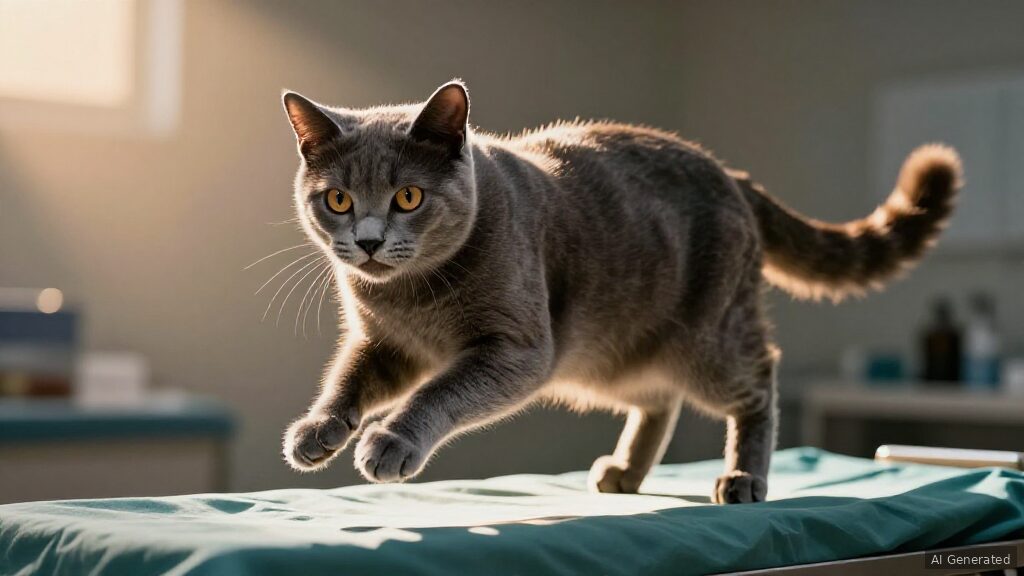
Ureteral Stent Surgery Process and Recovery Period Management
Purpose and Surgical Method of Ureteral Stent Surgery
Ureteral Stent surgery is a treatment that expands the ureter to open the blocked part while maintaining the ureteral passage until the stone is removed or excreted. The main purpose of this surgery is to resolve ureteral obstruction to prevent kidney damage and to immediately solve the painful difficulty of urination for the cat. The stent surgery performed at Dodam Iyum Animal Hospital mostly uses an endoscope, which is a minimally invasive surgical method that allows precise surgery without making a large incision in the cat’s abdomen.
The surgical process is divided into three main stages: anesthesia induction, stone removal or stent insertion under ultrasound guidance, and recovery. First, the cat receives general anesthesia, and the ureter is exposed while the excretory muscles are relaxed. At this time, the veterinarian inserts very sophisticated endoscopic equipment into the ureteral opening to observe the internal structure. The part blocked by the stone is removed, or if the stone is too large to be naturally excreted, it is crushed.
Next, even if there are traces of the removed stone, a stent is inserted to prevent the narrow part of the ureter from being blocked again. The stent is a fine tube made of metal or plastic that supports the ureteral wall to temporarily secure the passage. This stent is usually maintained for a few weeks to a few months, after which it is removed according to the veterinarian’s instructions, or in the case of absorbable stents, it is designed to decompose on its own. This process leaves only a small incision in the cat’s abdomen and is characterized by a fast recovery rate.
The reason Dodam Iyum Animal Hospital chooses this surgery is to provide the cat with the fastest recovery with minimal trauma and pain. Additionally, after stent insertion, guardians are presented with thorough food management and hydration induction strategies to prevent stones from accumulating again. This is because a successful treatment requires not just surgery, but a long-term management plan thereafter.
Diet and Hydration Management During the Post-operative Recovery Period
The recovery period after ureteral stent surgery is the most important stage in determining the success of the surgery. Immediately after surgery, symptoms such as vomiting or dizziness may appear as the cat wakes up from anesthesia, requiring the guardian’s attention. At Dodam Iyum Animal Hospital, it is observed whether urine is properly excreted within 24 hours after surgery and whether the urine volume is increasing normally. If urine does not come out or blood-mixed urine is continuously excreted, this is a sign that the stent may be blocked or new stones are forming, so the hospital must be contacted immediately.
From the perspective of diet management, the most important thing is the rapid introduction of ‘Wet Food’. Immediately after surgery, the cat should start with a mild diet that is easy to digest, but gradually transition to wet food with high moisture content. Wet food contains more than 70% moisture, providing more than 10 times the water compared to dry kibble. This is a key factor in reducing kidney burden and preventing stone reformation.
A point guardians should be careful about is that if wet food is fed too quickly immediately after surgery, the cat may show a rejection response. Therefore, it is recommended to start by mixing a small amount of water with the usual food to make a paste, or gradually increase the amount of wet food using the Transition Method. Additionally, the location of the water bowl should be moved to a place the cat likes, or water should be placed in multiple locations to improve accessibility.
It is most ideal to use prescription diet recommended by a veterinarian. Especially, brands like Urinary S/O or C/D diet are formulated to regulate the pH level of urine and reduce the content of magnesium and phosphorus, which are causes of stone formation. At Dodam Iyum Animal Hospital, a suitable prescription diet is recommended based on the cat’s stone composition analysis results, which should be consumed long-term for prevention management.
Importance of Pain Management and Antibiotic Administration
Pain management after surgery is essential for controlling the cat’s recovery speed and stress level. Cats have a strong habit of hiding pain, so guardians should not judge that there is no pain just because the cat is active. At Dodam Iyum Animal Hospital, non-steroidal anti-inflammatory drugs (NSAIDs) are prescribed for about 3 to 5 days after surgery to relieve pain. This drug plays a role in reducing pain and inflammation while protecting kidney function.
Additionally, antibiotics are administered to prevent infection at the surgical site. Since ureteral endoscopic surgery involves the ureter, an internal organ connected to the outside, there is a risk of bacterial infection. Antibiotics are usually taken for about 7 to 14 days, and this must be strictly followed according to the veterinarian’s instructions. If antibiotics are stopped in the middle, resistant bacteria may develop, making the problem worse; therefore, it is important to take the medication for the prescribed period even if symptoms disappear.
Often, due to pain, cats try not to move or lose their appetite. In such cases, it is good for guardians to actively show interest in the cat, provide gentle massage, and keep familiar items close to give a sense of security. Additionally, keeping the cat’s litter area clean and washing it daily in preparation for urine odor is also important as part of pain management.
Connection Between Stone Recurrence Prevention and Behavioral Enrichment
Main Causes of Stone Recurrence: Insufficient Water Intake and Stress
Even if the ureter is temporarily opened by ureteral stent surgery, the risk of stone recurrence still exists. Statistically, stone recurrence cases are reported in more than 30% of cats, mostly due to insufficient proper management after surgery or continuous environmental factors. The biggest cause is still insufficient water intake. Cats have evolved to conserve water instinctively, and if guardians do not induce water intake, the frequency of drinking naturally decreases as they live indoors.
Most guardians consulted at Dodam Iyum Animal Hospital answer, “The cat didn’t drink water, so stones formed.” However, simply adding more water does not solve the problem. Cats are very sensitive to the shape, location, and surrounding environment when drinking water. For example, if water is placed in a wide bowl, the cat may dislike it touching the water with its mouth (preferring flat-bottomed bowls), or if water is placed next to the litter box, the cat may avoid drinking due to the smell of urine.
Another major cause is stress. As mentioned earlier, stress raises cortisol levels, changing the acidity of the urine and promoting stone formation. Changes in the guardian’s lifestyle, moving, the appearance of a new animal, or aggressive attitudes from other animals can cause stress in cats. If these stress factors are not continuously managed, the stone problem solved by surgery may return.
Prevention Strategy Through Behavioral Enrichment
The most effective and fundamental method to prevent stone recurrence is ‘behavioral enrichment’ that stimulates the cat’s natural instincts. This aims to make the environment more interesting and challenging for the cat, increasing activity levels and reducing stress. At Dodam Iyum Animal Hospital, behavioral enrichment is recommended as part of the post-surgery management plan, which directly affects increased urine volume along with improved physical fitness.
The first element of behavioral enrichment is ‘play’. Cats feel happiness only when their hunting instincts are satisfied. If the guardian invests at least 2 times a day, 10 minutes or more, in逗引 (逗引) play, the cat feels natural thirst through energy consumption. When activity levels increase, metabolism becomes active, and as a result, water intake increases, which greatly helps prevent stone formation.
The second element is ‘environmental structure’. Wooden toys or structures like PlayCat provide spaces where the cat can hide, climb, and observe. When such an environment is created where the cat can move on its own, the cat can move sufficiently even without the guardian playing directly. Especially, utilizing vertical space is very important for cats, and this plays a significant role in relieving stress and providing a sense of security.
Additionally, changing the feeding method is also part of behavioral enrichment. Instead of feeding once a day, feeding in small amounts multiple times or changing to using a puzzle feeder so the cat has to use its head to get the food extends mealtime and naturally increases water intake. This is a very effective lifestyle correction method for preventing stone recurrence.
Ureteral Stent Surgery Cost Comparison and Prevention Economics
Surgical Cost vs. Prevention Cost: Economic Analysis from a Long-term Perspective
It is true that many guardians find the cost of cat ureteral stone surgery burdensome. The cost of Dodam Iyum Animal Hospital’s endoscopic ureteral stent surgery is usually between 500,000 and 800,000 won, which is a significant burden on a typical household budget. However, it is important to view this not just as ‘surgical cost’ but in comparison to ‘prevention cost’ from a long-term perspective.
Treatment costs for complications that may arise from stones can be much higher than the surgery cost. For example, if stones recur even after surgery and require repeated surgeries, additional surgery and anesthesia costs occur. Furthermore, if it leads to severe kidney failure requiring long-term treatment or kidney transplantation as a last resort, the cost can reach millions of won, which is a problem that must consider not only the cat but also the guardian’s mental and physical burden.
Therefore, when comparing surgery cost to prevention cost, the conclusion is reached that investing in ‘recurrence prevention and management’ rather than ‘one surgery’ is more rational. The cost of wet food for prevention (around 5,000 to 10,000 won per day) and PlayCat toy costs for behavioral enrichment (purchased once for long-term use) are very cheap amounts compared to the surgery cost. In other words, investing a little more time and dispersing costs in prevention management before investing in surgery cost becomes a strategy that ultimately saves more money.
Paradox of Product Selection and Rational Selection Guide
There are various foods and supplements for stone prevention in the market, but guardians have many products to choose from. This creates confusion by experiencing the ‘paradox of choice’. However, at Dodam Iyum Animal Hospital, it is emphasized that products differ depending on the cat’s stone composition (Struvite or Calcium Oxalate), so products should be selected based on accurate diagnosis rather than blindly choosing famous products.
For example, since Struvite component stones form in an acidic urine environment, an alkaline food that neutralizes it should be selected. On the other hand, Calcium Oxalate component does not dissolve even in an alkaline environment, so it is difficult to solve simply by adjusting pH, and continuous management is needed even after surgery. Therefore, it is important for guardians to trust the veterinarian’s prescription diet recommendation and select the product that best suits the cat among that brand’s products.
Additionally, a similar problem occurs when selecting toys for behavioral enrichment. It is better to select 2 to 3 products that match the cat’s personality rather than getting caught up in price or design and purchasing complex products. For example, while puzzle feeders are effective for active cats, hiding structures may be more effective for shy cats. PlayCat’s wooden furniture is most suitable for reducing stress by stimulating the cat’s natural behaviors (climbing, hiding, observing), which indirectly but powerfully helps in stone prevention.
Advanced Information: Additional Tips Useful for Both Beginners and Experienced Owners
Stone Occurrence Risk and Management Strategies by Age
A cat’s age is an important variable in stone occurrence risk and management strategies. Kittens (0 to 1 year old) may develop stones due to nutritional imbalance and rapid growth during the growth period. Especially, when weaning and rapidly switching to high-protein food, kidney burden may increase. Therefore, during the kitten stage, it is important to select food with balanced nutrients rather than growth food and ensure sufficient water intake.
Adult cats (1 to 7 years old) are active but are a period when water intake may be insufficient due to indoor life. This is the period with the highest stone occurrence rate, so focus should be on prevention management. Especially, adult cats deepen their relationship with guardians, so reducing stress through behavioral enrichment greatly helps in stone prevention.
Senior cats (7 years and older) are a period when kidney function begins to decline. Cats in this stage have reduced urine concentration ability, are prone to stones, and are at high risk of existing stones growing. For senior cats, intake of wet food and prescription diets to induce water intake is essential, and it is good to visit a veterinary nephrology specialist hospital for regular blood tests and urine analysis.
Differences in Stone Management by Cat Personality
A cat’s personality greatly affects stone management strategies. Cats with an active personality have high activity levels and relatively high water intake, but they may become dehydrated due to excessive exercise. Therefore, these cats should have sufficient rest time, and the environment should be created so they can drink water sufficiently after exercise.
On the other hand, cats with shy or aggressive personalities are very vulnerable to stress. Since stress promotes stone formation, stress management through behavioral enrichment becomes the core of stone prevention for these cats. Guardians should read the cat’s signals well, maintain a stable environment, and manage stress using sedatives when necessary.
Practical Application Guide: Action Checklist You Can Start Doing Today
1. Water Intake Monitoring and Bowl Placement Adjustment
* **Estimated Time Required:** 5 minutes
* **Required Items:** Large water bowl, moisture measurement tape (optional)
* **Expected Effect:** 30% increase in daily water intake
* **Action:** Place water bowls the cat drinks from in multiple locations, far from the litter box or feeding area. Change the water 2-3 times a day.
2. Setting Behavioral Enrichment Play Time
* **Estimated Time Required:** 20 minutes (2 times a day)
* **Required Items:** PlayCat toys,逗引 play tools
* **Expected Effect:** Stress reduction and increased activity
* **Action:** Play逗引 for 10 minutes in the morning and evening, and then give water to the cat.
3. Adjusting Wet Food Ratio
* **Estimated Time Required:** 5 minutes
* **Required Items:** Wet food (prescription diet recommended)
* **Expected Effect:** Increased urine volume and reduced stone formation
* **Action:** Change the ratio of dry food to wet food to 3:7 and gradually increase the wet food ratio.
4. Cat Litter Hygiene and Location Change
* **Estimated Time Required:** 10 minutes
* **Required Items:** New litter container, deodorizer
* **Expected Effect:** Reduced urine odor and increased litter box usage
* **Action:** Wash the litter box daily and place it in a place the cat likes.
5. Identifying and Removing Stress Factors
* **Estimated Time Required:** 15 minutes
* **Required Items:** Pheromone spray
* **Expected Effect:** Reduced cortisol levels and stone prevention
* **Action:** Remove elements causing stress to the cat (sounds, smells, etc.) and use pheromone spray.
FAQ: Specific Questions and Answers That Readers Actually Search For
Q1. Is ureteral stent surgery for cats very painful? How should it be managed?
The surgery itself is performed under anesthesia, so the cat does not feel pain during the procedure. However, pain and dizziness may occur as the cat wakes up from anesthesia after surgery. At Dodam Iyum Animal Hospital, non-steroidal anti-inflammatory drugs are prescribed for about 3-5 days after surgery to relieve pain. Guardians should carefully observe if the cat tries not to move or loses its appetite, and it is important to administer the prescribed medication accurately. Additionally, providing gentle massage and a stable environment to reduce stress also helps in pain management.
Q2. Can stones form again after ureteral stent surgery? What is the recurrence rate?
Ureteral stent surgery is a treatment for temporary passage securing, and the risk of stone recurrence still exists. Statistically, stone recurrence cases are reported in more than 30% of cats, mostly due to insufficient proper management (water intake, diet control, stress management) after surgery or continuous environmental factors. Therefore, do not rest assured just because it is solved by surgery; consult with a veterinarian and thoroughly manage prevention. Especially, monitoring wet food intake and stress reduction through behavioral enrichment is essential for preventing recurrence.
Q3. How much does cat ureteral stone surgery cost, and is insurance applicable?
The cost of Dodam Iyum Animal Hospital’s endoscopic ureteral stent surgery is usually between 500,000 and 800,000 won. This includes anesthesia, surgery fees, hospital fees, and medication costs for the post-surgery recovery period. Insurance applicability varies depending on the pet insurance company joined, and most cover only a part of the surgery cost, while prevention management costs (food, toys, etc.) are not compensated. Therefore, investing in prevention management can be a strategy that ultimately saves more money.
Q4. What methods are effective for making cats drink more water?
Cats have evolved to conserve water instinctively, and if guardians do not induce water intake, the frequency of drinking naturally decreases as they live indoors. An effective method is the rapid introduction of wet food. Wet food contains more than 70% moisture, providing more than 10 times the water compared to dry kibble. Additionally, the location of the water bowl should be moved to a place the cat likes, or water should be placed in multiple locations to improve accessibility. It is good for guardians to feed wet food that induces water intake and change the water 2-3 times a day.
Q5. Does using PlayCat toys help in stone prevention?
Wooden toys like PlayCat greatly help in reducing stress by stimulating the cat’s natural behaviors (climbing, hiding, observing). Since stress raises cortisol levels, changing the acidity of the urine, and promoting stone formation, stress reduction through behavioral enrichment provides indirect but powerful help in stone prevention. Additionally, when activity levels increase through toys, metabolism becomes active, and as a result, water intake increases, which greatly helps prevent stone formation.
Conclusion
A cat’s ureteral stones are not just a simple disease, but an important indicator showing how a guardian’s management and environment affect the cat’s health. Through the surgical experience and prevention management strategies at Dodam Iyum Animal Hospital, we can know that protecting a cat’s life starts not just from medical intervention, but from daily lifestyle habits and environment creation.
Remember that surgery is a last resort, and prevention is the most important treatment. Increasing water intake, reducing stress, and satisfying the cat’s natural instincts through behavioral enrichment are the key to preventing stone recurrence. We hope this article helps guardians protect their cat’s health.
Check more cat behavioral enrichment information at PlayCat (playcat.xyz)
This content was created using AI technology. Always consult a veterinarian for medical-related information.