


The Ultimate Guide to Environmental Enrichment and How to Choose Wooden Cat Furniture in 2026
The biggest concern for cat owners is not simply feeding or litter box management, but the mental satisfaction and stress relief of their pet. This article presents strategies for environmental enrichment (Environmental Enrichment) validated by more than 10 years of living with a ‘butterfly’ cat and making numerous learning mistakes, explaining in detail the scientific laws of wooden furniture placement that PlayCat specializes in. By reading this article, you can improve the effects of preventive medicine by creating an environment suitable for your cat’s nature, rather than relying on expensive food or nutritional supplements, and you can identify the causes of your cat’s behavioral changes and apply correct solutions.
What is the need for environmental enrichment for cats and what scientific basis should the owner know?
Problems arising from not satisfying the cat’s daily cycle and reproductive instincts
Many owners raise cats indoors, so they often cannot properly exercise their instincts to hunt (simulated) prey or defend their territory as a wild cat would. A wild cat hunts hundreds of mice or birds a day, consuming energy by chasing them. In contrast, an indoor cat spends the entire day stepping on its owner’s feet or sleeping, which harms the cat’s natural physiological rhythm and emotional stability. According to ethological studies, cats with suppressed hunting instincts manifest ‘excessive behavior’, showing destructive behaviors such as biting clothes, furniture, or their owner’s toys all night long and making noise. This is not just simple play, but indicates that cortisol levels, the stress hormone, have abnormally elevated because energy is not being released. Therefore, it is essential for the owner to design the physical environment so the cat can expend enough energy before going to sleep.
Importance of environmental regulation to prevent stress and obesity
Stress in cats can lead to various difficult-to-treat diseases that go beyond a sad expression. A stressed cat has a weakened immune system, making it more susceptible to infections, and can be the cause of digestive or skin diseases. Additionally, if physical activity is insufficient, the cat’s appetite naturally increases, leading easily to obesity. Obesity is the main cause of lethal diseases for cats such as diabetes, arthritis, and glomerulonephritis. From the perspective of behavioral economics, the investment of costs in prevention (time to create the environment and wooden furniture, etc.) is a much more rational choice compared to the costs of surgery or long-term treatments that could arise in the cat. In other words, the owner must always remember that the most efficient way to invest is to reduce the probability of disease by making the environment more prosperous. This is the first step of preventive medicine to protect the cat’s physical and mental health, beyond simply buying toys.
The first behavior the owner can implement immediately: Observation and recording
Before starting environmental enrichment, it is important for the owner to precisely understand the current state of their cat. They must observe the cat all day asking the question: ‘What does this cat like?’. Record which toy it adheres to for the longest time, what height it prefers, and when it is most active. This record will serve as a criterion to determine if the wooden furniture or toys purchased in the future align with its preferences. For example, if your cat likes to hide in every corner next to the window, a high-position wooden furniture with rich visual stimuli would be effective. When the owner understands the language and behavioral patterns of their cat, they can create a prosperous environment suitable for it. It is not enough to have the intention of ‘giving something’; it must be preceded by a specific behavioral analysis.
| Feline Behavioral Symptoms | Potential Cause | Recommended Environmental Enrichment Direction |
|---|---|---|
| Sleeps all day and cries all night | Excessive energy accumulation, instinctual dissatisfaction | Induce activity during the day (toy rotation), ensure high positions |
| Destroys and gets into furniture | Suppression of hunting instinct, stress | Simulated prey toys, provide vertical movement spaces |
| Increased aggression (hisses, kicks) | Stress, fear | Provide safe shelters, change the environment gradually |
What are the differences in environmental enrichment strategies according to the cat’s age and personality?
Challenges and learning for kittens and adolescents
Kittens (0-6 months) and adolescents (6 months until maturity) are physically the most active and the most suitable time to learn new things. At this stage, the cat is in an important process to perfect its hunting skills, adapt to the environment, and form a bond with its owner. The environmental enrichment the owner must provide at this time should focus on ‘challenge’ and ‘learning’. Toys that are solved too easily are less effective than those that must be found hidden or that require a slight movement to react. In the case of wooden furniture, at this stage it is essential to have ramps with different heights and anti-slip treatment so the cat can practice balance by jumping over trees. If the owner does not teach the correct exercise at this stage, it will be more difficult for the adult cat to learn new skills, and already formed habits can become a problem. Therefore, the kitten stage is the most important time to lay the foundations of ‘learning’.
Importance of safety and shelters for adult and senior cats
Adult cats (1-7 years) and seniors (7 years and older) tend to reduce their level of physical activity and be more sensitive to stress. At this stage, the core of environmental enrichment is providing ‘safety’ and ‘shelters’. The adult cat desires to establish its territory and maintain a stable life pattern, while the senior cat has less energy and is prone to reacting excessively to small stimuli or, conversely, becoming apathetic. In the case of wooden furniture, at this stage it is important to have high positions (towers or high ramps) where the cat can control its territory, and shelters with small holes where it can easily hide from any noise. Especially in the case of senior cats, because their joints weaken, it is more appropriate to choose wooden furniture with flat surfaces of medium height that the owner can easily climb, rather than places that are too high with steep slopes. Adult cats feel safer in a ‘predictable environment’ than in one of ‘challenge’ for their mental health.
Personalized approach according to personality (active, shy, aggressive)
The personality of each cat is different, and this is an important variable that determines the direction of environmental enrichment. Cats of an active temperament prefer high-intensity exercises in short periods and need toys that move quickly or spacious movement areas. On the contrary, cats of a shy or defensive temperament are prone to feeling stressed by new environments or objects. In this case, changing the environment quickly or giving toys with a lot of noise can have the opposite effect. For shy cats, it is better to introduce new toys slowly and provide ‘safety signals’, such as leaving the owner’s clothes in the holes of the wooden furniture so they can be impregnated with its scent. Since the hunting instinct can act with great force in cats of an aggressive temperament, furniture with a structure that allows releasing aggressive energy safely through safe toys is needed. The owner must precisely understand the personality of their cat and choose the most suitable type of wooden furniture and toy for that cat.
Key elements to consider when choosing and placing wooden furniture
Verification of wood texture and safety
When choosing PlayCat wooden furniture, the first thing you must verify is the type of wood and the finish. Cats move by directly feeling the surface of the wood with their paws, so a rough surface or a finish with sawdust can be dangerous for both the owner and the cat. Safe wooden furniture must protect the parts that touch the cat’s paws and hands using eco-friendly wood oils or natural varnishes, or through gentle sanding. Additionally, it is important to choose woods that do not emit toxic chemicals. If the owner associates the word ‘health’ with ‘wood safety’, choosing safe wooden furniture, even if expensive, will be a great long-term benefit for the cat. This reflects the sincerity of the owner seeking to provide the best environment for their cat.
Structural safety and stability: Prevention of falls and fixation
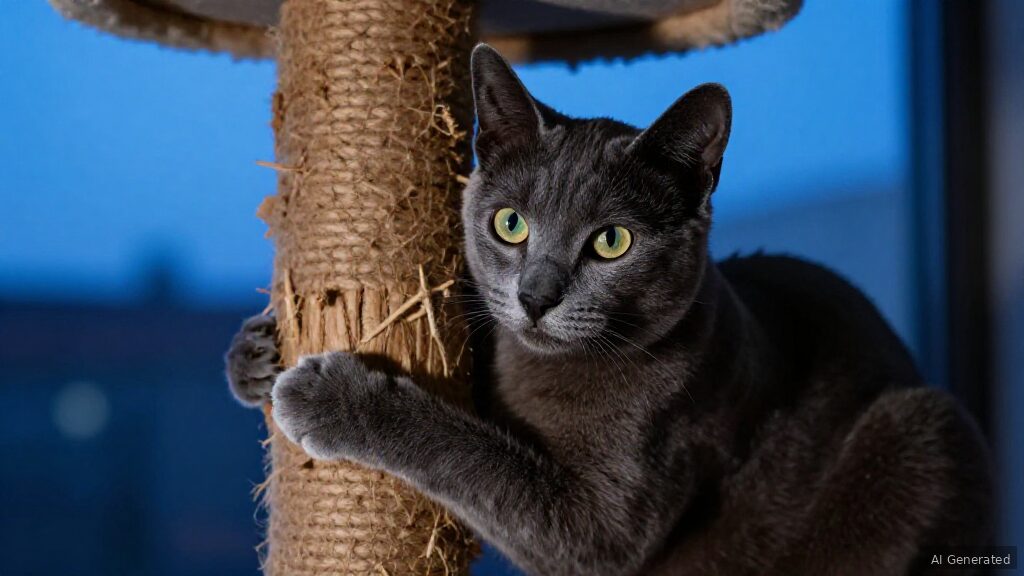
The structural stability of wooden furniture is the most important factor to protect the cat’s safety. Cats have the ability to jump more than double their weight and maintain a surprising balance even when jumping from heights. Therefore, wooden furniture must be firmly fixed to the floor, and especially any structure with thin legs or unstable balance must be prohibited. The owner must obligatorily test that the furniture does not move or fall when the cat climbs on it. Additionally, it is recommended to verify that the structure does not get damaged when the cat scratches with its claws. If the owner chooses to provide devices to fix the wooden furniture to the wall, this is the best way to satisfy the cat’s desire for vertical movement while ensuring the safety of the furniture. A structure that does not guarantee stability not only threatens the cat’s safety but can also cause psychological anxiety in the owner.
Space usage strategy and importance of vertical space
Modern apartments or houses have limited spaces, so it is often difficult to provide sufficient vertical space for cats. However, cats naturally prefer heights and watch over their territory from elevated places. When placing PlayCat wooden furniture, it is better to install them on the wall or place them in corners to ensure the cat’s view, rather than simply leaving them in the center of the room. This helps the cat perceive the entire house as its territory and move safely. Additionally, the height of the furniture levels should be an appropriate interval so the cat can climb naturally. An interval that is too narrow prevents the cat from climbing, while one that is too wide can pose a risk to the owner. It is efficient to place the wooden furniture in a position where the owner can easily observe, considering the cat’s body shape and movement patterns.
Cost efficiency: Preventive investment and long-term perspective
Often, owners hesitate to buy wooden furniture due to its high price. However, this is a view limited to short-term cost comparison. Investing in appropriate wooden furniture for the cat to reduce stress, prevent obesity, and avoid destructive behaviors is a method that can save the owner time and financial costs in the long term. For example, if the cat moves enough through the wooden furniture, the owner can buy fewer toys or reduce visits to the veterinary hospital requiring treatment. From the perspective of ‘behavioral economics’, this means that preventive cost is a much more efficient choice than treatment cost. Additionally, unlike toys that are easily damaged or consumed, wooden furniture is an investment that can be used for a long time along with the cat’s growth. Therefore, the owner must recognize wooden furniture not as simple toys, but as essential equipment to protect the cat’s health.
Advanced information on environmental enrichment and common mistakes owners overlook
Easy-to-misinterpret concepts: Adding toys vs. Designing the environment
Many owners misinterpret environmental enrichment as ‘buying many toys’. However, simply accumulating many toys can have the opposite effect. As the cat has more options, it often finds it difficult to decide which toy to choose (‘choice paradox’) and, as a result, often does not play with anything. Additionally, in the case of cats that are sensitive to minor changes, even adding a new toy can cause them stress. Therefore, environmental enrichment should focus more on ‘environment design’. In other words, it is important to provide a structure (levels, holes, wooden furniture ramps, etc.) that allows the cat to change and explore the environment on its own. It is more effective to create an environment that allows the cat to choose ‘how to play’ than to give it toys.
Cat fatigue management and risks of overstimulation
If environmental enrichment is done in excess, the cat can get tired. Unlike humans, cats have different activity patterns between day and night, and rest time is very important. If the owner throws toys or moves the wooden furniture to the cat all day, the cat can feel stressed and react defensively. Especially in the case of senior or adult cats, they may not react to toys due to lack of energy, which can make the owner misinterpret that ‘the cat doesn’t like it’. Therefore, it is important for the owner to constantly observe the cat’s state and provide appropriate stimuli without the cat getting tired. Additionally, it must be verified if the cat is experiencing stress by obsessing excessively with toys or wooden furniture. Healthy environmental enrichment is that which makes the cat feel ‘happy and comfortable’.
Owner participation: Strengthening the bond with the cat
The most important factor of environmental enrichment is owner participation. Installing wooden furniture or toys is the owner’s task, and it is important to help the cat use them naturally. Interaction, such as playing up and down the wooden furniture with the cat or throwing toys, provides great satisfaction to the cat. This goes beyond simply entertaining the cat; it is a process of strengthening the bond between the owner and the cat and increasing mutual trust. Additionally, observing the cat’s behavior and understanding what it likes and dislikes is the core of environmental enrichment. If the owner does not actively participate, the wooden furniture and toys will simply be abandoned objects in a corner of the house, unable to see the effects of environmental enrichment.
Environmental Enrichment Checklist You Can Implement Today
1. Analysis and recording of the cat’s current environment
Estimated Time: 15 minutes
Materials Needed: Notepad, camera
Expected Effect: Understanding of the cat’s behavioral patterns and determination of causes of problematic behaviors
Observe and record for an hour where the cat spends all day, what it does, and what toys it uses. Identify the cat’s favorite position or toy and discover the parts the owner is overlooking. This record will be the most important criterion when placing wooden furniture or selecting toys in the future. Additionally, record changes in the cat’s behavior (e.g., crying all night, increased aggression) to understand what environmental factors are the cause of stress.
2. Optimization of wooden furniture placement and safety verification
Estimated Time: 30 minutes
Materials Needed: Wooden furniture, fixing device (optional)
Expected Effect: Ensuring a safe vertical space and increasing the ease of cat movement
Walk through every corner of the house and check the wooden furniture or other vertical spaces (shelves, windows, etc.) the cat currently uses. Verify if the furniture is stable and if the cat can climb easily, and fix it to the wall or adjust the level heights if necessary. Additionally, verify if there are enough holes or shelters where the cat can hide safely. Install anti-scratch protection devices between each level of the wooden furniture to increase the furniture’s lifespan and the cat’s satisfaction.
3. Toy rotation and diversity guarantee
Estimated Time: 20 minutes
Materials Needed: Existing toys, new toys
Expected Effect: Maintaining the cat’s interest and providing new stimuli
Gather all the toys in the house in one place. Cats tend to lose interest in familiar toys. Therefore, the owner must change the toys once a week so the cat feels it has discovered a new toy. Additionally, prepare toys of various shapes that can be used together with the wooden furniture (prey simulation, string toys, etc.) to stimulate the cat’s diverse instincts. In particular, select the toys the cat does not use well and dedicate time to play with them together with the cat.
4. Feeding environment improvement and feeding strategy
Estimated Time: 10 minutes
Materials Needed: Wooden furniture ramps, food bowls
Expected Effect: Increasing the cat’s interest in food and preventing obesity
Feed the cat on the ramp or in a high position of the wooden furniture when eating. This makes ‘food’ feel like a special event for the cat and stimulates its hunting instinct. Additionally, divide the food bowl into several small bowls and place them at different levels of the wooden furniture so the cat enjoys the process of searching for its food. This helps regulate the cat’s appetite and prevent obesity. It is important for the owner to establish a meal schedule for the cat and create a feeding environment using wooden furniture.
5. Induction of daytime activity and energy expenditure
Estimated Time: 15 minutes
Materials Needed: Toys, wooden furniture
Expected Effect: Reduction of nighttime crying and destructive behaviors
Before going to work or during the day, have enough fun with the cat using the wooden furniture. Prepare toys that the cat must jump by climbing up and down the high levels of the wooden furniture to expend its energy. In particular, if the owner dedicates time to play with the cat, it can significantly reduce the cat’s stress. Even when the owner is not at home during the day, place and hide toys so the cat can play using the wooden furniture on its own. This helps the cat be active in a safe environment even when the owner is not present.
6. Cat behavior observation and feedback
Estimated Time: 5 minutes daily
Materials Needed: Notepad, camera
Expected Effect: Monitoring of behavioral changes and strategy adjustment
Observe the cat’s behavior daily and record how effectively the wooden furniture and toys are acting. Verify if the cat frequently uses the wooden furniture, if it reacts to the toys, and if it has reduced nighttime crying or destructive behaviors. If a specific toy or furniture is not effective, the owner must immediately adjust their strategy. It is important to continuously improve environmental enrichment methods considering the cat’s state and preferences.
Frequently Asked Questions (FAQ)
My cat doesn’t like the wooden furniture? What should I do?
If your cat doesn’t like the wooden furniture, the owner must first review the cat’s personality and current environment. The cat might be afraid of heights or might not like a specific scent. Try lowering the height of the wooden furniture or leaving the owner’s clothes in the holes so they can be impregnated with its scent. Additionally, dedicate time to play with your cat alongside the wooden furniture and provide positive experiences. It is important to wait for the cat to naturally accept the wooden furniture.
What should I prioritize when buying wooden furniture?
The most important thing when buying wooden furniture is ‘safety’ and ‘stability’. You must obligatorily verify the safety of the wood (presence of toxins), the finish, and the structural stability of the furniture (prevention of falls). Additionally, it is important to choose considering the height and level intervals appropriate for the cat’s personality and body shape. The owner must recognize wooden furniture not just as a purchase, but as essential equipment to protect the health and safety of their cat.
Does environmental enrichment involve additional costs?
Additional costs for environmental enrichment are not very high. Just with the purchase of wooden furniture, sufficient effects can be seen, and toys can be easily made at home or using recycled materials. Additionally, environmental enrichment has the effect of reducing stress in the cat and preventing diseases, which saves costs for the owner in the long term. Therefore, the owner must recognize environmental enrichment not as a simple cost, but as an investment to protect the cat’s health.
Should environmental enrichment methods change for senior cats (7 years and older)?
In the case of senior cats, because physical activity decreases and joints weaken, it is more important to provide wooden furniture that offers safety and comfort rather than active toys. Since senior cats may have difficulty climbing up and down high places, you should choose wooden furniture with many flat surfaces of medium height or structures that the owner can easily climb. Additionally, since senior cats are sensitive to stress, it is recommended to choose wooden furniture with abundant shelters or introduce new toys slowly.
Can environmental enrichment cause stress to the cat?
If environmental enrichment is not done correctly, the cat can feel stressed. For example, if many new toys are given at once or if the wooden furniture is placed too high. Therefore, it is important for the owner to constantly observe the cat’s state and create a comfortable and pleasant environment for it. The key is that the owner actively participates, understands the cat’s behavior, and provides appropriate stimuli.
Conclusion: The first step for a happy day-to-day life with your cat
The environmental enrichment strategies and wooden furniture selection presented in this article are essential elements to protect the cat’s healthy life and strengthen the bond between the owner and the cat. Satisfying the cat’s instincts and creating a suitable environment through wooden furniture is not a luxury or a whim, but a very rational choice from the perspective of preventive medicine. The owner must observe their cat’s behavior starting today, place the wooden furniture, and use toys to create a happy life for their cat. The time shared with your cat will become a more special and meaningful day-to-day.
PlayCat wooden furniture (PlayCat) is optimized to respect the cat’s instincts and provide a safe environment. Consult more information on cat environmental enrichment at PlayCat (playcat.xyz).
This content has been created using AI technology. Always consult a veterinarian for health-related information.