


Complete Guide to Enriching Your Cat’s Life and How to Choose Wooden Furniture in 2026
The most worrying part for cat owners is not just feeding or litter box management, but how to provide mental satisfaction and relieve stress for their feline companions. This article presents proven Environmental Enrichment strategies, validated through over 10 years of cohabitation with a cat named ‘Nabi’ and numerous trial-and-error experiences. It details the scientific laws of wooden furniture placement, which is a primary focus of PlayCat. By reading this article, you can increase preventive medical benefits by creating an environment suitable for your cat’s instincts, rather than relying on expensive food or supplements. You will also be able to identify the causes of behavioral changes in your cat and apply the correct solutions.
Why is enrichment necessary for cats and what scientific evidence should owners know?
Problems that arise when a cat’s daily routine and hunting instincts are not satisfied
Many owners keep their cats indoors, so they often fail to adequately exercise their instincts to hunt (simulated) prey or defend their territory like wild cats. Wild cats hunt hundreds of mice or birds a day, exhausting their energy by chasing them. In contrast, indoor cats spend all day stepping on their owner’s feet or sleeping, which alters their natural physiological rhythm and emotional stability. According to ethological studies, cats whose hunting instincts are suppressed exhibit ‘hyperactivity’, leading to destructive behaviors like biting clothes, furniture, or toys all night, or making loud noises. This is not just play; it indicates that stress hormone levels, such as cortisol, have abnormally increased because energy is not being released. Therefore, it is essential for owners to design the physical environment so their cats can expend enough energy before sleeping.
Importance of environmental control for stress and obesity prevention
A cat’s stress goes beyond a sad expression and can lead to various difficult-to-treat diseases. Stressed cats have weakened immune systems, making them prone to infectious diseases, and can also be the cause of digestive or skin disorders. Additionally, if a cat lacks activity, their appetite naturally increases, leading to obesity. Obesity is a leading cause of fatal diseases in cats such as diabetes, arthritis, and glomerulonephritis. From the perspective of behavioral economics, the cost invested in prevention (time dedicated to creating an environment and wooden furniture) is a much more rational choice compared to potential surgery costs or long-term treatment fees for the cat. In other words, owners should always remember that the most efficient investment is reducing the probability of disease occurrence by enriching the environment. This is the first step of preventive medicine that goes beyond simply buying toys to protect the cat’s physical and mental health.
First action owners can take immediately: Observation and recording
Before starting enrichment, it is important for owners to precisely understand their cat’s current condition. You must observe your cat all day asking the question: ‘What does this cat like?’. Record which toy they like most, which height they prefer, and when they are most active. This record will serve as a criterion to judge if a wooden furniture piece or toy you buy in the future matches your cat’s preferences. For example, if your cat enjoys playing hide-and-seek in corners near the window, a wooden furniture piece with a high position rich in visual stimuli would be effective. When owners understand their cat’s language and behavioral patterns, they can create the appropriate enriching environment. Simply having the mindset of ‘I should give them something’ is insufficient; it must be preceded by concrete behavioral analysis.
| Cat Behavioral Symptoms | Potential Causes | Recommended Enrichment Direction |
|---|---|---|
| Sleeping all day and crying all night | Excessive energy accumulation, unmet instincts | Induce daytime activity (rotate toys), ensure high positions |
| Tearing furniture, penetrating into it | Suppressed hunting instinct, stress | Prey simulation toys, provide vertical movement space |
| Increase in aggression (biting, scratching) | Stress, fear | Provide safe hiding spots, change environment gradually |
What are the differences in enrichment strategies based on the cat’s age and personality?
Challenges and learning for kittens and adolescents
Cats in the kitten stage (0-6 months) and adolescence (6 months until adulthood) are physically the most active and the most appropriate time to learn new things. This is an important process for them to refine their hunting skills, adapt to the environment, and form a bond with their owner. The enrichment provided by owners in this stage should focus on ‘challenge’ and ‘learning’. Toys that are too easy to solve are less effective than those that require finding hidden objects or reacting by moving slightly. In the case of wooden furniture, it is essential to have multiple levels and non-slip ramps so kittens can practice balance running on the wood. If owners do not provide adequate exercise during this period, the cat may have difficulty learning new skills as an adult, and established habits may become problematic. Therefore, the kitten stage can be said to be the most important time to lay the foundations for ‘learning’.
Importance of stability and hiding spots for adults and seniors
Cats in the adult stage (1-7 years) and senior stage (7 years and older) tend to have reduced physical activity and greater sensitivity to stress. In this stage, providing ‘stability’ and ‘hiding spots’ is the core of enrichment. Adults want to establish their territory and maintain a stable lifestyle, while seniors have less energy and may react strongly to small stimuli or become lethargic. In the case of wooden furniture, it is important to have high positions (towers or high ramps) where cats can control their territory, and hiding spots with small holes where they can easily hide from noise. Especially for seniors, since their joints weaken, wooden furniture with flat surfaces at intermediate levels that owners can easily climb up and down are more suitable than places that are too high or have steep slopes. Adults feel more stable in a ‘predictable environment’ than in ‘challenges’, which is better for their mental health.
Personalized approaches for different personalities (Active, Shy, Aggressive)
A cat’s personality varies from individual to individual, which is an important variable that determines the direction of enrichment. Cats with an active temperament prefer high-intensity exercise for short periods and require toys that move quickly or wide movement spaces. On the other hand, cats with a shy or defensive temperament easily get stressed with new environments or objects. In this case, suddenly changing the environment or giving noisy toys can have the opposite effect. For shy cats, it is better to introduce new toys slowly and provide ‘safety signals’ such as placing the owner’s clothes near the holes of the wooden furniture so the cat’s scent permeates them. Since aggressive cats may have their hunting instincts acting very strongly, it is necessary to have furniture with a structure that allows them to safely discharge aggressive energy through safe toys. Owners must precisely understand their cat’s personality and choose the most suitable type of wooden furniture and toys for that specific cat.
Key factors to consider when choosing and placing wooden furniture
Checking wood texture and safety
When choosing PlayCat wooden furniture, the first thing to check is the type of wood and the finish treatment. Since cats move by feeling the wood surface directly with their paw pads, rough surfaces or finishes with wood shavings can be dangerous for both the owner and the cat. Safe wooden furniture should protect the cat’s paw pads and hands using eco-friendly wood oils or natural varnishes, or by undergoing light sanding. Additionally, it is important to choose wood that does not release toxic chemicals. If owners connect the keyword ‘health’ with ‘wood safety’, choosing safe wooden furniture, even if expensive, will be a great long-term benefit for the cat. This reflects the owner’s sincerity in providing the best environment for their cat.
Structural safety and stability: Fall prevention and securing
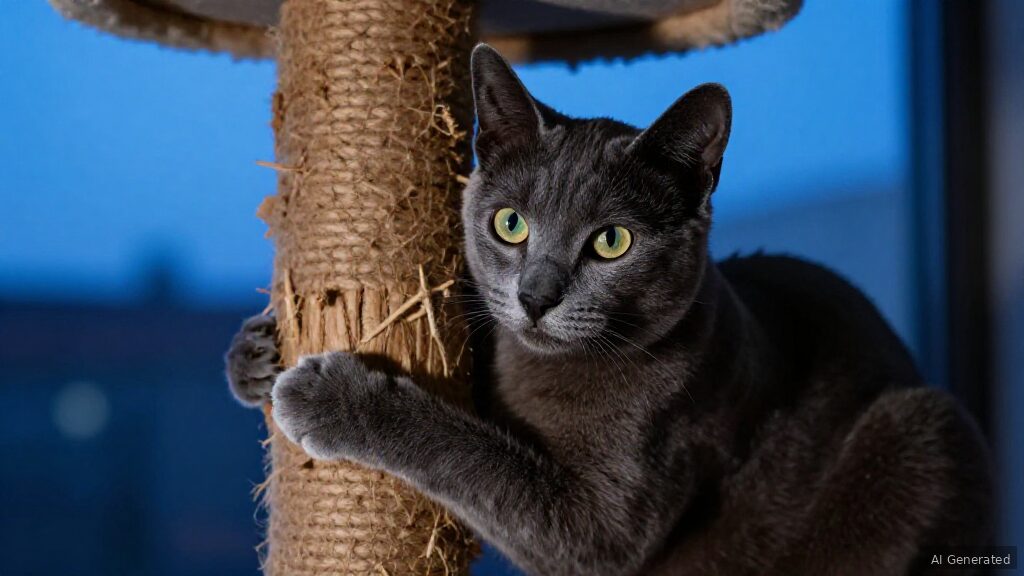
The structural stability of wooden furniture is the most important factor for protecting the cat’s safety. Cats have the ability to jump more than double their body weight and maintain incredible balance even when jumping from high places. Therefore, wooden furniture must be firmly fixed to the floor, and the existence of structures with thin legs or unstable balance must be prohibited. Owners should always test if the furniture shakes or falls when the cat climbs on it. Additionally, it is good to check if the structure is damaged when scratched by the cat’s claws. If owners decide to provide wall-fixing devices for wooden furniture, this is the best way to satisfy the cat’s desire for high movement while ensuring the furniture’s safety. Wooden furniture without ensured structural stability not only threatens the cat’s safety but can also cause psychological anxiety to the owner.
Space usage and placement strategy: Importance of vertical space
Modern apartments or houses often have limited space, making it difficult to provide sufficient vertical space for cats. However, cats inherently prefer heights and monitor their environment and defend their territory from high places. When placing PlayCat wooden furniture, it is better to install them on the wall or place them in a corner to ensure the cat’s view, rather than simply placing them in the center of the room. This helps the cat perceive the whole house as their territory and allows them to move safely. Additionally, the height intervals between the levels of the wooden furniture should be appropriate for the cat to climb naturally. Intervals that are too narrow prevent the cat from climbing, while intervals that are too wide can be dangerous for the owner. Considering the cat’s body shape and movement patterns, placing wooden furniture in a position easily observable by the owner is efficient.
Cost efficiency: Preventive investment and long-term perspective
Owners often hesitate to buy wooden furniture because it is expensive. However, this is a perspective limited to short-term cost comparison. Investing in appropriate wooden furniture for your cat to reduce stress, prevent obesity, and stop destructive behavior is a way to save time and monetary costs for owners in the long term. For example, if the cat has exercised enough through the wooden furniture, the owner can reduce the frequency of toy purchases or visits to the veterinary hospital for treatment. From the perspective of ‘behavioral economics’, this means that preventive costs are a much more efficient choice than treatment costs. Additionally, unlike toys that break easily or get consumed, wooden furniture are investment items that can be used for a long time along with the cat’s growth. Therefore, owners should recognize wooden furniture not as a simple toy, but as essential equipment to protect the cat’s health.
Advanced information on enrichment and common mistakes owners make
Misunderstood concepts: Adding toys vs. Environmental Design
Many owners misunderstand enrichment as ‘buying many toys’. However, simply piling up many toys can have the opposite effect. The wider the range of options for a cat, the more difficulty they will have in deciding which toy to choose (‘choice paradox’), and as a result, they often do not play with anything. Additionally, for cats that are sensitive even to small changes, adding a new toy can cause stress. Therefore, enrichment should focus more on ‘environmental design’. That is, it is important to provide a structure (levels, holes, wooden furniture ramps) where the cat can change and explore the environment on their own. It is more effective for owners to create an environment where the cat can choose ‘how to play’ rather than simply giving them toys.
Cat fatigue management and risks of over-activity
If enrichment is done in excess, the cat can become really tired. Unlike humans, cats have different activity patterns during the day and night, and rest time is very important. If owners throw toys at their cat or shake the wooden furniture all day, the cat may react defensively due to stress. Especially for seniors or adults, they may not respond to toys due to lack of energy, which can lead owners to misinterpret that ‘the cat doesn’t like it’. Therefore, owners must constantly observe their cat’s condition and provide appropriate stimulation within the limit where the cat does not get tired. Additionally, owners should check if the cat is getting stressed by being too attached to toys or wooden furniture. Healthy enrichment is that which gives the cat a sense of ‘joy and comfort’.
Owner participation: Strengthening the bond with the cat
The most important element of enrichment is owner participation. Installing wooden furniture or toys is the owner’s role, and it is important to help the cat use them naturally. Interactions such as owners playing with the cat by climbing up and down the wooden furniture or throwing toys give great satisfaction to the cat. This goes beyond simply playing with the cat; it is a process of strengthening the bond between the owner and the cat and increasing mutual trust. Additionally, observing the cat’s behavior and understanding what they like and dislike is the core of enrichment. If owners do not actively participate, wooden furniture and toys will simply become abandoned objects in a corner of the house, and the effects of enrichment will not be seen.
Enrichment checklist you can implement right now
1. Analysis and recording of the cat’s current environment
Estimated time required: 15 minutes
Required items: Notepad, Camera
Expected effect: Understand cat behavior patterns and identify causes of problematic behaviors
Observe and record where your cat stays all day, what they are doing, and which toys they use for an hour. Identify the cat’s favorite positions or toys and find parts that the owner is missing. This record will be the most important criterion when placing wooden furniture or selecting toys in the future. Additionally, record changes in the cat’s behavior (e.g., crying all night, increase in aggression) to help identify which environmental factors are the cause of stress.
2. Optimization of wooden furniture placement and safety verification
Estimated time required: 30 minutes
Required items: Wooden furniture, Fixing device (optional)
Expected effect: Ensure safe vertical space and increase cat movement comfort
Go around the corners of your house and review the wooden furniture or other vertical spaces (shelves, window sills) that your cat currently uses. Check if the furniture is stable and if the cat can climb easily, and fix it to the wall or adjust the level height if necessary. Additionally, check if there are enough holes or hiding spots for the cat to hide safely. Install protective devices that can be scratched by the cat’s claws between each level of the wooden furniture to extend the furniture’s lifespan while increasing the cat’s satisfaction.
3. Toy rotation and diversity guarantee
Estimated time required: 20 minutes
Required items: Existing toys, New toys
Expected effect: Maintain cat interest and provide new stimuli
Gather all the toys in the house in one place. Cats easily lose interest in familiar toys. Therefore, owners should replace toys once a week so the cat feels like they are discovering a new toy. Additionally, prepare several types of toys that can be used with wooden furniture (prey simulation, string toys, etc.) to stimulate the cat’s diverse instincts. Especially, select the toys the cat does not play well with and set aside time to play with them together with the owner.
4. Meal environment improvement and feeding strategy
Estimated time required: 10 minutes
Required items: Wooden furniture ramp, Food bowl
Expected effect: Increase cat interest in meals and prevent obesity
When the cat eats, feed the food on the ramp or high position of the wooden furniture. This makes ‘eating’ feel like a special event for the cat and stimulates their hunting instinct. Additionally, divide the food bowl into several small bowls and place them on various levels of the wooden furniture so the cat enjoys the process of finding and eating the food. This helps regulate the cat’s appetite and prevent obesity. It is important for owners to establish their cat’s mealtime and create a meal environment using wooden furniture.
5. Induction of daytime activity and energy expenditure
Estimated time required: 15 minutes
Required items: Toys, Wooden furniture
Expected effect: Reduction of nocturnal crying and destructive behaviors
Before going to work or during the day, play with the cat enough using the wooden furniture. Prepare toys that require the cat to climb up and down the high levels of the wooden furniture to exhaust their energy. Especially, if owners spend time playing with the cat, they can greatly reduce the cat’s stress. Even while the owner is absent during the day, place and hide toys so the cat can play using the wooden furniture on their own. This helps the cat move in a safe environment even when the owner is not present.
6. Cat behavior observation and feedback
Estimated time required: 5 minutes daily
Required items: Notepad, Camera
Expected effect: Monitor behavior changes and strategy modification
Observe the cat’s behavior daily and record how effective the wooden furniture and toys are working. Check if the cat uses the wooden furniture frequently, responds to toys, and if nocturnal crying or destructive behaviors have decreased. If a specific toy or furniture piece is not effective, the owner must modify the strategy immediately. It is important to continuously improve enrichment methods considering the cat’s condition and preferences.
Frequently Asked Questions (FAQ)
My cat doesn’t like wooden furniture? What should I do?
If your cat doesn’t like wooden furniture, owners should first review the cat’s personality and current environment. The cat might be afraid of heights or not like certain smells. Try methods like lowering the height of the wooden furniture or placing the owner’s clothes near the holes so the cat’s scent permeates them. Additionally, set aside time playing with the cat and the wooden furniture to provide positive experiences. It is important to wait until the cat naturally accepts the wooden furniture.
What should be the priority when buying wooden furniture?
The priority when buying wooden furniture is ‘safety’ and ‘stability’. You must check wood safety (presence of toxins), finish treatment, and the structural stability of the furniture (fall prevention). Additionally, it is important to choose based on appropriate heights and level intervals for the cat’s personality and body shape. Owners should recognize wooden furniture not just as a purchase, but as essential equipment to protect the cat’s health and safety.
Does enrichment require additional costs?
Additional costs for enrichment are not very high. Buying only wooden furniture can provide sufficient effects, and toys can be easily made at home or with recycled materials by owners. Additionally, enrichment reduces cat stress and prevents diseases, which has the effect of saving the owner’s costs in the long term. Therefore, owners should recognize enrichment not as a simple cost, but as an investment to protect the cat’s health.
Should enrichment methods be different for seniors (7 years and older)?
In the case of seniors, since physical activity decreases and joints weaken, wooden furniture that provides stability and comfort is more important than active toys. Since seniors may have difficulty climbing up and down high places, wooden furniture with many flat surfaces at intermediate levels or structures that owners can easily climb up and down should be chosen. Additionally, since seniors are sensitive to stress, it is good to choose wooden furniture with abundant hiding spots or introduce new toys slowly.
Can enrichment cause stress to the cat?
If enrichment is not done correctly, the cat can experience stress. For example, if owners suddenly give many toys the cat is not used to, or place the wooden furniture too high. Therefore, owners must constantly observe the cat’s condition and create a comfortable and pleasant environment for the cat. The core is that owners actively participate, understand the cat’s behavior, and provide appropriate stimulation.
Conclusion: The first step towards a happy daily life with your cat
The enrichment strategies and wooden furniture selection methods introduced in this article are essential elements to protect the cat’s healthy life and strengthen the bond between the owner and the cat. Satisfying the cat’s instincts and creating the appropriate environment through wooden furniture is not a simple luxury or preference, but a very rational choice from a preventive medical perspective. Starting today, owners should observe their cat’s behavior, place wooden furniture, and use toys to create a happy life for their cat. Time spent with your cat will become a more special and meaningful daily life.
PlayCat wooden furniture are optimized to respect the cat’s instincts and provide a safe environment. Consult more information on cat enrichment at PlayCat (playcat.xyz).
This content was written using AI technology. Always consult a veterinarian regarding medical information.