


The Complete Guide to Cat Travel Stress – From Vet Visits to Daily Life
While many cat owners only consider major moves like holidays, long-distance relocations, or travel as stressors, did you know that even routine short trips—such as visiting the vet, grooming, or visiting friends’ homes—can be a major cause of psychological instability for cats? This article clearly explains from a behavioral perspective why these small daily movements are so critical for cats, provides practical, step-by-step management techniques for owners dealing with Feline Fear of Veterinary Visits, and specifically analyzes how stable environments, such as PlayCat’s solid wood furniture, play a role in alleviating travel stress.
By reading this article, you will gain a concrete behavioral guide to reducing your cat’s fear response, learn the minimum countermeasures an owner can take even inside the clinic, and realize that for your precious pet’s mental health, ‘prevention’ is far more cost-effective and rational than ‘treatment’. Furthermore, this is a high-quality content piece where you can learn not just about suppressing fear, but also about behavioral enrichment (Environmental Enrichment) techniques that help your cat naturally become accustomed to travel by understanding their instincts.
Why do cats experience significant stress even during short trips?
Many owners think, “My cat is usually very determined and independent,” and easily mistake the anxiety they show only when going to the vet or groomer as a specific issue. However, the instinctive characteristics and physiological responses of the cat species refute this. Cats are animals that value their territory highly; when they must leave their controllable space (Home Base), they secrete high levels of cortisol (the stress hormone), and their survival instincts kick in. This is not just a feeling of ‘discomfort’; it can have a physiological intensity similar to detecting a threat from a predator or enemy.
1. Psychological Shock from Loss of Control
A cat’s brain structure and behavioral patterns prioritize ‘control’ above all else. Routine travel is a process where the owner forcibly puts the cat in a vehicle, closes the door, and moves them to an unfamiliar space, so the cat perceives this as a complete deprivation of control. When visiting an animal hospital like Anyang Kim Jun Animal Hospital, the owner imposes an obsessive pressure on the cat saying, “You have to go now,” which is one of the biggest stress factors infringing on the cat’s autonomy. According to research, stress hormone levels in these forced travel situations are measured to be much higher than when a cat is alone, and this can become a cause of psychological trauma (Trauma) beyond mere discomfort.
2. Sensitive Sensory Organ Reactions to Unfamiliar Environments
Cats have a sense of smell and hearing far more sensitive than humans, so noises, smells along the route, and even unfamiliar sounds of equipment at the destination are all perceived as threat signals. The smell of disinfectant inside the hospital, the smell of other animals, the sound of the doctor’s hands, and the noise of medical equipment all play a critical role as triggers (Triggers) for cats. Especially since cats visually prefer narrow spaces or high places, if their body cannot move on the carpet of a narrow examination room or a grooming salon, psychological pressure is maximized. Therefore, even if the travel time is short, the sensory overload (Sensory Overload) experienced during the process can cause more stress than the travel time itself.
3. No Answer to the Question “Why?”
Humans connect travel to a clear reward for the destination (hospital, groomer, etc.), but cats have no logical link as to why they suddenly need to move. This means a confusing situation for the cat of “loss of control for no reason,” leading to unpredictable fear. Even if the owner explains, “We have to groom now,” the cat cannot understand the meaning of those words; instead, they interpret the owner’s coercive attitude or behavioral changes (changing clothes, grabbing a bag) as threat signals. Therefore, managing the environment and the owner’s attitude before and after travel is far more important than the travel itself.
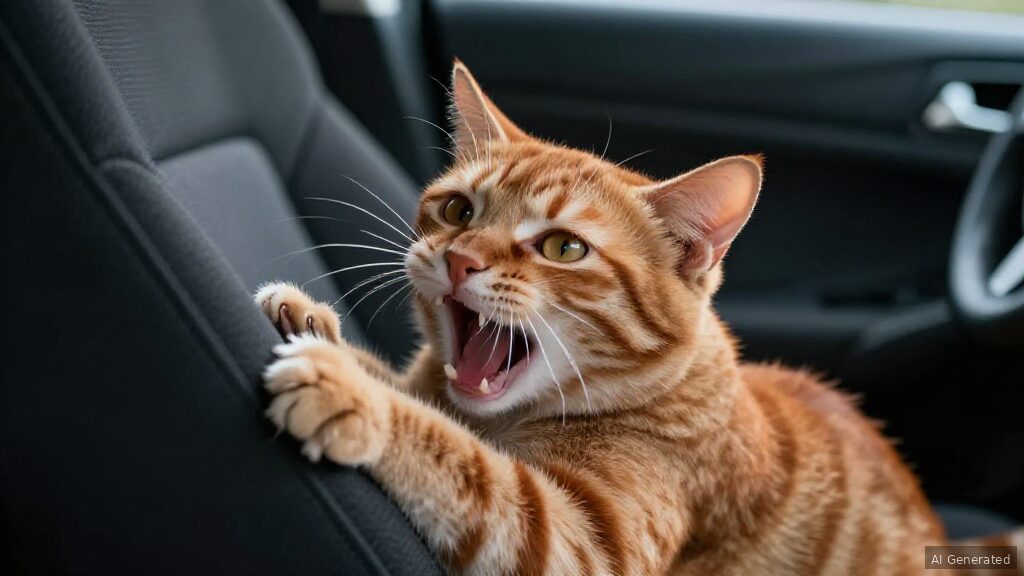
What step-by-step countermeasures can owners take for cats suffering from fear of vet visits?
For a cat, a vet visit is the most stressful situation they instinctively want to avoid. Especially for owners experiencing “vet panic,” the biggest concern is “what to do when the cat won’t enter the examination room” or “what to do when they run away during the exam.” This is not about forcibly dragging the cat along, but rather an approach that requires securing the cat’s psychological stability first and then gradually exposing them. The step-by-step guidelines presented below are methodologies designed considering the cat’s behavioral characteristics.
1. Environment Creation and Preparation Starting 24 Hours Before Travel
If you start preparing suddenly in the morning of the travel day, the cat will move in a tense state, so you must create a calm atmosphere at least 24 hours before travel. First, it is important to play with the cat in a place they are familiar with or feed their favorite food to form a positive emotion. Also, prepare the travel carrier (Carrier) in advance and let the cat live with it for several months by putting their favorite food or treats inside. This way, the carrier is perceived as a ‘treasure chest waiting’ rather than a ‘box of fear,’ reducing psychological resistance when travel begins. It is best for the owner not to be too hasty and leave the carrier door open once a day for the cat to enter and exit on their own.
2. Access Strategy and Entering the Examination Room at the Hospital
After arriving at the hospital, the owner should first check if the inside of the examination room is clean and not noisy, and while keeping the cat inside the carrier, enter the hospital environment safely for the cat by wiping disinfectant or organizing. At this time, the important thing is not to immediately pull the cat out, but for the owner to sit next to the carrier, make eye contact with the cat, speak softly, or open the carrier lid to let them stick their head out for a moment. If the cat shows resistance (抗拒), immediately close the door and wait, being careful not to force the door open or the body out. Some animal hospitals recommend staff carrying the carrier instead of owner accompaniment, but since the owner’s presence itself often calms the cat, the owner sitting next to the carrier may be more effective.
3. Behavior Management During and After the Visit
During the exam, minimize unnecessary physical contact such as touching the cat too much for tick removal or forcibly examining the eyes and ears. The owner should quietly watch while the cat is in the carrier or being held by the owner, allowing them to relax their body as much as possible, and it is good to gently comfort them if necessary. If the cat shows stress symptoms such as shaking severely, licking, or coughing while breathing heavily, the owner should immediately inform the staff and request to shorten the exam time or simplify the procedure as much as possible. After returning home, keep the cat in the carrier for at least 2 hours to let them return to a familiar space, then feed them to conclude with a positive experience. This can reduce stress levels for future travels.
4. Selection and Utilization of Travel Carrier (Carrier)
A cat travel carrier is not just a container, but must serve as a safe space (Safe Zone) where the cat can hide during travel. Therefore, the carrier should not be too small compared to the cat’s body length, and the bottom should be flat so it is not uncomfortable to walk on. Like PlayCat’s solid wood furniture, it is good if there is space for the cat to bend their body or a hole to hide inside the carrier. It is better for the owner to place the carrier low so the cat can easily enter, or guide them to enter on their own, rather than standing it on the floor. Also, always put a blanket or quilt (自用) that smells familiar to the cat inside the carrier; this provides a sense of security even in an unfamiliar hospital environment. Through this, the cat gains the perception that “this place is not dangerous.”
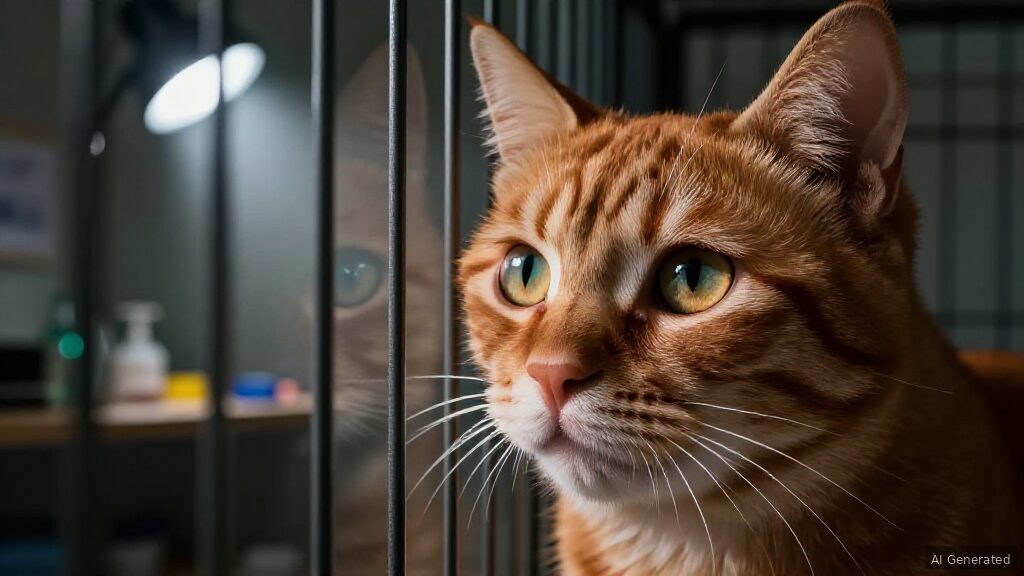
Differences and Precautions in Managing Cat Travel Stress by Age and Personality
Not all cats react to travel in the same way. Since the intensity of stress and response methods vary greatly depending on the cat’s age and temperament, owners must establish customized management strategies suitable for their cat’s characteristics. Especially kittens (juvenile cats), adult cats, and seniors (senior cats) have different physiological and psychological characteristics, so the approach must differ.
1. Kittens (Juvenile Stage, 0-6 months): Coexistence of Curiosity and Fear
Kittens are curious but lack the ability to understand the world, so they react very sensitively to unfamiliar environments. At this stage, travel itself can be a novel experience, but at the same time, they can feel extreme fear due to uncontrolled noise and movement. Therefore, for kittens, owners should actively form positive emotions through play before and after travel, and during the process, stay close, make eye contact, and speak to them. Kittens are very sensitive to the owner’s voice and touch, so it is important for the owner to comfort them confidently and softly. However, since kittens tend to move more frequently than adult cats, be careful not to let them escape from the carrier, and it is better to divide the travel into several times to keep the travel time short.
2. Adult Cats (Adulthood, 1-7 years): Stability and Territorial Awareness
Adult cats focus on establishing and maintaining their territory, so they react most sensitively to travel that takes them out of their control. Adult cats struggle to find an answer to the question “Why do I have to move?”, and as a result, they may show aggressive or escape behaviors. For adult cats, it is important to play enough and feed them before travel to give them a sense of fullness, and during travel, it is good to comfort them low without making eye contact (Eye Contact can be perceived as a threat). Adult cats want a space (Box, Hideout) where they can hide themselves in a new environment, so it is good for the owner to create a safe space inside the carrier at the hospital or grooming salon, or help the cat hide. Also, since adult cats may show different reactions even after travel, ensure sufficient rest time after returning home.
3. Seniors (Senior Stage, 7 years and older): Pain and Uncertainty
Senior cats may experience physical pain accompanying travel itself due to joint pain or chronic diseases. Additionally, senior cats have a lower ability to adapt to new environments and show stronger anxiety about changes. For seniors, it is important to take pain relief medication before and after travel, or keep the travel route flat. When visiting the hospital, be careful not to move the cat too much, and it is good for the owner to lift and move the cat with their hands. Seniors are very sensitive to the owner’s emotional changes, so the owner maintaining a calm attitude without being anxious themselves calms the cat. Also, since seniors require more rest time than usual after travel, ensure sufficient sleep time after returning home.
Common Mistakes and Solutions in Managing Cat Travel Stress
While owners try to reduce their cat’s travel stress, they often end up worsening the situation. This is because they inadvertently clash with the cat’s instinctive responses. Below is a summary of common mistakes that occur during cat travel stress management and their solutions.
1. Mistake: Touching the Cat Too Much and Forcing Movement
Owners make the mistake of continuing to touch the cat during or during the exam to comfort them, or pushing harder when the cat shows resistance (抗拒). This stimulates the cat’s fear, exacerbates stress, and causes greater resistance in future travels. The solution is for the owner to respect the cat’s reaction and wait until the cat wants to move on their own. The owner must first create a state where the cat feels comfortable in the carrier or in the owner’s hands, and it is good for the owner to comfort them low without making eye contact.
2. Mistake: Allowing Noise and Unnecessary Movement During Travel
Owners make the mistake of allowing noises or movements that startle the cat during travel. For example, if the owner speaks loudly next to the carrier or shakes the carrier after putting the cat inside, the cat feels greater fear. The solution is for the owner to act as quietly as possible during travel and transport the carrier calmly. Also, the owner must provide a safe space to protect the cat and allow the cat to hide on their own.
3. Mistake: Not Providing Sufficient Rest Time After Travel
Owners make the mistake of feeding or playing with the cat immediately after returning home. This causes the cat to consume energy again while exhausted from travel stress, hindering stress recovery. The solution is to leave the cat alone for at least 2 hours after returning home to rest sufficiently, and then feed them or play with them. Also, the owner should observe behavioral changes due to travel stress and request a hospital visit or professional help if necessary.
4. Mistake: Misuse of Travel Carrier (Carrier)
Owners make the mistake of viewing the carrier only as a travel container and not letting the cat live with it usually. This causes the carrier to be perceived as a symbol of fear by the cat, leading to greater resistance during travel. The solution is to let the cat live with the carrier usually so that the carrier is perceived as a safe space (Safe Zone) by the cat. For this, it is good to put the cat’s favorite food or treats inside the carrier and repeat having them enter and exit on their own. Also, the carrier should not be too small compared to the cat’s body length, and the bottom should be flat so it is not uncomfortable to walk on.
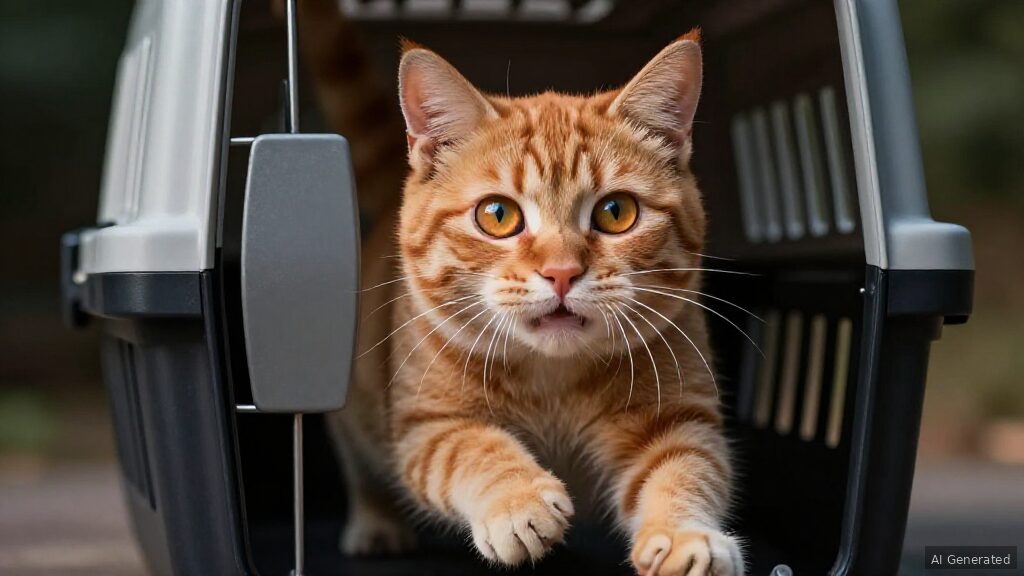
Travel Stress Management Checklist You Can Apply Starting Today
Based on theoretical content, we have summarized concrete behavioral guidelines that can be implemented immediately today. Through this checklist, owners can effectively manage their cat’s travel stress and make the relationship with the cat healthier.
- Preparation 24 Hours Before Travel: Put food in the carrier 24 hours before travel and repeat having the cat enter and exit the carrier on their own. (Time required: 10 mins/day, Required items: Travel carrier, food, treats)
- Creating a Quiet Atmosphere During Travel: During travel, avoid making noises that startle the cat and transport the carrier calmly. (Time required: Travel time, Required items: Travel carrier)
- Hospital Access Strategy: The owner enters the examination room first to organize the environment, and while keeping the cat in the carrier, sits next to them and comforts them. (Time required: 5 mins before exam, Required items: Travel carrier)
- Minimization During Exam: The owner does not touch the cat too much and waits until the cat wants to move on their own. (Time required: Exam time, Required items: Owner’s calm attitude)
- Sufficient Rest After Returning Home: Leave the cat alone for at least 2 hours after returning home to rest sufficiently, and then feed them. (Time required: 2 hours, Required items: Food)
- Providing a Safe Space Inside the Carrier: Put the cat’s favorite food or treats inside the carrier and repeat having them enter and exit on their own. (Time required: 10 mins/day, Required items: Travel carrier, food)
- Owner’s Emotional Stability: The owner maintains a confident and calm attitude and respects the cat’s reaction. (Time required: Before and after travel, Required items: Owner’s calm attitude)
Through this checklist, owners can effectively manage their cat’s travel stress and make the relationship with the cat healthier. Also, reducing travel stress has a positive impact not only on the cat’s physical health but also on their mental health, so owners must consistently practice this checklist.
Advanced Information: The Effect of Behavioral Enrichment and Solid Wood Furniture on Alleviating Travel Stress
The most important thing in reducing a cat’s travel stress is ‘Environmental Enrichment’. This means stimulating the cat’s instinctive behaviors to help psychological stability. Especially PlayCat’s solid wood furniture plays a big role in alleviating travel stress by stimulating the cat’s instinctive behaviors (vertical movement, hiding, running away, etc.).
1. Importance of Vertical Movement Space
Cats prefer vertical spaces, which provide a safe space (Safe Space) for cats. PlayCat’s solid wood furniture provides space for the cat to move vertically, providing stability to anxious cats due to travel stress. Also, since cats prefer observing from vertical spaces, it helps cats adapt to the new environment even after travel. Therefore, owners should install PlayCat’s solid wood furniture in their cat’s home to provide a safe space where the cat can reduce travel stress.
2. Necessity of a Space to Hide
Cats want a space to hide when stressed. PlayCat’s solid wood furniture provides a space for the cat to hide, providing stability to anxious cats due to travel stress. Also, since cats can perform their instinctive behaviors in a space to hide, it plays a big role in reducing travel stress. Therefore, owners should install PlayCat’s solid wood furniture in their cat’s home to provide a safe space where the cat can reduce travel stress.
3. Securing an Escape Route
Cats want a route to escape when stressed. PlayCat’s solid wood furniture provides a route for the cat to escape, providing stability to anxious cats due to travel stress. Also, since cats can perform their instinctive behaviors in an escape route, it plays a big role in reducing travel stress. Therefore, owners should install PlayCat’s solid wood furniture in their cat’s home to provide a safe space where the cat can reduce travel stress.
4. Behavior Comparison Table
The table below compares the effects of various cat travel stress management methods. Through this, owners can select the most effective method suitable for their cat’s characteristics.
| Management Method | Application Time | Effect | Precautions |
|---|---|---|---|
| Carrier Pre-Adaptation | 24 Hours Before Travel | Helps the cat perceive the carrier as a safe space | Put food or treats inside the carrier |
| Quiet Atmosphere During Travel | During Travel | Lowers the cat’s stress hormone levels | Minimize noise from the owner |
| Hospital Access Strategy | When Visiting Hospital | Helps the cat perceive the hospital environment safely | Owner enters the examination room first to organize the environment |
| Sufficient Rest After Returning Home | After Travel | Helps the cat recover from energy depletion due to travel stress | Leave the cat alone for at least 2 hours after returning home |
| PlayCat Solid Wood Furniture | Usually and After Travel | Stimulates the cat’s instinctive behaviors to help psychological stability | Install PlayCat’s solid wood furniture in the cat’s home |
Through this table, owners can select the most effective method suitable for their cat’s characteristics. Also, owners realize that ‘prevention’ is far more cost-effective and rational than ‘treatment’ in reducing their cat’s travel stress. Therefore, owners must consistently practice the methods presented in this table to effectively manage their cat’s travel stress.
Frequently Asked Questions (FAQ)
We have summarized the questions owners are most curious about regarding cat travel stress management and their answers. Through this content, owners can more effectively manage their cat’s travel stress.
1. Why is a vet visit scary for a cat?
A vet visit is the most stressful situation a cat instinctively wants to avoid. This is because it causes the cat to lose control and triggers fear of unfamiliar environments, noises, and smells. Also, cats perceive medical equipment sounds and smells of other animals inside the hospital as threat signals, maximizing psychological pressure. Therefore, owners need an approach that secures the cat’s psychological stability first and then gradually exposes them when visiting the hospital.
2. What should I do if the cat won’t enter the carrier?
If the cat won’t enter the carrier, the owner must be careful not to force the door open or the body out. It is good for the owner to sit next to the carrier, comfort the cat, and repeat having the cat enter and exit the carrier on their own. Also, put the cat’s favorite food or treats inside the carrier and repeat having them enter and exit on their own. Through this, the carrier is perceived as a safe space (Safe Zone) by the cat, reducing psychological resistance during travel.
3. What should I do if the cat shakes or breathes heavily during travel?
If the cat shakes or breathes heavily during travel, it is good for the owner not to touch the cat too much or push them forcibly. The owner should respect the cat’s reaction and wait until the cat wants to move on their own. Also, it is good for the owner to comfort them low without making eye contact. If the cat shows stress symptoms such as shaking severely, breathing heavily, or coughing, the owner should immediately inform the staff and request to shorten the exam time or simplify the procedure as much as possible.
4. What should I do if the cat continues to be stressed even after the vet visit?
If the cat continues to be stressed even after the vet visit, the owner should observe the cat’s behavior and request a hospital visit or professional help if necessary. Also, the owner should ensure sufficient rest time for the cat and wait until the cat wants to move on their own. Also, the owner should install PlayCat’s solid wood furniture in the cat’s home to provide a safe space where the cat can reduce travel stress.
5. Do I not have to use the travel carrier (Carrier) usually?
No. If the carrier is not lived with the cat usually, it is perceived as a symbol of fear by the cat, causing greater resistance during travel. Therefore, it is good for the owner to live with the carrier usually so that the carrier is perceived as a safe space (Safe Zone) by the cat. For this, it is good to put the cat’s favorite food or treats inside the carrier and repeat having them enter and exit on their own.
6. What if the cat shows behavioral changes due to travel stress?
If the cat shows behavioral changes due to travel stress, the owner should observe the cat’s behavior and request a hospital visit or professional help if necessary. Also, the owner should ensure sufficient rest time for the cat and wait until the cat wants to move on their own. Also, the owner should install PlayCat’s solid wood furniture in the cat’s home to provide a safe space where the cat can reduce travel stress.
Conclusion
This article presented concrete methods owners can take to reduce their cat’s travel stress. Did you know that even routine short trips—such as visiting the vet, grooming, or visiting friends’ homes—can be a major cause of psychological instability for cats? This article clearly explains from a behavioral perspective why these small daily movements are so critical for cats, provides practical, step-by-step management techniques for owners dealing with Feline Fear of Veterinary Visits, and specifically analyzes how stable environments, such as PlayCat’s solid wood furniture, play a role in alleviating travel stress. Through this content, owners can effectively manage their cat’s travel stress and make the relationship with the cat healthier. Also, reducing travel stress has a positive impact not only on the cat’s physical health but also on their mental health, so owners must consistently practice this content. Check for more cat behavioral enrichment information at PlayCat (playcat.xyz).
This content was written using AI technology. Always consult a veterinarian for medical-related information.