


Is the legend that cats guard treasures merely a coincidence, or could it be the evolutionary origin of survival instincts?
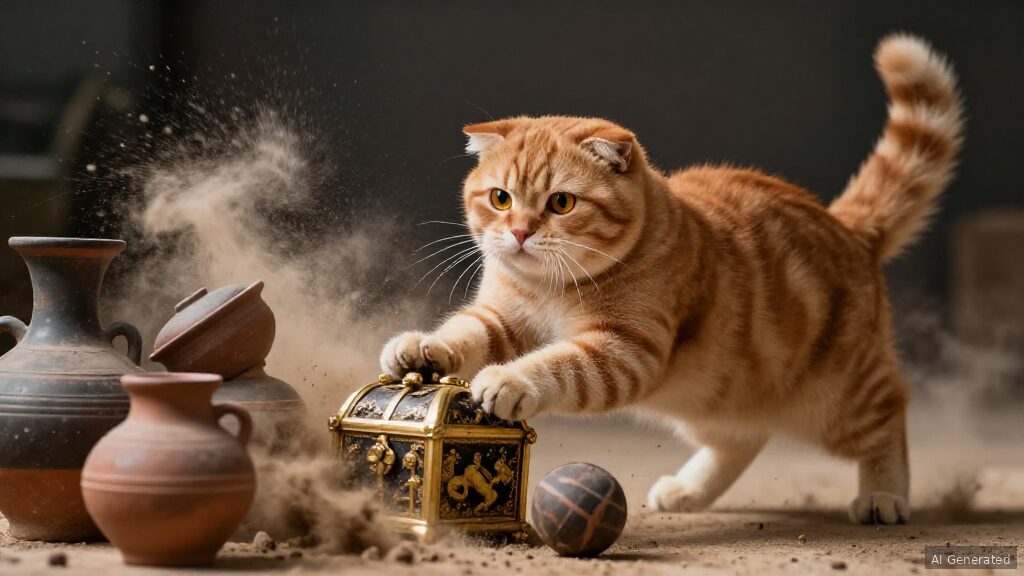
It is believed that cats are symbols of luck and guardians of wealth for humans, a tradition with a very long history and deep roots across both East and West. In Japan, the Maneki-neko is believed to bring wealth, while in Europe, during the Middle Ages, it was thought that cats drove away ghosts to protect the household. These ancient myths are not just simple folk legends, but results formed by the intersection of cats’ unique behavioral patterns and human survival instincts. Today, we can interpret these ancient stories from a completely new perspective through the lens of modern cat behavior science (Animal Behavior Science) and animal welfare science (Animal Welfare Science). This article analyzes the scientific basis for why cats exhibit behaviors of guarding specific objects or spaces, rather than leaving the story of cats, wealth, and luck passed down from ancient times as just a legend. Furthermore, it specifically presents how this instinctive ‘guarding behavior’ connects to environmental enrichment (Environmental Enrichment) strategies that reduce stress and increase happiness in modern homes, providing practical information for guardians who respect their cats’ natural instincts. Through this article, readers will be able to understand why cats try to guard things and learn how to form a deeper bond through this understanding.
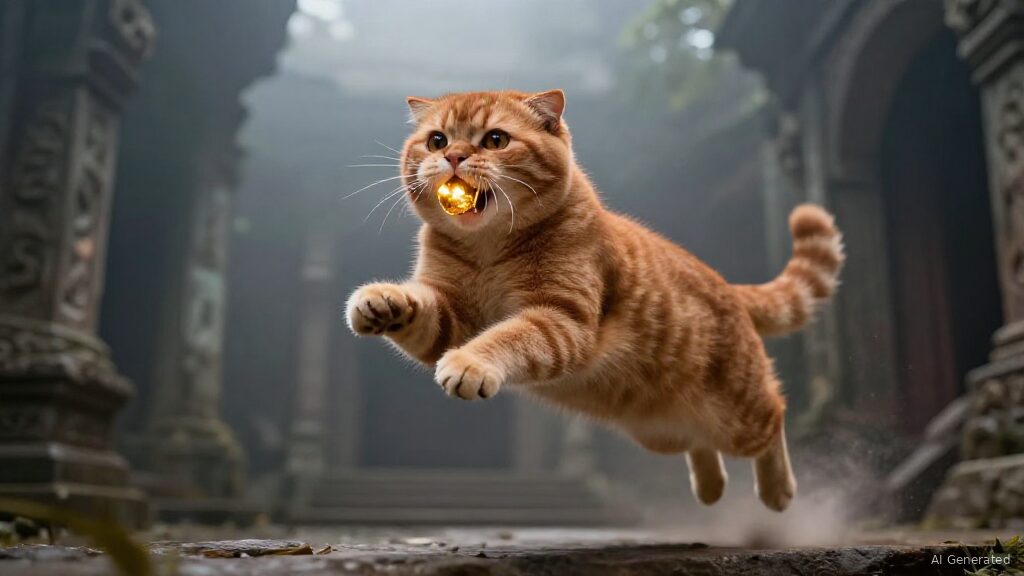
The Meaning of Cats and Treasures Where Ancient Myths and Modern Science Intersect
By examining ancient literature and folklore materials, we can trace the context of how perceptions of cats, treasures, or wealth were formed. This historical background shows the interaction between the ecological role of cats and human perception, going beyond simple cultural customs.
The Status of Cats as Guardians Penetrating East and West
The legend of the Japanese Maneki-neko (招き猫) says that when a cat raises its left hand, it brings luck, and when it raises its right hand, it brings wealth. This is interpreted as originating from the fact that early domesticated cats caught rats to protect crops and grains. Cats that prevented rats from taking away ‘wealth’ (human food) as agricultural pests naturally began to be worshipped as manifestations of ‘wealth’ and ‘luck’. In Europe, during the Middle Ages, churches and cathedrals bestowed sanctity on cats, assigning them the role of guardians who drove away ghosts and evil spirits. At that time, people believed that cats drove away demons by moving at night, which led to the perception that cats protected safety within and outside the home, bringing mental stability.
How Survival Instincts Transformed into the Myth of Guarding Treasures
Cats originally evolved as hunters, and their instinct to hunt small animals, secure food, and defend their territory is very strong. In ancient societies, grains or valuables secured by humans were essential resources for survival, so the behavior of cats driving away pests or thieves threatening these items provided immense survival value to humans. Therefore, the perception of cats as ‘guardians of treasures’ originated from the practical function that cats actually protected human food and assets. From a modern scientific perspective, this can be seen as a case where cats’ territorial defense behavior (Territorial Defense) was projected onto humans and mythologized. Cats do not relax their vigilance towards strange objects or animals entering their territory, and they regard them as their possessions or family to protect.
The Psychology of ‘Guarding Behavior’ Interpreted by Modern Cat Behavior Science
Modern ethology analyzes why cats try to strongly guard specific objects or spaces and what meaning this holds for humans. Cats value their home range (Home Range) very highly and consider all objects entering this area as ‘mine’ or ‘family’. Therefore, since valuables or important items owned by the owner are precious resources within the cat’s territory, instinctive behaviors to protect and guard them appear. This is closely related to the possessiveness cats have, and the reason humans regarded cats guarding treasures as symbols of luck is because this instinctive behavior of cats provides humans with positive psychological effects of ‘protection’ and ‘stability’.
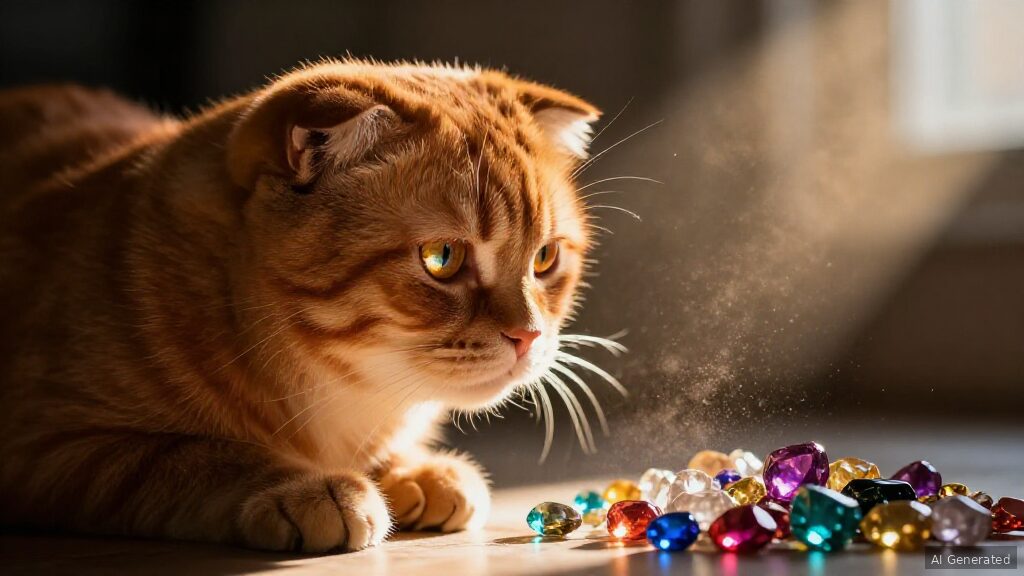
In-depth Analysis of Why Cats Guard Specific Objects: From a Behavioral Perspective
When a cat tightly hides a cloth, toy, or an object belonging to the owner, or places it in a specific location and tries absolutely not to let it be taken away, we can see that this is not a simple game, but a behavior reflecting complex cognitive processes and emotional states. In this section, we specifically analyze why cats try to guard objects based on theories presented by cat behavior experts.
Psychological Mechanisms of Territorial Defense Instinct and Possessiveness
Cats are animals that form small groups rather than collectives in their social structure, and their individual territorial boundaries are very distinct. This is an essential element for survival and reproduction in an animal’s life, so cats focus on protecting their territory from intruders. Objects owned by the owner are perceived by cats as ‘part of the territory’, so the behavior of guarding these objects stems from the instinctive desire to expand and maintain their territory. Especially in adult cats, this territorial defense instinct becomes stronger, and when new objects enter, they can take possession of them to guard them or guard existing objects more strongly. This is related to the psychological mechanism where cats are afraid of their territory being infringed upon and try to secure stability through this.
Transformation of Hunting Instinct and Food Securing Behavior
Cats have evolved as thorough hunters, and they have the habit (Hoarding Behavior) of hiding food immediately after catching it during hunting without eating it right away. This is a survival strategy to prevent other competing hunters from appearing and stealing the food. In modern homes, a cat’s behavior of hiding toys or wrapping them in a cloth and storing them elsewhere is a transformed form of this hunting instinct. Objects can be targets that hold value similar to ‘food’ for cats, and guarding them is interpreted as an instinctive behavior to secure food and protect it safely. Additionally, cats may hide or guard objects to avoid competition with other animals or people over food within their territory.
Behavior for Separation Anxiety and Securing Stability
When a cat tightly wraps a specific object or places it in a specific location and tries absolutely not to let it be taken away, this may be a strategy to alleviate separation anxiety (Separation Anxiety) or anxiety (Anxiety). Cats feel safe by keeping familiar objects or objects with a strong scent close by or leaving them in their territory. This provides cats with stability even when the guardian is absent (Absent), because it gives psychological comfort of ‘I am guarding this object, so I am safe’. Especially kittens (Kitten) or senior cats (Senior Cat) under stress tend to show this behavior more, and this can be seen as the cat’s effort to relieve anxiety and find mental stability. Therefore, it is important to interpret the cat’s object guarding behavior not as a simple game, but as a signal reflecting the psychological state the cat is currently feeling.
Cat Behavior Research and Data: Interaction Patterns Between Cats and Objects
Through research on cat behavior, we can specifically understand the interaction patterns between cats, objects, and spaces. Recent results from ethology research present data on the main reasons why cats show behaviors of guarding or hiding specific objects, their frequency, and how to intervene. In this section, we scientifically analyze the relationship between cats and objects based on these research results and data.
Research Results: Importance of Objects and Possessiveness for Cats
According to ethology research, cats have strong possessiveness over objects within their territory and show behaviors to protect them. One study observed cats guarding toys or food containers, which means the value of the object is very high to the cat. Especially in adult cats, this behavior appears more distinctly, and when new objects enter, they can guard existing objects more strongly. This is related to the psychological mechanism where cats are afraid of their territory being infringed upon and try to secure stability through this. Additionally, the behavior of cats hiding objects is interpreted as an instinctive behavior to secure food and protect it safely.
Data Analysis: Frequency and Patterns of Cat-Object Interaction
According to research results analyzing the frequency of interaction between cats and objects, cats are said to show behaviors of guarding or hiding specific objects more than 2-3 times a day. This shows that cats spend a lot of time interacting with objects and that objects have important meaning to cats. Additionally, analyzing the interaction patterns between cats and objects reveals that cats show object guarding behaviors more frequently during specific times of the day (e.g., morning, evening). This may be because cats consume more energy during specific times of the day and find stability through interaction with objects. Especially in stressed cats, this behavior appears frequently, and this can be seen as the cat’s effort to relieve anxiety and find mental stability.
Expert Opinion: Practical Approaches for Modifying Cat Behavior
Animal behavior experts advise that the behavior of cats guarding objects should not simply be blocked, but understood and solved through appropriate environmental enrichment (Environmental Enrichment). Experts explain that the reason cats show behaviors of guarding objects is because they feel anxiety or their instinct to protect their territory is at work. Therefore, it is important for guardians not to ignore or forcibly take away objects from cats, but to help their psychological stability by providing other interesting play spaces or spending time with the cat. Additionally, experts recommend observing the cat’s daily behavioral patterns to understand the reasons for the object guarding behavior and consulting with animal behavior experts if necessary. This is because it is the first step to understanding the cat’s behavior and increasing the cat’s happiness.
Solving Object Guarding Strategies Using Cat Environmental Enrichment (Environmental Enrichment)
When a cat shows behaviors of guarding or hiding specific objects, it is a natural instinct of the cat, and ignoring or forcibly stopping this can increase the cat’s stress. Therefore, it is important for guardians to understand these behaviors and satisfy the cat’s instincts and increase happiness through environmental enrichment (Environmental Enrichment) strategies. In this section, we introduce the principles and specific practical methods of cat environmental enrichment in detail.
Concept and Importance of Environmental Enrichment (Environmental Enrichment)
Environmental Enrichment (Environmental Enrichment) is a strategy that stimulates a cat’s natural instincts and behaviors to improve their mental and physical health. This aims to provide cats with various play tools, spaces, and environmental changes so that they can solve problems themselves, explore, and reduce stress. Environmental enrichment is very effective in satisfying cats’ hunting instincts, healthily expressing their territorial defense instincts, and helping their psychological stability. Additionally, environmental enrichment plays a significant role in preventing or solving behavioral problems in cats (e.g., guarding objects, excessive meowing, etc.). Guardians can increase their cat’s happiness through environmental enrichment, which also contributes to strengthening the bond between the cat and the guardian.
Practical Method 1: ‘Hidden Food’ Game to Satisfy Hunting Instinct
Since cats have a strong instinct to hide food, guardians can play a game of hiding their cat’s food to satisfy this instinct. This stimulates the cat’s hunting instinct, gives the cat stability, and helps the cat healthily express the behavior of guarding objects. The specific practical methods are as follows.
* **Hiding Food**: Put the cat’s food in small containers or cloths and hide them in various locations. Through this process, the cat finds the prey and can enjoy the taste and texture of the food more.
* **Hiding Location**: Mix places where the cat can easily find them with places that are hard to find. This stimulates the cat’s exploration instinct and gives the cat challenges and a sense of achievement.
* **Time Allocation**: Play the hiding food game 2-3 times a day. This helps the cat consume energy and improves the cat’s mental health.
* **Precautions**: Be careful not to let the cat feel stressed because it cannot find the hidden food for too long. Also, be careful not to provide too much food.
Practical Method 2: Creating ‘My Objects’ for Territorial Defense Instinct
Since cats have a strong instinct to protect their territory, guardians can instill the concept of ‘my objects’ in the cat. This helps the cat healthily express the behavior of protecting their territory and aids in the cat’s psychological stability. The specific practical methods are as follows.
* **Creating Cat-Exclusive Space**: Prepare spaces that the cat can use freely (e.g., cat desks, cat beds). This provides a space where the cat can guard their territory and feel stability.
* **Providing Cat-Exclusive Objects**: Distinguish objects used by the cat (e.g., cat toys, cat dishes) from objects used by the guardian. This helps the cat healthily express the behavior of protecting their territory.
* **Setting Territory Boundaries**: Clearly distinguish areas the cat can use from areas it cannot. This helps the cat healthily express the behavior of protecting their territory and reduces conflict between the guardian and the cat.
* **Precautions**: Be careful not to set the cat’s territory boundaries too narrowly. Also, be careful not to forcibly stop the cat from protecting their territory.
Practical Method 3: Securing ‘Safe Zone’ for Stress Relief and Psychological Stability
The reason a cat shows behaviors of guarding objects may be that it feels anxiety or is trying to find stability. Therefore, it is important for guardians to secure a safe space (Safe Zone) so the cat does not feel stress and help the cat’s psychological stability. The specific practical methods are as follows.
* **Creating Safe Zone**: Prepare safe spaces where the cat can hide or be alone (e.g., cat boxes, cat beds). This provides a space where the cat can feel stability when stressed.
* **Protecting Safe Zone**: The safe zone used by the cat should absolutely not be invaded by the guardian, and the cat’s territory is respected. This helps the cat feel stability in the safe zone and reduces stress.
* **Utilizing Safe Zone**: Guide the cat to utilize the safe zone when stressed. This helps the cat relieve stress itself and find psychological stability.
* **Precautions**: Be careful not to invade the cat’s safe zone. Also, guide the cat not to use the safe zone for too long and help the cat participate in other activities.
Comparison and Effect Analysis of Cat Environmental Enrichment (Environmental Enrichment) Strategies
There are various environmental enrichment (Environmental Enrichment) strategies to solve the behavior of cats guarding objects, but not all strategies produce the same effect. Therefore, it is important for guardians to choose a strategy suitable for their cat and analyze its effects. In this section, we compare major environmental enrichment strategies and analyze their respective effects.
Comparison of Effects by Strategy
The following is a table comparing major environmental enrichment strategies. Through this table, guardians can choose a strategy suitable for their cat.
| Strategy Name | Main Effect | Estimated Time Required | Required Items | Precautions |
| :— | :— | :— | :— | :— |
| **Hiding Food Game** | Satisfy hunting instinct, relieve stress, mental stimulation | 10-15 minutes/session | Food, container, cloth | Be careful not to provide too much food |
| **Utilizing Territorial Defense Instinct** | Setting territory boundaries, securing stability, improving self-confidence | 20-30 minutes/day | Cat-exclusive space, objects | Be careful not to set the cat’s territory boundaries too narrowly |
| **Securing Safe Zone** | Psychological stability, stress relief, resolving separation anxiety | Requires constant maintenance | Cat box, bed, cloth | Be careful not to invade the cat’s safe zone |
| **Controlled Exposure** | Satisfy hunting instinct, reduce stress, mental stimulation | 15-20 minutes/session | Toys, food, container | Be careful not to let the cat have too many toys |
| **Territory Expansion** | Satisfy hunting instinct, reduce stress, mental stimulation | 30-40 minutes/session | New space, toys, food | Be careful not to set the cat’s territory too widely |
Solving the Paradox of Choice: What is the Most Effective Strategy?
Although cat environmental enrichment strategies are diverse, not all strategies produce the same effect. Therefore, it is important for guardians to choose a strategy suitable for their cat and analyze its effects. To solve the paradox of choice (Paradox of Choice), it is recommended for guardians to choose 2-3 strategies considering the cat’s temperament (active/shy), age (kitten/adult/senior), and current condition. For example, an active adult cat can satisfy its hunting instinct and reduce stress by combining the ‘Hiding Food Game’ and ‘Controlled Exposure’ strategies. On the other hand, a shy senior cat can find psychological stability and improve self-confidence by combining the ‘Securing Safe Zone’ and ‘Utilizing Territorial Defense Instinct’ strategies. Additionally, it is important for guardians to carefully observe the cat’s response, adjust ineffective strategies in time, and continuously apply effective strategies.
Applying Strategies Using Loss Aversion (Loss Aversion)
When guardians choose cat environmental enrichment strategies, they can make better decisions by utilizing loss aversion (Loss Aversion) psychology. Loss aversion means that humans feel losses more strongly than gains when experiencing the same profit and loss. Therefore, it is effective for guardians to first present the loss of ‘the cat’s stress may increase if this strategy is not applied’ and emphasize the benefit of ‘the cat’s happiness will increase if this strategy is applied’. For example, after first presenting the loss of ‘if the cat’s object guarding behavior is ignored, the cat’s anxiety will increase, which can have a negative impact on the cat’s health’, and then emphasizing the benefit of ‘if the cat’s hunting instinct is satisfied through the hiding food game, the cat’s anxiety will decrease and it will become happier’, guardians will be more motivated to apply environmental enrichment strategies. This is an effective method that naturally utilizes the principles of behavioral economics to help guardians make decisions.
Cats and Objects: Advanced Information and Common Mistake Solutions
The relationship between cats and objects goes beyond simple ownership and is an important signal reflecting the cat’s psychological and physical condition. In this section, we explain in detail what guardians should pay attention to when a cat shows behaviors of guarding objects, and common mistakes and their solutions.
Relationship Between Cats and Objects: Advanced Information
When a cat shows behaviors of guarding objects, it is an important signal reflecting the cat’s psychological state (anxiety, stress, territorial defense instinct, etc.). Therefore, it is important for guardians to carefully observe the cat’s behavior and understand the cat’s psychological state. Additionally, when a cat shows behaviors of guarding objects, it may also reflect the cat’s physical health condition (pain, illness, etc.), so it is important for guardians to check the cat’s health status. If the guardian does not take appropriate action when the cat shows behaviors of guarding objects, the cat’s stress may increase, which can have a negative impact on the cat’s health. Therefore, it is important for guardians to carefully observe the cat’s behavior and consult with animal behavior experts or veterinarians if necessary.
Common Mistake 1: Ignoring or Forcibly Stopping the Cat’s Object Guarding Behavior
Ignoring or forcibly stopping the cat’s object guarding behavior can increase the cat’s stress and cause conflict between the cat and the guardian. When a cat shows behaviors of guarding objects, it is important for guardians to understand the cat’s behavior and understand the cat’s psychological state. Additionally, it is better for guardians to guide the cat’s behavior and help the cat’s psychological stability rather than ignoring or forcibly stopping it. For example, when a cat shows behaviors of guarding objects, it is better for guardians to praise the cat, spend time with the cat, and help the cat’s psychological stability.
Common Mistake 2: Providing Too Many Objects or Restricting Them for the Cat
Providing too many objects or restricting them for the cat can increase the cat’s stress and make the cat’s behavior irregular. When a cat shows behaviors of guarding objects, it is important for guardians to provide an appropriate amount of objects for the cat. Additionally, it is better for guardians to provide an appropriate amount of objects for the cat and guide the cat’s behavior rather than providing too many objects or restricting them. For example, when a cat shows behaviors of guarding objects, it is better for guardians to provide an appropriate amount of objects for the cat, guide the cat’s behavior, and help the cat’s psychological stability.
Common Mistake 3: Setting the Cat’s Territory Boundaries Too Narrowly or Infringing on Them
Setting the cat’s territory boundaries too narrowly or infringing on them can increase the cat’s stress and cause conflict between the cat and the guardian. When a cat shows behaviors of guarding objects, it is important for guardians to respect the cat’s territory boundaries and help the cat’s psychological stability. Additionally, it is better for guardians to respect the cat’s territory boundaries and help the cat’s psychological stability rather than setting the cat’s territory boundaries too narrowly or infringing on them. For example, when a cat shows behaviors of guarding objects, it is better for guardians to respect the cat’s territory boundaries and help the cat’s psychological stability.
Cat Environmental Enrichment Checklist You Can Start Practicing Today
Now, guardians understand the behavior of cats guarding objects and know specific practical methods to solve it. In this section, we present a specific behavior checklist that can be started practicing today. Each item includes estimated time required, required items, and expected effects so that guardians can easily follow them.
Checklist 1: Hiding Food Game (Finding Food)
* **Estimated Time Required**: 15 minutes
* **Required Items**: Cat’s food, small container (plastic cup, lid), cloth, newspaper
* **Expected Effect**: Satisfy hunting instinct, reduce stress, mental stimulation
* **Practical Method**: Put the cat’s food in small containers or cloths and hide them in various locations (e.g., on a desk, on the floor, in a cupboard). Through this process, the cat finds the food and can enjoy the taste and texture of the food more. While the cat is finding the food, the guardian spends time with the cat and praises the cat’s behavior.
Checklist 2: Creating Cat-Exclusive Space (Territorial Defense)
* **Estimated Time Required**: 30 minutes
* **Required Items**: Cat-exclusive bed, cat box, cloth, cat toys
* **Expected Effect**: Setting territory boundaries, securing stability, improving self-confidence
* **Practical Method**: Prepare spaces that the cat can use freely (e.g., cat desks, cat beds). The guardian absolutely does not invade this space and respects the cat’s territory. The cat feels stability in this space and can reduce stress.
Checklist 3: Securing Safe Zone (Stress Relief)
* **Estimated Time Required**: Requires constant maintenance
* **Required Items**: Cat box, cat bed, cloth, cat toys
* **Expected Effect**: Psychological stability, stress relief, resolving separation anxiety
* **Practical Method**: Prepare safe spaces where the cat can hide or be alone (e.g., cat boxes, cat beds). The guardian absolutely does not invade this space and respects the cat’s territory. The cat feels stability in this space and can reduce stress.
Checklist 4: Controlled Exposure (Satisfying Hunting Instinct)
* **Estimated Time Required**: 20 minutes
* **Required Items**: Toys, food, container
* **Expected Effect**: Satisfy hunting instinct, reduce stress, mental stimulation
* **Practical Method**: Hide toys so the cat can find prey and guide the cat to find them. Through this process, the cat finds the prey and can enjoy the taste and texture of the food more. While the cat is finding the food, the guardian spends time with the cat and praises the cat’s behavior.
Checklist 5: Territory Expansion (Exploring New Spaces)
* **Estimated Time Required**: 40 minutes
* **Required Items**: New space (e.g., another room, balcony), toys, food
* **Expected Effect**: Satisfy hunting instinct, reduce stress, mental stimulation
* **Practical Method**: Guide the cat to explore new spaces. Through this process, the cat finds new spaces and can enjoy the taste and texture of the food more. While the cat is exploring new spaces, the guardian spends time with the cat and praises the cat’s behavior.
Cat Environmental Enrichment (Environmental Enrichment) FAQ
We present questions that readers are likely to actually ask and detailed answers. Each answer is explained in at least 3-4 sentences to resolve the reader’s curiosity.
Q1: When a cat shows behaviors of guarding objects, how should the guardian react?
When a cat shows behaviors of guarding objects, it is important for guardians to understand the cat’s behavior and understand the cat’s psychological state rather than ignoring or forcibly stopping it. Additionally, it is better for guardians to guide the cat’s behavior and help the cat’s psychological stability rather than ignoring or forcibly stopping it. For example, when a cat shows behaviors of guarding objects, it is better for guardians to praise the cat, spend time with the cat, and help the cat’s psychological stability.
Q2: When a cat shows behaviors of hiding objects, is this a sign of illness?
When a cat shows behaviors of hiding objects, it may be an important signal reflecting the cat’s psychological state (anxiety, stress, territorial defense instinct, etc.). Therefore, it is important for guardians to carefully observe the cat’s behavior and understand the cat’s psychological state. Additionally, when a cat shows behaviors of hiding objects, it may also reflect the cat’s physical health condition (pain, illness, etc.), so it is important for guardians to check the cat’s health status. If the guardian does not take appropriate action when the cat shows behaviors of hiding objects, the cat’s stress may increase, which can have a negative impact on the cat’s health.
Q3: When doing cat environmental enrichment (Environmental Enrichment), what items should be prepared?
When doing cat environmental enrichment (Environmental Enrichment), it is important for guardians to prepare items suitable for the cat. For example, it is good to prepare the cat’s food, toys, cloth, cat boxes, cat beds, etc. Additionally, it is good for guardians to choose items considering the cat’s temperament (active/shy), age (kitten/adult/senior), and current condition. For example, an active adult cat requires many toys and food, while a shy senior cat requires more cat boxes and cloth.
Q4: When a cat shows behaviors of guarding objects, is this a problem for the cat?
When a cat shows behaviors of guarding objects, it may be a behavior reflecting the cat’s natural instincts (hunting instinct, territorial defense instinct, etc.). Therefore, it is important for guardians to understand the cat’s behavior and understand the cat’s psychological state rather than ignoring or forcibly stopping it. Additionally, it is better for guardians to guide the cat’s behavior and help the cat’s psychological stability rather than ignoring or forcibly stopping it. For example, when a cat shows behaviors of guarding objects, it is better for guardians to praise the cat, spend time with the cat, and help the cat’s psychological stability.
Q5: Can cat environmental enrichment (Environmental Enrichment) reduce the cat’s stress?
Yes, cat environmental enrichment (Environmental Enrichment) is very effective in reducing the cat’s stress. It is very effective in satisfying the cat’s hunting instinct, healthily expressing the territorial defense instinct, and helping the cat’s psychological stability. Additionally, environmental enrichment plays a significant role in preventing or solving behavioral problems in cats (e.g., guarding objects, excessive meowing, etc.). Guardians can increase their cat’s happiness through environmental enrichment, which also contributes to strengthening the bond between the cat and the guardian.
Q6: When a cat shows behaviors of guarding objects, is this because the cat feels anxiety?
When a cat shows behaviors of guarding objects, it may be that the cat feels anxiety or is trying to find stability. Therefore, it is important for guardians to carefully observe the cat’s behavior and understand the cat’s psychological state. Additionally, it is better for guardians to guide the cat’s behavior and help the cat’s psychological stability rather than ignoring or forcibly stopping it. For example, when a cat shows behaviors of guarding objects, it is better for guardians to praise the cat, spend time with the cat, and help the cat’s psychological stability.
Conclusion
The legend that cats guard treasures is not a simple coincidence, but a cultural heritage formed by the intersection of the cat’s survival instinct and the deep trust humans have for cats. The behavior of cats guarding specific objects can be interpreted as part of the cat’s territorial defense instinct, hunting instinct, and efforts for psychological stability, which is scientifically proven from the perspective of animal behavior science (Animal Behavior Science) and animal welfare science (Animal Welfare Science). It is important for guardians not to dismiss these behaviors as simple games, but to respect the cat’s instincts and practice environmental enrichment (Environmental Enrichment) strategies to increase the cat’s happiness. Starting today, create a suitable play space for your cat, satisfy its hunting instinct, and help its psychological stability to form a deeper bond. Check for more cat environmental enrichment information at PlayCat (playcat.xyz)
This content was written using AI technology. Always consult a veterinarian for medical-related information.