


Why Does Our Cat Repeat the Same Actions Every Day?
Many cat guardians often find themselves wondering, “Why on earth is my cat doing this?” when they see their cat staring blankly out the window, constantly scratching the sofa, or running around late at night. Especially for modern cats living exclusively indoors, these behaviors may not simply be cute habits but rather ‘stress signals’ arising from unfulfilled instinctual needs. In the wild, cats spend most of their day hunting, exploring, and resting, creating complex environments for themselves. However, if they are confined to a small apartment and only encounter the same toys and food every day, their mental and physical health will inevitably be gradually threatened.
This article goes beyond simply buying more toys or introducing new treats; it aims to explore the core principles of ‘Environmental Enrichment,’ which involves understanding your cat’s instincts and fulfilling them. Environmental enrichment refers to designing the environment and providing stimuli so that animals can perform natural behaviors required in their habitat. For cats, this is not merely a means to alleviate boredom but an essential element for finding mental stability, preventing disease, and deepening the bond with their guardian. From today, let’s explore concrete ways to transform your home into the happiest and safest playground for your cat.
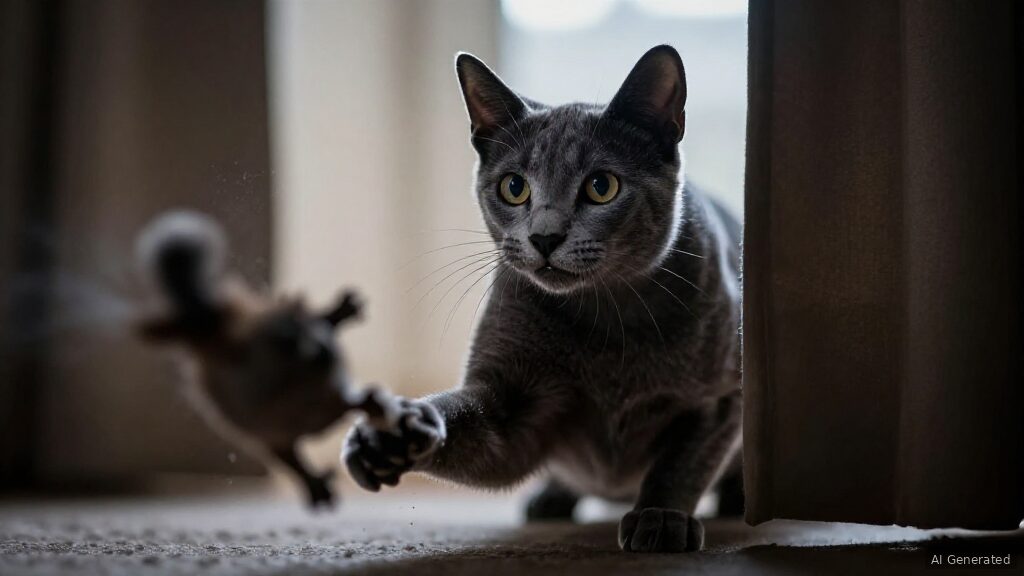
What Is the Secret to Space Configuration That Awakens a Cat’s Instincts?
Cats are inherently vertical animals that prefer high places. In the wild, they climb to high spots to avoid predators, hunt prey, and survey their surroundings. Therefore, the first step in environmental enrichment is configuring the indoor space to allow not just horizontal movement but also vertical movement. A wide floor area alone is not enough; you must provide stairs utilizing wall space, high platforms, and safe lookouts.
Introducing PlayCat Solid Wood Furniture for Vertical Space Utilization
For cats, height means ‘safety’ and ‘control.’ However, many cat towers on the market are made of synthetic resin or low-grade wood, often emitting odors or having unstable structures that cats do not trust. This is where PlayCat’s solid wood furniture can be the perfect solution for cat environmental enrichment. Natural solid wood regulates temperature well, staying cool in summer and warm in winter, and its unique scent provides a sense of security to cats. Additionally, its sturdy structure provides a safe landing without shaking when cats jump, showcasing a design that even considers joint health.
PlayCat solid wood furniture goes beyond just sitting spaces; it creates ‘circulation routes’ that allow cats to explore the house by moving vertically. From shelf-style furniture attached to walls to tower structures reaching the ceiling, it overcomes the spatial limitations of the home and expands your cat’s activity range. This plays a decisive role in developing muscle and balance through appropriate jumping and landing training during the growth period for young kittens. For senior cats, it provides gentle movement routes including ramps to reduce joint strain.
Furthermore, the natural texture of solid wood stimulates the sensation of a cat’s paw pads, satisfying their exploratory instincts. Unlike the coldness or slipperiness of synthetic materials, wood provides warmth and friction that feels comfortable underfoot, making cats naturally want to stay on it. This helps cats perceive the entire house as one large playground, preventing boredom and contributing to the formation of an active lifestyle.
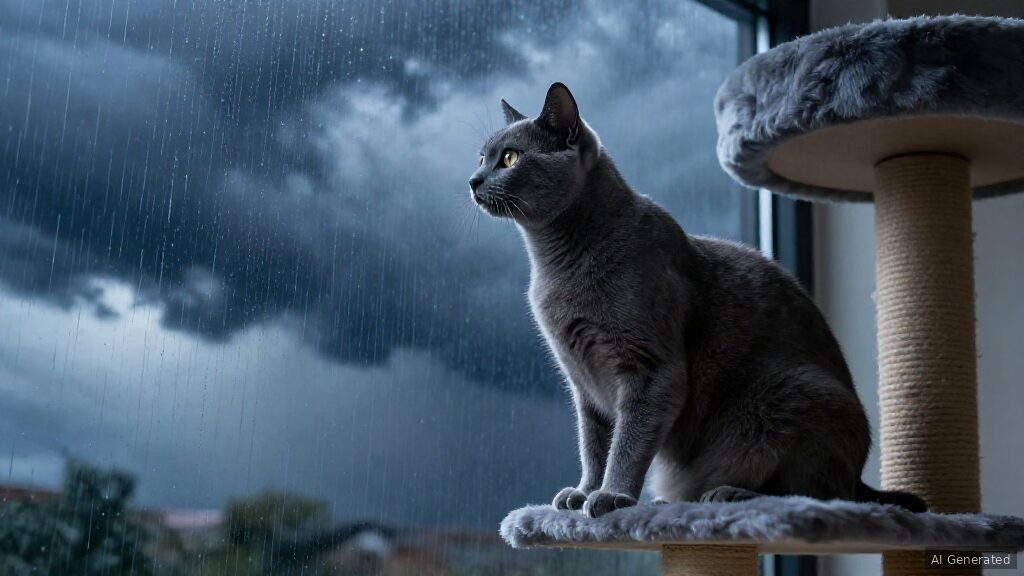
Can Mealtime Become a Hunting Game Beyond Simple Nutrition?
Cats are naturally predators that consume small amounts multiple times a day. However, most guardians feed them by filling a bowl with food at set times. This removes the need for cats to ‘work for their food,’ causing their hunting instincts to atrophy and leading to overeating or obesity. One of the core aspects of environmental enrichment is ‘transforming eating behavior into hunting behavior.’
The Effect of Food Puzzles and Hide-and-Seek Games
Instead of placing food directly in a bowl, putting it inside a puzzle board or hidden toys encourages cats to dig with their paws, push with their noses, and bite with their mouths to find their meal. Through this process, cats indirectly experience the entire hunting sequence of ‘finding – chasing – catching – eating,’ which activates their brains and relieves stress. Especially when using wet canned food or Churu-type treats, you can try ‘wall feeding’ by smearing them on walls or ceilings. As cats lick them up, they use their jaw muscles, and by jumping or scratching to reach high places, they can increase their exercise volume.
As mentioned in reference materials, products that are easy to eat and have an appropriate scent, naturally drawing cats closer, maximize their effect when combined with play. For example, meat-flavored treats mixed with tuna and chicken breast are highly attractive to cats. Hiding these in puzzle toys will make cats focus and immerse themselves in play for extended periods. This becomes a ‘behavioral reward’ that maximizes mental satisfaction, going beyond simply filling their bellies.
Differences in Feeding Methods by Age
| Age Group | Environmental Enrichment Feeding Strategy | Precautions |
|---|---|---|
| Kittens (Growth Stage) | Satisfy curiosity through puzzle toys with various textures and shapes. Feed small amounts multiple times to develop hunting instincts. | Ensure sizes are appropriate to prevent swallowing small parts. Control intake to prevent overeating. |
| Adult Cats (Adulthood) | Introduce complex puzzle systems. Combine vertical movement and hunting behavior through wall-based feeding games. | Rotate toys regularly to prevent boredom. Manage alongside weight control. |
| Seniors (Old Age) | Use accessible toys rather than overly difficult puzzles. Feed at lower heights to protect joints. | Use soft ingredients considering dental health and digestion. Create a stress-free environment. |
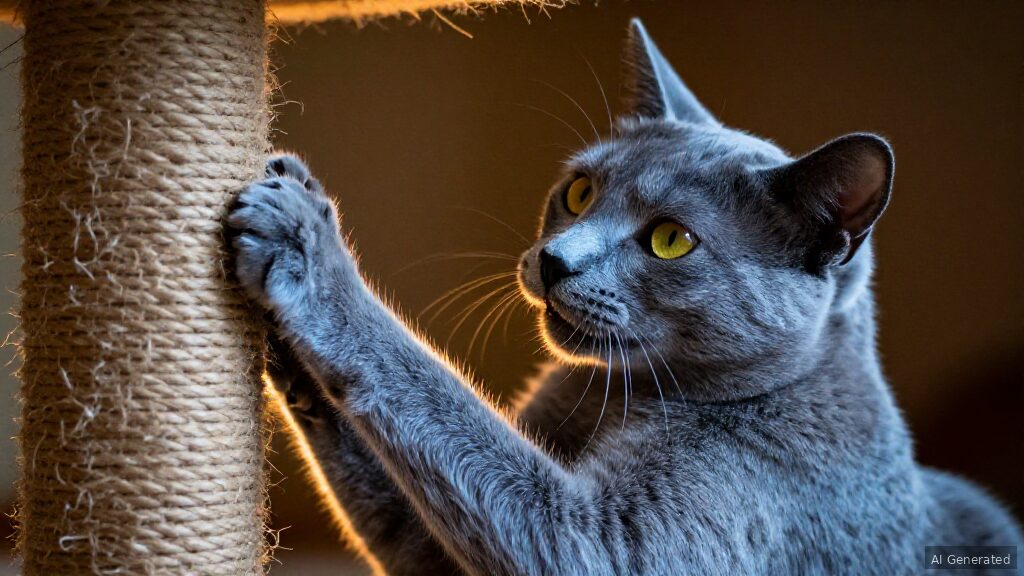
How to Create a Sensory Environment That Stimulates a Cat’s Curiosity?
Cats use their five senses—smell, hearing, touch, etc.—very keenly to perceive their surroundings. If the indoor space remains constant, cats will quickly feel bored. Therefore, it is important to periodically provide various sensory stimuli to enrich the environment.
Inducing Changes in Smell and Touch
A cat’s sense of smell is far more developed than humans’, so even a single new scent can spark great interest. Periodically changing the arrangement of furniture or the position of blankets inside the house, or scattering cat herbs (catnip, valerian, etc.), is a simple method that yields significant results. In particular, natural materials like PlayCat solid wood furniture do not emit artificial odors, allowing cats to sniff them comfortably. The tactile stimulation of touching the wood grain with their paws also stimulates their exploratory instincts. The rough texture of the wood surface connects with grooming behaviors like scratching, allowing cats to naturally mark their territory and relieve stress.
Additionally, solid wood resting spots installed near windows act as ‘birdcages’ for cats to observe external movements. Birds passing by or leaves rustling in the wind are the best visual stimulants for a cat’s hunting instincts. To achieve this, you can place comfortable solid wood cushions in front of the window or position toys where sunlight enters during the day to encourage cats to move on their own.
Improving the Auditory Environment
Cats can hear frequencies higher than the human audible range. Sudden noises or continuous vibrations can make cats anxious. Conversely, white noise containing sounds like rain, wind, or nature has a calming effect on cats. An environment with appropriate background noise, rather than complete silence, can aid in the psychological stability of cats, which is especially important for senior cats.
Why Is Strengthening Emotional Bonds Through Social Interaction Important?
Cats are often known as ‘solitary hunters,’ but in reality, they place great importance on the social bond with their guardian. However, a guardian’s indifference or incorrect interaction methods can cause anxiety in cats. An important element of environmental enrichment is increasing the ‘quality time’ spent with the guardian.
Techniques for Proper Hunting Play
The most common mistake is shoving toys at a cat or moving them too fast, not giving the cat a chance to catch them. True hunting play must include the entire process of ‘finding – chasing – catching – winning.’ Start the play by hiding and revealing the toy, and once the cat is focused, move slowly, then suddenly stop or run away quickly to mimic the behavior of real prey. After the play session, always let the cat catch the toy to make them feel the emotion of ‘victory,’ and immediately follow up with a treat or food to associate it with the reward of a successful hunt.
In spaces with PlayCat solid wood furniture, this play can become even richer. You can throw toys from high places to make cats jump or hide toys between stairs for them to find, enabling dynamic play utilizing vertical space. This goes beyond simple exercise volume, strengthening the trust relationship between the cat and guardian and making the cat perceive the guardian as a ‘hunting partner.’
Rhythm and Predictability of Daily Life
Cats prefer a consistent rhythm. Playing at the same time every day, feeding in the same order, and talking in a certain pattern reduces a cat’s anxiety. Especially in multi-cat households, it is important to secure individual play times considering each cat’s personality. It is advisable to separate spaces so that one cat is not disturbed while another is playing, or to provide different toys for each.
Common Mistakes in Cat Environmental Enrichment and Their Solutions
Many guardians strive for cat environmental enrichment, but sometimes it backfires or the cat loses interest. Here are the most common mistakes and their solutions.
Mistake 1: Piling Too Many Toys in One Place
Many guardians buy all the toys they can for their cat at once. However, since cats value ‘novelty,’ if all toys are visible at once, they quickly lose interest. This causes ‘curiosity decline.’
Solution: Introduce a ‘rotation system.’ Keep only 3-4 toys out at a time and store the rest in a place where they aren’t easily seen, swapping them out every 1-2 weeks. This makes it feel like there is always a new toy for the cat, maintaining continuous interest.
Mistake 2: Ignoring Vertical Space and Only Expanding the Floor
A large floor area does not guarantee a happy cat. Cats prefer high places over the floor. An environment with toys only on the floor and nothing on high places is boring for cats.
Solution: Expand vertical space by installing shelves utilizing wall space or PlayCat solid wood furniture. Placing resting spots and toys at various heights, such as near windows, above doors, or on bookshelves, will dramatically increase the cat’s activity range.
Mistake 3: Lack of Play Time
Many guardians do not play directly with their cats, thinking, “Cats play well on their own, so it’s fine.” However, toys alone are often insufficient to fully satisfy hunting instincts.
Solution: Play hunting games directly with a toy for at least 15 minutes, twice a day. It is important to make eye contact and talk to the cat at their eye level while playing.
Mistake 4: Neglecting Stress-Inducing Factors
Noise, strangers, and threats from other animals hinder cat environmental enrichment. Especially senior cats suffer significant stress from even small changes.
Solution: Provide plenty of hiding spots (boxes, tunnels, etc.) where cats can hide, and set up resting areas far from spaces where stress factors occur. The enclosed structure or high positions of PlayCat solid wood furniture can simultaneously serve as these hiding spots.
Practical Checklist for Starting Environmental Enrichment Today
Now, moving beyond theory, here are concrete actions you can start taking today. Small changes can add up to transform your cat’s daily life.
- Check Vertical Space: Utilize high places in your home (top of bookshelves, above doors, etc.) to install cat resting spots or toys. If you have PlayCat solid wood furniture, use it to create vertical circulation routes.
- Start Toy Rotation: Reduce the number of visible toys by half, store the rest well, and swap them out tomorrow.
- Introduce Feeding Games: Instead of putting tonight’s dry food in a bowl, place it in a puzzle board or holes in a paper box. Make your cat work to find their food.
- Add New Scents: Place cat herbs or natural leaves around the house to provide new scents.
- 15-Minute Hunting Play: Tonight, hold a toy, make eye contact with your cat, and play with focused attention for 15 minutes. At the end, make sure they catch it and give them a treat.
- Secure Hiding Spots: Prepare one more box for your cat to hide in and place it in a quiet corner.
- Manage Nighttime Activity: If your cat has a habit of running around late at night, exhaust their play energy during the day, play a final hunting game in the evening, and keep things quiet at night.
Frequently Asked Questions (FAQ)
1. Why is cat environmental enrichment necessary?
When living indoors, cats are prone to stress because their instinctual hunting and exploratory needs are not met. Environmental enrichment provides an environment where these natural behaviors can be performed, offering mental stability and is essential for preventing obesity and behavioral problems (inappropriate urination, furniture destruction, etc.). This is a crucial factor in improving the cat’s quality of life and extending their lifespan.
2. How does PlayCat solid wood furniture help with environmental enrichment?
PlayCat solid wood furniture is made of natural wood, stimulating the sensation of a cat’s paw pads, and its stable structure enables activity in high places (vertical movement). This satisfies the cat’s instinctual ‘preference for high places,’ turning the entire house into a playground and making a significant contribution to environmental enrichment.
3. Is just buying toys enough?
No. Toys are merely tools; what is important is the ‘social interaction’ of the guardian playing directly. If toys are left alone without interaction, cats quickly lose interest. Securing play time with the guardian and rotating toys is key.
4. Do senior cats also need environmental enrichment?
Yes, very much so. In fact, senior cats require more attention and appropriate stimuli due to joint pain or cognitive decline. Providing exploration activities that are not too intense and gentle movement routes helps maintain the mental health of senior cats and prevents depression.
5. What if my cat rejects environmental enrichment after I start?
Cats tend to dislike change. Instead of changing the environment suddenly, start with small changes. For example, place a new toy next to an existing one, or slightly change the hiding spot of the toy. Patience is needed to wait until the cat feels curious on its own.
6. How is environmental enrichment applied in multi-cat households?
In multi-cat households, you must consider each cat’s personality. To prevent one cat from taking a toy another likes, separate toys, food bowls, and resting spaces sufficiently. Providing individual play time for each cat is a way to reduce conflict and increase bonding.
Final Advice for a Happier Home with Your Cat
Cat environmental enrichment does not happen overnight. Small changes accumulate to breathe new vitality into your cat’s daily life and create a deep bond between guardian and cat. The vertical space utilization, hunting play, sensory stimulation, and environmental improvements through PlayCat solid wood furniture introduced today are not just tips, but warm practices that help cats live according to their instincts.
The greatest gift guardians can give their cats is not expensive toys, but the mindset of “I understand and respect your instincts” and the effort to put it into practice. Imagine your cat looking out the window happily, resting comfortably in high places, and running around energetically through hunting play. All those moments start from the small changes you make today. Why not start turning a corner of your home into a playground for your cat right now? Your love and attention will be the greatest happiness for your cat.
This content was written using AI technology. Please consult a veterinarian for any medical information.