


Environmental Enrichment: Why Does It Change Our Cats’ Lives?
Environmental enrichment refers to improving the physical, social, and sensory environment to allow animals to naturally express their instinctive behaviors. In the wild, cats spend most of their day engaged in various activities such as hunting, exploring, patrolling territories, and resting. However, indoor cats are confined to narrow spaces where these instinctive activities are restricted. This goes beyond mere lack of space; it can lead to psychological stress, obesity, and behavioral issues (self-harm, excessive grooming, territorial marking).
From the perspective of animal welfare, a cat’s happiness comes not just from being well-fed and safe, but from an environment that offers ‘choice’ and a sense of ‘control’. PlayCat’s environmental enrichment guide presents a comprehensive space design solution that allows cats to satisfy their wild instincts indoors and express themselves. This is a process of redesigning the entire home into a playground and sanctuary for your cat, going beyond simply providing toys. Kittens, in particular, are at a stage where they learn about the world through curiosity and exploration, while senior cats require gentle stimulation to maintain joint health and cognitive function. Adult cats need to expend energy and secure their territory. Creating a rich environment tailored to each age group is the core of raising a happy cat.
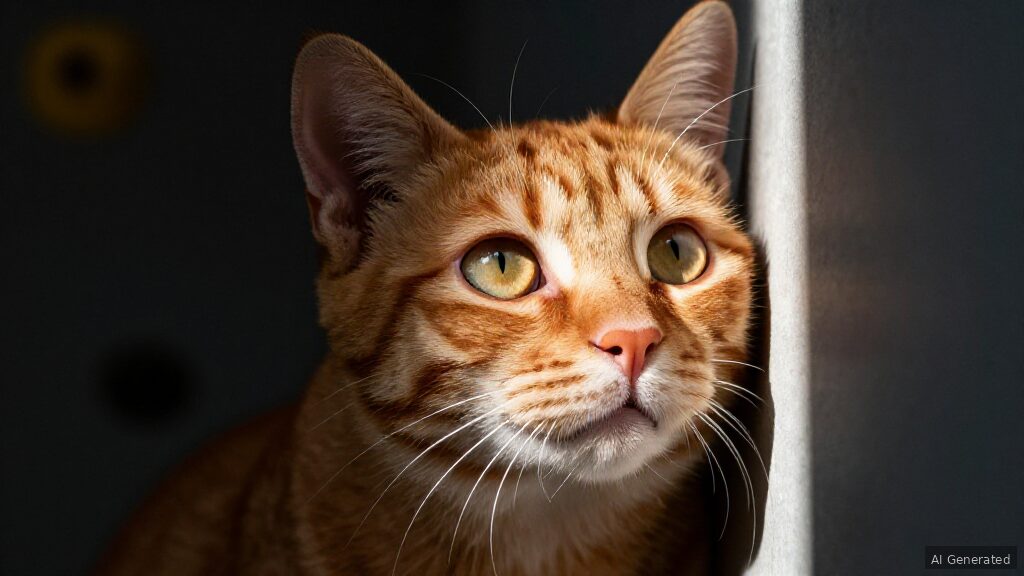
5 Key Enrichment Areas That Enrich Your Cat’s Life
Environmental enrichment cannot be achieved with just one element. It requires a multi-faceted approach that stimulates the cat’s five senses and cognitive abilities and aids social interaction. The table below details the five core areas of environmental enrichment.
| Enrichment Area | Main Purpose | Specific Execution Methods & PlayCat Solutions | Expected Effects |
|---|---|---|---|
| Sensory Enrichment (Sensory) |
Stimulates the five senses (sight, smell, hearing, touch, etc.) to alleviate boredom and activate the brain. | – Install flooring with various textures and cat towers – Secure views from high places or skylights – Use safe herbs or catnip – Provide natural sounds or soft background music |
Reduced stress, improved cognitive abilities, increased adaptability to new stimuli |
| Cognitive Enrichment (Cognitive) |
Develops problem-solving skills and stimulates curiosity to reduce mental fatigue. | – Use puzzle feeders – Play games to find hidden toys – Provide opportunities to explore new objects – Maze exploration using PlayCat structures |
Intellectual development, prevention of lethargy, healthy outlet for hunting instincts |
| Social Enrichment (Social) |
Provides emotional stability through positive interactions with people or other animals. | – Play at set times every day – Distribute resources in multi-cat households – Provide opportunities to observe from high places that are easy for cats to access – Create shared play spaces with PlayCat furniture |
Reduced aggression, strengthened bonds, alleviated separation anxiety |
| Feeding Enrichment (Feeding) |
Recreates the effort (hunting) process of obtaining food to make mealtime interesting. | – Hide food instead of serving it directly in a bowl – Use food-finding toys – Feed after mimicking natural hunting play – Place food bowls at various locations (heights) |
Obesity prevention, improved digestion, increased satisfaction with meals |
| Environmental Enrichment (Environmental) |
Maximizes space utilization by inducing physical activity and providing safe hiding spots. | – Expand vertical space (utilize walls) – Create resting spaces by windows – Install a Catio (outdoor connection space) – Form natural movement paths with PlayCat solid wood furniture |
Strengthened muscles, territory security, removal of stress causes, improved quality of life |
Seasonal Furniture Rearrangement Strategy: Designing Spaces That Provide New Stimuli
Cats are sensitive to change. Living in the same space with the same pattern every day can quickly lead to boredom and behavioral problems. Simply changing the layout of indoor furniture slightly every time the season changes makes the cat feel like it’s in a new environment, stimulating their curiosity. This is one of the most effective environmental enrichment strategies that can be done without additional cost.
Spring and Summer: Ventilation and Vertical Space Utilization
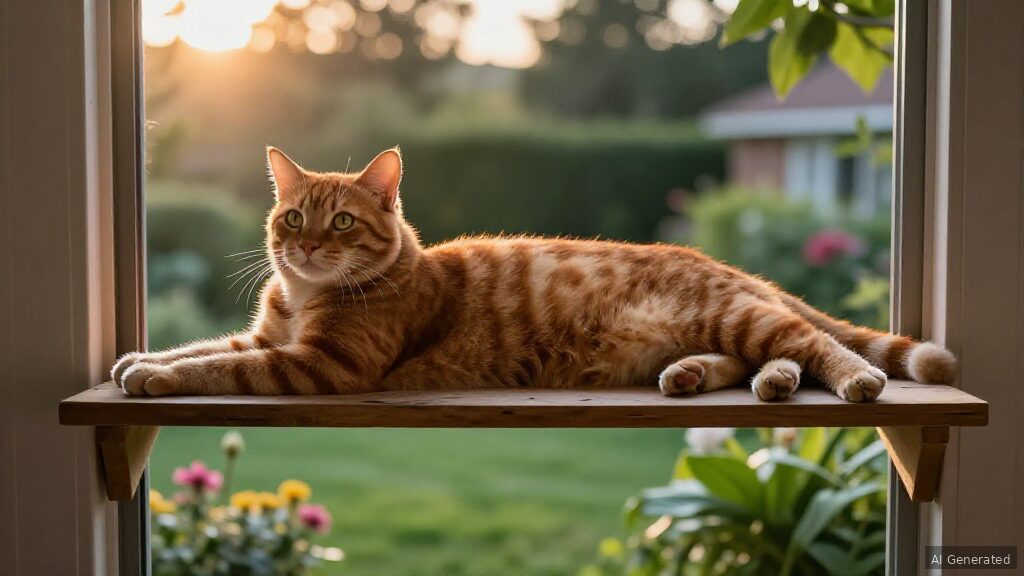
During warm seasons, windows are open for longer periods. During this time, clear furniture near windows to create ‘viewpoints’ where cats can feel the breeze and look outside. Especially in summer, a combination of cool flooring (tiles, etc.) to escape the heat and shaded high places is important. Move PlayCat’s solid wood cat towers or wall shelves towards the window, or create movement paths connecting to the window so cats can rest in high places while enjoying the breeze. Since kittens love to jump down from high places, ensure safe movement paths to lower levels covered with soft carpets.
Autumn and Winter: Cozy Hiding Spots and Heating Spaces
During cold seasons, emphasize ‘warmth points’ where cats can feel warmth. Create movement paths connecting well-heated areas and sunny windows. When arranging furniture, utilize narrow gaps between walls or the tops of furniture to create spaces where cats can hide and rest warmly. PlayCat’s solid wood furniture has excellent insulation properties, providing a resting space that isn’t cold even in winter. Additionally, since activity levels may decrease in winter, create narrow and complex movement paths to add the fun of exploration, ensuring sufficient exercise indoors through moving toys or food-finding games.
Principles of Furniture Rearrangement
1. Safe Movement Paths: When moving furniture, avoid sharp edges to prevent injury to cats, and ensure movement paths remain connected.
2. Height Diversity: Secure resting spaces of various heights from the floor to the ceiling so cats can choose according to their mood.
3. Secure Hiding Spots: Even after rearranging, you must leave safe corners where cats can hide. This provides psychological stability to the cat.
Introducing Natural Elements: Feeling the Power of Life Indoors
Introducing natural elements into the indoor environment is a powerful way to satisfy a cat’s instinctive desires. In the wild, cats push through grass to find prey or chew on specific plants to aid digestion. It is important to allow these behaviors to be expressed naturally indoors.
Cat Grass and Safe Plants
Cat grass (wheatgrass, oats, etc.) that cats can eat helps prevent indigestion and expel hairballs through vomiting. Additionally, placing safe plants that cats can nibble on provides visual and olfactory stimulation. Caution: Never place plants with toxicity among common household flowers (Lilies, Poinsettias, Oleander, etc.). PlayCat’s furniture is designed to blend naturally with plants, making it great for placing cat grass or cat-safe herbs together. Choose heavy or fixed pots so cats don’t knock them over, and use shelves of different heights to place them where cats can easily access them.
Catio and Outdoor Connection Spaces
The ideal environmental enrichment is either bringing the outdoors inside or allowing cats to experience the outdoors safely from within. A ‘Catio’ refers to an enclosed terrace or balcony space that allows cats to go outside safely. Create a cat-only entrance by modifying a window or veranda, and install various height shelves, shade, and sand areas inside. This allows cats to enjoy ‘hunting play’ by basking in the sun, feeling the breeze, and observing birds or butterflies. If installing a Catio is difficult, a good alternative is to use a dedicated swing or shelf installed on the window to create a space where cats can observe the outdoors more closely. PlayCat’s solid wood structures harmonize with these natural elements, acting as a natural extension of the indoor space.
Utilizing Natural Materials
Using natural materials like wood, hemp, and linen is better for a cat’s paw texture and sense of smell than artificial carpets or plastic. The solid wood furniture used by PlayCat provides the warmth and scent of natural wood, making cats feel more comfortable and inducing natural grooming behaviors. In particular, the grain of the wood provides a texture suitable for sharpening a cat’s claws.
Utilizing Vertical Space: The Cat’s World Expands Upwards
Cats are arboreal animals that naturally love climbing trees. Therefore, in indoor spaces, ‘vertical space’ is as important as floor area. Securing vertical space allows cats to perceive their territory as wider, watch for dangers from high places, and feel secure. This is an essential element, especially in multi-cat households or narrow apartment environments.
Strategic Placement of Cat Towers and Wall Shelves
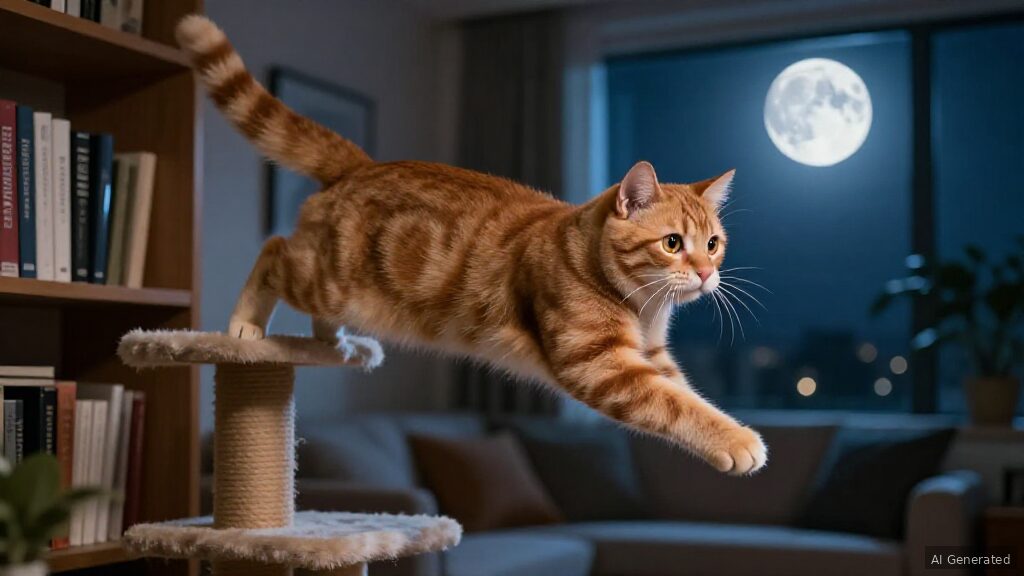
Go beyond simply placing one or two cat towers; utilize the entire wall to create ‘air corridors’. If wall-mounted shelves are connected so cats can move from one side of the room to the other without coming down to the floor, cats will feel their territory is much larger. PlayCat’s solid wood structures are optimized for connecting such vertical spaces. The sturdy solid wood material safely supports cats even when they jump or hang, and the natural wood grain serves as an excellent grooming space for sharpening claws.
Age-Specific Vertical Space Approaches
– Kittens: Since their jumping power is weak, they need step-like structures with adjustable heights or low platforms. Use PlayCat’s modular furniture to set narrow inter-floor heights so kittens can easily go up and down.
– Adult Cats: They prefer high places and have excellent jumping ability. Providing high positions close to the ceiling or long corridors connecting the entire wall increases satisfaction. In particular, high platforms connected to windows are great for enjoying hunting play and resting simultaneously.
– Seniors: They may find it difficult to climb high places due to arthritis or muscle weakness. During this period, prioritize low-level shelters and comfortable resting spaces, but also consider allowing access to previous high spaces via stairs or ramps. PlayCat’s gentle slope structures provide safe movement paths for senior cats.
Psychological Effects of Vertical Space
When cats climb to high places, they feel secure as they are shielded from surrounding noise and gazes. This reduces stress and contributes to better sleep quality. Additionally, looking down on other cats or people from high places boosts a cat’s self-esteem and provides a psychological advantage in conflict situations.
Rest and Hiding Spaces: The Importance of Safe Sanctuaries
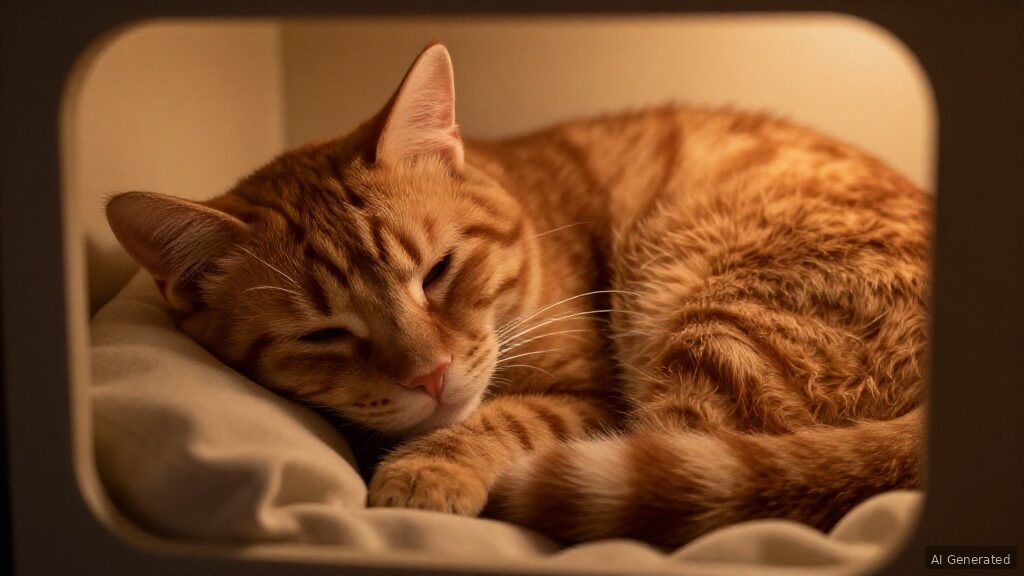
Cats are both hunters and prey. Therefore, when resting, a ‘hiding spot’ is essential to monitor surrounding dangers while being able to hide immediately if necessary. Especially during periods of adapting to a new environment or when stressed, a safe hiding space acts as a shield for the cat’s mental health.
Principles of Hiding Spot Placement
1. Secure Multiple Locations: One spot is not enough. Place hiding spots in various locations such as room corners, under furniture, and high places so cats can choose according to the situation.
2. Secure Views: Spaces with one side open to monitor the surroundings are better than completely enclosed spaces. Cats prefer spots where they can see to detect danger.
3. Temperature and Humidity Control: Hiding spots should be located where the temperature is maintained at an appropriate level, neither too hot nor too cold. Especially in winter, warm spots are ideal, while in summer, cool shaded areas are best.
4. Non-Isolated Locations: Avoid places that are completely isolated and cut off from communication, even if they are free from disturbance by other cats. PlayCat’s structures are designed with a mix of open and closed spaces so cats can hide or observe as much as they want.
PlayCat Solid Wood Furniture Hiding Solutions
PlayCat’s cat towers and structures are not just spaces to climb; they include spacious resting areas and hiding spots inside. The hardness and natural color of solid wood give cats a sense of stability, and the interior spaces are designed to fit the cat’s size, providing a warm and cozy feeling. Especially in multi-cat households, providing separate hiding spots for each cat can prevent territorial conflicts. Placing fabric-covered spaces or box-shaped resting areas on the top or middle levels of furniture allows cats to rest more comfortably.
Balancing Hiding Spots and Play Spaces
If cats only use hiding spots, their sociability may decline. Therefore, place play spaces or feeding areas near hiding spots to encourage cats to naturally become active even after hiding. This helps cats transition naturally between ‘hiding’ and ‘being active’ without separating the two.
Multi-Cat Household Environment Design: Resource Distribution and Territory Separation
In households raising multiple cats, environmental enrichment is even more important. Cats instinctively value territory and tend to monopolize resources. Therefore, in multi-cat households, ‘resource distribution’ and ‘territory separation’ are key strategies to prevent conflict and achieve peaceful coexistence.
Distributed Placement of Resources
Each cat should have at least one of each basic resource, and ideally N+1 (number of cats + 1). In particular, litter boxes, food bowls, water bowls, and resting spaces must be placed separately. To prevent a ‘disadvantage’ where one cat monopolizes resources or blocks others from accessing them, place each resource in different corners of the house. For example, it is good to place litter boxes in separate locations like the end of a hallway and a living room corner. Utilizing PlayCat’s multi-functional furniture can provide wide platforms or separate spaces where multiple cats can rest simultaneously, reducing resource competition.
Vertical Separation of Territories
If horizontal space is insufficient, use vertical space to separate territories. Cats prefer to secure their territory from high places. Install multiple wall shelves or cat towers to create ‘private zones’ that each cat can climb to. This allows one cat to rest without stress while looking down on other cats from a high place. PlayCat’s modular solid wood structures allow you to configure spaces of different heights or shapes for each cat’s personality, flexibly solving the complex movement paths of multi-cat households.
Movement Path Design to Prevent Conflict
It is important to secure movement paths where cats can move without facing each other. Avoid spaces that become ‘traps’, such as narrow hallways or corners where you can only exit in one direction. There must be multiple escape routes where cats can avoid each other if they meet. PlayCat’s furniture connects to walls, allowing for diverse movement paths so cats can move while avoiding each other, reducing stress.
Individual Attention and Interaction
Even in multi-cat households, you must provide individual play time and environments considering each cat’s personality and preferences. One cat may love high places, while another may prefer playing on the floor. Acknowledging these differences and providing suitable environments for each reduces conflict between cats, allowing each cat to live more happily.
Measuring Environmental Enrichment Effects: Behavior Change Observation Checklist
After implementing environmental enrichment, it is important to consistently observe changes in your cat’s behavior to measure the effect. It is not enough to just put toys in; you must check how the cat actually uses the environment and what changes occur in their behavior. Diagnose the effects of environmental enrichment using the following checklist.
| Observation Item | Before Improvement (Problem Behavior) | After Improvement (Positive Change) | Interpretation & Action |
|---|---|---|---|
| Activity Level | – Sleeping all day – Appears lethargic – Ignores toys |
– Climbs up and down the cat tower independently – Actively plays with toys – Runs actively around the house |
The environment seems to be stimulating. Try adding more diverse heights and textures. |
| Stress Signals | – Excessive grooming (hair loss) – Accidents (eliminating outside the litter box) – Increased aggression |
– Elimination habits normalized – Decreased aggressive behavior – Resting in a comfortable posture |
Hiding spots and vertical space are working well. Maintain them, but consider adding extra resting spaces. |
| Exploration Behavior | – Fears new objects – Avoids specific corners of the house |
– Explores new furniture with curiosity – Frequently uses windowsills or high places |
Adapting well to environmental changes. Try seasonal rearrangement. |
| Social Interaction | – Avoids other cats – Avoids contact with people |
– Plays or rests with other cats – Approaches people and acts cute |
Social enrichment is going well. Try increasing play time. |
| Sleep Quality | – Wakes up frequently and seems anxious – Unable to sleep in a comfortable posture |
– Takes deep sleep – Sleeps comfortably in various places |
Safe resting spaces are being provided well. The warmth of solid wood furniture may be helpful. |
Record this checklist about once a week and use it to track changes in your cat’s behavior. If you do not see improvement in a specific item, re-examine the environment in that area and try configuring a more suitable space using PlayCat’s structures. Environmental enrichment is not a one-time effort but a process of continuous development according to the cat’s growth and changes.
Frequently Asked Questions (FAQ)
1. What should I do first when starting environmental enrichment?
First, observe how your cat currently lives in the house. Identify where they spend the most time, their favorite heights, and situations that cause stress, then use this information to rearrange the space or add new elements. Rather than blindly buying toys, it is important to first secure vertical spaces and hiding spots that stimulate the cat’s instincts. PlayCat’s solid wood furniture helps create a customized environment for your cat based on these observations.
2. Is environmental enrichment possible in small apartments?
Yes, it is possible. In fact, utilizing vertical space is essential in smaller spaces. By installing shelves utilizing the entire wall or using cat towers that reach the ceiling, you can expand your cat’s activity range without securing floor area. PlayCat’s modular structures can be flexibly arranged even in small spaces, making effective environmental enrichment possible even in narrow apartments.
3. What should I do if my cat is afraid of new furniture?
Cats have a strong fear of new things. After installing new furniture, do not force them to climb up; instead, rub familiar scents (used blankets or toys) onto the furniture. Also, use treats or toys to encourage the cat to perceive the furniture as a positive place. PlayCat’s solid wood furniture has a natural wood scent and is designed so cats can slowly approach and explore, helping to shorten the adaptation period.
4. Is environmental enrichment necessary for senior cats too?
Yes, it is very important for senior cats too. However, unlike kittens, they require gentle stimulation to maintain joint health and cognitive function. Provide low-level resting spaces and sloped movement paths rather than very high places. Additionally, it is good to stimulate cognitive abilities through food-finding games and reduce stress through comfortable hiding spots. PlayCat’s solid wood furniture provides a gentle texture and stable structure that does not burden the joints of senior cats.
5. How long does it take to see the effects of environmental enrichment?
It varies depending on the cat’s personality and the degree of environmental change, but generally, behavioral changes are observed if you consistently provide the environment for about 2 weeks to 1 month. At first, the cat may explore or fear the new environment, but over time, they will naturally adapt and feel happiness in the new space. The important thing is to maintain the environment consistently and continuously observe the cat’s reaction.
Environmental enrichment is a journey that changes a cat’s life from simple ‘rearing’ to a ‘high quality of life’. With PlayCat’s solid wood furniture, redesign your entire home into a playground and sanctuary for your cat. Respecting your cat’s instincts and creating spaces for their happiness is truly the responsibility and reward of being a real pet owner.
This content was written using AI technology. Always consult a veterinarian regarding medical information.