


What kind of enriched environments do zookeepers create?
Behavioral enrichment in zoos is a systematic approach designed to promote the mental and physical well-being of animals by encouraging natural behaviors observed in the wild. It involves not only physical improvements like expanding cages but also includes foraging processes, hiding spots, and environmental changes that provide new stimuli. In particular, Everland has received world-class certification from the AZA (Association of Zoos and Aquariums), and its animal enrichment programs at Panda World and Ppuppa Town have been highly praised. This signifies that animals should be provided with opportunities to act according to their instincts and make choices, going beyond merely staying alive.
1. Food Enrichment to Stimulate Hunting and Exploration
Zookeepers stimulate natural hunting instincts by making animals work to obtain their food. For example, instead of simply throwing food in one spot for bears or large felines, keepers hide food inside ice blocks or hang it from trees, forcing the animals to move their bodies and use their minds to find the meal. This principle is also applied in bear sanctuaries like the ‘GOME SWEET HOME’ project when improving den environments, focusing on extending feeding times to prevent boredom.
When applying this to house cats, you should stop the habit of simply ‘putting food in a bowl.’ Instead, introduce puzzle feeders or place treats inside cartridges (balls) that they can roll to eat. This helps increase your cat’s daily activity levels and encourages dopamine release during the process of hunting for prey, even without feeling actual hunger.
2. Diversity of Physical Environment and Hiding Spots
Zoos must provide ‘hiding spots’ where animals can retreat when stressed. This gives animals a sense of control and psychological stability. Especially for rescued animals or those under high stress, lacking a space where their view is blocked and they can hide alone can lead to self-harming behaviors or stereotypic behaviors like pacing. Similar to a dog chasing its tail, this is a cause of repetitive and abnormal behaviors that appear when enrichment is insufficient.
‘Vertical space’ and ‘hiding boxes’ are also essential for house cats. Install window perches, high bookshelves, or dedicated cat towers so your cat can look down on their surroundings from a high vantage point. Additionally, saving cardboard boxes from deliveries and cutting holes for your cat to enter is a cost-effective and excellent enrichment tool.
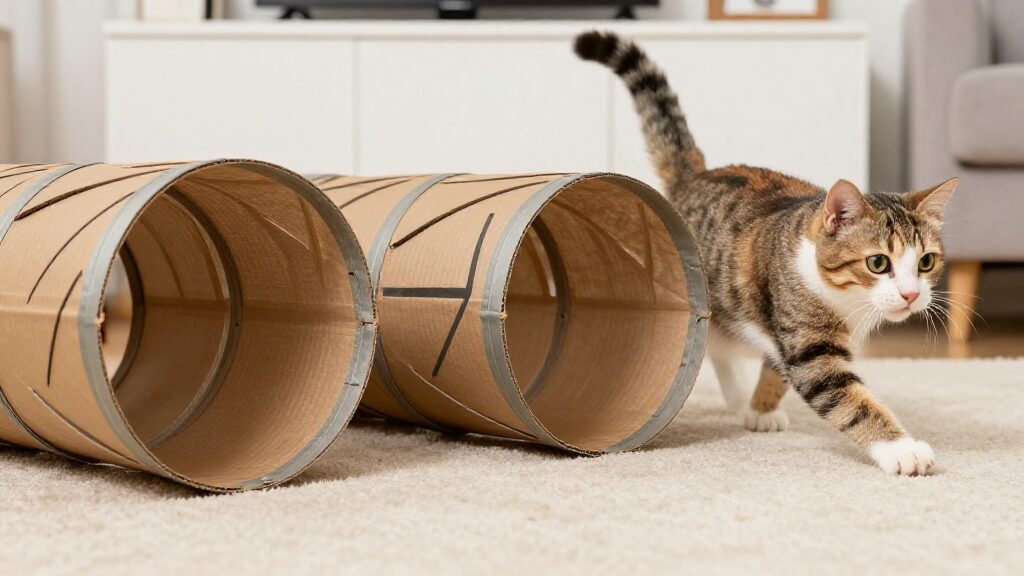
Execution Guide for Zoo-Level Enrichment for House Cats
Now, let’s look specifically at how to apply principles used in zoos to the confined space of a home. The most important factor is ‘unpredictability.’ Cats quickly get bored with doing the same thing, at the same time, in the same place, with the same toy every day.
1. Play Manual to Stimulate Hunting Instincts
The first thing to apply is play that follows the natural sequence of ‘hunt – capture – consume – groom – sleep.’ Rather than simply waving a toy, you must first capture the cat’s attention and move as if the toy is fleeing.
- Materials Needed: Wand toys (feather wands), laser pointers (use with caution), plush toys.
- Execution Method:
- Play for at least 15 minutes twice a day, before and after morning and evening meal times.
- Move the toy in a ‘hide-and-reappear’ pattern to stimulate the cat’s hunting instinct.
- Always end the session by letting the cat catch the toy (prey) and immediately giving a treat (food) as a reward for ‘successful hunting.’
2. Sensory Enrichment to Change the Environment
Zoos change facilities or introduce new props according to the seasons. At home, you should periodically change the type of food, the location of toys, and scents. Since cats have a highly developed sense of smell, scent enrichment is particularly effective.
| Enrichment Type | Zoo Example | Application for House Cats | Expected Effect |
|---|---|---|---|
| Taste/Appetite | Wrapping meat in ice, hanging from trees | Using puzzle feeders, hiding treats (Scavenger Hunt) | Reduced boredom, increased activity |
| Smell/Senses | Providing new scents (herbs, fruits) | Placing new scents (mint, lemon peels) near the litter box, using Catnip, etc. | Increased environmental stimulation, stress relief |
| Physical/Environmental | Installing new shade and shelters | Changing the location of boxes, blankets, and cat towers; ensuring window views | Securing hiding spots, restoring sense of control |
| Social/Play | Interaction with keepers | Consistent play times, rotating new toys | Building trust, alleviating separation anxiety |
3. Granting Choices to Provide a Sense of Control
Even in zoos, keepers help animals choose the food they want to eat or select where to rest. At home, create an environment where your cat can choose ‘which toy to play with’ or ‘where to sleep.’ For example, prepare three types of toys and let the cat choose the one they approach first. This plays a crucial role in boosting the cat’s self-esteem and reducing problem behaviors.
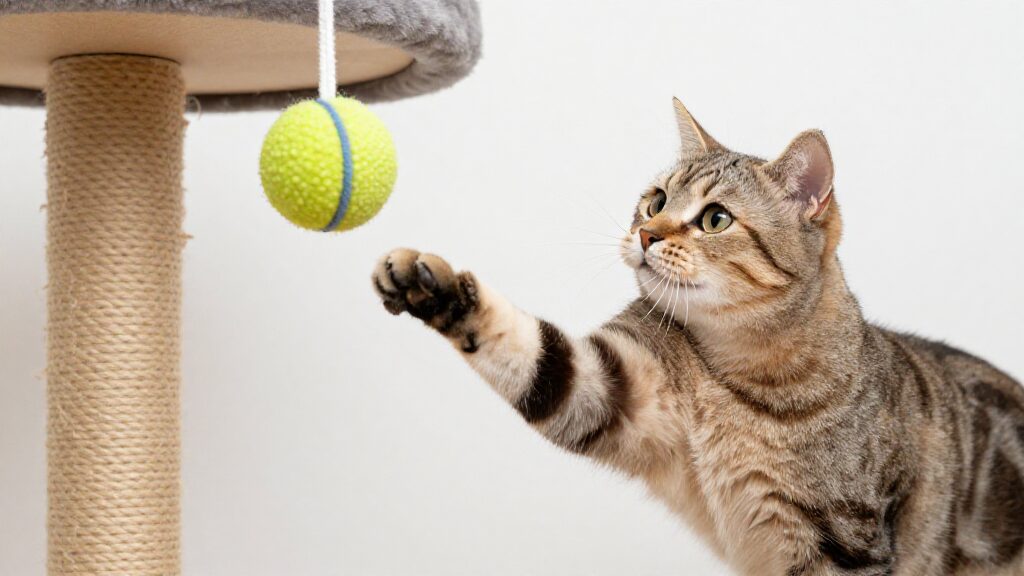
Precautions and Safety Rules for Applying Enrichment at Home
When bringing zoo programs into the home, safety must be the top priority. Some props used in zoos can be dangerous in a household setting.
First, small disposable toys or strings pose a risk of strangulation and must be used only under supervision. As emphasized in experience manuals like ‘Touching Animals with Two Fingers?’, interactions with animals must occur within limits that do not cause stress. Do not force play if your cat shows dislike.
Second, observe your cat’s reaction when introducing new scents or objects. Some cats may have hypersensitive reactions to new smells. Additionally, keep toys clean to reduce the risk of bacterial infection.
Third, enrichment is not a ‘one-time’ event. If you do not provide consistent changes like a zoo does, your cat will quickly adapt, and the effectiveness will diminish. Continuous management is required, such as changing toy locations once a week or adding new scents.
Frequently Asked Questions (FAQ)
1. Do enrichment toys have to be purchased to be effective?
No, the core of enrichment is not expensive toys but ‘change’ and ‘instinct stimulation.’ You can create an excellent enrichment environment using items already in your home, such as empty delivery boxes, crumpled newspaper, or yarn tied to a spoon. Zoos also frequently utilize recycled wood or stones, so using creative props is important.
2. How much should I play with my cat per day?
For adult cats, two sessions totaling 20–30 minutes of focused play per day are recommended. This mimics hunting times in the wild and is most effective when done before and after meals. However, intensity should be adjusted based on the cat’s age and health status; for senior or sick cats, it is better to play frequently for shorter durations.
3. What should I do if my cat ignores a new toy?
If your cat ignores a new toy, it may be because the toy is not being recognized as ‘prey.’ You need to stimulate their curiosity by moving the toy yourself to catch their attention or by hiding treats. Additionally, an ‘anti-boredom’ strategy of not showing the toy too often but ‘hiding it away’ and bringing it out occasionally is effective.
4. Won’t my cat be afraid that the enrichment toys will break?
Enrichment programs can include behaviors where animals destroy toys. This is a normal process for satisfying hunting instincts and relieving stress. Instead, prevent accidents by removing fragile glass items that could break and cause injury, and choose toys made of durable materials.
5. Is enrichment possible in multi-cat households?
Yes. In fact, enrichment is even more important in multi-cat households. However, instead of toys that all cats can use simultaneously, you should prepare ‘personal’ enrichment items that each cat can enjoy individually. When feeding, provide food in separate spaces for each cat to prevent fighting, and offer customized play based on each cat’s personality.
Key Summary
The principles of behavioral enrichment in zoos are the most reliable solution for stimulating a cat’s instincts and reducing stress, even in the confined space of a home. Create an environment that stimulates hunting instincts, provides new scents and hiding spots, and respects your cat’s choices. Check out PlayCat (playcat.xyz) for more information.
This content was created using AI technology. Always consult a veterinarian regarding medical information.