


The True Meaning of Cats’ Social Instincts and Social Enrichment
Many people mistakenly believe cats are independent animals that enjoy solitude. However, from an ethological perspective, cats are unequivocally ‘social animals’. While they are not a species that hunts in packs or lives in groups like dogs, they possess the ability to form and maintain very complex social relationships under specific conditions. In particular, our domestic cats, descended from the wild African wildcat (Felis lybica), have an instinct to live in matriarchal groups in resource-rich environments. Understanding how this instinct manifests in modern indoor living environments is the core of ‘Social Enrichment’.
Social Enrichment refers to all environmental and behavioral interventions that go beyond simply making cats familiar with each other; it aims to induce positive interactions between cats or between humans and cats, alleviate stress caused by social deprivation, and enhance emotional stability. This is an essential concept for guardians raising cats in multi-cat households or single-person households. Without adequate social enrichment, cats may exhibit various behavioral problems such as lethargy, excessive grooming, and elimination issues. Conversely, proper social enrichment instills confidence in cats, strengthens bonds with humans, and serves as a foundation for preventing conflict within multi-cat households.
A cat’s social instinct is directly linked to survival. Social judgment is involved in all activities, including foraging, territory defense, mating, and raising offspring. For indoor cats, the targets of these social interactions can be their guardians or other cats. If these interactions are insufficient or negative, cats feel social isolation, which leads to stress. Therefore, social enrichment can be considered an essential lifestyle for protecting a cat’s mental health, going beyond the simple dimension of ‘play’.
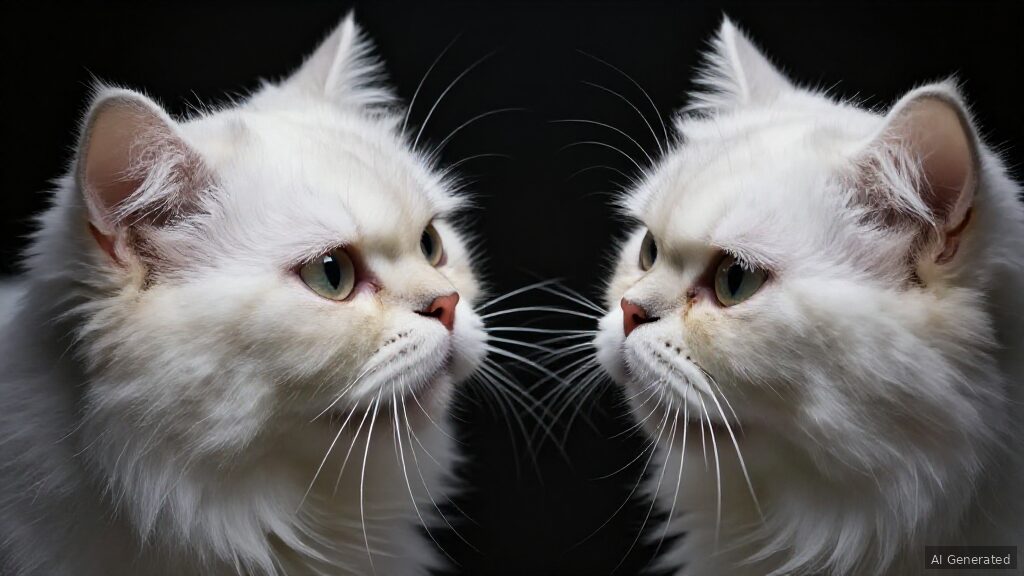
Cat-to-Cat Communication: Decoding the Language of Invisible Dialogue
Cats communicate with each other in far more sophisticated and diverse ways than humans imagine. Their dialogue is not just about the sound of a ‘meow’; it is a holistic process that includes body position, tail movement, ear direction, and even information exchange through scent. If you do not understand this complex communication code, misunderstandings and conflicts in multi-cat households are inevitable.
Scent and Pheromones: The Invisible Territory Markers
The most fundamental and powerful means of cat communication is ‘scent’. Cats have various pheromones that humans cannot detect, which are secreted from specific areas such as the face, paw pads, and the base of the tail. When a cat rubs its cheek against an object or a person, it is called ‘Facial Marking’. This is an act of claiming, “This is a safe place I know, and it is my territory,” by leaving their pheromones behind. In a multi-cat household, when a new cat arrives, the existing cat licking or rubbing against the new cat is an important process of mixing scents to create a ‘family scent’. This is also known as ‘group pheromone’, and when this scent is shared, cats recognize each other as intimate beings.
On the other hand, rubbing the base of the tail or paw pads to mark territory is a way to announce one’s presence without leaving excrement. If two cats reject each other’s scents, or if one cat’s scent forcibly intrudes into another’s territory (e.g., when introducing a new cat), the cats experience strong stress. Therefore, the first step of social enrichment is to naturally exchange scents and make them perceived as positive.
Body Language: Reading Thoughts Through Gestures
A cat’s body language conveys its emotions in the moment most accurately. The tail is the most important barometer for reading a cat’s mood. A tail held straight up with the tip slightly curved indicates friendliness and curiosity, a common sight when greeting each other. Conversely, a tail twitching rapidly side-to-side or pressed flat against the ground indicates irritation or aggression. Especially, shaking the tail and lying it down in front of another cat is a serious threat signal requiring immediate intervention.
The direction of the ears is also a crucial clue. Ears facing forward indicate interest and alertness, while ears flattened to the side or pinned back (airplane ears) suggest displeasure or aggressive intent. Eye size and pupil dilation are also important. Dilated pupils can indicate a play mode, but if the pupils are dilated and the gaze is fixed despite not being in a dark environment, it could be a precursor to defensive aggression. When two cats stare at each other and slowly blink their eyes, known as ‘Slow Blink’, it is a signal of trust meaning, “I will not attack you. You can trust me too.” Through this behavior, cats relieve tension and form bonds with each other.
Subtle Differences in Vocalizations and Sounds
Adult cats rarely use the ‘meow’ sound to communicate with each other. The meow is a communication tool developed primarily to demand food or attract attention from humans. In direct communication between cats, low and long ‘chirping’ sounds, ‘hissing’ warning sounds, or sharp sounds like ‘hissing’ (Hissing) are mainly used. A chirping sound indicates comfort and satisfaction, while hissing is a strong warning meaning “Do not enter my territory.” Through these vocalizations, cats clearly establish hierarchy and boundaries without physical conflict. Guardians must distinguish the subtle differences in these sounds and judge when to observe and when to intervene.
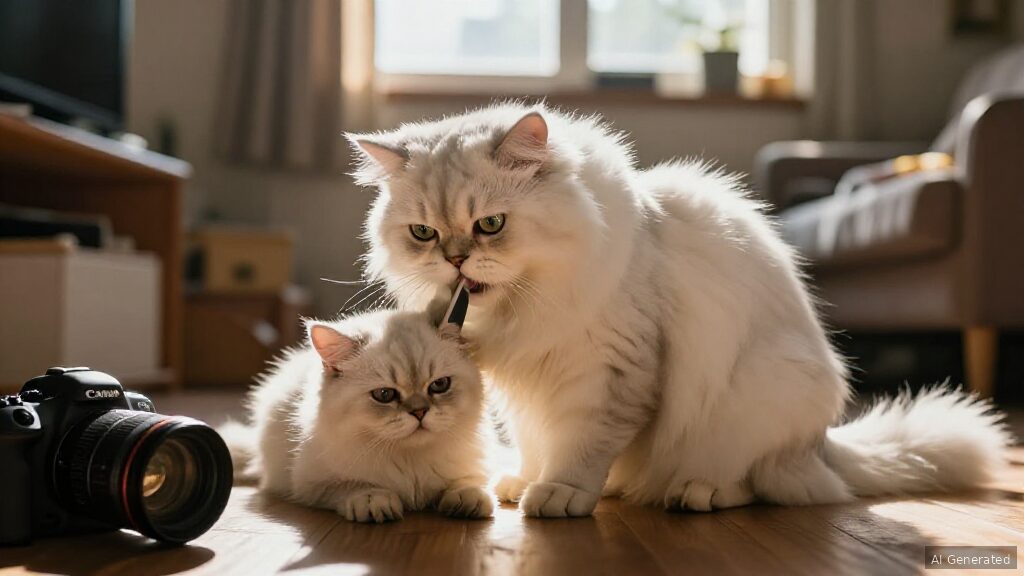
Multi-Cat Household Integration Strategy: A Step-by-Step Guide for Successful Coexistence
Living cats with different personalities and ages in one space is a great challenge and reward for guardians. The integration process is not about forcing unconditional meetings but is a scientific process of making them recognize each other through gradual contact and positive experiences. Failed integration can leave deep trauma in cats and cause permanent conflict, so a careful approach is necessary.
Complete Isolation Period: Starting with Scent Exchange
It is absolutely forbidden to bring a new cat and an existing cat together immediately after arrival. The first step is ‘complete isolation’. The new cat must stay in a separate room and be physically completely separated from the existing cat. The purpose of this period is to prevent them from perceiving each other’s presence as a threat. The most important activity during the isolation period is ‘scent exchange’. Bring blankets or toys used by each cat into the other’s space to get them used to the other’s scent. At this time, give treats or play enjoyable games with the items mixed with the scent, so that the other cat’s scent is associated with positive experiences.
This period may take at least 3 days to 1 week, and it can be longer depending on the cat’s temperament. When the cats no longer feel wary of each other’s scents and instead show curiosity, you can move to the next step. If one cat avoids the new cat’s scent or shows an overly aggressive reaction even during the isolation period, extend the isolation period and proceed slowly.
Visual Contact: Meeting Through Door Cracks and Barriers
After scent exchange proceeds smoothly, the two cats can see each other through door cracks or glass barriers. Direct physical contact is still not allowed at this time. Activities such as looking at each other with the door slightly open or feeding while separated by a glass barrier are performed. The important thing is that both cats must have positive experiences at this time. If one shows an aggressive attitude, close the barrier immediately and return to the previous step. In the visual contact stage, maintain ‘distance between cats’, learning to recognize each other’s presence without threatening.
A successful signal at this stage is when both cats look at each other while relaxing their bodies, moving their tails naturally, and eating well. Conversely, if one hides, hisses, or refuses food, it is a sign that they are not ready yet.
Direct Meeting and Identifying Success/Failure Signals
The final stage, direct meeting, should start with a very short time (a few minutes). Under the guardian’s supervision, let the two cats be in the same space, but be prepared to separate them immediately. It is best to conduct the first meeting along with enjoyable activities like play or treats. If the two cats sniff each other or walk past each other slowly, it is a great success. However, if one takes an aggressive posture, hisses, or chases, separate them immediately and return to isolation.
Success Signals: Sniffing each other, slow eye contact (Slow Blink), trying to sleep or groom together, eating together, approaching with tail held high.
Failure Signals: Hissing, fur standing on end all over (cat arch), aggressive posture with tail twitching rapidly side-to-side, one cat constantly running away or hiding, chasing and harassing each other.
The integration process does not happen overnight. It requires repeated attempts and patience over weeks or months. Even if you fail, do not be discouraged; it is important to go back to the previous step and start again. Proceeding at each cat’s pace is the fastest way.
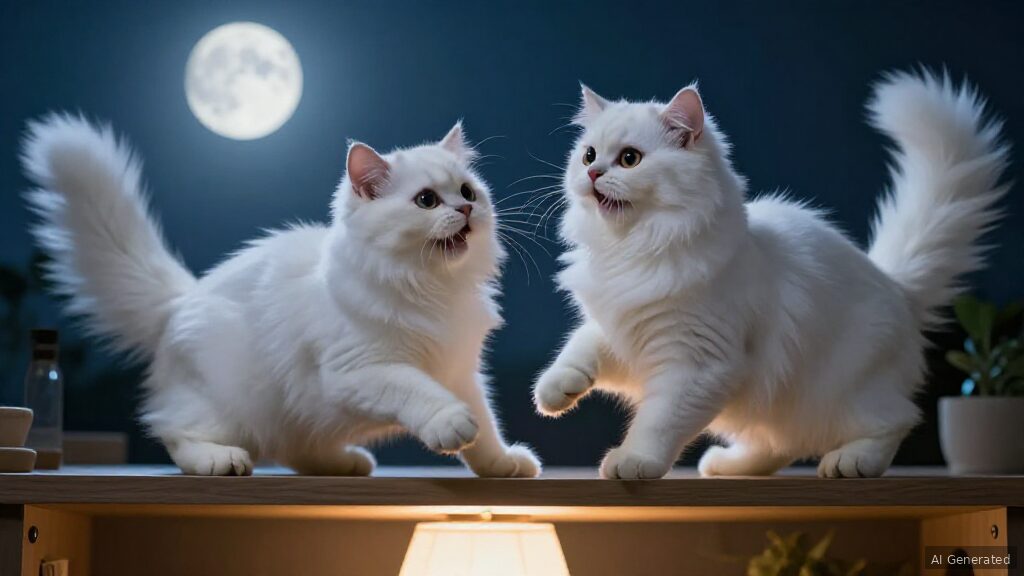
Strengthening Human-Cat Bonds: Play Sessions for Building Trust and Coexistence Skills
Bonds with humans are the core of social stability not only for multi-cat households but also for cats in single-person households. The stronger the trust relationship with the guardian, the better the cat adapts to environmental changes and manages stress effectively. Strengthening bonds involves not just expressions of affection but systematic interactions that satisfy the cat’s instinctual needs.
Effective Play Sessions: Satisfying Hunting Instincts
A cat’s play is a simulation of hunting. When a guardian plays with a cat using a toy, it is good to follow a 3-step process that stimulates the cat’s hunting instinct. The first is the ‘Finding’ stage, where you hide the toy or move it subtly to catch the cat’s attention. The second is the ‘Chasing’ stage, where you move the toy quickly to make the cat track it. The last is the ‘Catching’ stage, where you reward the cat after it catches the toy, such as by giving a treat. Through this process, the cat feels a sense of accomplishment for a successful hunt and recognizes the guardian as a hunting partner and helper to success.
It is recommended to conduct intensive play sessions of at least 15 to 20 minutes twice a day. Playing during the evening or when the cat is active is particularly effective. After play, you must replenish energy with treats or meals. This follows the natural sequence of hunting followed by feeding, increasing the cat’s psychological satisfaction. Also, if the cat bites or scratches during play, stop the play immediately and cut off attention. This is an important educational process to teach that ‘people are not objects for play’.
Correct Ways to Groom and Touch
Grooming between cats is an important act to confirm social bonds. When a guardian strokes or grooms a cat, it brings similar effects. However, not all cats like being stroked by humans. It is important to identify the cat’s preferred areas and avoid areas where they show reluctance. Generally, cats prefer the cheeks, chin, behind the ears, and the base of the tail. Stroking the back or touching the belly can be perceived as a threat depending on the cat, so caution is needed.
When grooming, watch the cat’s reaction to see if it is comfortable or if it pins its ears back or flicks its tail. When cats lick their guardians, it means they recognize the guardian as family and intend to protect them. These interactions are important times to exchange pheromones and strengthen bonds.
Quality of Coexistence Time: Together but in Their Own Spaces
Having a lot of time together does not always mean it is good. Cats prefer ‘together but independent’ time. When a guardian reads a book or works, just having the cat sitting comfortably nearby gives the cat great stability. At this time, it is good for the guardian not to interfere excessively with the cat and to give attention only when the cat wants it. This ‘peaceful coexistence’ instills in the cat the belief that “I am safe in this house, and the guardian respects me.”
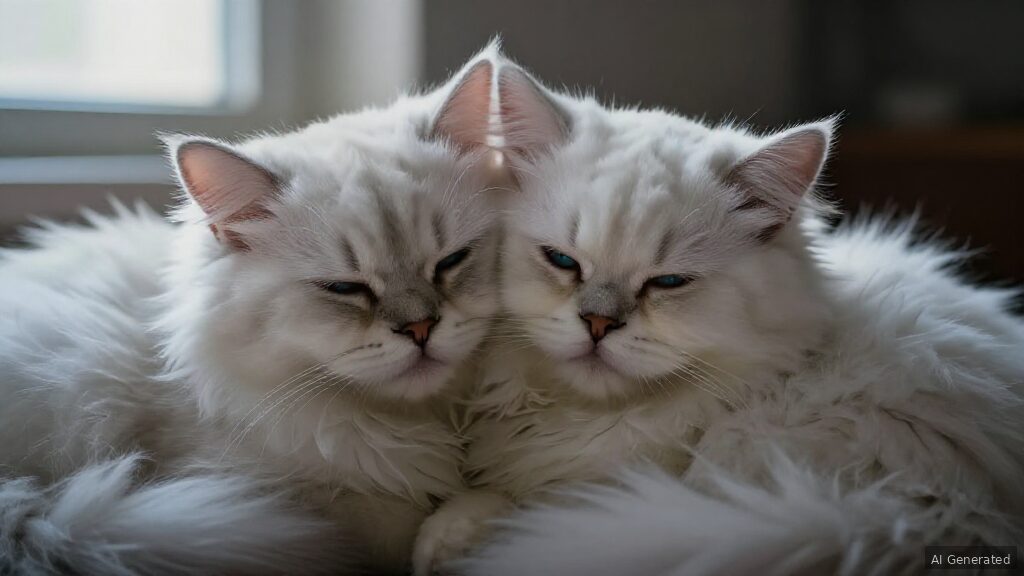
Signs of Social Stress: Identifying Conflict Signals and Mediation Methods
If social enrichment is not properly carried out or due to environmental changes, cats show various signs of stress. It is important to detect these signals early and intervene appropriately. Neglect can lead to chronic stress, causing health problems or serious behavioral disorders.
Types and Interpretation of Conflict Signals
Conflict between cats is largely divided into ‘open aggression’ and ‘hidden aggression’. Open aggression includes hissing, chasing with claws out, and biting, which can be clearly detected. However, what is more dangerous is ‘hidden aggression’. This includes behaviors such as one cat invading another’s territory, staring when passing near food bowls or litter boxes, or taking a defensive posture while eating. Also, if one cat avoids places the other cat frequently goes or tries to monopolize a specific location, it is a sign of conflict.
Causing elimination problems is also a typical symptom of stress. Urinating outside the litter box or not defecating in the litter box can be behaviors for marking territory or relieving stress. Especially in multi-cat households, there is often conflict due to insufficient number or location of litter boxes. The basic rule is to prepare “number of cats + 1″ litter boxes, but if there are spatial constraints, it is important to separate the locations of the litter boxes and improve accessibility.
Mediation Methods and Environmental Improvement
When conflict occurs, immediate intervention is necessary, but shouting or scolding indiscriminately only increases the cat’s stress. The first thing to do is to identify the cause of the conflict. Check if resources (food, litter boxes, resting spots) are insufficient or if a specific cat is invading territory excessively. If the conflict is severe, it is helpful to go through the isolation stage again or use a pheromone diffuser that can act as a mediator.
The key to environmental improvement is providing ‘horizontal space’ and ‘vertical space’. Cats try to secure safety by looking down from high places. Using PlayCat solid wood furniture can naturally provide vertical resting and observation spaces. For example, through high shelves or tower structures, cats can avoid each other’s gaze or securely secure their own territory. Also, provide independent food bowls and litter boxes for each cat to reduce competition.
If conflict persists, consider seeking professional help. Seek advice from an ethologist or consult a veterinarian to rule out health problems caused by stress first.
Social Differences by Age and Personality: Comparing Kittens, Adults, and Seniors
A cat’s social nature varies greatly with age. Kittens, adults, and seniors each have different social needs and abilities, requiring social enrichment strategies tailored to them.
| Category | Social Characteristics | Primary Needs | Social Enrichment Strategy |
|---|---|---|---|
| Kitten (0-12 months) | High curiosity, play-centered, sensitive socialization period | Play with other cats and humans, learning hunting skills | Provide diverse play experiences, create safe interaction opportunities with other cats, active play sessions with guardians |
| Adult Cat (1-7 years) | Fixed personality, strong territorial awareness, pursuit of stability | Maintain a consistent routine, secure safe territory, efficient rest | Maintain a predictable life rhythm, provide sufficient vertical space, manage stress-free integration process |
| Senior (7+ years) | Decreased activity, increased pain sensitivity, less sensitive to change | Comfortable rest, pain management, gentle interaction | Low-intensity play, provide easily accessible resting spots (utilize PlayCat’s low-step furniture), adjust social distance based on health status |
In the case of Kittens: This period is the ‘sensitive socialization period’, where various experiences and contacts have a profound impact on lifelong personality formation. Kittens learn hunting skills and social rules through play with other cats. If a kitten grows up alone, it may be familiar with humans but may have difficulty communicating with other cats. Therefore, it is important to expose them to various people, animals, and environments during this period. However, be careful not to cause too much stress.
In the case of Adult Cats: Adult cats already have an established personality and territorial awareness. They are sensitive to change and may take longer to accept new environments or cats. At this stage, stability and predictability are important. Rather than sudden changes, it is good to maintain a consistent routine and make gradual changes if necessary. In multi-cat households, conflict decreases when the hierarchy between adult cats is clear.
In the case of Seniors: Senior cats have reduced activity and may develop health problems such as arthritis. Therefore, climbing to high places may become difficult, or they may refuse to play with other cats. At this stage, gentle contact and comfortable resting spaces are most important. When utilizing solid wood furniture like PlayCat, they may prefer low steps or wide flat structures rather than high towers, so it is good to select furniture or adjust the location to suit the cat’s physical abilities. Also, senior cats react more sensitively to new environmental changes, so special consideration is needed during integration or moving.
Social Enrichment for Single-Person Households: How to Improve the Quality of Alone Time
Cats in single-person households where guardians are away for long periods may feel social isolation. However, this does not necessarily lead to negative results. Through appropriate environmental setup and social enrichment strategies, alone time can be turned into meaningful time that cats can enjoy on their own.
The most important thing is ‘diversity of stimulation’. You must provide various play toys and environments so that the cat does not feel bored while the guardian is away. Puzzle toys, automatic toys, and resting spots installed by the window are elements that continuously attract the cat’s attention. Especially looking out the window gives cats great joy and acts as a ‘Cat TV’. However, if the window is closed or the view is limited, this joy can decrease.
Also, placing clothes or blankets with the guardian’s scent in a place the cat likes is a way to provide psychological stability. Recording the guardian’s voice or playing a TV program exclusively for cats can also be helpful. Recently, there are various video contents for cats, and through these, cats can be stimulated by moving objects (birds, fish, etc.) to trigger their hunting instincts.
However, the most important thing is the interaction when the guardian returns home. Hugging or playing with the cat immediately upon returning home conveys the message “I waited for you, and I love you” to the cat. Play at this time is an important time to relieve the day’s stress and reconfirm the bond. Guardians raising cats in single-person households must understand the cat’s schedule and invest sufficient time and energy after returning home to fill social deprivation.
Utilizing PlayCat Furniture for Social Space Separation and Environmental Optimization
What is important for both multi-cat households and single-person households is ‘space separation’ and ‘accessibility’. Even if cats live in the same space, they feel more comfortable when their territories do not overlap. PlayCat solid wood furniture is an ideal solution designed to meet these social needs.
The biggest advantage of PlayCat furniture is that it effectively utilizes ‘vertical space’. Cats feel safe when they are high up and can observe their surroundings. PlayCat’s tower structures or shelf systems provide multiple independent resting spots for cats. For example, in a multi-cat household, while one cat is up on a high tower, another cat can rest in the space on the floor, allowing them to avoid each other’s gaze and reduce conflict. This naturally allows them to coexist in the same space while maintaining social distance.
Also, PlayCat furniture enables natural ‘traffic flow separation’. It is possible to arrange furniture to divide traffic flows so that cats do not get interfered with by other cats when eating or using the litter box. Providing independent movement paths for each cat greatly reduces stress. The solid wood material provides a warm touch to cats, and since pheromones are well absorbed, it has an effect of providing stability.
Even for single-person households, PlayCat furniture makes the time spent alone more enjoyable for cats. Resting spots installed at high locations provide the optimal position to look out the window and observe the world. Also, platforms of various heights provide opportunities for cats to jump and move, maintaining their activity levels even when the guardian is away. By utilizing the verticality of space through PlayCat furniture, cats can secure sufficient social distance and personal space even in a small indoor area.
In conclusion, PlayCat furniture means more than just furniture. It is an environmental improvement tool that respects cats’ social instincts and promotes their psychological stability. Proper furniture placement and utilization prevent conflict in multi-cat households and lay the foundation for cats in single-person households to live more happily.
Frequently Asked Questions (FAQ)
1. What is the most important integration step when adopting a new cat?
The most important steps are ‘complete isolation’ and ‘scent exchange’. You must start in a physically completely separated space and go through the process of getting used to each other’s scents first. If you skip this step and meet immediately, the cat may perceive the other as a threat, leading to conflict. Spending sufficient time, at least 3 days to 1 week or more, is the key to successful integration.
2. Is it a good sign if two cats lick each other?
Yes, generally it is a good sign. The act of licking each other’s heads is ‘mutual grooming’, an important behavior indicating social bonds and intimacy. This is evidence that the cats recognize each other as family and feel comfortable. However, if one tries to force licking or the other runs away, it could be a sign of conflict, so observe carefully.
3. Do cats feel lonely even in single-person households?
Yes, because cats are social animals, they can feel lonely if the time without a guardian is long. Especially cats left alone all day may show behavioral problems due to boredom and stress. However, this problem can be alleviated through appropriate environmental enrichment and sufficient interaction after the guardian returns home. Utilizing automatic toys or window resting spots is helpful.
4. Can using PlayCat furniture reduce conflict between cats?
Yes, PlayCat furniture provides vertical space, helping cats avoid each other’s gaze and secure independent territories. This is very effective in reducing conflict in multi-cat households. By allowing each cat to feel comfortable in their own space through high towers or separated resting spots, stress decreases and peaceful coexistence becomes possible.
5. How should social enrichment for senior cats be different?
Senior cats have reduced activity and may develop health problems, so they need low-intensity play and comfortable resting spaces. Since climbing to high places may be difficult, they prefer furniture structures that are easy to access. Also, they may prefer gentle interaction and soft stroking from guardians rather than competition with other cats. It is important to adjust social distance considering their health status.
This content was written using AI technology. Always consult a veterinarian regarding medical information.