


Can We Enrich a Cat’s Life Like a Zoo?
The evaluation method known as ‘Cognitive Enrichment,’ used in zoos to reduce stress in captive animals and encourage natural behaviors, is a scientific methodology that can be perfectly applied to household cats. The key lies not simply in adding toys, but in designing ‘challenges’ that allow cats to solve problems, forage for food, and interact with their environment on their own. Originally developed for zoo enclosure design, this technique has proven to be the most effective solution for satisfying the intellectual needs of cats even in space-constrained home environments, thereby preventing unnecessary destructive behaviors and depression.
How Do Zoos Measure and Evaluate the Cognitive Abilities of Captive Animals?
Zoos regularly conduct ‘Behavioral Enrichment Evaluations’ to judge animal welfare levels. This goes beyond simple physical health checkups and involves observing how animals respond to their environment. This process confirms whether the animal is free from boredom and has ample opportunities to control its own actions.
Using Tools to Evaluate Problem-Solving Skills
Many advanced zoos (e.g., San Diego Zoo in the US, London Zoo in the UK, etc.) assign ‘tool use’ or ‘problem-solving’ tasks to captive animals. For instance, instead of directly feeding tigers or bears, they provide complex puzzle boxes containing food, forcing the animals to figure out how to open them. During this process, the number of attempts made, the time taken to succeed, and the persistence shown without giving up are recorded. These metrics serve as important indicators for evaluating an animal’s cognitive ability and learning speed, and successfully completing tasks boosts the animal’s self-esteem.
Checking Responsiveness to New Stimuli (Neophilia)
Zoo managers record animal reactions when new objects or scents are introduced. They observe whether the animal approaches new stimuli with curiosity rather than fear, or if it becomes overly alert and stressed. This evaluation serves as a criterion for determining if the captive environment is too monotonous and boring, or if there are too many stimuli causing anxiety. An appropriate enrichment program ensures that animals accept new stimuli as ‘fun challenges.’
Granting Choice and Verifying Control
One of the core evaluation items in behavioral enrichment is how much ‘choice’ is provided to the animal. For example, when animals are given multiple types of resting spots, hiding spaces, or various paths to choose from, the frequency with which they make their own selections is measured. Animals that have a sense of control are known to have lower stress hormone levels and exhibit more active behaviors. This signifies that mental health is optimized when the animal feels like a subject of the environment rather than just a part of it.
What is the Specific Checklist for Applying Zoo Techniques to Household Cats?
When applying zoo techniques to household cats, ‘miniaturization’ and ‘integration into daily life’ are necessary, considering the animal’s size and space constraints. Below is a checklist for household cat application based on zoo evaluation criteria.
1. Changing Feeding Methods (Foraging Enrichment)
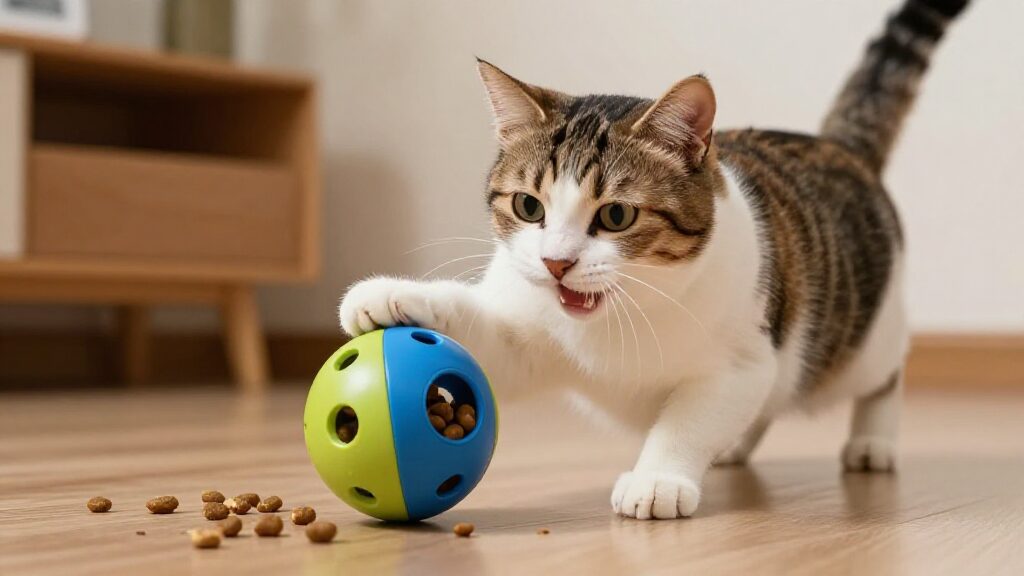
In zoos, food is hidden or puzzles are used to induce natural hunting behaviors in captive animals. At home, you should reduce reliance on standard feeders and apply the following methods.
| Evaluation Item | Zoo Application Example | Household Cat Application Method (Action Item) |
|---|---|---|
| Stimulating Hunting Instincts | Making animals find meat hidden in corners of the enclosure | Divide the daily food portion into 3-4 meals and hide them in various corners of the room for the cat to find |
| Problem Solving | Using puzzle boxes equipped with mechanisms to obtain food | Purchase a Puzzle Feeder or roll up newspaper to hide treats inside |
| Extending Digestion Time | Making animals search for food all day to alleviate boredom | Extend meal consumption time to over 15 minutes to induce brain activity |
2. Environmental Manipulation and Providing Exploration Opportunities (Sensory Enrichment)
Zoos arrange various elements to stimulate animals’ senses of smell, hearing, and sight. You need to check how to implement this in your daily home life.
- Olfactory Stimulation: In zoos, new herbs or scents of other animals are mixed in. At home, place ‘Catnip’ or ‘Valerian root’ in specific areas of the house, or hide cloths with scents your cat enjoys.
- Visual Stimulation: Zoos allow animals to view the outside scenery through windows. At home, install a ‘Bird feeder’ on the windowsill or turn on the TV to show videos of birds or fish. This stimulates the cat’s hunting instinct.
- Utilizing Vertical Space: Zoos install trees or rock structures. At home, connect the tops of bookshelves, door frames, and dedicated cat towers to create ‘ropes’ that allow cats to move vertically.
3. Social Interaction and Training (Social & Cognitive Training)
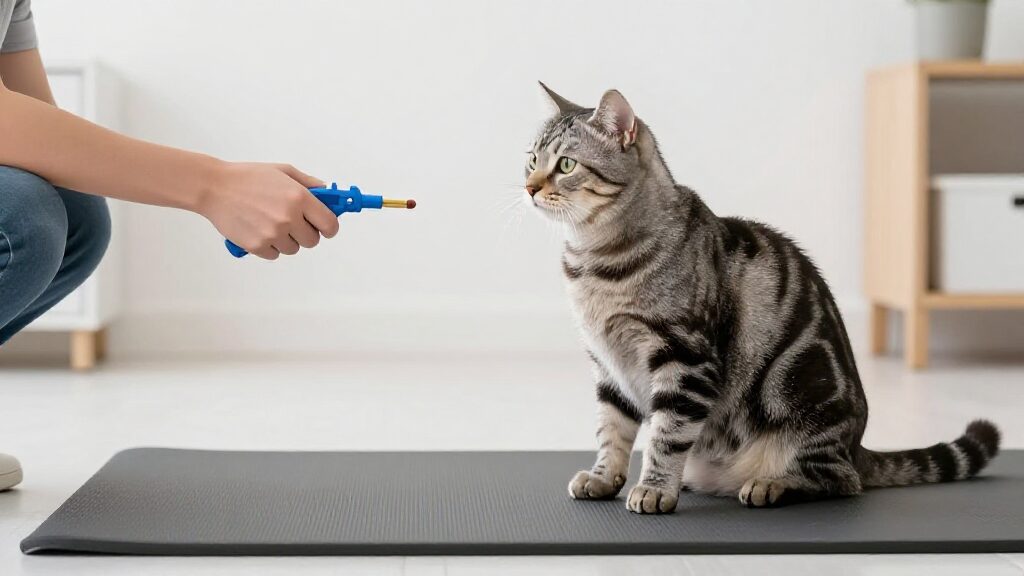
Zoos use clicker training to facilitate communication between animals and humans. This is one of the most reliable methods for strengthening a cat’s cognitive abilities.
This is a training method where a small device called a ‘Clicker’ is used to make a ‘click’ sound and give a treat when the cat performs a desired behavior. Start with simple commands like sitting, following a finger, or lifting a paw. This process builds trust between the cat and the owner and maximizes cognitive ability by teaching the cat to learn ‘what actions lead to rewards’ on its own.
What Safety Measures and Precautions Must Be Followed When Applying This at Home?
When applying zoo techniques at home, safety is the top priority. While zoos have professional keepers constantly monitoring, it is difficult for guardians to control every situation in a home environment.
1. Removing Hazards and Ensuring Material Safety
Materials used to make puzzle toys (tape, strings, small plastics, etc.) must be something the cat cannot swallow. In particular, strings or threads left unattended for long periods can be swallowed by cats, causing intestinal blockage, so they must always be within the guardian’s sight during play. Additionally, any toxic plants in the house must be isolated so cats cannot access them.
2. Preventing Excessive Stress (Stress Management)
Even in zoos, new stimuli are introduced ‘gradually’ to prevent animals from becoming overly stressed. The same applies to cats. Suddenly giving a complex puzzle or introducing many new toys at once can cause the cat to feel fear and run away. Add only one new stimulus per day, observe the cat’s reaction, and adjust the pace accordingly. If the cat loses interest or becomes anxious, stop immediately.
3. Respecting Individual Differences and Customized Approaches
Not all cats like the same stimuli. Older cats may have lower activity levels, while kittens can be very aggressive. A customized enrichment program must be designed considering the individual cat’s personality, age, and health status. For example, for a cat with arthritis, hunting games on the floor are more suitable than jumping to high places.
Frequently Asked Questions (FAQ) About Household Cat Enrichment Programs
Q1. Are puzzle toys really effective for cats?
Yes, they are very effective. According to zoo research, animals using puzzle toys show a significant reduction in stress behaviors caused by boredom (e.g., excessive grooming, repeating the same actions). Since cats use their brains to find food, this satisfies their hunting instincts and also helps prevent obesity.
Q2. Is it true that clicker training is not suitable for cats?
That is a misconception. Clicker training is a proven method widely used not only for large animals like whales and lions but also for cats. Cats have excellent learning abilities and can acquire complex behaviors through proper reinforcement. It is important to start with short sessions of under 10 minutes initially to create positive experiences.
Q3. How many minutes a day should I play with my cat?
In zoos, captive animals spend a significant amount of time active each day. For household cats, it is recommended to have at least 15-20 minutes of focused playtime daily, ideally at least twice. This is essential for the cat’s energy expenditure and mental health, and it also helps correct nocturnal activity habits.
Q4. What should I do if my cat shows no interest in new toys?
Cats are animals where curiosity and wariness coexist. Do not force new toys on them; instead, place treats near the toy or demonstrate interesting behavior with the toy yourself. Additionally, hiding the toy and bringing it out later can make it seem like a ‘new object,’ which can rekindle interest.
Q5. Do these methods actually affect a cat’s lifespan?
Rather than direct scientific data on lifespan extension, the main goal is the improvement of ‘Behavioral Welfare.’ However, by reducing mental stress and preventing obesity, the risk of developing chronic diseases such as cardiovascular disease and diabetes is lowered, indirectly contributing to a longer lifespan and better quality of life.
Zoo-level cognitive enrichment programs are the most effective way to preserve a cat’s instincts and mental health even within the limited space of a home. The key is to go beyond simply providing toys and create an environment where cats can solve problems and make choices on their own. Starting today, make small changes, such as serving meals in puzzle bowls, to enrich your cat’s life. Check out PlayCat (playcat.xyz) for more information.
This content was created using AI technology. Always consult a veterinarian regarding medical information.