


Cat Oral Diseases: Why Is Neglect Dangerous?
Many cat owners often overlook oral health, thinking, “My cat eats well and plays with toys just fine.” However, oral disease in cats can be the starting point for fatal illnesses that threaten their overall health, going far beyond simple toothaches. Periodontal disease (gum disease), in particular, is extremely common, found in over 70% of adult cats. Yet, because cats express pain very subtly, owners often only notice the problem after the disease has progressed significantly.
When bacteria accumulate on teeth and gums, causing inflammation and abscesses, these bacteria can spread throughout the body via the bloodstream. This can lead to serious systemic diseases such as endocarditis (inflammation of the heart valves), kidney disease causing renal failure, and liver dysfunction. Furthermore, severe pain can cause cats to refuse food, drastically increasing the risk of rapid weight loss and liver disease (hepatic lipidosis). Therefore, oral health is not merely a hygiene issue but an essential care item directly linked to a cat’s lifespan.
Causes and Mechanisms of Oral Disease
The Process of Plaque and Tartar Formation
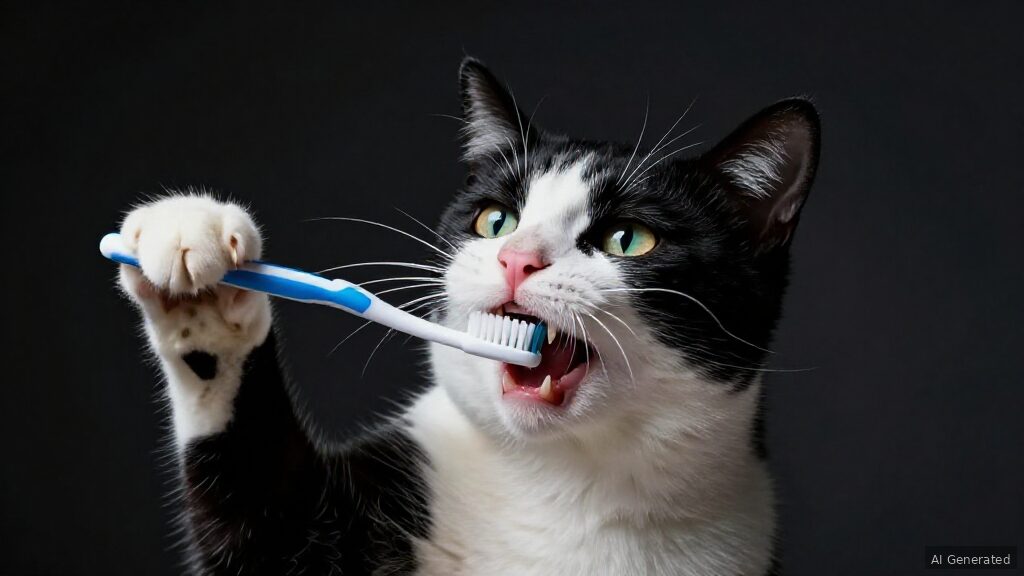
The primary causes of feline oral disease are ‘plaque’ and ‘tartar’. After meals, food debris, bacteria, and saliva components mix in the mouth to form a sticky film known as plaque. Over time, plaque combines with minerals in the saliva and hardens; at this stage, it is called tartar (calculus). Tartar has a rough surface, creating an environment where more bacteria can easily adhere.
Bacteria generated in this process penetrate the gap between the gums and teeth, forming ‘periodontal pockets’. As these pockets deepen, the gums detach from the teeth, allowing bacteria and food to accumulate continuously, causing chronic inflammation. This inflammation destroys gum tissue and, in severe cases, dissolves the bone supporting the teeth (alveolar bone), leading to tooth loss.
Unique Risk Factors
The high prevalence of oral disease in cats is related to several unique characteristics. First, their eating habits. While wild cats hunted and ate soft meat, modern domestic cats mostly consume soft wet food or dry kibble. Wet food, in particular, offers almost no abrasive cleaning effect on the teeth, allowing plaque to accumulate easily. Second, cats have an innate tolerance for pain. As wild animals, they have a strong instinct not to appear weak or sick to avoid becoming prey. Consequently, owners often fail to realize their cat is in severe pain until the condition worsens.
Additionally, genetic factors cannot be ignored. Certain breeds, such as Persians and Scottish Folds, are congenitally prone to irregular teeth alignment or weak gum tissue, making them more susceptible to oral disease. Aging also plays a role; as immune function declines and metabolism slows, the ability to remove oral bacteria decreases, contributing significantly to the problem.
Stages of Symptoms: From Early to Severe
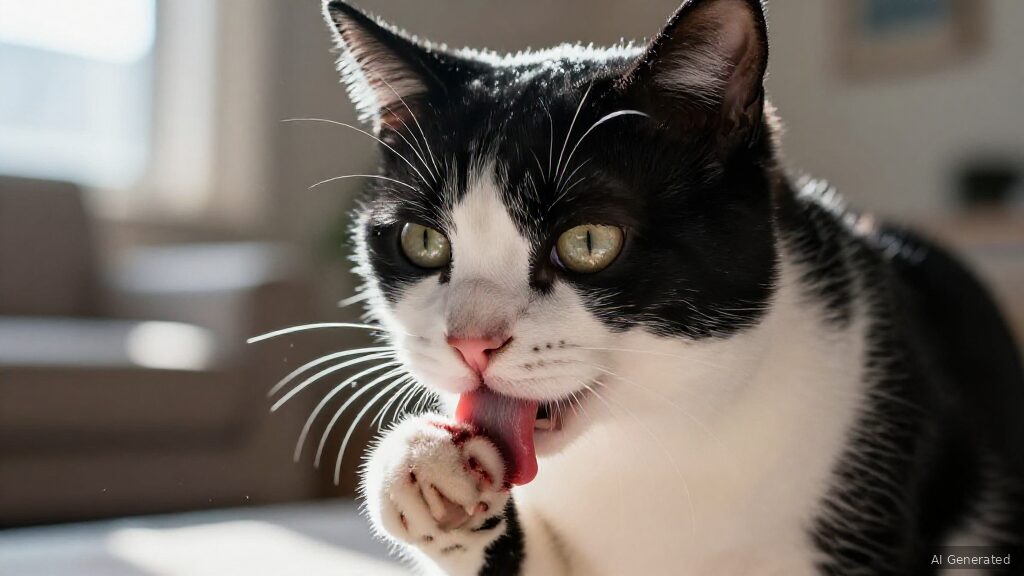
Symptoms of feline oral disease vary distinctly depending on the stage of progression. Below, we have organized the signs you can observe at home by stage. Please use the table below to assess your cat’s current condition.
| Progression Stage | Major Symptoms | Behavioral Changes & Signs | Risk Level |
|---|---|---|---|
| Early (Plaque/Mild Gingivitis) | – Slight redness along the gumline – Mild bad breath – Thin yellow film on tooth surfaces |
– No significant behavioral changes – Occasionally pauses while eating – Increased licking of gums with the tongue |
Low (Recoverable with preventive care) |
| Moderate (Severe Gingivitis/Mild Periodontitis) | – Swollen, dark red gums – Gum bleeding – Visible tartar – Severe bad breath |
– Chewing on only one side of the mouth – Decreased appetite or slower eating speed – Frequent head shaking or rubbing face with paws |
Moderate (Veterinary treatment required) |
| Severe (Severe Periodontitis/Tooth Resorption) | – Gums completely detached from teeth – Exposed alveolar bone and fractures – Loose or missing teeth – Purulent discharge |
– Rapid weight loss due to food refusal – Excessive salivation (drooling) – Stops grooming due to pain, resulting in rough fur – Aggressive or withdrawn behavior |
Very High (Immediate treatment required; threat to systemic health) |
Particularly, ‘Tooth Resorption Lesions’ are extremely common in cats and cause excruciating pain. This occurs when the tooth surface erodes, exposing the nerve. In the early stages, there are no obvious external symptoms, making detection difficult. However, if your cat refuses water due to pain while drinking or spits out food after putting it in its mouth, seek veterinary care immediately.
Diagnosis and Examination at the Veterinary Clinic
Precise Oral Examination and Systemic Evaluation
Accurate diagnosis of feline oral disease requires a detailed oral examination under anesthesia. Cats often refuse to open their mouths due to pain, and a visual inspection alone cannot reveal the condition of the tooth roots or the area beneath the gums. Therefore, after stabilizing the cat with general anesthesia, every tooth is examined individually using a probe, and the depth of periodontal pockets is measured.
During the diagnostic process, a blood test to evaluate overall health is performed alongside the oral exam. Since oral disease significantly impacts the kidneys and liver, pre-anesthesia blood tests confirm whether the cat’s organ function can withstand anesthesia and check for any organ damage already caused by oral disease. Special attention is paid to kidney values (Creatinine, SDMA) and liver enzyme levels.
Essential Test Items and Cost Range
When diagnosing feline oral disease, the following tests are generally performed:
- General Anesthesia and Detailed Oral Exam: The basic process to check the condition of all teeth and gums.
- Oral Radiography (X-ray): Essential for identifying bone loss around tooth roots, tooth resorption lesions, and periapical abscesses. Many problems invisible to the naked eye are discovered through this imaging.
- Blood Test (CBC, Biochemistry): To ensure anesthesia safety and detect systemic infections.
- Cardiac Ultrasound (Optional): To evaluate cardiac output before anesthesia in senior cats or those with a history of heart disease.
Costs vary depending on the clinic size, location, cat’s weight, and specific tests, but the basic diagnostic cost including a detailed oral exam and radiography generally ranges from 100,000 to 200,000 KRW. If additional procedures like periodontal treatment or tooth extraction are required, anesthesia, surgery, and hospitalization fees will be added, potentially raising the total cost to 300,000 to 600,000 KRW or more. Since this depends on the cat’s oral condition and the scope of necessary treatment, it is advisable to consult with the clinic beforehand to confirm estimated costs.
Treatment Options Comparison: Medication, Surgery, and Management
Treatment methods vary depending on the diagnosis. We have organized the pros and cons of each option to make them easier to understand.
| Treatment Option | Target Candidates | Pros | Cons & Precautions |
|---|---|---|---|
| Scaling (Tartar Removal) | – Early tartar formation – Cases with only gum inflammation – Teeth not yet damaged to the root |
– Teeth can be preserved – Relatively low cost and time – Short recovery period |
– Requires anesthesia – Possibility of recurrence (if care is neglected) – Difficult to clean below the gumline |
| Periodontal Therapy (Gum Surgery) | – Moderate periodontitis – Deep gum pockets but firm tooth roots |
– Removes inflammation while preserving gum tissue – Treatment possible without tooth extraction |
– Longer surgery time – Increased anesthesia risk – Post-operative care is very demanding |
| Tooth Extraction | – Severe periodontitis with loose teeth – Severe pain from tooth resorption lesions – Non-salvageable teeth |
– Immediate improvement in quality of life by removing the source of pain – Minimizes risk of recurrence – Blocks the source of systemic infection |
– Permanent tooth loss (though cats adapt quickly) – Risk of infection at the extraction site – Risks associated with anesthesia and surgery |
| Medication (Antibiotics/Painkillers) | – Adjunctive treatment during acute inflammation – Infection prevention before/after surgery – Pain management for senior cats where extraction is impossible |
– Non-surgical method – Rapid relief of acute symptoms |
– Cannot remove the root cause – Burden on liver/kidneys with long-term use – Possibility of antibiotic resistance |
Many owners worry, “How will my cat eat if its teeth are pulled?” However, cats can consume enough soft food or wet food using their jaw muscles and tongue even without teeth. In fact, leaving painful teeth untreated, which prevents eating, is a much greater risk. In most cases, once the pain is gone, the cat’s appetite and activity levels recover.
Age-Specific Management: Kittens, Adults, and Seniors
Kittens (0~1 year): Forming Healthy Oral Habits
The kitten stage is when teeth development is completed, and establishing proper oral care habits during this period lays the foundation for lifelong health. Around 4-6 months, kittens go through a ‘teething phase’ where baby teeth fall out and permanent teeth emerge. During this time, they may scratch their gums or chew on objects due to itchiness. Starting gentle tooth-brushing training during this period increases cooperation when they become adults. Additionally, kittens can develop ‘persistent deciduous teeth’ (baby teeth that don’t fall out and remain alongside permanent teeth) or irregular teeth alignment, making regular checkups essential.
Adult Cats (1~7 years): The Golden Age of Prevention
The adult stage is when oral disease begins in earnest. Before tartar accumulates and gum inflammation sets in, thorough preventive care, such as scaling for tartar removal, must be performed. During this period, regular scaling under anesthesia is necessary, and it is important to brush their teeth daily at home or provide dental care treats. Adult cats are also active, so caution is needed during play to prevent accidents that could cause tooth fractures.
Seniors (7+ years): Management Linked to Systemic Health
Senior cats are at a stage where immune function declines and kidney function begins to deteriorate. Bacterial infections from oral disease can worsen kidney disease, making regular checkups and oral examinations every six months even more critical. At this age, gums are weaker, so even a small amount of tartar can cause severe inflammation, and the prevalence of tooth resorption lesions increases rapidly. If tooth extraction is needed, kidney function must be evaluated meticulously before anesthesia to establish a safe plan. Furthermore, senior cats should be fed soft food or puree to ensure adequate nutrition even without teeth.
Home Environment Management: The Role of PlayCat Solid Wood Furniture
A stress-free, stable environment is essential for restoring and maintaining a cat’s oral health. Cats sensitized by pain recover faster when resting in a quiet and secure space. At this time, PlayCat solid wood furniture can be the optimal environmental solution to help stabilize your cat’s psychology.
Healing Effects of PlayCat Solid Wood Furniture
PlayCat’s solid wood furniture features the natural warmth and soft texture of wood, which does not cause discomfort when a cat leans against it to rest. Particularly, cats suffering from oral pain feel more comfortable on warm wooden surfaces compared to cold metal cat houses or the floor. PlayCat furniture is designed to match a cat’s eye level, allowing them to lie down and rest comfortably without the burden of lifting their head or bending their neck.
Additionally, solid wood regulates humidity and has antibacterial properties, aiding in environmental hygiene management for cats with compromised immune systems due to oral disease. PlayCat’s various structures provide cats with spaces to claim their territory and hide, contributing to reduced stress and increased sleep time. Since sufficient sleep is the most important factor for immune recovery, providing a space for adequate rest through PlayCat solid wood furniture is a crucial part of the treatment process.
Tips for Creating a Safe Space
- Well-ventilated Location: Place PlayCat furniture near windows or in well-ventilated areas to maintain a pleasant environment.
- Easy Accessibility: For senior cats or those in pain, place the furniture so that step heights are low or flat tops can be used easily.
- Maintain Cleanliness: Wipe solid wood furniture with a soft, dry cloth. Clean the area around cats with oral disease more frequently to prevent bacterial growth.
Prevention and Regular Checkup Checklist
Prevention of oral disease is much easier and less costly than treatment. Use the checklist below to consistently manage your cat’s oral health.
Daily Care Checklist
- Daily Brushing: If possible, train your cat to brush their teeth daily, or at least 3 times a week. Use cat-specific toothpaste (human toothpaste is prohibited).
- Diet Management: If the diet is primarily wet food, appropriately combine it with dry food that has a cleaning effect or dental treats that remove tartar.
- Check Breath: Check your cat’s breath daily when interacting. Bad breath is a signal for early detection.
- Observe Grooming: If the frequency of your cat licking its body suddenly decreases, or if it frequently licks its gums with its tongue, suspect oral pain.
Regular Checkup Checklist
- Annual Systemic Exam: Check oral health along with blood tests.
- Annual Oral Scaling: Perform detailed scaling under anesthesia when tartar begins to accumulate.
- Biannual Radiography: Regularly take X-rays to check the condition of tooth roots.
- Senior Cats (7+ years): Shorten the checkup interval to every 6 months to monitor oral and systemic health.
Frequently Asked Questions (FAQ)
1. How can I tell if my cat has a toothache?
Cats express pain very subtly, making it difficult to notice. However, if you observe behavioral changes such as refusing food, spitting out food while chewing, severe bad breath, or chewing on only one side of the mouth, suspect a toothache. Additionally, frequently shaking the head or rubbing the face with paws can also be signs of pain.
2. Can I use human toothpaste for my cat?
Absolutely not. Human toothpaste contains ingredients harmful to a cat’s stomach, such as fluoride, xylitol, and sodium lauryl sulfate, which can cause serious poisoning or vomiting if ingested. You must use toothpaste specifically made for cats, and it is important to check if your cat likes the flavor.
3. Is scaling possible without anesthesia?
Scaling without anesthesia only removes tartar from the tooth surface and cannot eliminate bacteria and tartar below the gums. Furthermore, there is a very high risk of dental instruments injuring the gums or tongue if the cat moves. Therefore, for a precise oral examination and safe treatment, it must be performed under anesthesia.
4. Will my cat starve if its teeth are extracted?
Cats can consume food using their jaw muscles and tongue even without teeth. In fact, cats that couldn’t eat due to pain often recover their appetite and eat normally once the pain is gone after extraction. As long as you slightly adjust the size and texture of the food, they can live without major issues.
5. Is it true that oral disease affects kidney disease?
Yes, it is true. Bacteria and inflammatory substances from periodontitis can travel through the bloodstream to the kidneys, impairing kidney function. Especially in cats with pre-existing weak kidney function, oral disease is a major cause that rapidly worsens kidney disease. Therefore, oral care is essential for kidney health.
A cat’s oral health is a critical factor that determines their overall health and lifespan, going beyond simple toothaches. The longer it is neglected, the more the treatment costs and the cat’s suffering increase exponentially. Starting today, carefully check the condition of your cat’s mouth and create a stable recovery environment with PlayCat solid wood furniture. Finally, visiting a veterinary clinic for a professional diagnosis is the wisest path for any cat owner.
This content was created using AI technology. Always consult a veterinarian regarding medical information.