


Can You Touch a Cat’s Paws? The Answer Every Cat Owner Must Know
When seeing the soft, jelly-like pads of a cat’s paws, most cat owners feel an irresistible urge to reach out. However, not infrequently, this cute gesture is rejected, or in severe cases, results in a scratch. A cat’s paws are not just body parts; they are the ‘second face’ that most sensitively expresses their emotions and a core tool for survival. Knowing exactly when a cat extends its paws and in what situations contact is prohibited is the first step in building trust with your cat. By reading this article to understand feline psychology and learn the correct timing and methods for touching their paws, your bond with your beloved cat will deepen even further.
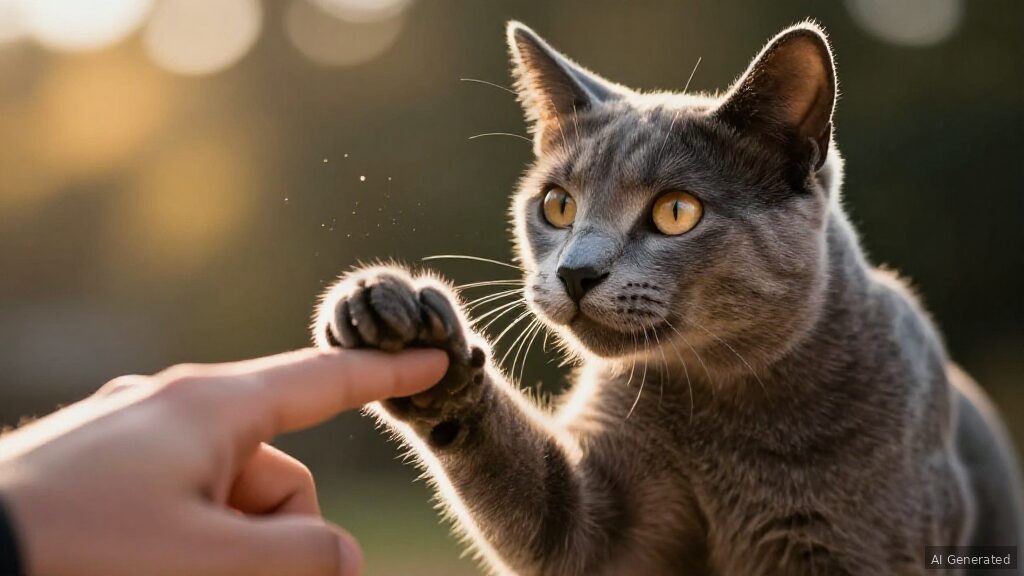
Why is Touching a Cat’s Paw Pads Important?
A Sign of Trust and a Window for Emotional Communication
Cats naturally value their paw pads highly to protect themselves from predators in the wild. The numerous nerve endings in the paw pads detect ground vibrations, temperature, and texture to predict danger. Therefore, when a cat exposes its paw pads or allows a human’s hand to touch them, it is a powerful signal of trust, meaning, “This place is safe, and I do not consider you an enemy.” Conversely, if a cat exhibits behavior to protect its paw pads, it suggests they may not yet feel complete psychological stability or could be experiencing pain or stress.
From the perspective of environmental enrichment, appropriately touching and massaging a cat’s paws provides positive stimulation that relieves stress and aids blood circulation. Especially when a cat rests comfortably in a natural environment like PlayCat solid wood furniture, their paws remain in a relaxed state, making this the best timing for contact.
The First Step in Assessing Paw Health
Regularly touching a cat’s paws is an important part of health management beyond just an expression of affection. You should check for splinters or shards of glass embedded in the paw pads, dry or cracked skin, or signs of fungal or bacterial infections. Even indoor cats are prone to minor injuries from toy fragments or dust. If owners develop the habit of touching their cat’s paws, they can detect abnormal symptoms early and take appropriate action without delaying a hospital visit.
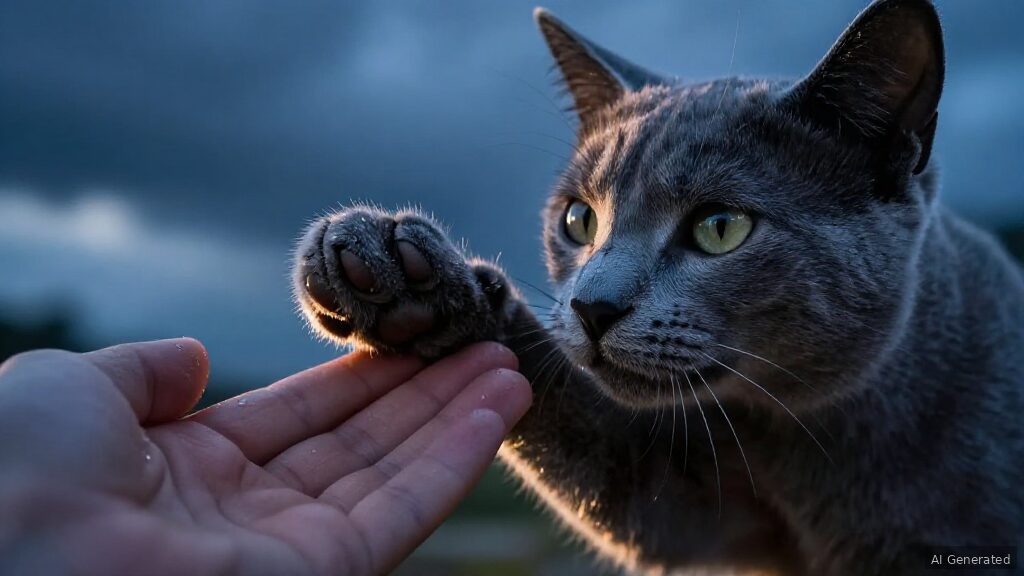
What Are the Clear Signs a Cat Wants You to Touch Its Paws?
Behaviors Showing Paw Pads Naturally
The clearest sign is when a cat lies down with its legs spread comfortably enough to expose its paw pads. This means the cat completely trusts its surroundings and is resting without tension. Especially when lying on its back or stretching its legs to the side while rubbing its body with a soft ‘purring’ sound, lightly touching the paw pads will elicit a positive response.
Additionally, when a cat places its paw on the owner’s hand or lap, it is a significant signal. This can be an affectionate request meaning, “Pay more attention to me” or “Stay here,” and lightly tapping between the toes with your fingertips will make the cat feel joy.
A Gradual Approach
If a cat repeatedly touches the owner’s hand with its paw and then pulls away, it may be a signal requesting play or attention through an ‘approach-avoidance’ game. In this case, do not suddenly grab the paw; instead, slowly bring your hand to the cat’s eye level and gently brush the tip of the paw. If the cat does not pull away and instead pushes its paw closer, it is then good to touch it softly as if massaging.
On the other hand, never touch the paws if the cat is flattening its ears, wagging its tail vigorously, or tensing its body. These are aggressive signals or warnings of stress, so you must immediately stop contact and respect the cat’s space.
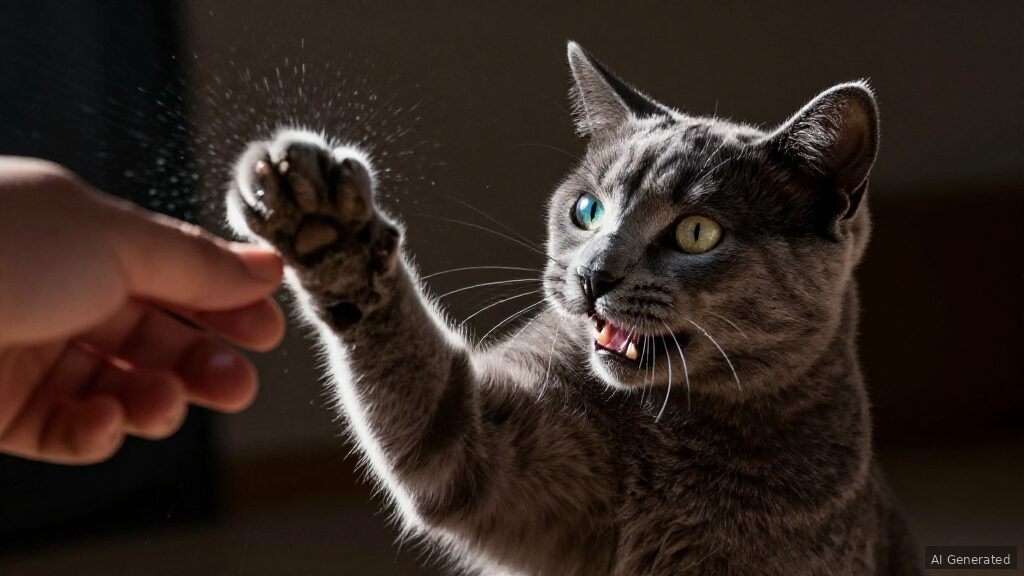
When Should You Absolutely NOT Touch a Cat’s Paws?
During Sleep or Deep Rest
Suddenly touching a cat’s paws while it is deeply asleep is a very dangerous behavior. Cats instinctively react to danger even during sleep, and sudden contact can be perceived as an ‘attack,’ causing claws to extend reflexively. This can cause deep wounds to the owner’s hand and, furthermore, shock the cat, causing it to lose trust in the owner.
When a cat is breathing deeply and its muscles are relaxed, it is best to provide minimal stimulation. If you must touch the paws, first gently stroke the cat’s shoulder or back with the back of your hand to wake it gradually, or guide it to be conscious before making contact.
When Pain or Illness is Suspected
If a cat is limping on a specific paw, licking excessively, or refusing to put its paw on the ground, there is a high possibility of pain. Forcing contact or attempting to examine the paw during this time can cause the cat to feel extreme stress and fear, potentially leading to aggression. Additionally, if there are wounds or inflammation on the paw pads, contact will only worsen the pain.
In such situations, refrain from direct contact and prioritize creating an environment where the cat can rest comfortably without complaining of pain, such as with PlayCat solid wood furniture. The safest method is not to touch the paws until a veterinarian has diagnosed the cause of the pain.
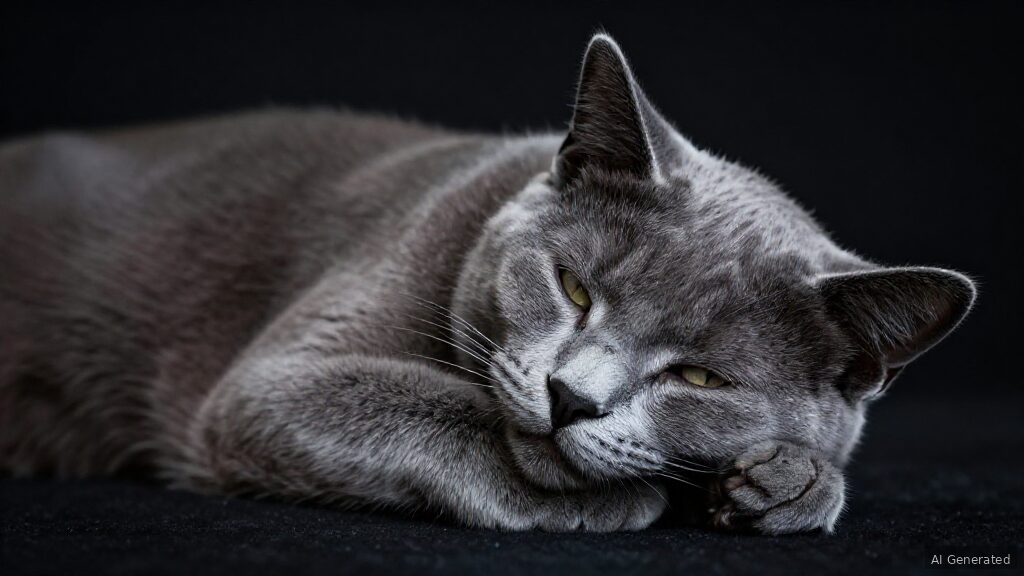
Age-Specific Cat Paw Care and Contact Guide
Kitten Period
The kitten period is a critical time when sensitivity to paw pads is very high, and they grow while experiencing various textures. Gently touching the paws during this time can reduce future resistance to handling them. However, since kittens still lack physical strength and control, be careful not to hold them too tightly or touch them for too long.
Kitten paw pads are very delicate and prone to minor injuries from biting or licking toys. It is advisable to let kittens move freely in natural play spaces like PlayCat solid wood furniture and to periodically check for foreign objects on their paw pads.
Adult Cat Period
Adult cats have a clear sense of their territory and body, and the degree to which they allow paw contact varies depending on their condition. For adult cats, it is effective to approach during the evening or lazy afternoons when activity is lowest. Additionally, determine whether the cat tends to expose its paws or hide them, and adopt a contact method accordingly.
Adult cat paw pads have a thicker layer of callus and are firmer than kittens’, but the nerves remain sensitive. When massaging the paw pads, it is good to gently rub in circles with your fingers, and nail trimming should also be done while the cat is relaxed.
Senior Cat Period
Senior cats may experience numbness or pain in their paw pads due to arthritis or neurological diseases. At this stage, it is more important to check the temperature and condition of the paws before touching them. If the paw pads are cold, they may need warmth; if they are hot, inflammation or infection could be suspected.
For senior cats, environmental improvements that reduce the burden on their paws are essential, such as using PlayCat solid wood furniture with adjustable heights or non-slip treatments. When touching the paws, observe carefully for signs of pain and stop immediately if the cat seems uncomfortable.
| Category | Can Contact Be Made? | Precautions and Tips |
|---|---|---|
| During Sleep | Absolutely Forbidden | Risk of instinctive reflex attack. Wake them first or make light contact with the back of your hand. |
| During and Immediately After Meals | Not Recommended | They are sensitive during digestion. Try again after at least 30 minutes post-meal. |
| While Focused on Play | Possible (with Caution) | Can be used as a play element by brushing the paws with a toy. |
| Stressful Situations | Forbidden | New environments, strangers, etc. Wait until they regain stability after securing their space. |
| During Relaxed Rest | Optimal | When lying on their back or snoring. Soft massage is possible. |
Common Mistakes in Cat Paw Care and Solutions
Mistake 1: Forcing the Cat While Trimming Nails
Many owners try to forcibly hold and fix the cat’s paws while trimming nails, which only makes the cat tremble in fear. This implants a negative memory of having their paws touched, causing them to refuse paw care altogether in the future.
Solution: Sit with the cat in a comfortable space like PlayCat solid wood furniture and provide positive reinforcement with treats or praise every time you trim the nails. Start by lightly touching the paws and gradually adapt them to the process of holding and cutting the nails.
Mistake 2: Neglecting Foreign Objects on Paw Pads
Owners often overlook fine dust or hair getting stuck in the paw pads as the cat moves around indoors. This can hinder ventilation of the paw pads or cause dermatitis.
Solution: Develop a habit of gently wiping the paw pads with a cloth during your daily bonding time with the cat. It is particularly important to carefully check between the toes to remove foreign objects.
Mistake 3: Misunderstanding Pain
Even when a cat licks its paws or limps, owners often dismiss it as “just like that.” However, this is highly likely to be a sign of pain.
Solution: Gently press the paw pads to see if the cat reacts. If pain is suspected, consult a veterinarian immediately, and until then, provide a stable environment without touching the paws.
Paw Care Checklist to Start Practicing Today
- Check Signals: Approach when the cat is lying on its back or stretching its legs comfortably. First, check that the ears are not pinned back and the tail is not wagging violently.
- Approach Slowly: Very lightly brush the tip of the cat’s toes with your fingertips and observe if the cat pulls away.
- Soft Massage: If the response is good, gently massage in circles from the center of the paw pad to the tips of the toes. Be careful not to press too hard.
- Check Nail Condition: While massaging, visually check if the nails are overgrown or if there are any cracks.
- Environment Check: Re-check the area around the PlayCat solid wood furniture where the cat rests for glass shards or sharp foreign objects.
- Positive Reinforcement: If the cat seems comfortable while touching the paws, lightly praise them or give a favorite treat to implant a positive memory.
- Maintain Consistency: Touch the paws regularly for short periods (3-5 minutes) daily so the cat naturally accepts this behavior.
Frequently Asked Questions (FAQ)
Q1. Does touching a cat’s paw pads really mean trust?
Yes, that is correct. Because cats instinctively consider their paw pads the most vulnerable part of their body, exposing them or allowing contact signifies deep trust in the owner. This is a behavior that appears when the cat judges its surroundings to be safe and is strong evidence that the bond with the owner has deepened.
Q2. Is it okay if claws extend when I touch a cat’s paws?
No, this is a signal to be careful of. If a cat’s claws suddenly extend when you touch its paws, it could be a warning signal that they are feeling discomfort or fear. Immediately stop contact, observe the cat’s reaction, and ensure you do not force contact again.
Q3. Is paw pad massage helpful for health?
Yes, it is helpful. Appropriate paw pad massage promotes blood circulation, relaxes muscles, and reduces stress. Additionally, stimulating the nerves in the paw pads has a positive effect on maintaining sensory function. However, it must be done gently only when the cat is comfortable.
Q4. How should I approach a cat that dislikes nail trimming?
It is best not to force an approach on a cat that dislikes nail trimming. Start by touching the paws, provide positive reinforcement, and slowly adapt them in a comfortable space like PlayCat solid wood furniture. Getting the cat used to the nail trimming tools is also a good method.
Q5. What should I do if a cat’s paw pads become dry?
If a cat’s paw pads become dry, they can crack or cause pain. In this case, it is good to use a specialized moisturizer or gently wipe them with a clean cloth. Additionally, maintain appropriate indoor humidity and create an environment that aids ventilation of the paw pads using natural materials like PlayCat solid wood furniture.
Q6. What should be noted when caring for a senior cat’s paws?
Senior cats may have pain in their paws due to arthritis or neurological diseases, so forced contact should be avoided. It is important to frequently check the temperature and condition of the paw pads and use PlayCat solid wood furniture with non-slip treatments to reduce the burden on their paws.
Conclusion: Building a Warm Relationship with Your Cat
Touching a cat’s paws is more than just physical contact; it is an important process of understanding their psychology and building trust. Even though the paw pads may look like soft jelly, they fully contain the cat’s emotions and health status. If you approach with the right timing and method, your relationship with your cat will deepen further, becoming a warm comfort for both the owner and the beloved cat.
Help your cat rest comfortably through a nature-friendly environment like PlayCat solid wood furniture, and practice the heart of cherishing their paws. From today, your perspective on your cat’s paws will change. The big change created by a small touch is the warm daily life spent with your cat.
This content was created using AI technology. Always consult a veterinarian regarding medical information.