


Environmental Enrichment: Why is it Essential for Our Cats’ Lives?
Cats are naturally hunters and explorers. In the wild, they spend most of their day hunting, patrolling territories, resting, and engaging in social interactions. However, in modern society, cats that have moved indoors face restrictions on these instinctive behaviors, which can lead to various psychological and physical problems. This is precisely why Environmental Enrichment is necessary. Environmental enrichment refers to a systematic approach of adding or improving elements in an animal’s physical and social environment to encourage natural behaviors, thereby enhancing the animal’s welfare and reducing stress.
The key lies in designing the entire living space to satisfy the cat’s instincts and desires, going beyond simply providing more toys. Especially for indoor cats, their space is not just a shelter but their entire living environment where everything is resolved. Repetitive daily routines in a narrow space and a predictable environment can lead to boredom and lethargy in cats, resulting in various abnormal behaviors such as over-grooming, litter box accidents, aggression, and loss of appetite. Environmental enrichment is the most fundamental solution to prevent and treat these issues.
From a zoopsychological perspective, cats desire control and choice. Environmental enrichment provides cats with the opportunity to decide for themselves “where they will be,” “what they will do,” and “when they will rest.” Space design utilizing PlayCat’s solid wood furniture plays a significant role in expanding these choices. Wood is the most familiar material to cats and provides a surface they instinctively prefer, serving as a perfect stage for scratching and climbing.
Environmental enrichment is not a one-time effort but a process that must continuously change and evolve according to the cat’s growth stage and the season. Kittens need various stimuli to spark curiosity, adult cats require territory establishment and hunting simulation behaviors, and senior cats prioritize joint protection and comfortable resting spaces. This guide presents a comprehensive environmental improvement strategy covering the entire living space to help your feline friend maintain their wild instincts and live a healthy, happy life indoors.
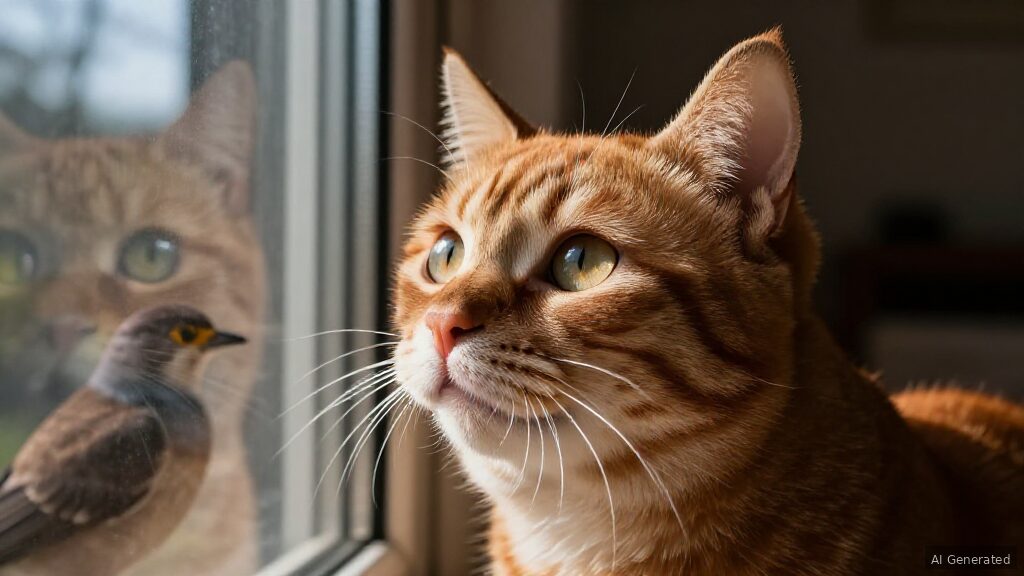
5 Core Enrichment Areas: Elements that Enrich a Cat’s Life
Environmental enrichment is divided into five main areas, each making a unique contribution to a cat’s physical and mental health. When these five areas are balanced, cats can maintain the most stable psychological state. Let’s review the role of each area and specific implementation plans in a table.
| Enrichment Area | Primary Role | Specific Implementation Methods & PlayCat Usage |
|---|---|---|
| Sensory Enrichment (Sensory) |
Stimulates vision, smell, hearing, and touch to activate the brain and relieve stress. | Providing new scents (catnip, valerian), various textured floorings, and window views. The natural wood scent and grain of PlayCat solid wood furniture naturally stimulate a cat’s sense of smell and touch. |
| Cognitive Enrichment (Cognitive) |
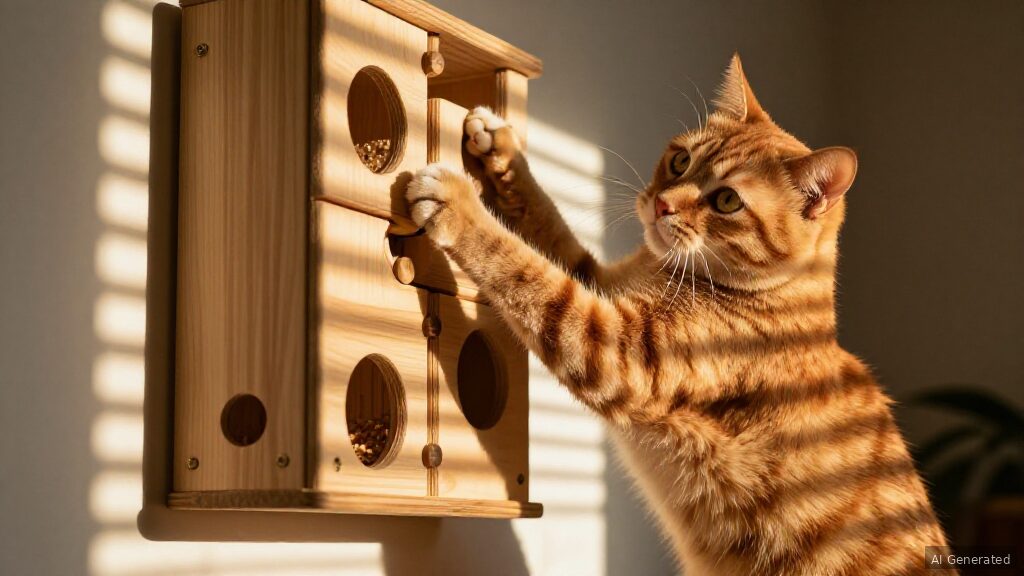
Develops problem-solving skills and prevents boredom to avoid mental fatigue. | Puzzle toys, hide-and-seek games, and exploring new paths. Connecting cat towers and wall shelves to create complex movement routes can induce cognitive activities where cats search for new paths. |
| Social Enrichment (Social) |
Strengthens attachment bonds through positive interactions with people or other cats. | Regular playtime, conversation, and appropriate territory separation in multi-cat households. PlayCat structures provide neutral spaces where cats can observe each other or rest together, helping to reduce conflict. |
| Foraging Enrichment (Foraging) |
Satisfies hunting instincts and turns mealtime from a boring activity into an interesting process. | Food puzzles, hidden treats, and cat grass hunting. Distributing food across multiple levels of a cat tower or fixing treat bowls on wall shelves to encourage climbing increases activity levels. |
| Physical Enrichment (Physical) |
Provides physical space for exercise and rest to maintain fitness and a sense of security. | Securing vertical space, creating hiding spots, and comfortable resting areas. PlayCat’s various solid wood structures maximize the use of vertical space, creating an environment where cats can climb high to patrol or sleep comfortably. |
These five areas do not function in isolation. For example, placing hidden treats on a cat tower (physical enrichment) and encouraging the cat to climb up combines foraging and cognitive enrichment, while the process also triggers sensory enrichment as the cat feels the texture of the wood and watches its surroundings. Therefore, rather than relying on a single product, it is important to comprehensively consider these five elements to redesign the entire space.
Seasonal Furniture Rearrangement Strategy: Changing Space for New Stimuli
Cats react sensitively to even subtle changes in their environment. If they live in the same space with the same pattern every day, their brains switch to automatic mode, leading to boredom. To prevent this, rearranging furniture according to the season or time is a very effective strategy. Even without large-scale remodeling, small changes can bring a great sense of freshness to a cat’s daily life.
Spring and Autumn: Expanding Active Movement Routes
During seasons with moderate temperatures when cats are active, it is beneficial to create wider movement routes through furniture placement. Slightly moving cat towers or shelves that were previously attached to walls can create new ‘highways’ for cats to traverse the house. PlayCat’s modular solid wood furniture is relatively easy to assemble and disassemble, offering the advantage of flexibly changing its shape or location according to the season. For example, extending movement routes towards windows to encourage hunting play in sunny spots allows cats to enjoy natural light and fresh air, which is very beneficial for mental health.
Summer: Securing Cool Resting Spots and Ventilation Routes
In hot summers, providing a cool space for cats to rest is the top priority. By rearranging furniture, create low platform-style resting areas in well-ventilated spots or encourage the use of spaces with exposed cool flooring. Additionally, optimize vertical space so cats can climb high to breathe cool air. During summer, check that solid wood furniture is well-ventilated to prevent mold due to rain or high humidity, and manage it with moisture-resistant materials. PlayCat products are designed with good ventilation structures, making them comfortable resting spots even in summer.
Winter: Warm Sunlight and Concentrated Resting Spaces
In cold winters, cluster furniture towards the windows where cats can receive sunlight to create a warm ‘Sun Deck.’ Place furniture between the wall and window to form a warm corner shielded from direct wind, and place soft pads there. Also, in multi-cat households, cats tend to share body heat and rest together more in winter, so it is good to use wide platforms or connected structures where multiple cats can rest together. PlayCat’s solid wood furniture maintains a natural temperature, providing a warm resting space that isn’t cold even in winter.
Rearranging furniture sends a signal to the cat that “the house has changed,” stimulating curiosity and encouraging them to explore new territories. The important thing at this time is to have patience and wait until the cat gets used to the new arrangement. They may initially feel unfamiliar or avoid it, but over time, they will become more active in the new space.
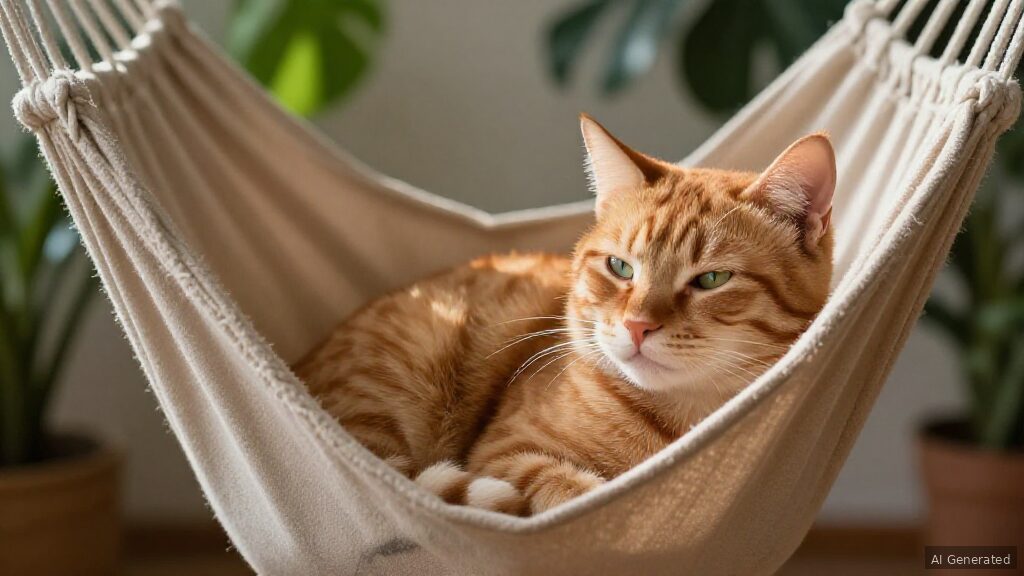
Introducing Natural Elements: Feeling the Breath of Nature Indoors
Cats are animals that originally lived in nature. Elements like soil, grass, trees, and wind provide the greatest sense of stability to cats and can substitute for the lack of natural experiences in indoor life. However, not all plants are safe for cats, so selection and placement are very important.
Cat Grass and Safe Plants
Cat grass is an essential plant that aids digestion and induces vomiting to help expel foreign substances from the digestive tract. Additionally, the act of chewing grass is effective for stress relief and dental care. Cat grass grown from seeds like wheatgrass, wheat, and oats is easy to cultivate and should be placed in a low position where cats can easily access it. Other plants safe for cats include Spathiphyllum (air-purifying plant), Spade Flower, and Kalanchoe. Conversely, Yucca, Aloe, Lilac, and Lilies are toxic to cats and should never be grown. Solid wood furniture like PlayCat has an optimal structure for placing plants on top or beside it, allowing you to create a beautiful indoor garden where nature and artificial structures blend.
Catio: Expansion of Outdoor Space
A ‘Catio’ is a portmanteau of ‘Cat’ and ‘Patio,’ meaning a safe enclosed space where cats can experience the outdoors. It involves blocking a veranda or balcony with transparent mesh or glass to create a dedicated outdoor space for cats. Introducing natural elements like tree stumps, branches, sand, and grass into the catio allows cats to dig in the soil, chase butterflies, and bask in the sun, engaging in natural behaviors. For cats that stay indoors only, a catio can be a paradise-like space. If installing a catio is difficult, simply placing PlayCat solid wood furniture near a window and opening it can provide an indirect natural experience by letting them hear birds and feel the wind.
Utilization of Natural Materials
Natural materials like wood, stone, and straw should be utilized as much as possible rather than artificial materials like plastic or metal. PlayCat’s solid wood furniture preserves the texture and scent of natural wood, providing the most familiar and comfortable environment for cats. Wood also has a humidity-regulating effect, helping to keep indoor air pleasant, and provides a natural friction feel when cats sharpen their claws. Introducing natural elements is not just for decoration but is a core strategy to satisfy cats’ instinctive desires and promote psychological stability.
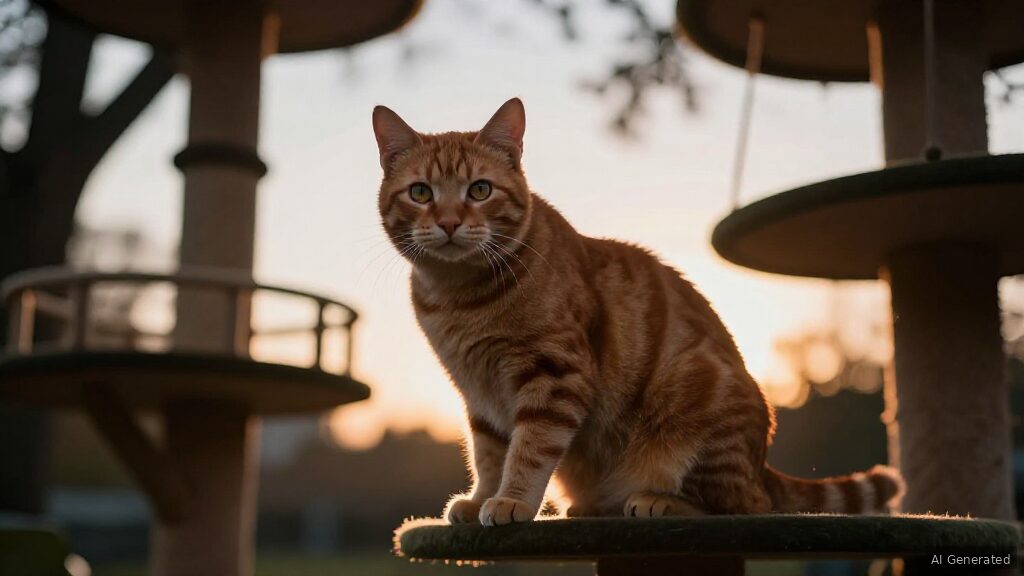
Utilizing Vertical Space: Expanding the Cat’s Territory to the Sky
Cats prefer vertical space over horizontal space. Climbing to high places and looking down is the most basic behavior for cats to confirm their territory, detect threats, and feel secure. Utilizing vertical space is essential to solve space problems that may be insufficient with floor area alone and to increase a cat’s activity level.
Strategic Placement of Cat Towers and Wall Shelves
Cat towers are the most representative vertical structures allowing cats to climb high. However, instead of just placing one tall tower, it is more effective to connect multiple towers and wall shelves to turn the entire house into one giant playground. PlayCat’s solid wood structures allow you to freely combine wall-mounted shelves and freestanding towers to build ‘horizontal and vertical highways’ for cats to move. Especially, installing shelves near windows to create a ‘Bird Watching Station’ where cats can rest while looking outside allows them to naturally satisfy their hunting instincts by watching birds or passersby.
Design Principles for Vertical Space
When designing vertical space, consider the cat’s jumping ability and joint health. Places that are too high can be burdensome for senior cats, so provide resting spots in between and arrange them with appropriate jump distances. Additionally, vertical movement routes should be designed with ‘one-way streets’ or ‘detours’ so other cats do not interfere. In multi-cat households, there must be multiple escape routes so one cat can avoid another if chased. PlayCat’s solid wood furniture is designed with a sturdy structure, allowing safe use without shaking even at high places, and the wood surface is non-slip, making it easy for cats to climb up and down.
Psychological Effects of Vertical Space
Cats perched high up feel a sense of superiority and experience reduced stress. This plays a crucial role when strangers visit or when other animals are present, helping cats maintain stability by guarding their territory. Securing sufficient vertical space allows cats to avoid conflicts happening on the floor and rest in their own high citadels, contributing to the overall peace of the household.
Rest and Hiding Spaces: The Importance of Safe Havens
Cats spend more than 16 hours a day sleeping. However, it is important not just to sleep, but to sleep ‘safely.’ Cats instinctively feel vulnerable to predator attacks while sleeping, so they prefer to fall asleep while constantly monitoring their surroundings or have a space where they can hide completely.
Types of Hiding Spots and Placement Principles
Hiding spots range from temporary spaces using boxes to dedicated resting spaces like PlayCat. The important point is that a hiding spot must have two entrances so the cat can “enter and exit.” A space with only one entrance can cause anxiety because the cat cannot escape if trapped. Additionally, hiding spots should be placed in quiet areas with little noise and good ventilation. It is best to avoid places near dishwashers or washing machines, or right next to the front door, where people frequently pass or noise is loud.
Variety of Resting Spaces
Cats prefer various resting spaces depending on their mood. You should provide various options such as open spaces with sunlight, dark and enclosed spaces, high places, and low places. PlayCat’s solid wood structures include both open platform types and enclosed resting room types, providing variety so cats can choose according to their mood. Especially, senior cats may have stiff joints, so they need comfortable resting spots that are not too high and easy to access. Kittens tend to prefer narrow, warm spaces, while adult cats prefer wide platforms, so it is good to prepare resting spaces suitable for each age group.
Hiding Spots and Conflict Prevention
A lack of hiding spots in multi-cat households is a serious cause of conflict. If one cat chases another and there is no hiding spot to escape to, the victim cat suffers from chronic stress. Therefore, it is important to secure as many resting spaces and hiding spots as there are cats and place them in separate areas where they cannot see each other. Ensuring each cat has its own safe haven is the first step towards peaceful coexistence in a multi-cat household.
Multi-Cat Household Design: Resource Dispersion and Conflict Prevention Strategies
When raising multiple cats in one house, environmental enrichment becomes a much more complex and important task than raising a single cat. In multi-cat households, resource competition can occur, leading to various problems such as aggression, litter box accidents, and loss of appetite. Therefore, the key is to design the environment so that each cat can use resources independently.
The 1+N Rule for Resources
Cat behaviorists recommend that essential resources (litter boxes, food bowls, water bowls, resting spots) in multi-cat households should be prepared in a quantity of one more than the number of cats. For example, if there are 2 cats, you should prepare 3 litter boxes and 3 or more food bowls. This prevents one cat from monopolizing resources or being monitored by others, allowing all cats to use resources stably.
Territory Separation and Visual Barriers
In multi-cat households, it is important to separate spaces so each cat can have its own territory. Especially, consider arrangements so cats do not face each other while eating or using the litter box. PlayCat’s solid wood structures can help visually separate spaces. By placing high shelves or towers so cats can be at different heights, they can stay in the same space without making eye contact, reducing conflict. Additionally, arranging furniture to naturally divide traffic flow and territories is recommended.
Individual Interaction and Play
Each cat needs individual playtime and interaction. It is important to provide toys and play styles suitable for each cat’s preference so that one cat does not interfere while another is playing. PlayCat’s various solid wood structures provide spaces where individual cats can act independently, allowing them to spend their time without interfering with each other. Additionally, identifying each cat’s preferred resting spot and creating a personalized environment is also important.
Environmental Adjustment for Conflict Resolution
If conflict arises between cats, seek solutions through environmental changes. Add new hiding spots or change the location of food and litter boxes to avoid situations that trigger competition. Also, ensure there are enough escape routes and hiding spaces so cats can avoid each other. Solid wood furniture like PlayCat provides solutions that can flexibly respond to such environmental adjustments.
Measuring Environmental Enrichment Effects: Behavioral Change Observation Checklist
To measure the effects after implementing environmental enrichment, you must closely observe changes in the cat’s behavior. It is not enough to just add toys; you need to check how the cat’s living patterns and emotional state have changed. Evaluate the effects of environmental enrichment using the checklist below.
- Sleep Time and Quality: Check if the cat is sleeping more comfortably and waking up less frequently. Securing safe resting spots leads to longer and better quality sleep.
- Hunting Play Frequency: Observe if the frequency of reacting to toys has increased or if they are engaging in self-initiated hunting simulation behaviors. Enriched environments increase the desire to play.
- Appetite and Litter Habits: Check if meal amounts are maintained normally and if the litter box is used cleanly. Reduced stress improves appetite and litter habits.
- Social Interaction: Check if the cat plays and interacts more with people or other cats. A stable environment makes social behavior more active.
- Reduction of Abnormal Behaviors: Check if stress-induced abnormal behaviors like over-grooming, wall scratching, and litter box accidents have decreased.
- Increased Activity Level: Observe if activity levels have increased, such as running around the house or climbing to high places.
- Expression of Curiosity: Check if the cat shows curiosity towards new environments or toys and if exploratory behaviors have increased.
These changes may not appear overnight. Environmental enrichment is a process achieved through consistent observation and adjustment. It is important to consistently check if space improvements using PlayCat’s solid wood furniture have brought positive changes to the cat’s behavior and to adjust the environment further as needed.
Frequently Asked Questions (FAQ)
Q1. How much does it cost to start environmental enrichment?
Environmental enrichment does not require purchasing expensive products. You can start with methods that cost almost nothing, such as rearranging existing furniture or using boxes. While introducing professional solid wood furniture like PlayCat requires an initial investment, this can be viewed as an investment that improves the cat’s health and behavior, ultimately reducing long-term veterinary costs and enhancing quality of life. It is important to improve the environment step-by-step according to your budget.
Q2. Is environmental enrichment necessary for senior cats?
Yes, environmental enrichment is very important for senior cats as well. However, a different approach is needed compared to kittens or adult cats. Senior cats may have arthritis or cognitive decline, so avoid movement to very high places and provide resting spots and food areas that are easy to access. The key is to use soft surfaces and stable structures to ensure no strain is placed on their joints.
Q3. Is environmental enrichment possible in small apartments?
Yes, it is possible. The size of the space is not as important as how well you utilize vertical space. By creating vertical movement routes using wall shelves, cat towers, and furniture, cats can be active enough even in narrow spaces. PlayCat’s solid wood furniture is designed to utilize space efficiently, allowing you to create an optimal environment even in small apartments.
Q4. What is the first thing to do for environmental enrichment?
The first thing to do is to observe the current home environment and understand the cat’s behavior patterns. After checking where the cat rests, what they like, and where they feel stressed, it is good to fill in the missing elements (hiding spots, vertical space, play areas, etc.). Even before introducing PlayCat products, simply rearranging furniture can bring about significant changes.
Q5. What should I do if my cat is still bored after environmental enrichment?
Cats adapt to new things quickly. Therefore, environmental enrichment should not be static but a dynamic process. Periodically change the location of toys or furniture and add new stimuli (new scents, new paths) to stimulate the cat’s curiosity. Additionally, increasing playtime with the cat to strengthen human interaction is also important.
Environmental enrichment is a process that helps cats live not just ‘alive,’ but ‘breathing and living.’ We hope that by utilizing PlayCat’s solid wood furniture, your home becomes a true sanctuary and a space for adventure for your cat. Small changes will gather to create great happiness.
This content was written using AI technology. Always consult a veterinarian for medical information.