


Why Should We Address Sensory Deprivation in Indoor Cats?
Indoor cats living with humans are guaranteed stable food and safe sleeping areas, but they simultaneously suffer from a lack of the diverse sensory stimulation they would enjoy in a natural environment. Indoor spaces, where they cannot perform instinctive hunting, exploring, and territorial marking behaviors possessed by their wild ancestors, can cause boredom and stress for cats. This sensory deprivation can lead not just to laziness, but to psychological issues such as hyperactivity, increased aggression, and excessive grooming, as well as physical problems like obesity. Sensory enrichment is a scientific approach that goes beyond simply providing another toy; it stimulates a cat’s five senses (sight, smell, hearing, touch, and taste) to activate the brain and find emotional stability.
Animal behavior studies in the UK and the US have revealed that providing appropriate environmental stimulation to cats lowers cortisol levels (the stress hormone) and promotes the secretion of endorphins (the happiness hormone). Especially since cats perceive the world not only through visual information but also through smell and hearing, stimulating only one sense is insufficient. PlayCat presents environmental improvement solutions considering various materials and forms to aid feline sensory development, helping cats satisfy their wild instincts even within the home through natural five-sense stimulation. From now on, let’s look at specific methods to awaken your cat’s five senses one by one.
How to Captivate Your Cat’s Attention with Visual Stimulation
Stimulating Hunting Instincts by Observing Birds Outside the Window
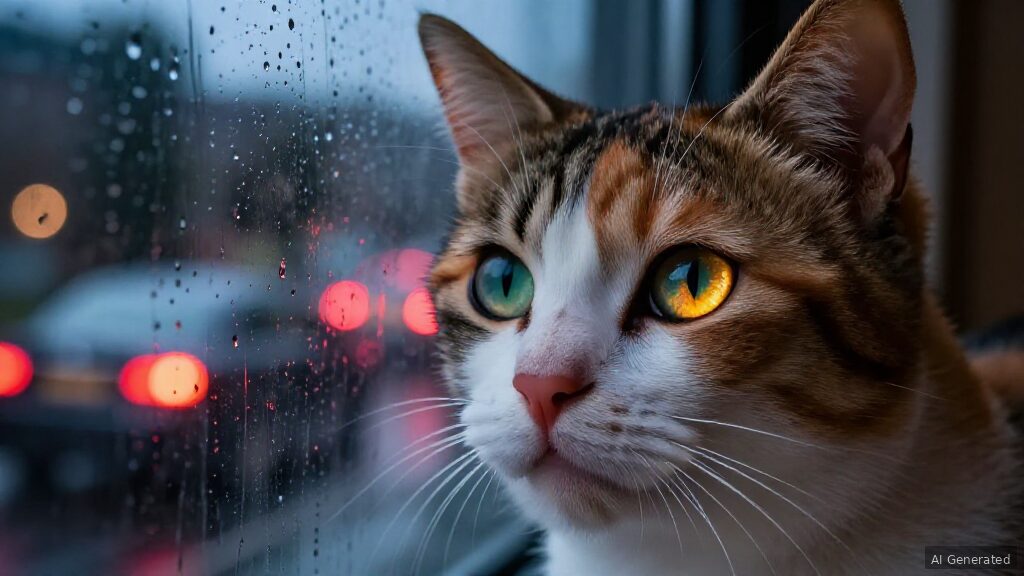
A cat’s vision has evolved differently from humans. Research shows that cats can detect ultraviolet light invisible to humans, which plays a decisive role in night hunting or capturing moving objects in complex environments. In particular, birds flying outside the window or animals passing by are the best visual stimuli for cats. However, simply letting them sit by the window may not be enough. It is important to help your cat see the world better through the window.
Install a platform at a height where your cat can sit comfortably in front of the window, or place a stable shelter made of natural solid wood like PlayCat to secure their view. The warm texture and natural color of the wood make your cat’s eyes feel comfortable while creating a contrast with the dynamic movements outside, triggering visual interest. If you are worried about drafts or noise, use double-glazed windows or special films, but be careful not to obstruct the cat’s view. Dropping small objects near the window or using toys that create virtual movements are also effective ways to increase your cat’s focus time.
The Science of Moving Toys and TV/Video Usage
A cat’s vision reacts much more sensitively to dynamic objects than static ones. Fast-moving dots or silhouettes immediately stimulate hunting instincts. However, if you use a toy for too long, the cat is likely to lose interest quickly. Therefore, it is effective to change the movement pattern of the toy irregularly or play ‘hide-and-seek’ where it disappears from the cat’s view and reappears. Silhouette projectors or laser pointers (be sure to finish with a physical object at the end to avoid frustration) are also excellent for visual stimulation.
Recently, dedicated video content for cats is also gaining attention. Videos of birds, mice, or fish crossing the screen capture a cat’s attention. However, rather than just leaving the TV on, it is better to select videos of animals the cat is interested in and play them for an appropriate duration (10-15 minutes). Check that the screen brightness is not too strong, and stop immediately if the cat seems tired. PlayCat’s solid wood furniture naturally complements such media spaces, serving as a stable support when the cat watches videos or plays with toys. The calm tone of the wood balances the vigorous movements on the screen, reducing visual fatigue for the cat.
Expanding Your Cat’s World with Olfactory Stimulation
Proper Use of Catnip and Silver Vine
A cat’s sense of smell is tens of thousands to hundreds of thousands of times more sensitive than humans. They have an overwhelming number of olfactory receptors in their nose, allowing them to detect even microscopic chemical substances in the air. Catnip and Silver Vine are representative plants that stimulate a cat’s sense of smell, inducing excitement, relaxation, and hunting instincts. The nepetalactone component in catnip stimulates specific receptors in the cat’s brain, providing temporary pleasure. However, not all cats react to catnip; this is determined by genetic factors. Additionally, silver vine can be an effective alternative for cats that do not react to catnip.
When using these herbs, it is important not to overuse them. Continuous daily exposure can dull the cat’s sensitivity, reducing the effect. It is recommended to provide small amounts only 2-3 times a week. PlayCat’s environmental setup guide recommends placing catnip or silver vine in specific zones to create a space where the cat can explore and enjoy on its own. For example, sprinkling catnip in the corners of solid wood furniture or hidden spaces allows the cat to recognize that space as its territory and feel olfactory satisfaction. It is more effective to concentrate the scent on specific points so the cat can choose to approach, rather than letting the herb scent spread throughout the entire room.
Exploration Games via Herb Gardens and Hiding Treats
Beyond simply smelling scents, the process of a cat actively using its sense of smell to find something keeps the brain active. The ‘olfactory exploration game’ of hiding small treats or catnip around the house is the most natural way to satisfy a cat’s hunting instincts. In particular, hiding them in corners the cat doesn’t usually visit or on high shelves stimulates the desire to explore. The treats used should have a scent that is not too common; a new smell can be more interesting than the familiar scent of regular cat food.
Creating a small ‘herb garden’ in the house is also a good idea. Planting cat-safe rosemary, mint, or valerian root in pots allows the cat to have various olfactory experiences by smelling and licking the plants (within safe limits). However, be careful not to let the cat eat too much of the plants, and never place toxic plants (such as lilies) nearby. PlayCat’s solid wood shelves or storage spaces are ideal for placing such herb gardens. The porous structure of the wood gently holds the scent of the herbs, helping the cat receive olfactory stimulation naturally as it walks by. This makes the cat perceive the entire house as one giant exploration space.
Awakening Instincts and Emotional Stability with Auditory Stimulation
Psychological Effects of Nature Sounds and Birdsong
Cats have very sensitive hearing and can hear frequencies much higher than the human audible range. This is the result of evolutionary adaptation to capture prey. Therefore, playing nature sounds in the house greatly helps a cat’s psychological stability. Sounds of rain, wind, birdsong in the forest, and flowing water reproduce environments cats are instinctively familiar with, lowering stress. Especially if you play nature sounds as background music when you are away from home, the cat can feel comforted without feeling isolated.
However, not all sounds are good. Sudden loud noises or mechanical noises can startle cats and induce fear. Therefore, it is best to keep the volume moderately low and choose natural sounds with soft and consistent frequencies. On YouTube or streaming services, there are various contents with keywords like ‘nature sounds for cats’ or ‘cat hunting sounds’. While listening to these sounds, if the cat looks out the window or plays with toys, the dual stimulation of sight and hearing can enhance the completeness of the hunting simulation.
Music Selection and Utilization of Cat-Specific Music
The effect of human music on cats may be limited. Most classical or pop music contains frequency bands that cats do not prefer, which can actually cause stress. On the other hand, ‘cat-specific music’ is produced to match the cat’s hearing range and frequency preferences. This is made using tones similar to the frequency of a cat’s meow or mimicking mammalian nursing sounds and birdsong. Studies have shown that cats listening to cat-specific music spend more time resting and have lower stress indices.
When creating a home atmosphere, it is good to play cat-specific music in the background or repeat specific sounds the cat likes. Especially for nursing kittens or senior cats, music with soft frequencies provides greater comfort. In PlayCat’s space design, these auditory environments are considered, utilizing the characteristics of solid wood to ensure sound is well transmitted. Wood softly reflects and absorbs sound, reducing harsh noise and creating a natural resonance. This provides a more comfortable and safe auditory environment for the cat, showing that the whole house is a space that respects the cat’s senses.
Tactile Stimulation: Awakening Skin Sensations with Various Materials
The Importance of Experiencing Wood, Fabric, and Cardboard
A cat’s skin is very sensitive, and it detects even microscopic changes in the surrounding environment especially through whiskers (tactile hairs). Cats mark their territory and stimulate their senses by stepping on or rubbing against surfaces of various materials. Experiencing various materials such as soft fabric, rough cardboard, cold tiles, and warm wood is essential for a cat’s tactile development. If a cat is repeatedly exposed to only one type of material, its senses may become dull, leading to a decrease in interest in the environment.
PlayCat’s solid wood furniture is the optimal solution for this tactile enrichment. The grain of wood from nature provides a unique texture for cats, and the warm temperature inherent to solid wood offers great comfort when the cat leans against it. The microscopic irregularities on the wood surface stimulate the cat’s paw pads and whiskers, providing new sensory information every time it moves. Also, unlike fabric or plastic, wood does not generate static electricity, preventing the cat’s fur from becoming stiff and helping to prevent skin troubles. PlayCat furniture serves not just as a sitting space, but as a tactile playground where cats can explore and experience various textures.
Creating Grooming and Scratching Spaces
A cat’s scratching behavior is not just for claw maintenance but is an important action that stimulates the tactile sensation of the paw pads and marks territory. Provide cats with a choice by placing scratching posts of various angles and materials. It is good to mix various materials such as rope (burlap), cardboard, and solid wood along with various shapes like vertical, horizontal, and inclined. In particular, PlayCat’s solid wood scratching posts provide a satisfying grooving experience for cats by giving the feeling of natural wood grain touching their claws.
Also, creating a grooming space where the cat rubs its body is important. Installing rubbing posts made of soft fabric or wood near wall corners or next to furniture allows the cat to feel stable by leaving its scent. The wood used here should be polished so it is not rough, ensuring it does not hurt the cat’s fur or skin. PlayCat products are manufactured considering both this safety and tactile satisfaction. By scattering these tactile points throughout the house, the cat can explore the entire home and continuously acquire new tactile information, reducing boredom.
Gustatory Stimulation: The Joy of Dietary Diversity and Food Exploration
Dietary Diversity and Qualitative Changes in Treats
A cat’s sense of taste is simpler than humans, but it is very sensitive to texture and temperature. Alternating between wet and dry food provides changes in taste and texture, stimulating the cat’s appetite. Also, slightly warming the food (to body temperature) makes the meat smell stronger and makes the cat more interested. However, more important than simply changing the food is making the ‘process of eating’ itself enjoyable.
It is also good to provide treats in various forms and flavors. Stimulate the cat’s taste by alternating treats with different textures, such as dry treats, jelly treats, and pieces of meat. PlayCat’s environmental guide recommends hiding treats or providing them in puzzle forms instead of simply putting them in a bowl. This allows the cat to exercise its hunting instincts in the process of finding food and maximizes satisfaction when consuming it. However, the amount of treats should be adjusted to within 10% of total calories to avoid nutritional imbalance.
The Effect of Food Puzzles and Exploration Play
In the wild, cats hunt several times a day to get food. Giving all the food at once from a bowl to an indoor cat can be an act that suppresses this instinct. Making the cat work to get food through ‘Feeder Puzzles’ or ‘Hidden Treat’ games enhances not only taste but also cognitive abilities. Simply putting food in a bottle with holes or hiding treats inside a toy makes the cat act like a hunter.
Such play is especially effective for obese cats. Spending more time to get food makes it easier to feel full, and the amount of exercise naturally increases. PlayCat’s solid wood furniture can be utilized as a platform for such puzzle play. If you place puzzle toys on solid wood shelves or create spaces to hide treats using the furniture structure, the cat can experience visual, motor, and gustatory stimulation simultaneously in the process of climbing up to find food. This changes the cat’s mealtime from a simple act of consumption to a joyful playtime using the whole body.
Comparison of Sensory Enrichment Strategies by Age and Personality
The type and intensity of sensory stimulation needed vary depending on the cat’s age or personality. Young cats (kittens) are curious and active, so they need various new stimuli, whereas senior cats require soft and stable stimuli due to joint pain or sensory decline. Additionally, introverted cats avoid excessive stimulation, while extroverted cats desire active interaction. The table below summarizes suitable sensory enrichment strategies for each stage and personality.
- Various toys (moving ones, noisy ones)
- Exploring high places (using solid wood towers)
- Introduction of simple puzzle toys
- Regular hunting play (15 minutes or more)
- Olfactory exploration games (hiding treats)
- Provision of grooving spaces with various materials
- Soft tactile stimulation (wood, warm fabric)
- Low-intensity olfactory stimulation (scented herbs)
- Accessible food puzzles
- Securing hiding spots (boxes, solid wood caves)
- Starting with light olfactory/auditory stimulation
- Using automatic toys that do not attract attention
- Active hunting play (wand toys, etc.)
- Complex puzzle toys
- Introduction of new environmental elements (new toys, new paths)
| Category | Main Characteristics | Recommended Sensory Stimulation Strategy | Precautions |
|---|---|---|---|
| Kitten (2-12 months) | Explosion of curiosity, high activity, fast learning | Ensure rest time so they are not tired from too much stimulation. Remove hazardous items. | |
| Adult Cat (1-7 years) | Maintaining instincts, stable energy, territorial marking | Change stimuli periodically so daily routines do not become boring. | |
| Senior (7 years+) | Decreased activity, sensory decline, joint pain | Install safety barriers when moving stairs or high places. Exercise without straining joints. | |
| Introverted Personality | Fear of new things, preference for hiding | Do not force play. Wait until the cat approaches. | |
| Extroverted Personality | Active, prefers owner interaction | Introduce new games daily to prevent boredom. Release excess energy. |
Example Weekly Sensory Enrichment Schedule
For cat sensory enrichment, a balance between a consistent routine and new stimuli is necessary. Below is a sample schedule to stimulate your cat’s five senses evenly throughout the week. This schedule can be flexibly adjusted according to the cat’s condition and home environment.
- Monday (Visual & Auditory): Secure time for observing birds outside the window + play nature sounds as background music. 15-minute hunting play with a laser pointer or wand toy in the afternoon.
- Tuesday (Olfactory & Gustatory): Sprinkle a small amount of catnip or silver vine + hide-and-seek game with treats (3 spots around the house). Provide food with changed texture or adjusted temperature.
- Wednesday (Tactile & Motor): Create paths to climb up and down PlayCat solid wood furniture. Introduce grooving posts or fabric toys with new materials. 20 minutes of active play.
- Thursday (Rest & Exploration): Organize toys and rest. Time to listen to cat-specific music. Induce naps in a comfortable solid wood shelter.
- Friday (Combined Stimulation): Watch TV/video content (bird videos) + mealtime using puzzle toys. Walk (inside the house) stepping on floors of various materials.
- Saturday (New Experiences): Slightly change the arrangement of house furniture (explore new paths). Try new herbs or treat flavors. Playtime with family members.
- Sunday (Full Review): Review the week’s sensory stimulation. Check which stimuli the cat responded to best and reflect them in next week’s schedule. Deep grooming and rest.
Frequently Asked Questions (FAQ)
1. When is the best time to start sensory enrichment?
Sensory enrichment can be started at any time regardless of the cat’s age, and the effect is greater the younger they are. During the kitten stage, brain development is active, so it is ideal to expand senses through various stimuli. However, adult or senior cats can also be helped to maintain emotional stability and cognitive abilities through new stimuli. The important thing is not to change everything suddenly, but to introduce things one by one slowly so the cat can adapt comfortably.
2. Is it okay to give catnip every day?
If you give catnip every day, the cat’s sensitivity may decrease, reducing the effect, so it is recommended to provide small amounts about 2-3 times a week. Also, since there are cats that do not react to catnip, you can try other herbs like silver vine or valerian root as alternatives. When giving catnip, carefully observe for digestive issues or behavioral changes (excessive excitement) caused by overconsumption.
3. What benefits does PlayCat solid wood furniture provide to cats?
PlayCat solid wood furniture stimulates the cat’s tactile senses with natural wood grain, and is good for the cat’s skin and fur health due to the warm temperature inherent to solid wood and its anti-static effect. Additionally, it provides an environment where cats can explore and climb through various heights and structures, giving visual and motor stimulation simultaneously. The durability and safety of the wood guarantee a stable play space that cats can use for a long time.
4. What should I do if my cat loses interest in toys?
Cats have a strong curiosity for new things, but they can lose interest quickly once they get used to them. At this time, apply a ‘rotation play’ method where you hide the toy and take it out again after a few days. Also, you can regain the cat’s attention by varying the type, material, or movement of the toy. You can also add fun by combining treats or playing games where the owner participates directly.
5. Do senior cats also need sensory enrichment?
Yes, sensory enrichment is very important for senior cats. Senior cats whose sensory functions have declined due to aging and whose activity levels have decreased may suffer from depression or cognitive decline. Soft tactile stimulation (wood, warm fabric), easy olfactory exploration, and low-intensity auditory stimulation help the emotional stability of senior cats and activate the brain to improve quality of life. However, it should be carried out within limits that do not strain the joints or physical condition.
Cat sensory enrichment is not just a pastime but an essential element for cats to live happily while maintaining their true nature. By creating an environment that stimulates sight, smell, hearing, touch, and taste evenly, cats can feel the joy of natural hunting and exploration even at home and live a stress-free life. PlayCat provides the optimal solid wood furniture and environmental solutions to practice this sensory enrichment, offering deeper bond and happiness to both cats and owners. Start small changes to awaken your cat’s five senses from today.
This content was written using AI technology. Always consult a veterinarian for medical information.