


Unlocking Your Cat’s Hidden Intelligence: Why You Should Start Now
Many guardians misunderstand cats as independent and sometimes lazy animals. However, the latest research in animal ethology proves that cats possess highly complex and sophisticated cognitive abilities. Cats are not merely automated machines reacting to hunger or sleepiness; they are explorers with an instinct to observe, analyze, and solve problems in their environment. In particular, their wild ancestors required high levels of spatial memory, pattern recognition, and fine motor control to hunt. Today, indoor cats often face a new stressor called ‘boredom’ because these instinctual drives remain unfulfilled.
Boredom goes beyond mere lack of fun; it can severely impact a cat’s mental health. Excessive sleeping, obesity, anxiety behaviors, and even aggression can be the result of cognitive deprivation. This is where ‘Cognitive Enrichment’ comes in. It refers to creating an environment that stimulates the brain and offers opportunities for problem-solving, going beyond simply providing physical space. As Dr. Jane Goodall emphasized, hope and quality of life for animals are only realized when they are given the opportunity to act. Especially on April 3rd, ‘Jane Goodall Day,’ as global awareness of animal welfare rises, it is time to gift our own cats true cognitive richness.
Cognitive enrichment recreates the rhythm of the hunt for cats, satisfies their curiosity, and allows them to feel a sense of accomplishment. This is a scientific method that not only strengthens the bond between guardian and cat but also extends the cat’s lifespan and significantly improves their quality of life. Why not try waking up your feline friend’s hidden intelligence through the various cognitive training tools and methods guided by PlayCat?
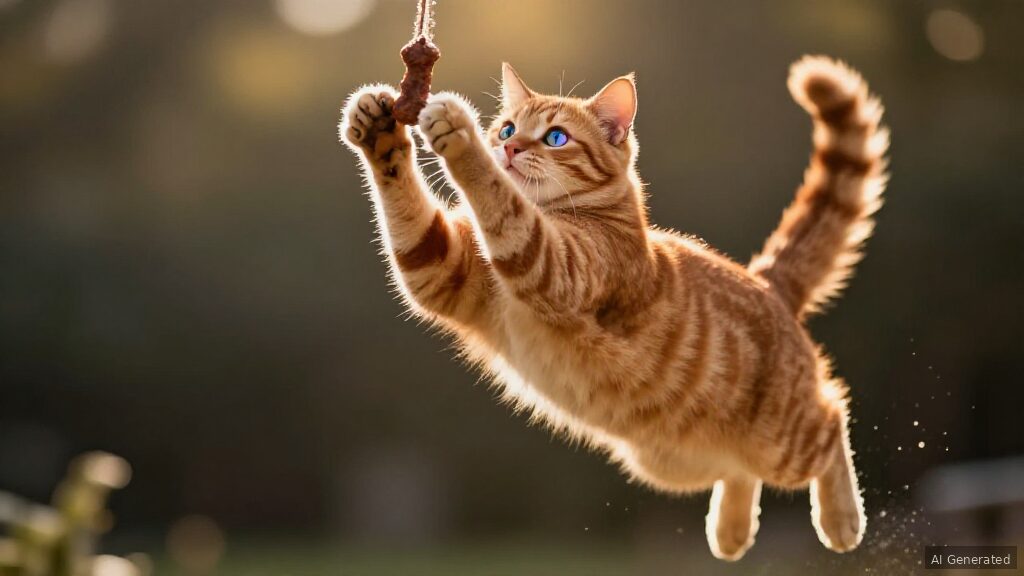
Recommended Guide for Puzzle Feeders and Smart Toys by Difficulty Level
The most accessible and effective method for cat cognitive training is the ‘Puzzle Feeder.’ These are toys that require specific manipulation to obtain food, recreating the process of working for a meal to stimulate both hunting instincts and problem-solving skills. However, providing the same tool to every cat is not appropriate. Difficulty must be adjusted according to the cat’s age, intelligence level, and learning speed; if set too hard, it causes frustration, and if too easy, they lose interest quickly.
The table below summarizes the types of puzzle feeders and smart toys recommended according to the cat’s developmental stage and cognitive level. Guardians should observe their cat’s current state to select the appropriate difficulty and adopt a strategy of gradually upgrading.
| Difficulty | Recommended Tool Type | Key Actions & Requirements | Suitable Cat Types | Expected Effects |
|---|---|---|---|---|
| Beginner (Level 1) | Holey bowls, covered trays | Treats are revealed when the cat pushes or slightly moves them with paws or nose | Kittens (under 6 months), beginners, senior cats | Stimulating curiosity, understanding basic cause-and-effect |
| Intermediate (Level 2) | Slide covers, rotating discs | Holes open only when slides are pushed in a specific direction or discs are rotated | Growing adult cats, cats with strong hunting instincts | Improving hand-eye coordination, enhancing focus, attempting problem-solving |
| Advanced (Level 3) | Complex mazes, lever-operated, multi-step locking mechanisms | Requires multiple steps and specific sequence of operations to obtain food | Highly intelligent adult cats, cats accustomed to training | Higher-order thinking, memory retention, stress relief |
| Senior Exclusive | Tactile stimulation, scent tracking | Finding food location relying on smell and touch rather than sight | Starting to age (7+ years), cats with joint issues | Maintaining cognitive function, brain exercise with minimal physical activity |
In the beginner stage, it is important for the cat to recognize the toy’s existence and realize the cause-and-effect relationship: “If I touch this, something comes out.” At this stage, place treats or food in visible spots to help them accumulate success experiences. Moving to the intermediate stage, cats learn more complex manipulations, and through this process, they can develop perseverance by experiencing ‘failure’ and trying again. The advanced stage is like humans solving a puzzle, giving the cat a great sense of accomplishment the moment they find the answer themselves.
A cat’s cognitive development is not fixed; it changes flexibly depending on the environment. In particular, the wood-based toys and furniture structures provided by PlayCat stimulate the cat’s exploration instinct even more through natural textures. For example, wooden puzzle feeders feel softer and more stable than plastic products, allowing cats to focus for longer periods. Additionally, environmental improvements using wooden furniture go beyond simple aesthetics; they create spatial hierarchies where cats can naturally jump and hide, promoting cognitive activity. This spatial richness provides comprehensive brain stimulation that is difficult to achieve with toys alone.
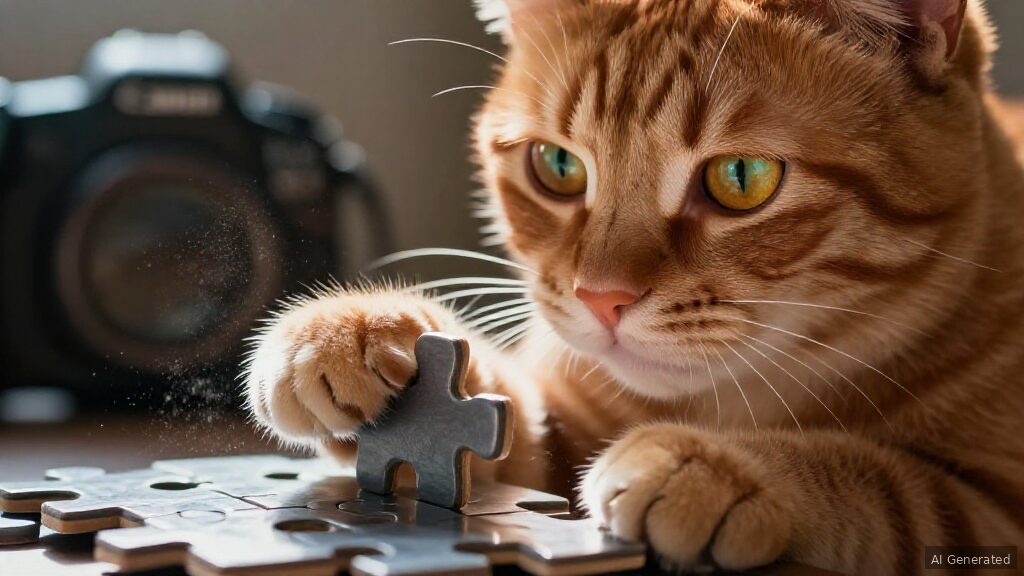
How to Communicate with Your Cat Using Clicker Training
Clicker Training was originally used in zoos to modify and train wild animal behaviors, but it has recently become the standard for pet training. The core of this method is to immediately connect a ‘sound signal (click)’ with a ‘reward (treat)’ to reinforce desired behaviors. For cats, clicker training goes beyond simple command execution; it builds an emotional bond with the guardian and instills self-esteem by allowing them to control their own actions.
The basic principle of clicker training is ‘operant conditioning.’ When a cat performs a specific action, a ‘click’ sound immediately follows, and a delicious treat is given. The cat quickly learns the fact that “the action I just performed made a clicking sound, and as a result, I got something tasty.” Timing is crucial in this process. The action, the click, and the reward must occur within an interval of 1-2 seconds for the cat to clearly understand the cause-and-effect relationship.
Starting Clicker Training Step-by-Step
Step 1: Charging the Clicker
First, you must make the cat recognize the click sound as a positive signal. No action is required from the cat; simply repeat the process of making a ‘click’ sound and immediately giving a treat 10-15 times. If the cat looks at you with anticipation upon hearing the click, the connection is successful.
Step 2: Luring the Target Behavior
Start with the easiest behaviors. For example, lure the cat to turn its head when you call its name, or to lick your hand when you show it. The moment the desired behavior occurs, press the ‘click’ and give a treat. If the cat does not perform the behavior, you can lure it by holding a treat in your hand and guiding the cat to follow naturally, thereby creating the behavior.
Step 3: Reinforcing and Sustaining the Behavior
Once the same behavior is successfully performed multiple times, gradually reduce the frequency of giving treats and introduce a ‘variable ratio reinforcement’ method. Instead of giving a treat for every success, give it only occasionally to maintain the behavior. Similar to gambling psychology, this makes the cat expect that “maybe I’ll get a treat next time,” which strengthens and solidifies the behavior.
Step 4: Learning New Behaviors
Once the foundation is laid, teach more complex behaviors. Actions like ‘high five,’ ‘sit,’ ‘back up,’ and even ‘close the door’ are possible. At this stage, the guardian must use their hand or a treat to break down the behavior into smaller steps and teach them (Shaping). For example, to teach closing a door, provide a ‘click’ and reward for each small step: approaching the door, licking the handle, touching it with a paw, etc.
Clicker training is the best tool for increasing a cat’s cognitive abilities while building trust with the guardian. Especially for senior cats, the process of learning new things stimulates neuroplasticity in the brain, greatly helping to delay cognitive decline. However, it is important to keep training sessions short. A cat’s attention span is usually about 5-10 minutes; longer sessions can actually cause stress. It is effective to divide the training into several short sessions throughout the day.
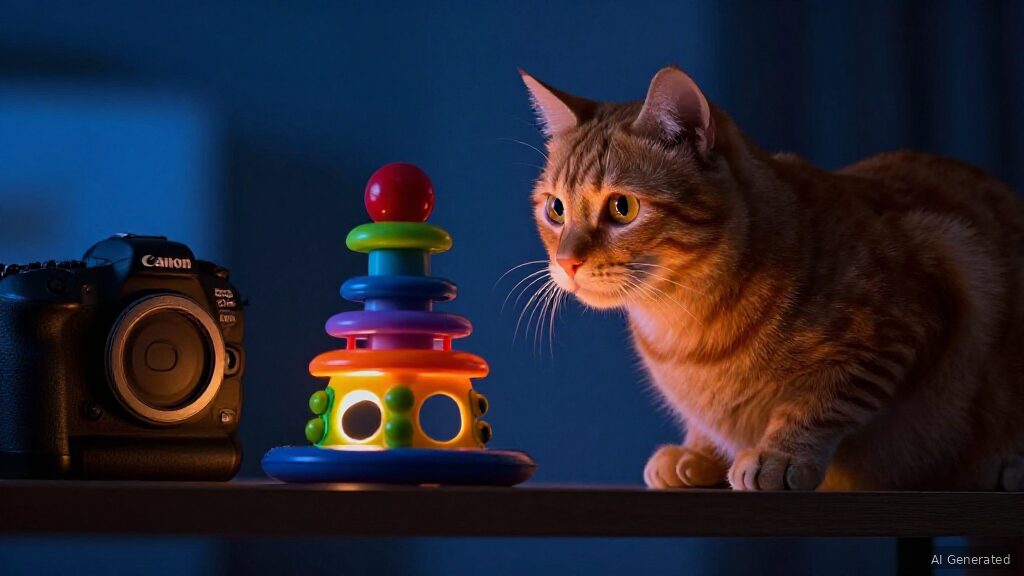
Stimulating Exploration Instincts: The Joy of Hide-and-Seek and Treasure Hunts
Cats are naturally experts at ‘hiding’ and ‘seeking.’ In the wild, the process of discovering prey, hiding, waiting, and attacking was essential for survival, and this exploration instinct remains strong even in indoor cats. However, modern indoor environments are often too predictable and simple to satisfy a cat’s desire to explore. To solve this, it is recommended to make ‘hide-and-seek’ and ‘treasure hunt’ games part of your daily routine.
Treasure Hunt Game (Scavenger Hunt)
Instead of feeding your cat in a fixed location every day, try hiding food or treats around the house. The process of the cat sniffing and finding them intensely stimulates their sense of smell and spatial memory. Start by hiding them in visible places, but gradually increase the difficulty by hiding them in harder-to-find spots (under the sofa, behind curtains, inside boxes). At this time, PlayCat’s wooden furniture or shelf structures can serve as excellent hide-and-seek locations. Wood materials hold scents well, encouraging cats to explore for longer periods.
Treasure hunt games also increase a cat’s physical activity. Jumping to find hidden treats, crawling into every corner, and passing through narrow gaps improve muscle strength and flexibility. Furthermore, exploring new places builds confidence in the environment, reducing anxiety.
Exploring New Spaces
Cats react sensitively to changes in their environment. Instead of moving along the same path every day, try changing the environment by slightly rearranging furniture or placing new toys. The important thing here is to ensure safety so that the cat can explore the new space on its own. Remove dangerous items and secure high places to climb and narrow spaces to hide in.
Especially when the season changes or after a guardian has been away for a long time, it is good to slightly change the atmosphere of the house. For example, creating a new nest by the window or placing a new toy on the desk can stimulate the cat’s curiosity. These small changes convey the message to the cat that “this place is still worth exploring,” maintaining cognitive vitality.
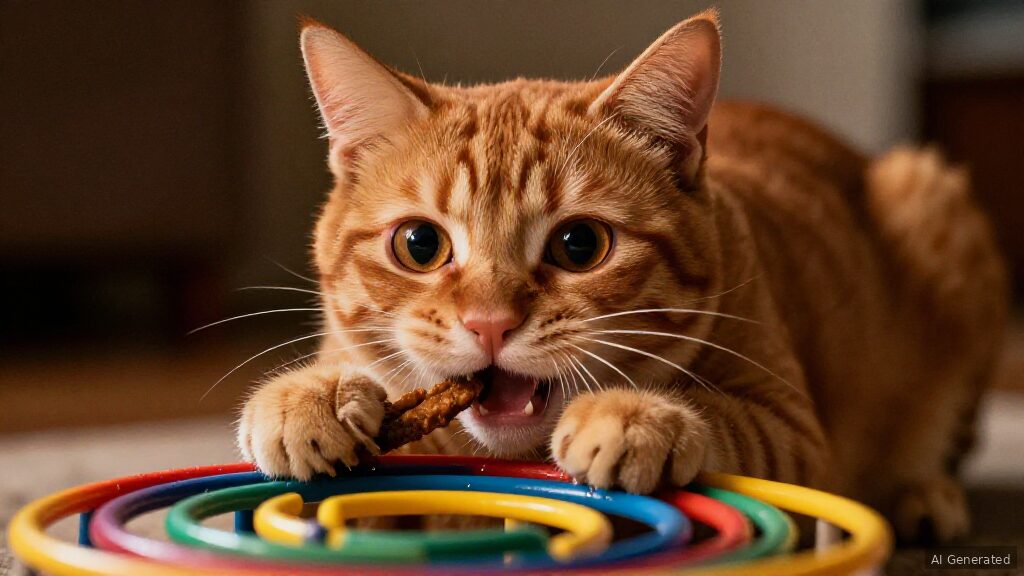
Problem-Solving Training: Opening Drawers and Navigating Obstacles
A cat’s intelligence is revealed not just in manipulating toys, but in its ability to solve complex problems. Behaviors like ‘opening a drawer,’ ‘opening a door,’ and ‘passing obstacles’ show that the cat understands physical laws and spatial structures. Such problem-solving training helps develop a cat’s logical thinking and naturally establishes the guardian’s authority.
Drawer Opening Training
Cats love manipulating levers like door handles. Initially, put a treat in a drawer and leave it slightly ajar so the cat can easily take it out. Gradually close the drawer more and guide the cat to push it open with its paws or nose. Praise and reward immediately upon success. This training deepens the cat’s fine motor control of the front paws and understanding of cause-and-effect.
Obstacle Navigation and Sequence Learning
Create obstacles in the house to form a course the cat must pass through. You can create a maze by passing between chairs or going through boxes. Furthermore, you can try teaching sequence learning involving multiple steps. For example, teaching the sequence of “first pass through the box, then push the disc, and finally get the treat.” This strengthens the cat’s working memory and develops the ability to solve complex problems step-by-step.
This training is particularly effective for young cats and high-intelligence breeds. However, not all cats learn at the same speed, so guardians must carefully observe their cat’s reactions. If the cat shows signs of frustration or giving up, it is important to lower the difficulty and help them accumulate successful experiences again.
Senior Cat Brain Health: Preventing Cognitive Decline
As cats age, they can suffer from ‘Feline Cognitive Dysfunction Syndrome (CDS),’ similar to Alzheimer’s in humans. Senior cats (usually 7 years and older) may show symptoms such as memory loss, disorientation, changes in sleep cycles, and unnecessary nighttime vocalization. At this stage, cognitive enrichment is not just a hobby but an essential therapy for maintaining brain health.
Cognitive training for senior cats should be done within limits that are not too difficult or physically strenuous. It is good to have them repeat behaviors they used to do well to revive memories. For example, you can induce exploration activities through simple clicker training from their kittenhood or toys with familiar scents.
Additionally, since a senior cat’s senses may dull, it is effective to use tools that stimulate smell and touch. Use toys filled with strongly scented herbs or let them touch wooden furniture with various textures to maintain sensory input. PlayCat’s wooden furniture, with its soft surfaces and natural textures, provides the optimal environment to stimulate the desire to explore without straining the joints of senior cats.
To prevent cognitive decline, maintaining a regular training schedule is important. Repeating the same activity at the same time every day makes the cat feel the environment is predictable and stable, reducing anxiety. Also, increasing interaction time with the guardian has a positive effect on brain health. Senior cats find greater comfort in their guardian’s voice and presence, so sharing emotional connection through training time is crucial.
DIY Cognitive Enrichment Tools You Can Easily Make at Home
Even without expensive toys, you can make excellent cognitive enrichment tools with simple materials found at home. DIY tools have the advantage of allowing time for bonding while making them together with your cat, and they can be freely modified to suit the cat’s preferences. Below is a DIY project checklist that anyone can easily follow.
1. Plastic Bottle Maze
– Materials: Empty plastic bottle, scissors, cat food
– Method: Open the cap of the plastic bottle and drill several holes in the body. Put food inside, close the cap, and let the cat take the food out through the holes. Adjust the size and position of the holes to match the difficulty.
– Time Required: 10 minutes
– Precautions: Be sure to wrap or sand the sharp edges of the plastic bottle with tape to prevent injury.
2. Box Treasure Chest
– Materials: Empty (shoe box) or large box, paper, treats
– Method: Drill several holes in the bottom of the box, crumple paper inside, and hide treats. Let the cat dig through the paper to find the treats. To make it harder, you can place smaller boxes inside to create a layered structure.
– Time Required: 15 minutes
– Effect: Stimulates digging instinct and improves exploration skills
3. Wooden Block Stacking Game
– Materials: Small wooden blocks (using PlayCat wooden furniture scraps or toys), treats
– Method: Stack wooden blocks to make a small tower and hide treats inside. The cat must knock down the tower or move the blocks to get the treats. Wood material is quiet, safe, and provides a good texture for the cat’s paws.
– Time Required: 20 minutes
– Advantage: Eco-friendly due to natural materials and excellent durability
When making DIY tools, always prioritize the cat’s safety. Secure small parts firmly so they do not fall off, and be careful not to use materials contaminated with harmful chemicals. Also, clean the finished toys thoroughly after use to maintain a hygienic environment.
Precautions and Common Mistakes
While cognitive enrichment has a positive impact on cats, improper application can cause stress. It is important to identify and avoid common mistakes made by guardians.
1. Failure to Adjust Difficulty
The most common mistake is providing toys that are too difficult for the cat’s ability. If the cat cannot find a solution and feels frustrated, they may avoid the toy and lose the desire to learn. Conversely, if it is too easy, they lose interest quickly. Observe the cat’s reaction well to find the appropriate difficulty.
2. Excessive Training Time
Cats have a shorter attention span than humans. Do not exceed 10 minutes for a single training session. Too long a time can tire the cat and make the training itself a negative experience. Short but frequent repetition is effective.
3. Inconsistent Reward System
During clicker training or problem-solving training, if the timing between behavior and reward does not match, the cat becomes confused. Always provide an immediate reward right after the behavior. Also, while the reward doesn’t always have to be a treat, using high-value treats is recommended during the initial learning stage.
4. Do Not Force
Voluntary motivation is most important for cats. If the guardian forces the cat to sit in front of a toy or forces a behavior, it only increases stress. The key is to create an environment where the cat feels interested and approaches on its own.
5. Indifference to Environmental Changes
If you endlessly repeat the same toy or environment, the cat will get bored quickly. It is important to make changes, such as periodically replacing toys or changing their placement. PlayCat’s wooden furniture offers various placement options to help you respond flexibly to environmental changes.
Frequently Asked Questions (FAQ)
1. When is the best time to start cognitive enrichment?
Cognitive enrichment can be started at any time, regardless of the cat’s age. Starting during the kitten stage (2-6 months) is good for fast learning and acquiring various skills, and it is also very helpful for maintaining brain health in adult or senior cats. In particular, cats that experience various stimuli from a young age adapt better to environmental changes later in life.
2. What should I be careful about when using a puzzle feeder?
When using a puzzle feeder, you must control the daily calorie intake so the cat does not become obese by eating too many treats. Also, check if the toy material is safe and regularly inspect it to ensure small parts do not fall off. Especially for senior cats who may have dental issues, it is good to choose a structure where food can be easily retrieved.
3. What should I do if my cat fails at clicker training?
If your cat does not respond to the clicker sound or learns slowly, try repeating the sound connection stage longer or trying other rewards (e.g., favorite toy, petting). Depending on the cat’s personality, they might dislike the clicker sound; in that case, you can use a ‘click’ sound made with fingers or another signal. It is important to proceed at a pace where the cat feels comfortable without forcing them.
4. What cognitive training is most effective for senior cats?
For senior cats, training focused on sensory stimulation and memory recovery is better than high-intensity physical activity. Treasure hunts using familiar scents, repeating simple commands, and touching wooden toys that provide texture are good. Avoid strenuous training and choose activities where the cat can participate happily and comfortably.
5. If you recommend PlayCat products as cognitive enrichment tools, which ones would they be?
PlayCat’s wooden furniture series stimulates the cat’s touch and smell with natural wood materials, and structures of various heights satisfy their exploration instinct. In particular, wooden puzzle feeders or mobile shelves provide the optimal environment for cats to solve problems and be active on their own. Safe and durable wood materials are suitable for long-term cognitive training tools.
A cat’s brain has endless potential for growth and change. The opportunities for cognitive enrichment provided by guardians are not just play for the cat, but an important factor determining their quality of life. We hope you wake up your cat’s hidden intelligence through puzzle feeders, clicker training, exploration games, and problem-solving training, and spend happy times together. PlayCat will continue to develop various solutions to help your feline friends live healthier and more intellectually.
This content was written using AI technology. Always consult a veterinarian regarding medical information.