


Adopting a Stray Cat Indoors: Why Is It the Most Risky Time?
Welcoming a stray cat into your home is a warm act of kindness, but from a veterinary perspective, it is also the moment requiring the most vigilance. Cats exposed to the outside environment have had many opportunities to come into contact with various pathogens, and due to stress, their immune systems are likely extremely compromised. If a stray cat brought indoors carelessly carries parasites or viral diseases, this is not merely an issue for a single cat; it is a critical matter that can threaten the health of existing pets and family members alike.
Stray cats are often ‘carriers.’ They may appear healthy on the surface, but the phenomenon of ‘stress-induced onset,’ where latent diseases flare up the moment they are stressed or their environment changes, occurs frequently. If this period is neglected or if you simply start raising them without proper diagnosis, fatal infectious diseases like cat leukemia (FeLV) or Feline Immunodeficiency Virus (FIV) can spread to other pets. If treatment is delayed, it can even take a cat’s life. Therefore, thorough veterinary examinations and quarantine management before becoming a new family member are not optional but essential conditions.

Hidden Causes and Mechanisms of Health Risks in Stray Cats
The health risks for stray cats are not solely due to a ‘dirty environment.’ Their very mode of survival forms the mechanism for disease occurrence. First, there is an imbalance in the immune system. Constant stress to survive outdoors triggers the release of stress hormones like cortisol, which suppresses immune cell function. Consequently, bacteria or viruses that might normally be harmless can cause fatal infections.
Second, there is exposure to various pathogens. Stray cats are exposed to various infectious diseases through fights with other cats, contact with feces, and interactions with wild animals. In particular, Feline Herpesvirus (FHV) and Feline Calicivirus (FCV) spread easily through air or contact. Once infected, the virus can lie dormant in nerve cells and recur whenever the cat experiences stress. Additionally, parasites like fleas, ticks, and heartworms are directly contracted from the external environment; if they penetrate the cat’s skin or bloodstream, they can cause secondary bacterial infections or anemia.
Third, there is nutritional deficiency and physical damage. The process of enduring hunger and cold on the streets can lead to chronic malnutrition, which impairs healing abilities. It is also common for wounds from fights to become infected and suppurate due to lack of treatment, or for broken teeth to lead to periodontitis, spreading inflammation throughout the body. These complex factors intertwine to make the health status of stray cats unpredictable.

Categorizing Symptoms by Stage: Early Detection Saves Lives
Diseases in stray cats often do not show obvious symptoms in the early stages, making them easy for owners to miss. However, with careful observation, the progression of the disease can be identified. The table below summarizes the progression stages of symptoms that appear during common infectious diseases and parasitic infections.
| Stage | Key Symptoms | Behavioral Changes | Precautions |
|---|---|---|---|
| Early Stage (Incubation to Mild) | * Mild discharge from eyes or nose * Slightly red ears or scratching behavior * Slightly reduced appetite compared to usual * Rough fur or loss of shine |
* Hiding excessively in the new environment * Less activity than usual * Tendency to avoid people |
* Easy to mistake for a simple cold or stress * Immediate isolation and veterinary consultation required |
| Middle Stage (Systemic Symptoms) | * High fever and loss of appetite * Severe sneezing and coughing * Inability to swallow food due to stomatitis * Repeated diarrhea or vomiting * Skin wounds or scabs forming |
* Drinking excessive water or refusing to drink at all * Changes in bathroom usage frequency (defecation issues) * Twisting body or aggression due to pain |
* High risk of dehydration and electrolyte imbalance * Maximizes risk of transmission to other pets |
| Severe Stage (Chronic/Late) | * Severe anemia (pale gums) * Rapid weight loss * Neurological symptoms (abnormal gait, seizures) * Severe difficulty breathing * Tumors or chronic ulcers |
* Almost no movement * Gasping or shortness of breath * Complete cessation of social interaction |
* Hospitalization or hospice care may be necessary * Immediate veterinary intervention is essential |
Veterinary Clinic Diagnostic Process and Essential Tests
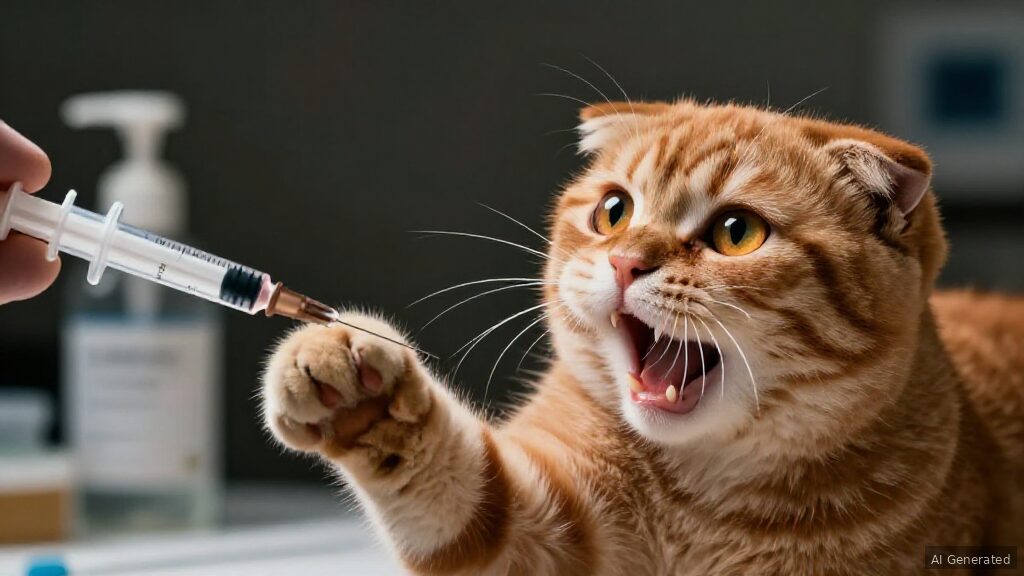
If you have adopted a new stray cat, the very first thing you should do is visit a veterinary clinic for a comprehensive health checkup. After checking the cat’s age, gender, and physical appearance, the veterinarian will proceed with the following tests.
1. Physical and Surgical Examination
This is the most fundamental step. The veterinarian uses a stethoscope to check for heart murmurs or respiratory abnormalities and palpates the abdomen to check for organ enlargement or pain. The skin condition is carefully examined for signs of parasites (fleas, ticks), skin lesions, or wounds. Additionally, the color of the mucous membranes in the eyes and ears is checked to identify signs of anemia or inflammation.
2. Blood Tests (CBC and Biochemistry)
Blood tests are key to understanding the cat’s overall health status. A Complete Blood Count (CBC) checks red blood cells, white blood cells, and platelet counts to determine the degree of anemia, infection, or inflammation. Biochemistry tests check the function of organs like the liver, kidneys, and pancreas, as well as electrolyte balance. Since stray cats often have compromised organ function, these tests can reveal hidden chronic diseases.
3. Viral Tests (FeLV/FIV)
This is one of the most important tests for stray cats. Feline Leukemia Virus (FeLV) and Feline Immunodeficiency Virus (FIV) are transmitted through blood or mucous secretions and cause fatal destruction of the immune system. It is essential to immediately confirm infection status through antigen/antibody tests for these two viruses. If the result is positive, isolation from other pets is mandatory.
4. Parasite Tests (Feces and Serum)
Feces tests check for eggs or cysts of internal parasites (roundworms, hookworms, whipworms, etc.). Serum tests may also be used to check for heartworm infection. Since stray cats have a very high rate of infection with internal parasites in addition to external ones, this test must be included.
5. Cost Range
Costs vary depending on the type of test and the size of the clinic, but a basic comprehensive checkup (physical exam + blood test + viral test + parasite test) can range from approximately 50,000 to 150,000 KRW. If additional ultrasounds or X-rays are required, costs may increase further, so it is advisable to inquire with the clinic beforehand and plan your budget before adoption.

Treatment Options Comparison: Pros and Cons of Medication, Surgery, and Management
If a disease is discovered during the checkup, the owner must choose a treatment option. Each treatment method has its own pros and cons, and the most suitable method should be selected based on the cat’s condition and the owner’s situation.
| Treatment Option | Pros | Cons | Suitable For |
|---|---|---|---|
| Medication (Antibiotics, Antivirals, Parasiticides) |
* Treatment possible at home without hospitalization * Relatively low cost * No invasive procedures required |
* Difficulty in administration (cat resistance) * Potential burden on liver/kidneys with long-term use * May only manage symptoms rather than cure |
* Mild infections * Management of chronic diseases * Cases where surgery is not possible |
| Surgical Treatment (Resection, Tooth Extraction, Trauma Repair) |
* Possibility of removing the root cause of the disease * Low risk of recurrence * Permanent resolution of pain |
* Risk of anesthesia exists * High surgical costs and long recovery period * Post-operative care can be difficult |
* Tumor removal * Tooth extraction due to severe periodontitis * Orthopedic repair of traumatic wounds |
| Management and Environmental Therapy (Nutritional Management, Stress Reduction) |
* Almost no side effects * Improves quality of life for the cat * Effective for boosting immunity |
* No immediate effect * Requires patience and consistent management * Limited effectiveness as a standalone treatment |
* Adjunct therapy for chronic diseases * Recovery phase management * Preventive purposes |
Age-Specific Management Differences: Tailored Care for Kittens, Adults, and Seniors
The age of a stray cat is a crucial factor in determining treatment and management strategies. There are different points of caution and management methods for each age group.
1. Kittens (Under 1 Year Old)
Kittens have immune systems that are not fully developed, making them most vulnerable to infectious diseases. In particular, if infected with fatal viruses like Feline Panleukopenia, the survival rate is very low. Therefore, it is essential to strictly adhere to the vaccination schedule. If breastfeeding is not possible, nutritional supplementation with milk replacer and high-protein food is necessary. Additionally, kittens lack thermoregulation abilities and are very sensitive to cold, so maintaining a warm environment is important.
2. Adult Cats (1 to 7 Years Old)
Adult cats are in their physical prime, but if they lived on the streets, they may have hidden chronic pain from external parasite infections or injuries. During this period, special attention should be paid to weight control and dental care. Periodontitis is very common in adult cats and, if neglected, can lead to kidney disease. Additionally, there is a risk of cystitis or urinary stones due to stress, so increasing water intake is recommended.
3. Senior Cats (7 Years and Older)
Senior cats that have lived on the streets for a long time are exposed to organ function decline and age-related diseases. Kidney disease, hyperthyroidism, and arthritis occur frequently. During this period, nutrition should be managed with high-protein, low-fat food, and organ values should be monitored through regular blood tests. Since joint pain may be present, create an environment that is easy to move around in, and ensure they can rest in a warm place.
Home Environment Management: Creating a Space for Recovery
For a stray cat to adapt to life in a new home and recover its health, an appropriate environment is essential. In particular, creating a space that minimizes stress and provides a sense of security is important.
1. Importance of Quarantine Space
A newly adopted stray cat should live in a separate space isolated from other pets for at least 2 weeks to 1 month. During this period, the goal is to prevent disease transmission and allow the cat time to adapt to the new environment on its own. The quarantine space should be quiet, well-ventilated, and equipped with a litter box, food bowls, and a resting area.
2. Creating a Stable Space with PlayCat Solid Wood Furniture
Cats feel an instinctive sense of stability from the smell and texture of wood. PlayCat‘s solid wood furniture offers the warm temperature and scent of natural wood, which has an excellent effect on reducing cat stress. In particular, PlayCat’s multi-level solid wood shelters or swings allow cats to observe their surroundings from a high place, giving them a sense of security. This provides the essential ‘safe zone’ for cats that lived on the streets.
PlayCat solid wood furniture has a smooth, non-toxic surface, making it safe even if the cat scratches or licks it. Additionally, the breathability of solid wood helps regulate humidity, aiding in the prevention of skin diseases. By placing a dedicated solid wood shelter for cats, you can secure a safe space for them to rest on their own, which has a positive impact on mental stability and physical recovery.
3. Providing Hiding Spaces
Stray cats exhibit hiding behavior when they feel fear in unfamiliar environments. Utilize the structural features of PlayCat solid wood furniture to place furniture with holes or spaces where cats can hide. This gives the cat a sense of self-protection and is effective in lowering stress hormone levels.
Prevention and Regular Checkup Checklist
To maintain the long-term health of stray cats, prevention and regular checkups are key. Please refer to the checklist below to proceed with systematic management.
- Early Adoption (Within 1 Week): Comprehensive health checkup, viral tests (FeLV/FIV), parasite tests, and initial vaccination consultation.
- 1 Month After Adoption: Completion of 2nd round vaccinations, administration of internal/external parasite medication, and monitoring of weight and physical condition.
- 3 Months After Adoption: Completion of 3rd round vaccinations, neutering/spaying surgery (if needed), and dental health check.
- Regular Checkups (At least once a year): Blood tests (kidney, liver function), urine tests, heartworm tests (depending on region), and consultation for tartar removal.
- Daily Care: Check appetite and bowel movements daily, groom fur and check skin condition, and engage in stress-reducing activities using PlayCat solid wood furniture.
This checklist can be adjusted according to the veterinarian’s advice based on the cat’s health status. When the owner’s consistent attention is combined with professional veterinary management, stray cats can grow into healthy and happy pets.
Frequently Asked Questions (FAQ)
1. Can I let a stray cat meet other pets immediately after bringing it home?
It is absolutely not recommended. Stray cats are highly likely to carry latent infectious diseases, and their immune systems are weakened due to stress, posing a high risk of transmitting diseases to other pets. It is safe to keep them in quarantine for at least 2 weeks to 1 month and gradually introduce them only after a veterinarian confirms their health following an examination.
2. When should I start vaccinations?
For kittens, the first vaccination should start at 6-8 weeks of age, with 2-3 doses completed at 3-4 week intervals. For adult cats, if past vaccination history is unclear, consult with a veterinarian to either restart basic vaccinations or determine the need for additional vaccinations after checking immune status via antibody titer tests.
3. How often should I give parasite medication to a stray cat?
Internal and external parasite medications are generally administered every 1-3 months. However, for stray cats, it is safer to administer them monthly in the beginning, and the interval can be adjusted based on the veterinarian’s diagnosis. In particular, flea and tick preventatives are recommended year-round, regardless of the season.
4. What should I do if a stray cat refuses food in the new home?
Loss of appetite can occur due to stress from the new environment. First, try offering treats or wet food with a scent the cat likes, and allow them to eat alone in a quiet place when feeding. If they refuse water or food for more than 24 hours, there is a risk of dehydration, so you must visit a veterinary clinic immediately.
5. Does using PlayCat solid wood furniture actually reduce stress?
Yes, the natural scent and texture of solid wood provide an instinctive sense of stability for cats. In particular, PlayCat’s multi-level furniture allows cats to observe their surroundings from a high place and secure safety, which is effective in reducing the anxiety stray cats feel in unfamiliar environments. This also has a positive impact on reducing stress hormones from a veterinary perspective.
This content was created using AI technology. Always consult a veterinarian for medical-related information.