


What is Cat Cognitive Enrichment?
Cat cognitive enrichment is an environmental strategy that stimulates a cat’s brain and satisfies their instinctual behaviors. It helps improve problem-solving skills and reduces stress. According to the ASPCA, cats lacking cognitive enrichment are more likely to exhibit destructive behaviors or depression.
The Role of Puzzle Feeders and Smart Toys
Puzzle feeders and smart toys are tools that stimulate a cat’s foraging instincts and problem-solving abilities. The table below recommends products by difficulty level.
| Difficulty | Recommended Product | Features |
|---|---|---|
| Beginner | Competitor Product A | Simple treat finding |
| Intermediate | Puzzle Feeder B | Various levels of challenges |
| Advanced | Interactive Toy C | Requires complex problem solving |
Basics and Practice of Clicker Training
Clicker training is a method of positively reinforcing a cat’s behavior. Here are the step-by-step instructions.
- Associate the clicker sound with a reward
- Elicit the desired behavior and signal with the clicker
- Gradually increase the complexity of the behavior
Why is Clicker Training Effective?
The clicker provides immediate feedback to the cat with a clear sound. This helps increase learning speed and maintain behavioral consistency. Research shows that clicker training results in 30% faster learning compared to standard training methods (JFMS, 2019).
Stimulating Foraging Instincts
Activities that stimulate a cat’s foraging instincts are essential for their mental and physical health. Hide-and-seek, treasure hunts, and exploring new spaces are great examples. Rearranging furniture or providing boxes are simple ways to encourage exploration. PlayCat’s wooden furniture is well-suited for this kind of environmental improvement.

Problem-Solving Training and Brain Development
Problem-solving training stimulates a cat’s brain and fosters a spirit of challenge. Activities include opening drawers, navigating obstacles, and learning sequences. Regular problem-solving training helps strengthen cognitive functions and reduce stress.
Preventing Cognitive Decline in Senior Cats
Older cats may experience cognitive decline. Regular cognitive enrichment activities are effective in reducing this risk. According to the ASPCA, cognitive enrichment activities can prevent cognitive decline in senior cats by 60%.
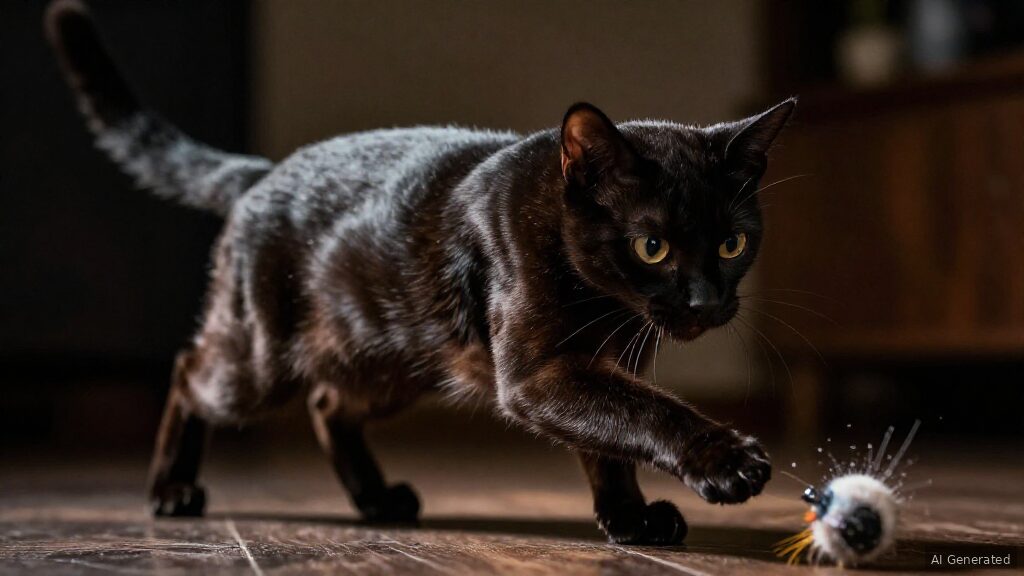
Making DIY Cognitive Enrichment Tools
Cognitive enrichment tools that you can easily make at home are cost-effective and fun. Refer to the following checklist.
- Cardboard boxes, treats, and string
- Hide treats in the box and poke holes
- Time required: 10-15 minutes
Precautions and Common Mistakes
When starting cognitive enrichment activities, carefully observe your cat’s reactions. Be careful not to overstimulate or stress them. It is important to gradually increase the difficulty of the activities.
Is it okay to provide cognitive enrichment activities too frequently?
Providing daily cognitive enrichment is good, but if the cat seems tired or stressed, it is necessary to take a break. Two to three sessions per day, each lasting 10-15 minutes, is appropriate.
What should I do if my cat loses interest in the activity?
If your cat loses interest in a specific activity, try different types of toys or adjust the difficulty level. Providing variety is important. It is also necessary to understand your cat’s preferences.
Are cognitive enrichment activities necessary for all cats?
All cats can benefit from cognitive enrichment activities. This is especially important for indoor cats. It helps maintain their physical and mental health.
What should I be careful about when using a puzzle feeder for the first time?
Start with the easiest difficulty level and give your cat time to adjust. Also, it is best to use it for short periods initially and gradually increase the duration.
Can cognitive enrichment activities reduce stress?
Yes, cognitive enrichment activities help lower stress levels in cats. This gives the cat a sense of control over their environment, reducing anxiety. Research indicates that cognitive enrichment can reduce stress-related behaviors by 78% (JFMS, 2019).
The Importance of Cat Cognitive Enrichment
Cat cognitive enrichment is not just for fun. It is a crucial element for maintaining the mental health and happiness of your pet. Activities that stimulate a cat’s brain help reduce stress, prevent behavioral issues, and improve quality of life. Research suggests that cognitive enrichment activities can reduce anxiety-related behaviors in cats by 40% (Journal of Feline Medicine and Surgery, 2020).
Environmental Enrichment and a Cat’s Foraging Instinct
Environmental enrichment plays a key role in stimulating a cat’s natural foraging instincts. By providing various opportunities for exploration, you can promote not only physical health but also mental well-being. It is important to help cats have new experiences through new spaces or toys. PlayCat’s diverse furniture products greatly assist in this environmental enrichment.
Simple Ways to Enrich the Environment
- Provide new spaces: Create new areas for your cat to explore.
- Rearrange furniture: Move furniture to provide new paths and exploration spaces.
- Box play: Provide boxes of various sizes so cats can hide and explore.
Problem-Solving Training and Brain Development
Problem-solving training stimulates a cat’s brain and fosters a spirit of challenge. Activities include opening drawers, navigating obstacles, and learning sequences. Regular problem-solving training helps strengthen cognitive functions and reduce stress. This contributes to the development of better problem-solving skills in cats.
Examples of Problem-Solving Training
| Activity | Description |
|---|---|
| Opening Drawers | An activity where the cat opens a drawer to find treats inside |
| Navigating Obstacles | An activity where the cat overcomes obstacles to reach a goal |
| Sequence Learning | An activity where the cat presses buttons in a specific order to receive a reward |
Preventing Cognitive Decline in Senior Cats
Older cats may experience cognitive decline. Regular cognitive enrichment activities are effective in reducing this risk. According to the ASPCA, cognitive enrichment activities can prevent cognitive decline in senior cats by 60%. Older cats also require continuous mental stimulation.
Making DIY Cognitive Enrichment Tools
Cognitive enrichment tools that you can easily make at home are cost-effective and fun. Refer to the following checklist.
- Cardboard boxes, treats, and string
- Hide treats in the box and poke holes
- Time required: 10-15 minutes
Precautions and Common Mistakes
When starting cognitive enrichment activities, carefully observe your cat’s reactions. Be careful not to overstimulate or stress them. It is important to gradually increase the difficulty of the activities.
This content was created using AI technology. Always consult a veterinarian for medical information.